Floaters and Flashes Post-Retina Laser Therapy
Discover why floaters and flashes persist after retinal tear laser surgery and when to seek urgent care for optimal eye recovery.
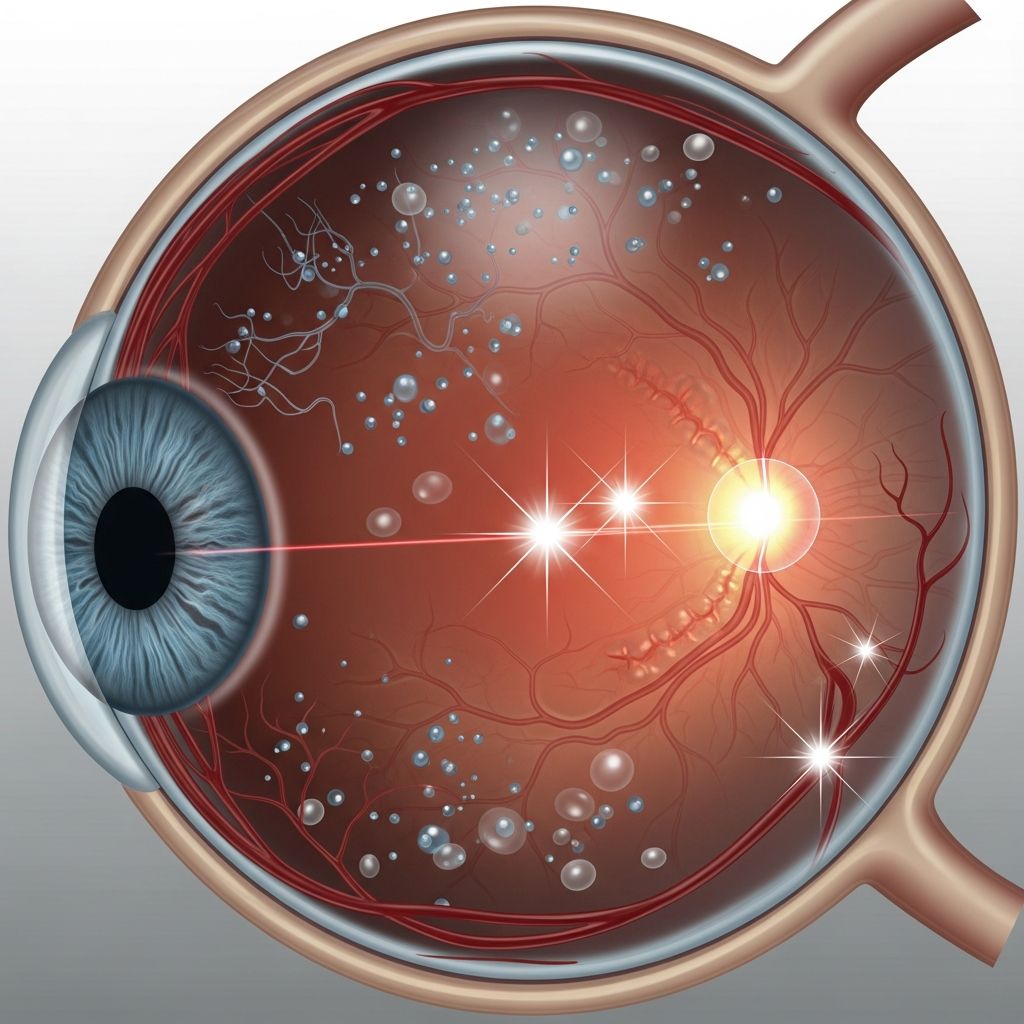
Laser photocoagulation effectively seals retinal tears by creating scar tissue that adheres the retina to the underlying tissue, preventing fluid buildup and detachment. However, many patients notice ongoing floaters and light flashes in the treated eye during recovery. These symptoms typically fade within days to weeks as the eye heals.
Understanding the Laser Procedure for Retinal Tears
The retina, a thin layer at the back of the eye, captures light and sends visual signals to the brain. A tear in this delicate membrane allows vitreous fluid to seep underneath, risking detachment and vision loss if untreated. Ophthalmologists perform laser surgery in-office, directing precise beams to burn spots around the tear, forming adhesive scars usually within 1-3 weeks.
Procedures last under 15 minutes, using numbing drops for comfort. No incisions or hospitalization needed, making it minimally invasive. Post-treatment, the eye dilates, causing temporary blur, and patients must arrange rides home.
Common Visual Disturbances After Treatment
- Floaters: Dark spots or webs drifting in vision, from laser-induced debris or vitreous changes.
- Flashes: Brief light bursts, especially in peripheral vision, due to irritated retinal nerves.
- Blurred Vision: Lasts hours to days from dilation and mild inflammation.
- Mild Irritation: Scratchiness or soreness, easing with drops or OTC relief.
These effects stem from the healing process: laser spots contract, tugging the vitreous gel and stimulating photoreceptors. Most resolve as scars strengthen.
Recovery Timeline and Daily Expectations
Day 1 brings peak blur and sensitivity; rest with an eye shield if advised. By day 3-7, symptoms lessen, allowing light activities. Full scar formation takes 2-4 weeks, so follow-up exams confirm adhesion.
| Timeframe | Expected Symptoms | Recommended Actions |
|---|---|---|
| Immediate (0-24 hours) | Blur, flashes, floaters, irritation | Rest, eye drops, no driving |
| 1-7 days | Decreasing flashes/floaters, mild blur | OTC pain relief, avoid strain |
| 1-4 weeks | Minimal symptoms, improving clarity | Follow-up visit, gradual activity resume |
| Long-term | Scar stabilization | Regular eye checks |
Adhering to guidelines prevents re-tear; missing them risks progression to detachment.
Self-Care Strategies for Smoother Healing
Prescribed anti-inflammatory drops reduce swelling; artificial tears soothe dryness. Avoid rubbing eyes, heavy lifting, or bending to minimize pressure. Wear sunglasses outdoors against light sensitivity.
- Use cool compresses for redness.
- Sleep elevated to ease fluid shift.
- Follow diet rich in antioxidants: leafy greens, fish for retinal health.
Hydration and avoiding straining support recovery.
Potential Risks and Complications
Success rates exceed 95% for sealing tears, but risks exist.
- Bleeding: Rare vitreous hemorrhage.
- Pressure Rise: May cause glaucoma; monitored via exams.
- Cataracts: Accelerated lens clouding in some.
- Failure: Tear reopening or new ones, especially in high myopes.
Studies show low detachment rates post-laser (under 1%), but lattice degeneration elevates risk. Prophylactic treatment doesn’t always prevent issues.
Related Stories



Critical Warning Signs Requiring Immediate Care
Distinguish normal from dangerous: contact your doctor urgently for:
- Severe pain unresponsive to meds.
- Sudden vision drop or curtain effect.
- Worsening/increased floaters or flashes.
- Eye pressure sensation or redness surge.
- Discharge or swelling escalation.
New flashes/floaters signal possible detachment needing same-day intervention.
Long-Term Outlook and Vision Preservation
Most regain normal vision; persistent mild floaters often harmless. Annual exams detect issues early, vital for at-risk groups like myopes. Lifestyle aids: control blood sugar/pressure, protect eyes from trauma.
Laser halts progression effectively when prompt.
Frequently Asked Questions
Do floaters always disappear after laser?
Many fade, but some linger; consult if increasing.
How soon can I exercise post-treatment?
Wait 1-2 weeks or per doctor’s okay; avoid high-impact.
Is laser surgery painful?
Numbing minimizes discomfort; post-op mild soreness typical.
Can tears recur?
Possible, especially untreated predispositions; monitor regularly.
What if I ignore symptoms?
Risk detachment, permanent loss; seek care promptly.
References
- What can someone expect after laser surgery for a retinal tear? — Medical News Today. 2023. https://www.medicalnewstoday.com/articles/what-to-expect-after-laser-surgery-for-retinal-tear
- What to Expect After Retinal Tear Surgery — RetinaLA. 2024. https://retinala.com/what-to-expect-after-retinal-tear-surgery/
- Retinal Tear Surgery – Risks, Recovery, and Outcomes — Blue Fin Vision. 2024. https://bluefinvision.com/blog/retinal-tear-surgery-risks-recovery-and-outcomes/
- What to Expect After Retinal Tear Surgery — Mid Atlantic Retina. 2025-08-28. https://midatlanticretina.com/2025/08/28/what-to-expect-after-retinal-tear-surgery/
- Incidence and risk factors for retinal detachment following laser-assisted in situ keratomileusis — PMC (National Library of Medicine). 2021. https://pmc.ncbi.nlm.nih.gov/articles/PMC8374757/
- What to Expect after Laser Surgery for Retinal Tear — Florida Eye. 2024. https://floridaeye.org/eye-health/what-to-expect-after-laser-surgery-for-retinal-tear/
Similar Articles








Read full bio of medha deb