Joint Fluid and Tissue Tests for Arthritis
Understand how joint fluid and tissue tests help diagnose arthritis, from gout crystals to infection detection.
Lab tests that analyze joint fluid or tissue samples play a crucial role in diagnosing specific types of arthritis when symptoms and blood tests are inconclusive. These procedures provide definitive insights into joint inflammation, crystals, infections, or other abnormalities.
Why Joint Fluid and Tissue Tests Matter
No single test diagnoses rheumatic or autoimmune diseases definitively, as diagnosis relies primarily on medical history, symptoms, and physical exams. Blood tests support but often lack precision—for instance, high uric acid levels do not always indicate gout, and normal levels do not rule it out during flares. Joint fluid analysis via arthrocentesis offers higher accuracy by directly examining synovial fluid for crystals, cell counts, or pathogens.
Tissue biopsies, though less common, help when fluid tests are inconclusive or specific conditions like septic arthritis are suspected despite negative fluid results. These tests not only aid diagnosis but can relieve symptoms by removing excess fluid, reducing joint pressure in inflammatory arthritis like rheumatoid arthritis (RA).
Joint Fluid Test (Arthrocentesis)
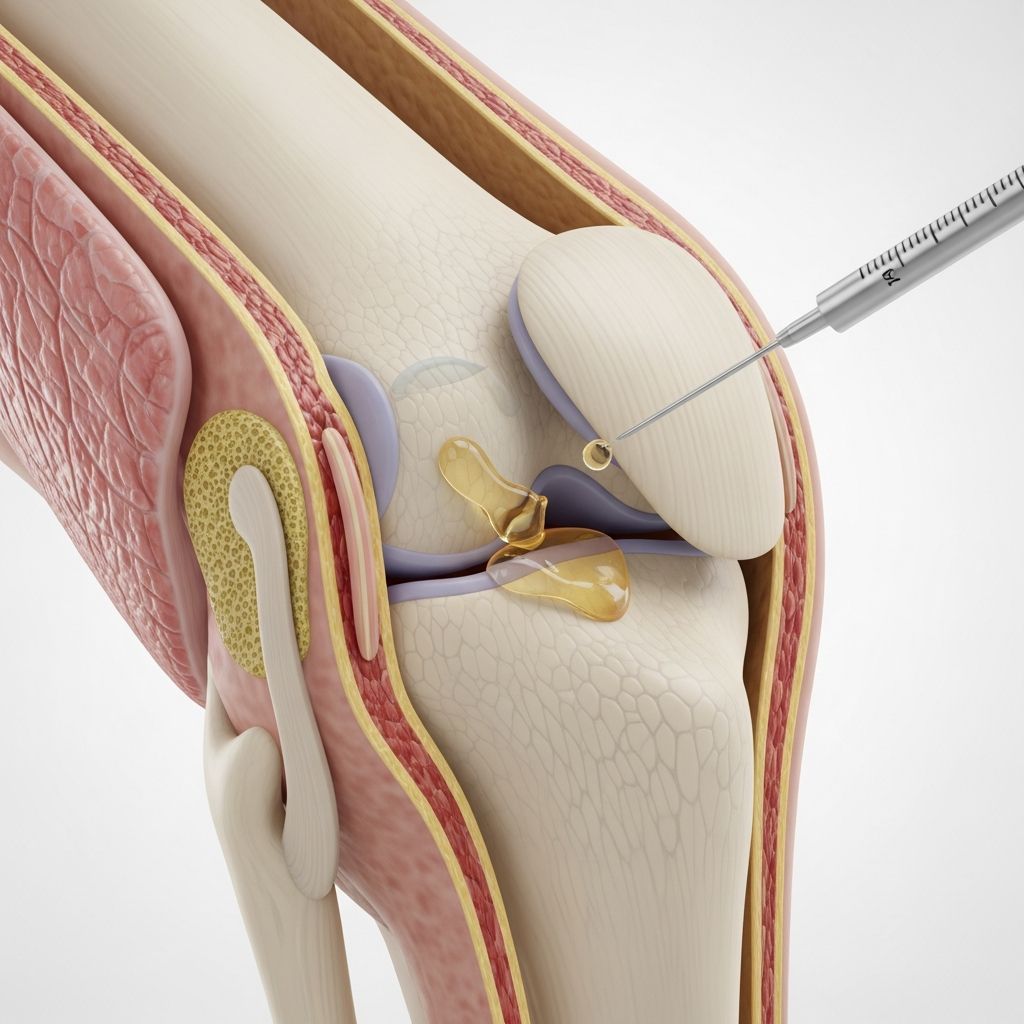
**Arthrocentesis**, or joint aspiration, involves withdrawing synovial fluid from an affected joint using a needle. This simple office procedure is generally painless, takes minutes, and allows immediate return home, though strenuous activity may be limited for 1-2 days.
How Arthrocentesis Is Performed
- The skin over the joint is cleaned with antiseptic and numbed with local anesthetic.
- A thin needle is inserted into the joint space, guided sometimes by ultrasound for precision.
- Synovial fluid (typically 1-5 mL or more if effusion exists) is aspirated into a syringe.
- The fluid is sent to a lab for analysis, including cell count, crystal examination, Gram stain, and culture.
Normal synovial fluid volume in a healthy knee is up to 3.5 mL; excess (>3.5 mL) signals abnormality, potentially exceeding 80 mL in severe cases.
What Arthrocentesis Reveals
Synovial fluid analysis differentiates arthritis types based on appearance, cell counts, and contents:
| Condition | Fluid Appearance | White Blood Cells (WBC/μL) | Key Findings |
|---|---|---|---|
| Normal/Osteoarthritis (OA) | Clear/straw-colored | <200 | Few WBCs, no crystals/infection |
| Inflammatory (RA, PsA) | Yellow, cloudy | 5,000–50,000 | High WBCs (mostly neutrophils), no crystals |
| Gout | Yellow, cloudy | >50,000 | Monosodium urate (MSU) needle-shaped crystals |
| Septic Arthritis | Purulent | >50,000 (>75% neutrophils) | Gram stain positive, culture grows bacteria |
| Pseudogout (CPPD) | Yellow | Variable, often >10,000 | Rhomoid calcium pyrophosphate crystals |
OA fluid shows low inflammation (few WBCs), while inflammatory arthritis like gout features tens of thousands of WBCs. Crystals do not exclude infection; both can coexist.
Arthrocentesis for Gout
Joint fluid testing is the gold standard for gout diagnosis, confirming MSU crystals definitively—unlike blood uric acid tests. It’s recommended when distinguishing gout from septic arthritis or pseudogout is challenging. Fluid from gouty joints is inflammatory, yellow, with high WBCs and negatively birefringent needle crystals under polarized microscopy.
Tests for Septic Arthritis
Septic arthritis, a medical emergency, requires prompt synovial fluid analysis before antibiotics to identify pathogens. Key tests include:
- Gram stain: Detects bacteria in 50-70% of cases; guides initial antibiotics.
- Culture: Gold standard, but prior antibiotics may yield false negatives. Inoculate into blood culture bottles to improve yield, especially for fastidious organisms or pediatrics.
- WBC count/differential: >50,000/μL with >75% neutrophils strongly suggests infection, though lower counts do not exclude it.
- Additional: PCR for rapid detection (results in 5 hours), lactate, or calprotectin (>50 mg/L).
Related Stories



Serum markers like ESR (>10-15 mm/hr) or CRP (>2 mg/dL) support suspicion but are not diagnostic. Synovial biopsy may follow if fluid is negative but suspicion high.
Other Joint Fluid Tests
- Reactive Arthritis: Fluid assesses inflammation; cultures from stool/urine detect triggers, though often negative by symptom onset. ESR/CRP measure systemic inflammation.
- Crystal Arthropathies (Pseudogout): Identifies CPPD crystals (positively birefringent rhomboids).
- Lyme Arthritis: Serum antibodies first (96% sensitive), then synovial PCR (nearly 100% sensitive).
Analysis also rules out bleeding disorders or non-arthritic causes.
Synovial Tissue Biopsy
When fluid analysis is inconclusive, a synovial biopsy examines joint lining tissue. Performed via arthroscopy or needle, it detects inflammation patterns, granulomas, or infections missed in fluid. Useful for tuberculosis, fungal arthritis, or confirming RA if fluid WBCs are borderline.
Procedure
- Local/regional anesthesia; arthroscopic for larger joints.
- Tissue sample processed for histology, culture, PCR.
- Risks minimal: bleeding, infection <1%.
Interpreting Results
Results must integrate with history, exam, imaging:
- Normal fluid: Suggests OA or mechanical issues.
- Inflammatory: RA, spondyloarthritis; biopsy if needed.
- Crystals: Gout/CPPD; treat accordingly.
- Infection: Urgent antibiotics/drainage.
Consult rheumatologist for complex cases. Repeat tests monitor treatment.
Frequently Asked Questions (FAQs)
Is arthrocentesis painful?
Minimal discomfort due to local anesthetic; most report pressure, not pain. Procedure lasts 5-10 minutes.
Can I drive after arthrocentesis?
Yes, immediately after, unless sedated. Avoid heavy lifting for 24-48 hours.
How long for results?
Cell count/crystals: same day. Cultures: 2-7 days; PCR faster.
Does insurance cover these tests?
Typically yes, as diagnostic for arthritis.
Are there risks?
Rare: infection (<0.01%), bleeding. Sterile technique minimizes.
Benefits Beyond Diagnosis
Aspiration relieves pain by decompressing effusions, aids steroid injection, and enables therapeutic lavage. Early accurate diagnosis prevents joint damage, especially in septic cases.
References
- Joint Fluid and Tissue Tests for Arthritis — Arthritis Foundation. 2024-06-27. https://www.arthritis.org/health-wellness/about-arthritis/understanding-arthritis/fluid-and-tissue-tests-for-arthritis
- Septic Arthritis: Diagnosis and Treatment — American Academy of Family Physicians (AAFP). 2021-12-00. https://www.aafp.org/pubs/afp/issues/2021/1200/p589.html
- Septic Arthritis | Choose the Right Test — ARUP Consult. Recent update (accessed 2026). https://arupconsult.com/content/septic-arthritis
- Reactive Arthritis: Diagnosis, Treatment, and Steps to Take — National Institute of Arthritis and Musculoskeletal and Skin Diseases (NIAMS). Recent. https://www.niams.nih.gov/health-topics/reactive-arthritis/diagnosis-treatment-and-steps-to-take
- Synovial Fluid Analysis — MedlinePlus (National Library of Medicine). Recent. https://medlineplus.gov/lab-tests/synovial-fluid-analysis/
- Lab Tests and Arthritis — University of Washington Orthopaedics. Recent. https://orthop.washington.edu/patient-care/articles/arthritis/lab-tests-and-arthritis.html
Similar Articles








Read full bio of Sneha Tete