Fluid Behind Retina Post-Surgery: Causes & Care
Discover effective strategies for managing fluid buildup behind the retina after eye surgery, including causes, symptoms, and proven treatments.
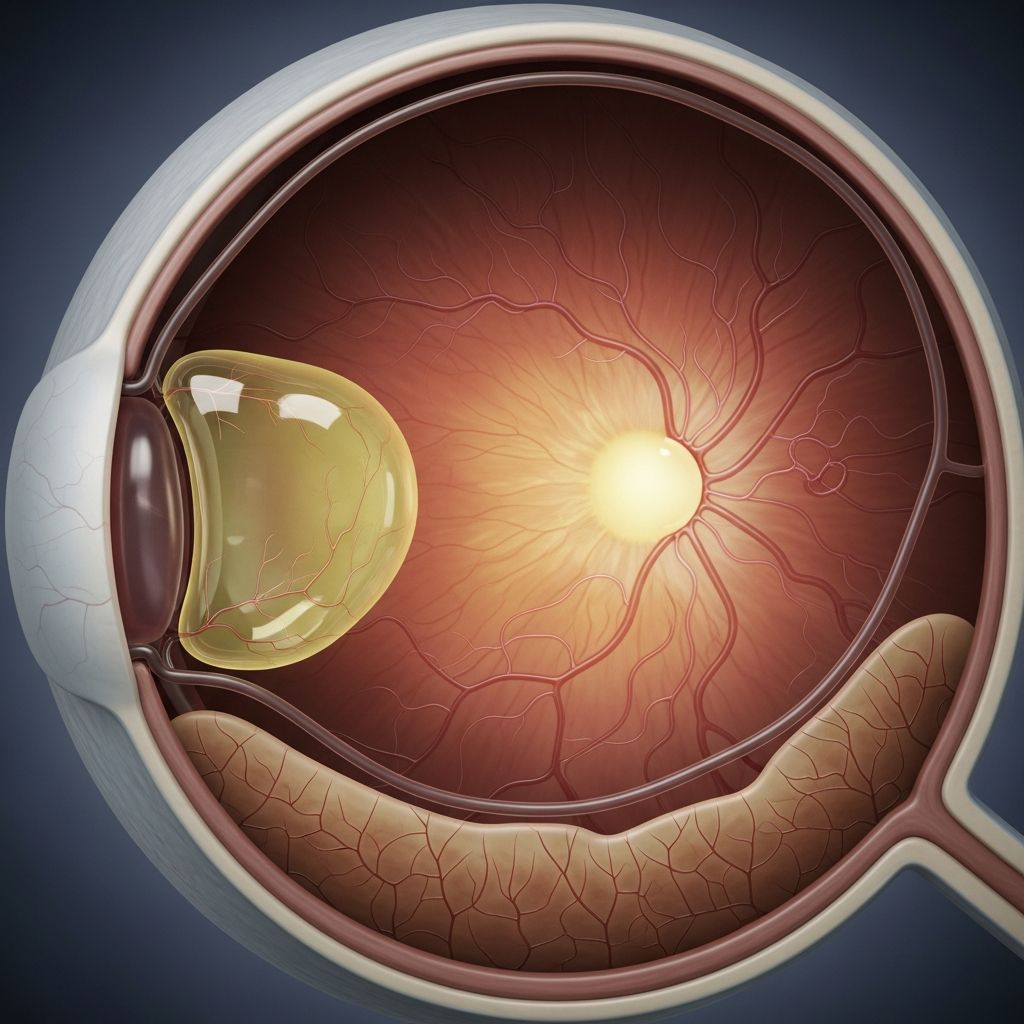
Fluid buildup behind the retina, known as subretinal fluid, can emerge as a complication after eye surgery, disrupting normal vision and requiring targeted intervention. This condition arises when liquid collects in the space between the retina and the retinal pigment epithelium (RPE), often due to leakage from damaged vessels or barriers.
Understanding Subretinal Fluid Dynamics
The retina, a thin layer of light-sensitive cells at the back of the eye, relies on a precise balance of fluids for optimal function. Subretinal fluid occurs when this balance is disturbed, typically post-surgery when surgical trauma or underlying diseases allow fluid to seep into inappropriate spaces. In postoperative scenarios, this fluid can stem from incomplete resolution of preoperative issues or new inflammatory responses.
Normally, the RPE acts as a pump, removing excess fluid from beneath the retina. When compromised—by surgery, inflammation, or vascular abnormalities—this mechanism fails, leading to detachment-like effects. Patients may notice blurred central vision, distorted lines, or dark spots, signaling the need for immediate specialist evaluation.
Primary Causes of Postoperative Subretinal Fluid
Several conditions contribute to fluid accumulation after retinal or related surgeries. Identifying the root cause is crucial for effective management.
- Neovascular Age-Related Macular Degeneration (Wet AMD): Common in patients over 50, wet AMD involves fragile new blood vessels leaking fluid under the retina. Post-surgery, persistent or recurrent leakage exacerbates this, making it a leading cause of vision impairment.
- Central Serous Chorioretinopathy (CSC): This affects younger adults (20-50 years), where stress or corticosteroids cause RPE defects, allowing choroidal fluid to enter subretinal spaces. Surgery can trigger or worsen CSC-like episodes.
- Inflammatory Disorders: Conditions like posterior uveitis or Vogt-Koyanagi-Harada disease inflame ocular tissues, impairing RPE function post-procedure.
- Structural Anomalies: Optic disc pits or macular holes, if not fully addressed surgically, permit ongoing fluid ingress.
- Other Factors: Choroidal tumors, infections (e.g., toxoplasmosis), or polypoidal choroidal vasculopathy can mimic or compound surgical complications.
Symptoms and Progression After Surgery
Postoperative symptoms often develop gradually but can progress rapidly. Initial signs include mild central blur, metamorphopsia (wavy vision), or reduced contrast sensitivity. Untreated, fluid accumulation lifts the retina, forming blisters that impair photoreceptor function and threaten permanent loss.
| Symptom | Early Stage | Advanced Stage |
|---|---|---|
| Visual Acuity | Slight blurring | Central scotoma |
| Distortion | Wavy lines | Severe warping |
| Color Perception | Dulled hues | Complete fade |
Progression varies: CSC may self-resolve in months, while wet AMD demands urgent action to avert irreversible damage.
Diagnostic Approaches for Accurate Assessment
Diagnosis hinges on advanced imaging unavailable in routine exams. Optical coherence tomography (OCT) is gold-standard, visualizing fluid pockets with micron precision. Fluorescein angiography identifies leakage points, while fundus autofluorescence highlights RPE health.
- OCT: Quantifies fluid volume and monitors treatment response.
- Angiography: Maps vascular abnormalities.
- Ultrasonography: Detects tumors or detachments.
Post-surgery, serial OCT scans track resolution, guiding adjustments.
Treatment Strategies Tailored to Cause
Treatments target the fluid source, enabling natural reabsorption. Observation suits self-limiting cases like acute CSC.
Anti-VEGF Injections for Vascular Leakage
For wet AMD or neovascularization, intravitreal anti-VEGF agents (e.g., aflibercept, ranibizumab) inhibit vessel growth. Administered every 4-12 weeks based on OCT, these restore retinal apposition in most cases.
Laser and Photodynamic Therapies
Focal laser seals peripheral leaks; photodynamic therapy (PDT) with verteporfin targets choroidal hyperpermeability in chronic CSC or PCV.
Surgical Interventions
Related Stories



Vitrectomy addresses structural defects like macular holes, often with gas tamponade to press retina flat.
Anti-Inflammatory Regimens
Corticosteroids or immunosuppressants control uveitis-driven fluid, though caution is needed post-surgery to avoid exacerbating CSC.
Management of Fluid in Wet AMD Specifically
In neovascular AMD, subretinal fluid signals active disease. While intraretinal fluid correlates strongly with vision loss, mild subretinal fluid’s impact is debated—some studies suggest it may stabilize rather than harm. Treatment prioritizes drying intraretinal fluid first.
Dry AMD (85-90% of cases) progresses slowly via drusen; conversion to wet form with fluid heralds aggressive decline.
Lifestyle Modifications and Prevention
Supportive measures enhance outcomes: stress reduction for CSC, smoking cessation for AMD, blood pressure control. Discontinue corticosteroids if feasible.
- Avoid high-stress environments.
- Maintain healthy weight and diet rich in leafy greens.
- Regular retinal screenings post-surgery.
Prognosis and Long-Term Monitoring
Outcomes depend on cause and timeliness. CSC resolves in 90% within 6 months; wet AMD stabilizes vision with consistent anti-VEGF. Lifelong monitoring prevents recurrences.
Frequently Asked Questions
Does subretinal fluid always require treatment after surgery?
Not necessarily; acute CSC often resolves spontaneously, but AMD-related fluid demands intervention to preserve sight.
How do I differentiate subretinal fluid from other postoperative issues?
OCT distinguishes it from macular edema or hemorrhage; specialist review is essential.
Are anti-VEGF injections painful?
Minimal discomfort; topical anesthesia ensures tolerability, with effects lasting months.
Can lifestyle changes prevent recurrence?
Yes, managing stress and avoiding steroids reduces CSC risk; AMD benefits from smoking cessation.
What if fluid persists despite treatment?
Switch therapies (e.g., PDT) or investigate rare causes like tumors via advanced imaging.
References
- Subretinal Fluid: Causes, Diagnosis and Treatment — Greenwich Eye. 2023. https://greenwicheye.sv-builder.com/article/subretinal-fluid/
- Understanding Subretinal Fluid in AMD and Its Importance — Specialty Vision. 2024. https://specialty.vision/article/understanding-subretinal-fluid-in-amd-and-its-importance/
- To Treat or Not to Treat? Resolving the Question of… — PubMed (Peer-reviewed). 2025-07-15. https://pubmed.ncbi.nlm.nih.gov/39904844/
- Stress and the Retina: Understanding Central Serous Retinopathy — Palmetto Retina. 2023. https://www.palmettoretina.com/blog/stress-and-the-retina-understanding-central-serous-retinopathy
- Central Serous Retinopathy: What It Is, Symptoms &… — Cleveland Clinic. 2024. https://my.clevelandclinic.org/health/diseases/24335-central-serous-retinopathy
Similar Articles








Read full bio of Sneha Tete