Fluorescein Angiography: 5-Step Clinical Guide 2025
Comprehensive guide to fluorescein angiography: diagnostic imaging for retinal and choroidal blood vessels, procedure details, and clinical applications.
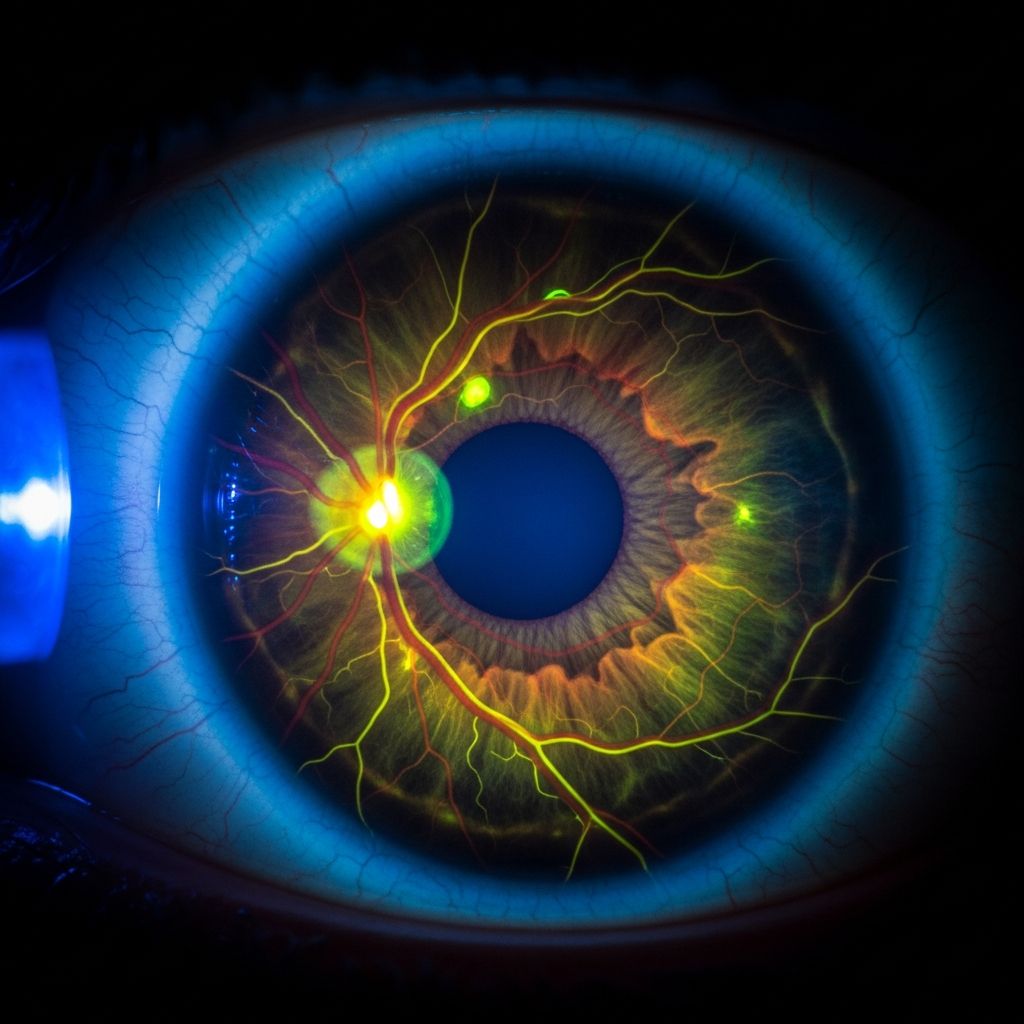
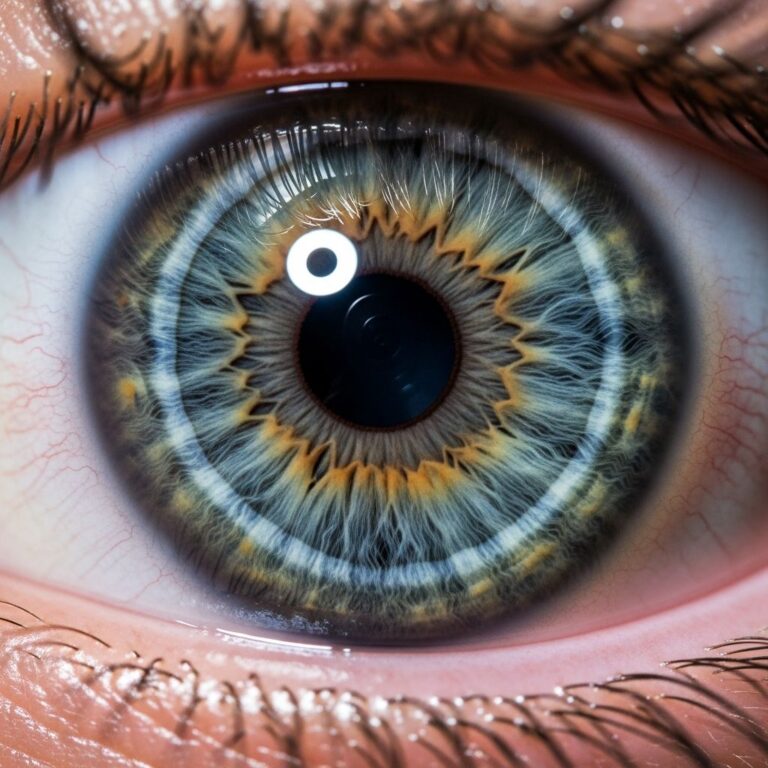
Fluorescein angiography represents a cornerstone in ophthalmic diagnostics, offering detailed visualization of the retinal and choroidal vascular systems through the use of a fluorescent dye.
Understanding the Fundamentals of Retinal Vascular Imaging
The retina, a thin layer at the back of the eye, relies on a complex network of blood vessels for oxygen and nutrient delivery. Disruptions in this network can lead to vision loss from conditions such as diabetic retinopathy, age-related macular degeneration, or retinal vein occlusions. Traditional fundus photography provides static images, but fluorescein angiography adds dynamic insight by tracking dye flow through these vessels, revealing leaks, blockages, or abnormal growths.
This technique employs sodium fluorescein, a dye that glows under specific blue light wavelengths after intravenous injection. The glow, or fluorescence, highlights vascular patterns invisible to the naked eye, enabling precise identification of pathology.
Specialized Equipment and Technological Foundations
Performing fluorescein angiography demands a fundus camera with precise optical filters. An excitation filter transmits blue light (465-490 nm) to activate the dye, while a barrier filter (520-530 nm) captures only the emitted yellow-green fluorescence, excluding non-fluorescent reflections.
Modern systems integrate digital imaging for high-resolution capture, often supplemented by confocal scanning laser ophthalmoscopy for enhanced clarity. These advancements reduce motion artifacts and improve contrast, particularly in peripheral retina views.
- Excitation filter: Blue light source for dye activation.
- Barrier filter: Green light selector for fluorescence isolation.
- Digital recording: Real-time image storage and analysis.
Patient Preparation and Pre-Procedure Protocols
Preparation begins with a medical history review to identify allergies, particularly to iodine or fluorescein, given rare but serious reaction risks. Patients receive topical eye drops to dilate pupils, ensuring optimal fundus access. Consent forms detail potential side effects like temporary yellow skin tinting or urine discoloration.
A comfortable seating arrangement positions the patient’s chin on the rest and arm for venous access. Initial color and red-free fundus photos establish baselines before dye injection.
Detailed Step-by-Step Procedure Execution
The process unfolds rapidly post-injection. A healthcare professional inserts an intravenous cannula, typically in the antecubital vein, confirming placement with a blood draw. The ophthalmologist or technician administers 5-10 mL of 10% fluorescein sodium, starting a timer concurrently.
Imaging commences immediately: early phases capture choroidal filling within 10-15 seconds, followed by arterial, venous, and late recirculation stages over 5-10 minutes. Stereo pairs and wide-field views may target specific lesions.
- Establish IV access and baseline photos.
- Inject dye swiftly to optimize early-phase contrast.
- Acquire rapid-sequence images (1-2 seconds apart initially).
- Switch eyes for bilateral evaluation.
- Capture late-phase images after 3-5 minutes.
Sequential Phases of Dye Circulation
Dye progression defines distinct angiographic phases, each revealing unique vascular dynamics.
| Phase | Timing (Post-Injection) | Key Features |
|---|---|---|
| Choroidal | 8-15 seconds | Patchy hyperfluorescence from lobular filling; optic disc staining. |
| Arterial | 1-2 seconds after choroidal | Retinal arteries fill uniformly. |
| Arteriovenous | Follows arterial | Laminar flow in veins; perifoveal capillary arcade visible. |
| Venous (Early/Mid/Late) | Progressively | Veins darken; peak macular definition. |
| Late (Recirculation) | 5-10 minutes | Background fluorescence; leakages prominent. |
Normal findings include symmetric filling without leaks or non-perfusion. Variations like cilioretinal artery presence affect timing.
Interpreting Normal Versus Pathological Patterns
In healthy eyes, the angiogram shows orderly progression: choroidal flush without gaps, clear capillary networks, and no staining. Pathologies disrupt this harmony.
Related Stories



- Hyperfluorescence: Leakage (e.g., neovascular AMD), pooling (exudates), or staining (drusen).
- Hypofluorescence: Blockage (hemorrhage), non-perfusion (ischemia), or filling defects (tumors).
- Window defects: RPE atrophy allowing choroidal glow.
Stereo imaging enhances depth perception for conditions like choroidal neovascularization.
Clinical Applications Across Ocular Disorders
Fluorescein angiography informs diagnosis and management in diverse retinopathies.
Diabetic Retinopathy: Identifies microaneurysms, neovascularization, and macular ischemia, guiding laser therapy.
Age-Related Macular Degeneration (AMD): Differentiates dry from wet forms by detecting CNV leakage; monitors anti-VEGF response.
Retinal Vascular Occlusions: Maps capillary dropout and ischemia extent for anti-VEGF candidacy.
Inflammatory Conditions: Reveals vasculitis leakage or uveitis activity.
Additional uses include optic neuropathies, tumors, and post-surgical evaluations.
Potential Risks, Side Effects, and Mitigation Strategies
Though safe, complications occur in <1% of cases. Common: nausea (10-20%), yellow discoloration (lasting 24-48 hours).
Rare serious events: anaphylaxis (0.01-0.1%), urticaria, or seizures in epileptics. Contraindications include pregnancy (unless critical) and severe allergies. Pre-medication with antihistamines may be considered for at-risk patients.
Post-procedure: Avoid contact lenses (dye residue), fluorescent fabrics, and driving until vision normalizes. Indoor lighting sensitivity persists briefly.
Advances and Complementary Imaging Modalities
While foundational, fluorescein angiography pairs with optical coherence tomography angiography (OCTA), which non-invasively maps flow without dye. Ultra-widefield FA extends peripheral views.
Oral fluorescein offers a less invasive alternative for select cases, though slower onset limits utility.
Patient Experience: What to Anticipate
Patients report a brief burning sensation at injection, followed by orange skin tint and sweet urine taste. Vision remains unaffected long-term, but photosensitivity warrants sunglasses.
Results discussion occurs post-analysis, often same-day, influencing treatment plans.
Frequently Asked Questions (FAQs)
Is fluorescein angiography painful?
Minimal discomfort from IV insertion and brief dye sting; no eye pain.
How long does the test take?
30-45 minutes total, with active imaging under 10 minutes.
Can I drive after the procedure?
No, due to dilation; arrange transport.
Is it safe during pregnancy?
Avoid unless essential; consult physician.
What if I’m allergic to dye?
Inform provider; alternatives like OCTA may suffice.
Role in Modern Ophthalmic Practice
Despite non-invasive alternatives, fluorescein angiography endures for its gold-standard vascular detail, especially in complex cases. Interprofessional teams—ophthalmologists, technicians, nurses—ensure safety and accuracy.
Training emphasizes phase recognition and complication vigilance, underscoring its teaching value.
References
- Fluorescein Angiography – EyeWiki — American Academy of Ophthalmology. 2023-10-15. https://eyewiki.org/Fluorescein_Angiography
- Fluorescein Angiography – StatPearls — NCBI Bookshelf, NIH. 2023-08-08. https://www.ncbi.nlm.nih.gov/books/NBK576378/
- Fluorescein Angiography Patient Information — Manchester University NHS Foundation Trust. 2018-04. https://mft.nhs.uk/app/uploads/sites/2/2018/04/REH-049.pdf
- Fluorescein Angiography: What It Is and What To Expect — Cleveland Clinic. 2023-05-12. https://my.clevelandclinic.org/health/diagnostics/24618-fluorescein-angiography
- A Closer Look at Fluorescein Angiography — Retina Associates of Western New York. 2022-11-20. https://retinaassociatesofwny.com/a-closer-look-at-fluorescein-angiography/
Similar Articles








Read full bio of medha deb