Fluorouracil Cream: Treatment Guide for Skin Lesions
Understand how topical fluorouracil targets precancerous skin lesions and skin cancer effectively.
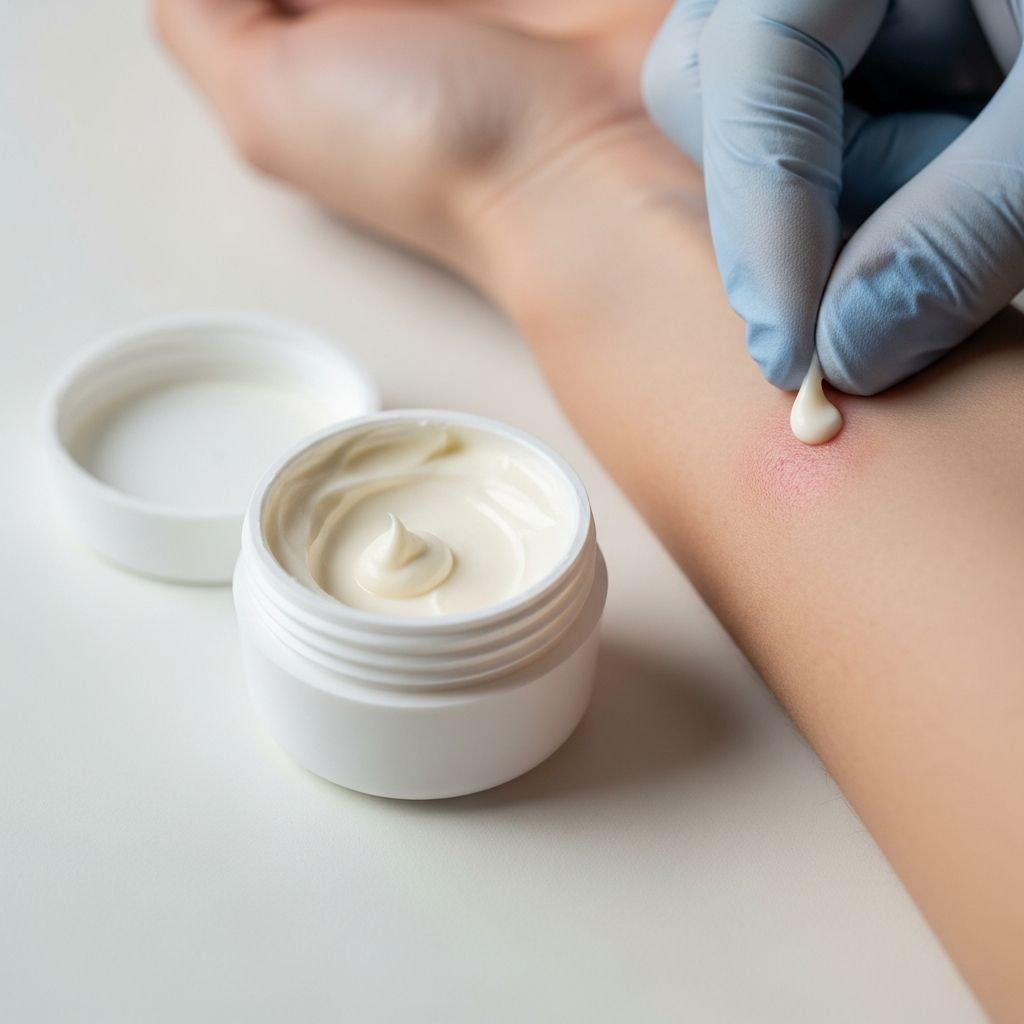
Topical fluorouracil, commonly known as 5-FU cream, represents one of the most effective pharmaceutical interventions for treating precancerous and early-stage cancerous skin lesions. This topical medication works by targeting and destroying abnormal cells on the skin’s surface, offering patients a non-invasive alternative to surgical procedures. Healthcare providers worldwide prescribe this treatment for conditions ranging from sun-damaged skin patches to superficial skin cancers, making it an essential tool in dermatological practice.
Understanding the Mechanism of Action
Fluorouracil operates as an antimetabolite, a class of medications designed to interfere with cellular growth and division processes. When applied to the skin, the active compound penetrates affected tissue and disrupts the metabolic pathways necessary for abnormal cell reproduction. This mechanism proves particularly effective against rapidly dividing cells characteristic of precancerous lesions and early-stage malignancies.
The drug’s action initiates an inflammatory response within the treated area, triggering the immune system to recognize and eliminate compromised cells. This process, while sometimes uncomfortable during treatment, indicates that the medication is functioning as intended. The inflammatory cascade leads to progressive destruction of abnormal tissue, ultimately clearing lesions and promoting regeneration of healthy skin.
Primary Clinical Applications
Actinic Keratosis Treatment
Actinic keratosis (AK), also referred to as solar keratosis, represents the most common indication for topical fluorouracil therapy. This condition develops from cumulative ultraviolet radiation exposure over many years, creating scaly, crusted lesions typically appearing on sun-exposed areas such as the face, ears, scalp, forearms, and hands. Actinic keratosis occupies a critical position in the disease continuum: these lesions represent early photodamage that, if untreated, may progress to squamous cell carcinoma.
Research demonstrates that topical 5-fluorouracil achieves cure rates exceeding 90 percent for widespread multiple actinic keratosis lesions. This exceptional efficacy rate makes it a first-line treatment option for patients with multiple lesions across various body regions. The treatment eliminates not only visible lesions but also subclinical lesions—abnormal cells not yet visible to the naked eye—potentially preventing future disease progression.
Basal Cell Carcinoma Management
For superficial basal cell carcinoma (BCC), the most common type of skin cancer, fluorouracil cream offers an effective therapeutic option when conventional surgical approaches prove impractical. Patients with multiple lesions or lesions in anatomically challenging locations frequently benefit from this topical approach. The 5% strength formulation proves particularly useful for these malignancies, providing direct destruction of cancer cells without requiring invasive procedures.
The advantage of topical fluorouracil for basal cell carcinoma lies in its ability to treat large surface areas simultaneously. Patients who might otherwise require multiple surgical interventions can consolidate treatment into a single topical regimen, reducing overall healthcare burden and recovery time.
Dosage Considerations and Application Protocols
Standard Treatment Schedules
Healthcare providers typically recommend different application frequencies depending on the condition being treated and the formulation strength selected. The standard dosing protocol for actinic keratosis involves applying the cream twice daily to affected areas for two to four weeks. This duration allows sufficient time for the medication to penetrate abnormal tissue and induce complete lesion clearance.
Related Stories



For superficial basal cell carcinoma, extended treatment duration of three to six weeks is generally necessary due to the deeper tissue involvement characteristic of cancerous lesions. The extended timeline ensures adequate destruction of malignant cells throughout the affected area.
Available Formulation Strengths
Fluorouracil cream exists in multiple concentrations, with 0.5% and 5% formulations being most commonly prescribed. The lower-concentration 0.5% formulation, often marketed under the brand name Carac, features a microsponge delivery system that releases medication gradually throughout the day. This formulation may be applied once daily, potentially improving treatment adherence and reducing systemic absorption compared to higher-strength products.
The 5% formulation (brand names including Efudex and Fluoroplex) delivers higher drug concentration directly to affected tissue, making it particularly suitable for treatment of superficial basal cell carcinoma and for patients requiring rapid lesion clearance. Both formulations demonstrate clinical efficacy; the choice between them depends on individual patient factors, lesion severity, and physician preference.
Effectiveness and Clinical Outcomes
Clinical trial data provides compelling evidence regarding fluorouracil’s therapeutic effectiveness. In large-scale randomized controlled trials involving hundreds of patients with actinic keratosis, even one week of once-daily 0.5% fluorouracil cream application produced significant reductions in lesion numbers. Efficacy continued to increase with extended treatment duration, with maximum benefit typically achieved by four weeks of therapy.
Long-term follow-up studies demonstrate sustained benefits from fluorouracil treatment. When combined with complementary approaches such as cryotherapy (freezing treatment), fluorouracil shows superior outcomes compared to single-modality therapy. This synergistic approach addresses both visible and subclinical lesions while reducing overall treatment duration, thereby improving patient compliance and satisfaction.
The medication’s ability to target multiple lesions simultaneously across different body areas represents a significant advantage over localized surgical approaches. Patients with extensive sun damage affecting large facial or bodily regions achieve comprehensive treatment through a single topical regimen rather than undergoing numerous surgical procedures.
Understanding Side Effects and Adverse Reactions
Common Dermatological Responses
During fluorouracil treatment, most patients experience localized skin reactions reflecting the medication’s mechanism of action. Facial redness and erythema occur in approximately 95 percent of treated patients, representing the expected inflammatory response. Swelling, skin irritation, and crusting frequently accompany treatment, appearing within the first week and intensifying during the second and third weeks as abnormal cells are destroyed.
These reactions, while sometimes alarming in appearance, generally indicate that therapy is functioning properly. The visible inflammatory response correlates directly with lesion destruction and healing. In most cases, these adverse effects are categorized as mild to moderate in severity and resolve completely following treatment completion.
Duration and Management of Reactions
Skin reactions peak during the middle phases of treatment and gradually diminish in the weeks following completion. Some patients experience temporary hyperpigmentation or hypopigmentation (areas of darker or lighter skin) as new tissue regenerates and heals. These pigmentation changes typically normalize within several months as the skin continues its natural healing process.
Physicians emphasize that patients should expect a treatment response including inflammation, which differs fundamentally from an allergic reaction or dangerous adverse effect. The inflammatory cascade is therapeutically necessary for destroying abnormal cells and promoting healthy regeneration. However, severe reactions affecting extensive areas or causing significant functional impairment should be reported to the prescribing physician immediately.
Patient Preparation and Application Instructions
Pre-Treatment Considerations
Before beginning fluorouracil therapy, patients should thoroughly clean the treatment area with gentle soap and water. Dermatologists recommend washing hands both before applying the medication and after completing application to prevent inadvertent transfer to non-target areas. The skin should be completely dry before application, as moisture may interfere with absorption and increase irritation.
Patients should avoid applying other topical medications, cosmetics, or sunscreen directly over fluorouracil treatment areas during active therapy. These products may interfere with medication absorption or increase irritation. However, sunscreen remains essential on untreated skin areas, as sun exposure during treatment may worsen inflammatory responses and complicate healing.
Application Technique and Frequency
Following physician-specific instructions regarding application frequency proves critical for treatment success. The standard approach involves applying a thin layer of cream directly to affected lesions, spreading it gently across the entire area requiring treatment. Patients should use enough medication to cover lesions adequately without excessive application, which increases irritation without improving efficacy.
Consistent adherence to the prescribed schedule maximizes therapeutic outcomes. Missing applications or applying medication irregularly may prolong treatment duration or reduce overall effectiveness. Many patients find establishing a consistent daily routine—such as applying medication at the same time each morning and evening—helps ensure compliance throughout the treatment course.
Special Populations and Treatment Modifications
Elderly Patients and Treatment Tolerance
Elderly populations, who experience the highest prevalence of actinic keratosis and other sun-induced skin damage, represent a significant treatment demographic. The once-daily 0.5% formulation proves particularly valuable for this age group, as reduced application frequency may improve treatment adherence. Additionally, the lower concentration results in decreased systemic fluorouracil absorption, potentially minimizing systemic adverse effects while maintaining local therapeutic efficacy.
The flexibility of treatment duration, permitting therapy from one to four weeks depending on patient tolerance and lesion response, enables individualized approaches accommodating varying tolerance levels. Some elderly patients complete full courses comfortably, while others may require extended treatment periods with reduced application frequency to manage inflammatory responses.
Combination Therapy Approaches
Strategic combination of fluorouracil with complementary treatments represents an evolving clinical approach. Cryotherapy application to remaining lesions following short-duration fluorouracil treatment (as brief as one week) demonstrates superiority to either modality alone. This sequential approach reduces total treatment duration while achieving higher clearance rates and addressing subclinical lesions that cryotherapy alone might miss.
Frequently Asked Questions
Will my skin appear worse during treatment?
Yes, expected inflammatory responses typically make lesions appear more prominent and irritated during the second and third weeks of treatment. This represents therapeutic progress rather than treatment failure. Inflammation indicates the medication is effectively targeting abnormal cells.
How long until results become visible?
Some patients observe improvement within one week of therapy initiation. However, maximum benefit typically requires two to four weeks of consistent application. Healing continues for several weeks following treatment completion as the skin regenerates healthy tissue.
Can treatment recurrence occur?
While fluorouracil treatment provides excellent initial clearance rates, continued sun exposure may lead to development of new actinic keratoses over time. Rigorous photoprotection following treatment significantly reduces recurrence risk. Some patients may require periodic retreatment if new lesions develop years later.
Are there restrictions during treatment?
Sun exposure should be minimized during active treatment, as ultraviolet radiation may worsen inflammatory responses and compromise healing. Swimming and excessive sweating should be avoided if possible, as moisture may interfere with medication absorption. Most other daily activities can continue normally.
Important Precautions and Contraindications
Pregnant individuals should avoid fluorouracil cream, as the drug may cause fetal harm through systemic absorption. Nursing mothers should discuss treatment options with their healthcare provider, as medication transfer through breast milk remains a theoretical concern. Individuals with known hypersensitivity to fluorouracil or any cream component should not use this medication.
Patients taking systemic medications should inform their dermatologist, particularly those on immunosuppressive therapy or anticoagulants. While topical fluorouracil generally produces minimal systemic absorption, individual variations exist, and drug interactions remain theoretically possible with certain medications.
References
- Fluorouracil: Uses, Interactions, Mechanism of Action — DrugBank. https://go.drugbank.com/drugs/DB00544
- Fluorouracil Topical: MedlinePlus Drug Information — National Library of Medicine. https://medlineplus.gov/druginfo/meds/a605010.html
- Considerations for Use of Fluorouracil Cream 0.5% for the Treatment of Actinic Keratosis — U.S. National Center for Biotechnology Information (PMC). https://pmc.ncbi.nlm.nih.gov/articles/PMC2989823/
- Fluorouracil (topical route) – Side effects & dosage — Mayo Clinic. https://www.mayoclinic.org/drugs-supplements/fluorouracil-topical-route/description/drg-20063877
- Fluorouracil (5-FU): How to Apply & Side Effects — Cleveland Clinic. https://my.clevelandclinic.org/health/drugs/19329-fluorouracil-5-fu-skin-cream-or-solution
Similar Articles








Read full bio of Sneha Tete