Focal Seizures: Types, Symptoms, and Treatment Options
Complete guide to focal seizures: Understanding symptoms, diagnosis, and effective treatment strategies.
Understanding Focal Seizures
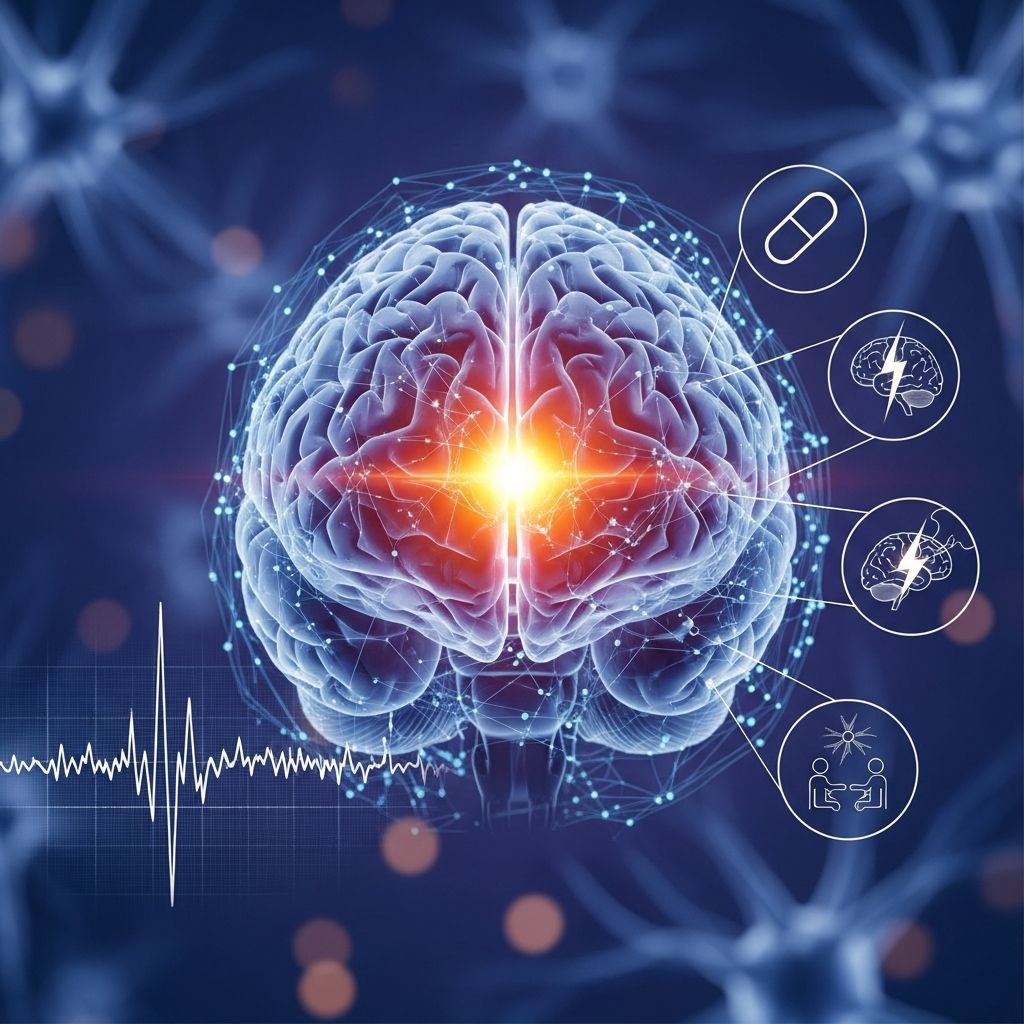
Focal seizures, also known as focal onset seizures, are seizures that begin in a specific region or area of the brain rather than affecting the entire brain at once. Unlike generalized seizures, which involve abnormal electrical activity throughout the brain simultaneously, focal seizures originate from a localized brain region and may remain confined to that area or spread to other regions over time. These seizures typically last less than two minutes and are among the most common types of seizures experienced by individuals with epilepsy.
The terminology used to describe these seizures has evolved over time. Historically, healthcare providers referred to focal seizures as “partial seizures.” However, in April 2017, the International League Against Epilepsy (ILAE) implemented new standardized classifications for seizure types, changing the terminology from partial seizures to focal onset seizures to provide more precise medical descriptions.
Types of Focal Seizures
Medical professionals recognize three distinct types of focal seizures, each with different characteristics and symptoms. Understanding which type of focal seizure a person experiences is crucial for healthcare providers to develop an effective and personalized treatment plan. The classification helps guide medication selection, potential surgical interventions, and overall management strategies.
Focal Onset Aware Seizures
Focal onset aware seizures, previously referred to as simple partial seizures or focal seizures without loss of consciousness, represent seizures during which an individual maintains full consciousness and awareness throughout the event. During these seizures, the person remains alert and cognizant of their surroundings and the seizure activity occurring. However, depending on which specific area of the brain is affected by the abnormal electrical activity, individuals may experience noticeable changes in their emotions, body movements, sensation, or vision.
The symptoms experienced during focal onset aware seizures vary based on the brain region involved. Some individuals may experience involuntary jerking movements in a specific limb, unusual sensations such as tingling or numbness, visual disturbances, or emotional changes ranging from sudden fear to unexplained joy or anger. Because the person remains aware during the seizure, they can often describe their experience to healthcare providers, which provides valuable diagnostic information.
Focal Onset Impaired Awareness Seizures
Focal onset impaired awareness seizures, formerly known as complex partial seizures or focal dyscognitive seizures, occur when an individual experiences a partial or complete loss of consciousness or a significant alteration in their level of consciousness during the seizure event. During this type of seizure, the person will have no memory of the seizure and may not respond to their environment or other people attempting to communicate with them.
One significant challenge with focal onset impaired awareness seizures is that observers may misinterpret the person’s behavior during the seizure as intentional inattention, rudeness, or deliberate ignoring of others. In reality, the individual is experiencing altered consciousness and is not capable of responding appropriately. Additionally, individuals having this type of seizure may exhibit automatisms—repetitive, purposeless movements such as lip smacking, chewing motions, or hand movements that can further contribute to misunderstandings about their actual medical condition.
Focal Onset Seizures with Secondary Generalization
Focal onset seizures with secondary generalization, also called secondarily generalized seizures, begin in a specific localized region of the brain but then spread progressively to involve other brain regions and eventually both hemispheres of the brain. Healthcare providers sometimes refer to the initial focal seizure component as an aura or warning sign that precedes the more widespread generalized seizure.
Related Stories



As the seizure activity spreads throughout the brain, the symptoms intensify and expand. The person may initially experience mild symptoms localized to one area of the body, but as the seizure generalizes, they typically develop more severe symptoms including convulsions, muscle spasms, loss of consciousness, and changes in muscle tone. These seizures can be particularly challenging to manage and often require more aggressive treatment approaches.
Focal Seizure Symptoms by Brain Location
The specific symptoms an individual experiences during a focal seizure depend entirely on which brain region is affected by the abnormal electrical activity. Different brain lobes and regions control distinct functions, so seizures originating in particular areas produce characteristic symptom patterns. Understanding these location-specific symptoms helps healthcare providers identify where seizures originate, which guides diagnostic and treatment decisions.
Temporal Lobe Seizures
When abnormal electrical activity affects the temporal lobe during a focal seizure, individuals typically experience distinctive symptoms including repetitive mouth and throat movements. Common manifestations include lip smacking, repeated involuntary swallowing, and chewing motions. Additionally, people may experience emotional symptoms such as sudden inexplicable fear or fright. Some individuals report experiencing déjà vu—the uncanny sensation of feeling that current events have happened before—during temporal lobe seizures. These symptoms reflect the temporal lobe’s role in processing emotions, memory, and sensory information.
Frontal Lobe Seizures
Seizures originating in the frontal lobe produce symptoms that reflect this brain region’s primary functions in motor control, speech, and movement coordination. Individuals experiencing frontal lobe focal seizures may develop difficulty speaking or experience speech disturbances during the event. Eye movements may become abnormal, with rapid side-to-side eye movements occurring involuntarily. Motor symptoms commonly include unusual stretching or extension of the arms into abnormal positions, as well as repetitive rocking motions of the body. Some individuals may experience behavioral changes or personality alterations during frontal lobe seizures.
Parietal Lobe Seizures
The parietal lobe processes sensory information and spatial awareness, so seizures in this region produce correspondingly distinctive sensory and perceptual symptoms. Individuals may experience numbness, tingling sensations, or even pain in various body locations, typically on one side of the body opposite to the hemisphere where the seizure originates. Dizziness and vertigo are common experiences during parietal lobe seizures. Vision changes and visual disturbances may occur, and some individuals report unusual perceptual disturbances such as a feeling that their body does not belong to them or that parts of their body seem foreign or distorted.
How Doctors Diagnose Focal Seizures
Accurate diagnosis of focal seizures involves a comprehensive evaluation process that combines patient history, clinical examination, and specialized diagnostic testing. Because focal seizures can produce symptoms that overlap with various other medical and neurological conditions, careful differential diagnosis is essential.
Initial Clinical Assessment
The diagnostic process typically begins with a thorough medical history and physical examination. Healthcare providers ask detailed questions about the seizure events, including when they occur, what symptoms the person experiences, how long episodes last, and any potential triggers or patterns. The physician will examine the patient carefully, and in some cases, the clinical history and description of symptoms may be sufficient to make a diagnosis.
However, because focal onset seizures can produce symptoms remarkably similar to those of other conditions, additional testing is usually necessary to confirm the diagnosis and rule out alternative explanations. Conditions that can mimic focal seizure symptoms include psychiatric illnesses such as panic attacks or dissociative disorders, migraine headaches, pinched nerves causing radiating pain and numbness, and transient ischemic attacks (TIAs), which are warning signs of stroke. The physician must systematically evaluate and exclude these alternative diagnoses while determining whether the symptoms indeed indicate focal seizures.
Electroencephalography (EEG)
Electroencephalography, commonly referred to as EEG, represents one of the most important diagnostic tools for confirming seizure disorders. During an EEG test, healthcare providers place small electrodes or sticky patches across the scalp to record the brain’s electrical activity. The EEG machine displays real-time brain wave patterns, allowing physicians to identify abnormal electrical activity characteristic of seizures. When seizures occur, the EEG shows distinctive burst patterns of abnormal activity that differ from the normal brain wave patterns seen between seizures. Recording both normal brain activity and actual seizure activity provides definitive diagnostic evidence.
Neuroimaging Studies
Additional imaging tests such as magnetic resonance imaging (MRI) or computed tomography (CT) scans may be used to provide further diagnostic information and identify underlying structural causes of seizures. These imaging studies can reveal brain abnormalities such as focal cortical dysplasia (areas of abnormal brain development), brain tumors, scarring from previous injuries, vascular malformations, or other structural lesions that may be triggering seizure activity. Identifying an underlying cause can significantly influence treatment decisions and prognosis.
Treatment Options for Focal Seizures
Treatment approaches for focal seizures vary depending on seizure frequency, severity, response to medications, and other individual factors. The primary goals of seizure treatment are to eliminate or significantly reduce seizure frequency, minimize medication side effects, and maintain quality of life.
Immediate Seizure Management
When focal seizures persist for extended periods—lasting minutes, hours, or in rare cases days—they become progressively more difficult to stop. Prolonged seizures require urgent medical intervention. In emergency situations, intravenous (IV) medications are administered to rapidly terminate seizure activity and prevent status epilepticus, a dangerous condition involving continuous or rapidly recurring seizures.
Long-Term Seizure Prevention
After addressing immediate seizure activity, treatment focuses on preventing future seizures. Antiepileptic medications represent the primary treatment approach for most individuals with focal seizures. These medications work through various mechanisms to stabilize abnormal electrical activity in the brain and raise the seizure threshold. Different medications are effective for different individuals, and healthcare providers may need to try several options to find the most effective medication with tolerable side effects.
Surgical and Advanced Interventions
For individuals whose seizures do not respond adequately to medication management, surgical interventions may be considered. Focal seizures originating from a clearly identified brain region may be candidates for surgical removal of the affected tissue. Advanced surgical techniques including laser ablation and direct open resection can precisely remove seizure-generating brain tissue while minimizing damage to surrounding healthy brain tissue. For individuals with multiple seizure foci or seizures that are difficult to localize, other interventions such as vagus nerve stimulation or deep brain stimulation may be considered.
When to Seek Medical Attention
Recognizing when to contact a healthcare provider or seek emergency care is crucial for appropriate seizure management. Some individuals with focal seizures, particularly those with impaired awareness during seizures, may not recognize that they are experiencing seizures themselves. Close observation by family members and friends can provide important clues about unrecognized seizure activity.
Warning signs that warrant medical evaluation include frequent episodes of staring blankly or appearing unresponsive, reports from family or friends that the person seems to “zone out” or not pay attention regularly, or experiencing unusual sensations or movements repeatedly. Additionally, if a seizure lasts longer than 5 minutes, immediate medical attention should be sought by calling emergency services or going to the nearest emergency room.
Until a person can be evaluated by their healthcare provider, keeping a detailed symptom journal documenting seizure episodes, their duration, associated symptoms, and any potential triggers can provide invaluable information to help the physician identify seizure patterns and establish an accurate diagnosis.
Frequently Asked Questions
Q: How long do focal seizures typically last?
A: Most focal seizures last less than two minutes. However, if a seizure persists longer than 5 minutes, immediate medical attention should be sought.
Q: Can focal seizures spread to become generalized seizures?
A: Yes. Focal seizures with secondary generalization begin in one brain region but spread to involve larger brain areas, eventually affecting both hemispheres and producing more severe symptoms including convulsions and loss of consciousness.
Q: What is the difference between focal aware and focal impaired awareness seizures?
A: During focal aware seizures, the person remains fully conscious and aware throughout the event. During focal impaired awareness seizures, the person experiences partial or complete loss of consciousness and will not remember the seizure.
Q: Is an EEG necessary to diagnose focal seizures?
A: EEG is an important diagnostic tool that helps confirm seizure disorder by recording abnormal brain electrical activity during seizures. While clinical history may sometimes suggest seizures, EEG provides definitive diagnostic evidence.
Q: What should I do if someone is having a focal seizure?
A: If someone is having a seizure lasting more than 5 minutes, call emergency services. Keep the person safe from injury, turn them on their side if possible to maintain airway clearance, and stay with them until help arrives.
Q: Can focal seizures be cured with surgery?
A: For some individuals with focal seizures originating from a clearly identified brain region, surgical removal of the seizure-generating tissue can eliminate seizures. Success depends on accurate identification of the seizure focus and whether surgery can safely remove the affected tissue.
References
- Focal Onset Epileptic Seizures: Types and Symptoms — Healthline. 2024. https://www.healthline.com/health/epilepsy/types-partial-onset-epileptic-seizures
- Seizures: Medical Focus — National Rehabilitation Research and Training Center on Blindness and Low Vision (NRRTS). 2021. https://nrrts.org
- Children and Epilepsy: Everything a Family Needs to Know — Johns Hopkins Medicine. 2024. https://www.hopkinsmedicine.org
- Documentation and Coding for Epilepsy, Seizure Disorders, and Convulsions — Blue Cross NC. 2023. https://www.bluecrossnc.com
Similar Articles








Read full bio of Sneha Tete