Follicle-Stimulating Hormone (FSH): What It Is & Function
Understanding FSH: The hormone regulating sexual development, reproduction, and fertility.
What Is Follicle-Stimulating Hormone (FSH)?
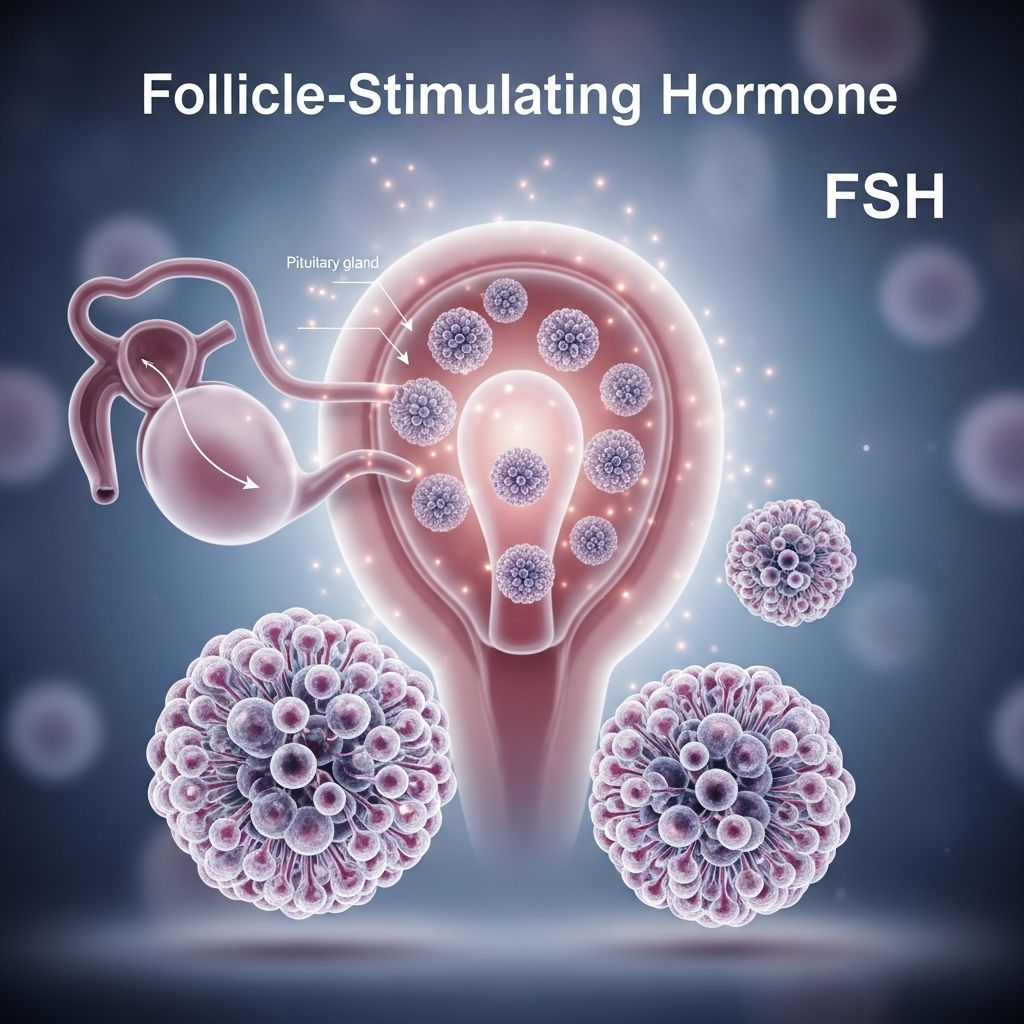
Follicle-stimulating hormone (FSH) is a critical hormone produced and released by your pituitary gland, a small gland located at the base of your brain. FSH plays a fundamental role in sexual development and reproduction by directly affecting the function of your ovaries and testes. This hormone belongs to a group called gonadotropins—hormones specifically concerned with regulating the activity of the gonads, or sex glands. FSH works in close collaboration with another hormone called luteinizing hormone (LH) to maintain reproductive health and regulate fertility throughout your life.
FSH is a glycoprotein, meaning it consists of protein and carbohydrate components. The hormone circulates through your bloodstream and binds to specific receptors on reproductive cells, triggering a cascade of biological responses that are essential for successful reproduction. Understanding FSH and how it functions can help you better comprehend fertility issues, hormonal imbalances, and reproductive health in general.
How FSH Functions in Females
In females who menstruate, FSH serves as a primary regulator of the menstrual cycle and is essential for reproductive function. The main function of FSH in women is to help regulate the menstrual cycle and prepare the body for potential pregnancy each month.
The Role of FSH in the Menstrual Cycle
FSH stimulates follicles on the ovary to grow and prepare eggs for ovulation. As these follicles increase in size, they begin to release estrogen and a low level of progesterone into your bloodstream. This process is crucial for maintaining hormonal balance and preparing the reproductive system for ovulation.
Between days six and 14 of a typical 28-day menstrual cycle, FSH causes follicles in one of the ovaries to begin to mature. However, during days 10 to 14, only one of the developing follicles forms a fully mature egg. At about day 14 in the menstrual cycle, a sudden surge in LH causes the mature follicle to rupture and release its egg—a process known as ovulation.
After Ovulation
After ovulation occurs, the ruptured follicle transforms into a temporary endocrine gland called the corpus luteum. This structure produces high levels of progesterone, which blocks the release of FSH and helps prepare the uterine lining for potential pregnancy. The egg begins its five-day journey through the fallopian tube to the uterus. If a sperm successfully fertilizes the egg during this time, pregnancy occurs. If fertilization does not happen, toward the end of the cycle the corpus luteum breaks down, progesterone production decreases, and the next menstrual cycle begins with menstruation, as FSH levels start to rise again.
How FSH Functions in Males
In males, FSH serves a distinctly different but equally important reproductive function. FSH stimulates sperm production in the testes and is essential for male fertility. Working in collaboration with testosterone—a hormone triggered by LH—FSH sustains sperm production throughout a man’s reproductive years. FSH acts on Sertoli cells within the testes, which are crucial for supporting sperm development. Without adequate FSH levels, males may experience reduced sperm production or poor sperm quality, leading to fertility challenges.
The Hormonal Regulation of FSH: The HPG Axis
A complex feedback system of hormones called the hypothalamic-pituitary-gonadal (HPG) axis regulates your FSH levels. If any of the glands or organs in this system aren’t working properly, it leads to abnormal levels of hormones involved in the system.
Related Stories



How the HPG Axis Works
Your hypothalamus, a region of your brain, initiates the process by releasing gonadotropin-releasing hormone (GnRH). This hormone stimulates your pituitary gland to release FSH as well as luteinizing hormone (LH)—collectively known as gonadotropins. Your hypothalamus releases GnRH in pulses, which are small, short bursts occurring at specific intervals. Low-pulse frequencies stimulate more FSH production, while high-pulse frequencies trigger more LH production.
The released FSH and LH travel through your bloodstream and bind to receptors in the testes or ovaries. This is how FSH, along with LH, controls the functions of the testes and ovaries. In return, hormones that your testes or ovaries release control the amount of GnRH your hypothalamus makes, starting the cycle over again in what is known as negative feedback.
Feedback Mechanisms
However, different amounts of certain hormones in this system affect the release of other hormones in distinct ways. For example, in females, estrogen affects levels of FSH release in different ways depending on concentration and timing. Chronic, long-term estrogen exposure inhibits FSH release, whereas rising estrogen levels—which normally occur before ovulation—trigger your pituitary gland to increase levels of gonadotropins (FSH and LH). Progesterone slows the frequency at which your hypothalamus releases GnRH but enhances gonadotropin responses to GnRH, creating a finely tuned hormonal balance.
Normal FSH Levels
FSH levels vary considerably depending on your sex, age, and reproductive status. Understanding what constitutes normal levels is important for assessing reproductive health and fertility potential.
FSH Levels in Women
In women, FSH levels fluctuate throughout the menstrual cycle. During the follicular phase (early in the cycle), FSH levels are typically elevated to stimulate follicle development. Normal baseline FSH levels in women during the follicular phase typically range from 5 to 20 milli-international units per milliliter (mIU/mL), though specific reference ranges may vary between laboratories.
Age significantly affects FSH levels in women. As women approach menopause, FSH levels typically increase because declining estrogen levels no longer provide negative feedback to suppress FSH production. Postmenopausal women typically have FSH levels above 30 mIU/mL.
FSH Levels in Men
In men, FSH levels remain relatively stable throughout life and typically range from 1.7 to 8.6 mIU/mL, though reference ranges may vary between laboratories. Unlike women, men do not experience the dramatic hormonal fluctuations seen during the menstrual cycle.
FSH and Fertility
A study examining day 3 FSH levels and in vitro fertilization (IVF) outcomes showed that people with day 3 FSH levels lower than 15 mIU/mL had a better chance of becoming pregnant with an IVF attempt compared to people with FSH levels between 15 mIU/ml and 24.9 mIU/ml. For people with FSH levels over 25 mIU/ml, pregnancy rates per attempt were even lower. FSH levels can serve as an indicator of ovarian reserve—the remaining supply of eggs in a woman’s ovaries.
What Causes Abnormal FSH Levels?
Several conditions and factors can cause FSH levels to become abnormally high or low, affecting reproductive health and fertility.
Causes of High FSH Levels
Elevated FSH levels typically indicate that the pituitary gland is working harder to stimulate the gonads, often because the ovaries or testes are not responding adequately or are declining in function. In women, high FSH levels commonly indicate approaching or current menopause, diminished ovarian reserve, ovarian failure, or certain genetic conditions affecting ovarian function. In men, high FSH levels may suggest testicular failure, reduced sperm production, or genetic disorders affecting testicular function.
Causes of Low FSH Levels
Low FSH levels suggest that the pituitary gland or hypothalamus is not producing or releasing adequate amounts of FSH. Causes may include pituitary disorders, hypothalamic dysfunction, excessive exercise, severe caloric restriction, obesity, or hormonal imbalances. In both men and women, low FSH levels can result in reduced fertility.
FSH Testing and Fertility
FSH testing is commonly used to assess reproductive health and fertility potential. A blood test measures FSH levels, typically performed on day 3 of a woman’s menstrual cycle, when FSH levels are at their baseline.
When FSH Testing Is Recommended
Healthcare providers may recommend FSH testing for women experiencing irregular or absent periods, suspected infertility, symptoms of menopause, or when evaluating ovarian reserve before fertility treatments. For men, FSH testing may be ordered when investigating low sperm counts or other signs of reduced fertility.
FSH and Fertility Treatments
Recombinant human FSH is widely used in fertility clinics during in vitro fertilization (IVF) protocols to stimulate follicular growth in women and for improvement of sperm production in men. Understanding your FSH levels can help fertility specialists determine appropriate treatment approaches and predict treatment outcomes.
Age and FSH Levels
FSH levels change significantly throughout life, particularly in women as they progress through different reproductive stages.
FSH in Childhood and Adolescence
During childhood, FSH levels remain relatively low. As puberty approaches, FSH levels gradually increase, triggering the development of secondary sexual characteristics and the maturation of reproductive organs.
FSH During Reproductive Years
During the reproductive years, FSH levels fluctuate cyclically in women according to the menstrual cycle. In men, FSH levels remain relatively stable.
FSH and Menopause
As women enter perimenopause and menopause, FSH levels rise dramatically due to declining estrogen production. FSH levels above 30 mIU/mL typically indicate menopause has occurred.
Frequently Asked Questions
Q: What does FSH stand for?
A: FSH stands for Follicle-Stimulating Hormone. It is a gonadotropic hormone produced by the pituitary gland that regulates reproductive function in both men and women.
Q: When should FSH levels be tested?
A: For women, FSH is typically tested on day 3 of the menstrual cycle to get a baseline measurement. Testing may be recommended when evaluating fertility, investigating irregular periods, or assessing menopausal status.
Q: Can FSH levels be too low?
A: Yes, low FSH levels can occur due to pituitary or hypothalamic disorders, extreme exercise, severe caloric restriction, or obesity. Low FSH can result in reduced fertility in both men and women.
Q: How do FSH and LH work together?
A: FSH and LH are gonadotropins that work together to regulate reproductive function. FSH stimulates follicle and sperm development, while LH triggers ovulation in women and testosterone production in men.
Q: Does FSH affect men the same way as women?
A: No. In women, FSH regulates the menstrual cycle and follicle development. In men, FSH stimulates sperm production. However, both sexes require adequate FSH for normal reproductive function.
Q: Can FSH levels be improved naturally?
A: Maintaining a healthy lifestyle with appropriate exercise, balanced nutrition, adequate sleep, and stress management can support overall hormonal health. However, underlying medical conditions affecting FSH production should be evaluated by a healthcare provider.
Q: What is the relationship between FSH and egg quality?
A: While FSH stimulates follicle development, it does not directly determine egg quality. However, FSH levels can indicate ovarian reserve—the number of remaining eggs—which may correlate with age-related changes in egg quality.
References
- Follicle-stimulating hormone (FSH) — Britannica. Accessed 2025. https://www.britannica.com/science/follicle-stimulating-hormone
- Follicle-Stimulating Hormone — National Center for Biotechnology Information (NCBI), National Institutes of Health. 2024. https://pmc.ncbi.nlm.nih.gov/articles/PMC11387984/
- Follicle-Stimulating Hormone (FSH): What It Is & Function — Cleveland Clinic. Accessed 2025. https://my.clevelandclinic.org/health/articles/24638-follicle-stimulating-hormone-fsh
- Follicle-Stimulating Hormone (FSH) Levels Test — MedlinePlus, National Library of Medicine. Accessed 2025. https://medlineplus.gov/lab-tests/follicle-stimulating-hormone-fsh-levels-test/
- Infertility: A practical framework — Cleveland Clinic Journal of Medicine. 2019. https://www.ccjm.org/content/86/7/473
Similar Articles








Read full bio of Sneha Tete