Follicular Eruptions Due To Drugs: Diagnosis, Causes, Treatment
Comprehensive guide to drug-induced follicular skin reactions, causes, diagnosis, and management strategies.
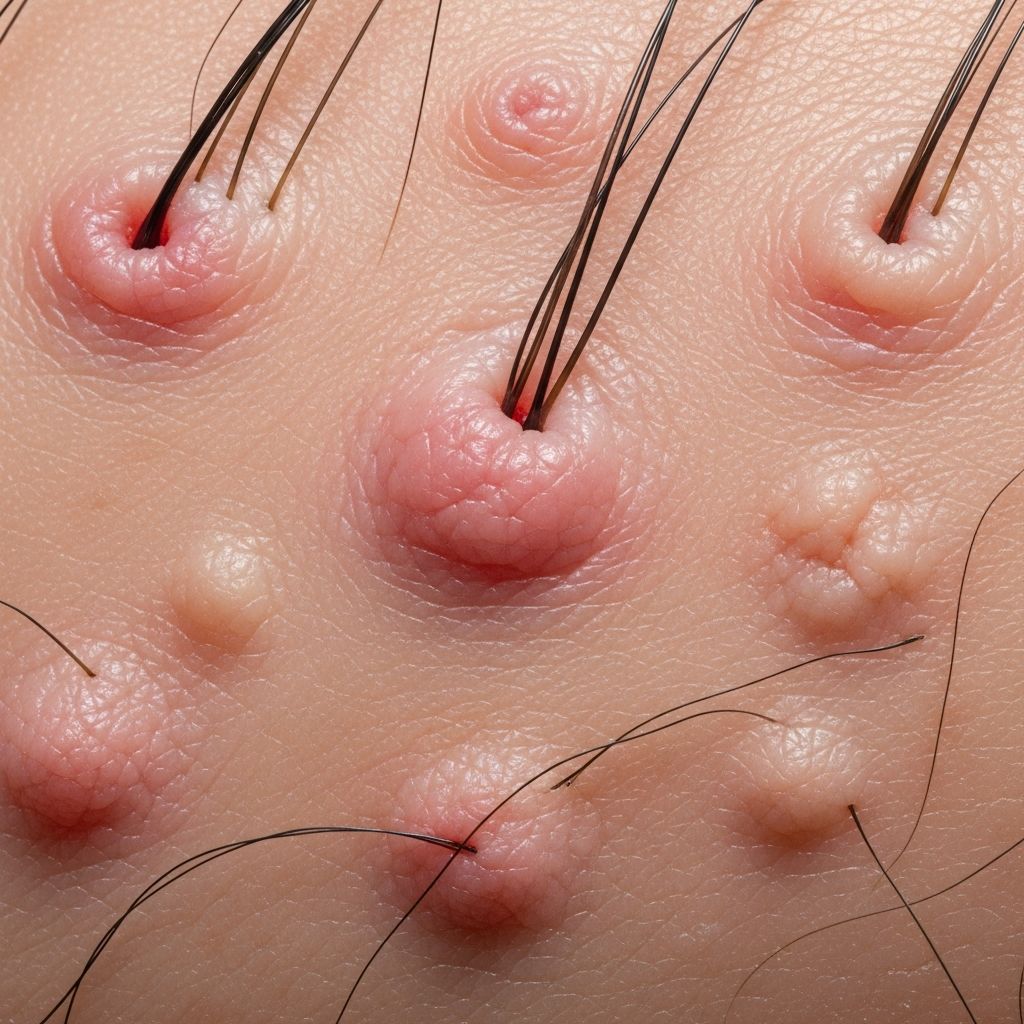
Follicular eruptions due to drugs represent a diverse group of skin reactions characterized by inflammation centered around hair follicles, often mimicking acne, folliculitis, or other primary follicular disorders. These eruptions arise from various medications, including corticosteroids, targeted cancer therapies, anticonvulsants, and others, typically presenting as monomorphic papules, pustules, or plaques predominantly on the trunk, face, and extremities.
What are the clinical features of follicular eruptions due to drugs?
Drug-induced follicular eruptions commonly manifest 1-6 weeks after initiating the offending medication, with rapid onset in cases like systemic steroids (2-5 weeks). Key clinical features include:
- Monomorphic papulopustular lesions: Uniform small papules and pustules lacking comedones, distinguishing them from true acne vulgaris.
- Preferred sites: Chest, back, shoulders, and arms; facial involvement with topical steroids may resemble rosacea.
- Sudden onset and symmetry: Widespread, symmetrical distribution without personal or family history of acne.
- Severity correlation: With EGFR inhibitors, severity correlates with drug dose and antitumor efficacy.
- Variants: Acne conglobata, hidradenitis suppurativa-like with scarring (e.g., lithium), or follicular mucinosis-like plaques (e.g., carbamazepine).
In steroid acne, lesions are intensely pruritic or tender, resolving 4 weeks post-discontinuation without scarring. Lithium eruptions may take months to develop and persist longer.
Which drugs cause follicular eruptions?
Numerous medications are implicated, categorized by class:
| Drug Class | Examples | Key Features |
|---|---|---|
| Corticosteroids | Systemic (prednisone, dexamethasone), topical, inhaled | Sudden papulopustules on chest/back 2-5 weeks post-start; rosacea-like on face. |
| Anabolic steroids/Hormones | Testosterone, estrogen, levonorgestrel IUD | Worsens preexisting acne; bodybuilders at risk. |
| Targeted Cancer Therapies | EGFRi (cetuximab), TKIs, MEK inhibitors, mTORi | Dose-dependent papulopustules within 2-4 weeks; correlates with efficacy. |
| Psychotropics | Lithium, aripiprazole, haloperidol | Delayed onset (months); neutrophilic folliculitis, possible scarring. |
| Anticonvulsants | Phenytoin, carbamazepine, valproate | Acne keloidalis or mucinosis-like; hyperandrogenism. |
| Immunosuppressants | Cyclosporine, tacrolimus, sirolimus | Focal acne in transplant patients. |
| Other | Isoniazid, azathioprine, vitamins B6/B12, JAKi (tofacitinib) | Mild, resolves post-discontinuation. |
Halogenated compounds (bromides, iodides) and cystic fibrosis drugs like elexacaftor/tezacaftor/ivacaftor also trigger outbreaks.
Pathogenesis
The mechanisms are multifactorial:
- Corticosteroids: Upregulate toll-like receptor 2 (TLR2) in keratinocytes, enhancing Propionibacterium acnes-induced inflammation.
- Lithium: Neutrophil induction leading to folliculitis rather than true acne.
- EGFR inhibitors: Follicular hyperproliferation and inflammation due to EGFR blockade in keratinocytes.
- Hormones: Androgenic stimulation of sebaceous glands.
- Other: Direct follicular toxicity or immune modulation (e.g., calcineurin inhibitors suppress T-cells).
Histologically, these show neutrophilic or lymphocytic folliculitis without comedones; special cases like carbamazepine reveal mucin deposition mimicking follicular mucinosis.
Diagnosis
Diagnosis relies on:
- Clinical history: Temporal association with new drug (1-6 weeks).
- Morphology: Monomorphic lesions sans comedones.
- Biopsy: Confirms folliculitis; rules out infection (Gram stain negative).
- Differential: Acne vulgaris (comedones), bacterial folliculitis (Gram-positive), eosinophilic folliculitis, malassezia folliculitis.
Resolution upon drug withdrawal confirms causality.
Differential Diagnosis
| Condition | Distinguishing Features |
|---|---|
| Acne Vulgaris | Comedones, polymorphic, chronic, seborrheic areas. |
| Bacterial Folliculitis | Culture-positive, deeper furuncles. |
| Gram-Negative Folliculitis | Post-antibiotic, cysts/pustules. |
| Acne Fulminans | Fever, arthralgias, systemic. |
| Follicular Mucinosis | Mucin deposits, plaques; neoplastic association. |
Management
Primary strategy: Discontinue offending drug if feasible.
- Topical: Benzoyl peroxide, retinoids, antibiotics (clindamycin).
- Oral: Tetracyclines, dapsone for severe cases.
- For EGFRi: Continue therapy; use tetracyclines + topicals; severity predicts efficacy.
- Steroids: Taper if possible; supportive care.
- Lithium: Manage without cessation using topicals.
Lesions heal within 4 weeks post-withdrawal, rarely scarring.
Prevention
- Patient education on potential skin reactions.
- Prophylactic topicals for high-risk therapies (e.g., EGFRi).
- Monitor high-risk patients (e.g., cancer therapy).
Related Stories



Frequently Asked Questions (FAQs)
Q: How soon after starting a drug do follicular eruptions appear?
A: Typically 1-6 weeks; steroids 2-5 weeks, EGFRi 2-4 weeks.
Q: Do drug-induced follicular eruptions scar?
A: Rarely; exceptions with lithium or severe cases.
Q: Can I continue the medication causing the eruption?
A: Often yes for essential drugs like cancer therapies; treat symptomatically.
Q: Is biopsy always needed?
A: Not routinely; useful for atypical or persistent cases.
Q: What is the most common culprit drug?
A: Corticosteroids, especially systemic.
References
- Drug-induced acneiform eruption – VisualDx — VisualDx. 2023. https://www.visualdx.com/visualdx/diagnosis/?moduleId=101&diagnosisId=51031
- Drug-Induced Acne and Acneiform Eruptions: A Review — HMP Global Learning Network. 2023. https://www.hmpgloballearningnetwork.com/site/thederm/article/drug-induced-acne-and-acneiform-eruptions-review
- Carbamazepine-induced follicular mucinosis-like drug eruption — Indian Journal of Dermatology, Venereology and Leprology. 2023. https://ijdvl.com/carbamazepine-induced-follicular-mucinosis-like-drug-eruption/
- Acneiform Eruptions – StatPearls — NCBI Bookshelf / NIH. 2023-10-05. https://www.ncbi.nlm.nih.gov/books/NBK459207/
Similar Articles








Read full bio of Sneha Tete