Follicular Occlusion Syndrome: 4 Disorders & Treatment Options
Understanding the spectrum of inflammatory skin disorders caused by hair follicle blockage and rupture.
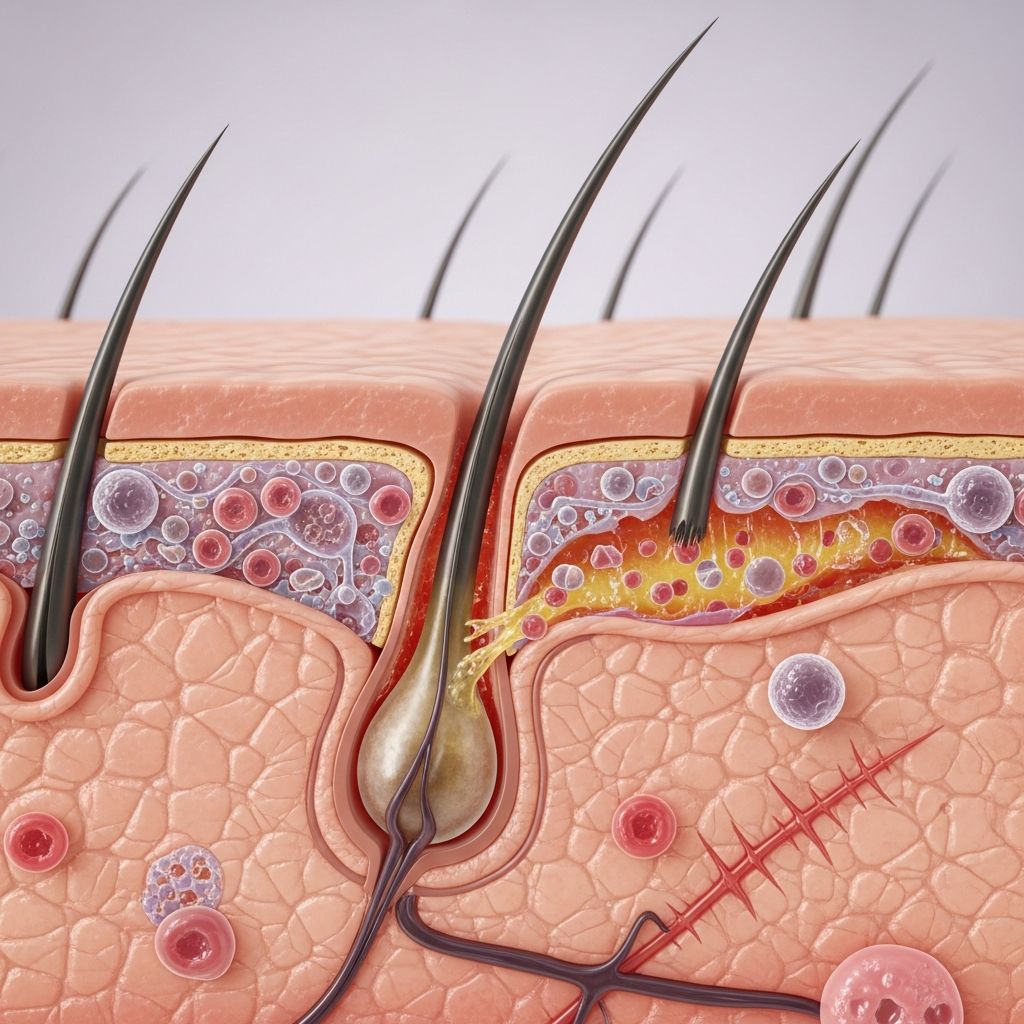
Follicular occlusion syndrome refers to a spectrum of chronic inflammatory skin disorders where hair follicles become obstructed by keratin plugs, leading to rupture, inflammation, abscesses, sinus tracts, and scarring. These conditions often coexist, severely impacting quality of life due to pain, disfigurement, and recurrence.
What is Follicular Occlusion Syndrome?
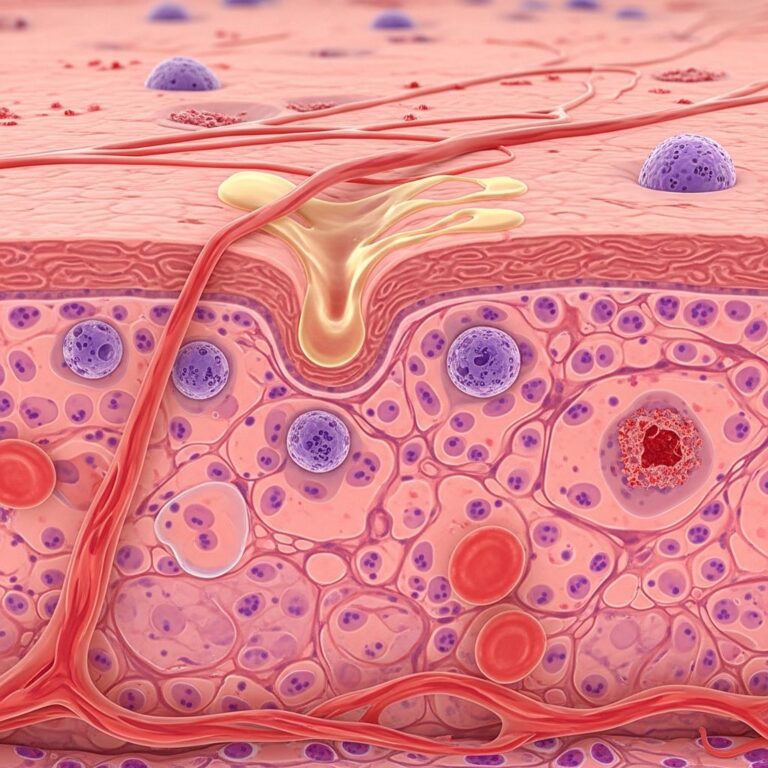
Follicular occlusion syndrome (FOS), also known as the follicular occlusion triad or tetrad, describes interrelated dermatological conditions sharing a common pathogenesis: abnormal hyperkeratinization of the follicular infundibulum, resulting in plugging, dilation, and eventual rupture of the follicle. This initiates a cascade of neutrophilic inflammation, secondary bacterial infection, and fibrotic scarring.
The syndrome typically manifests in adulthood, predominantly affecting areas rich in apocrine glands such as axillae, groin, perineum, buttocks, and scalp. While individual components are common, their simultaneous occurrence as a tetrad is rare but well-documented in literature. Patients experience recurrent nodules, pustules, abscesses, and draining sinuses that heal with keloid-like scars, contractures, and alopecia in scalp involvement.
Who Gets Follicular Occlusion Syndrome?
FOS primarily affects young to middle-aged adults, with a male predominance, particularly in hidradenitis suppurativa (HS) and dissecting cellulitis. Risk factors include genetic predisposition, obesity, smoking, family history of severe acne, and mechanical friction in intertriginous areas.
- Demographics: More common in males (up to 4:1 ratio in some series); onset post-puberty.
- Associations: Metabolic syndrome, Crohn’s disease, PCOS, hyperandrogenism.
- Risk modifiers: Smoking cessation and weight loss improve outcomes.
Clinical Features of Follicular Occlusion Syndrome
Lesions evolve from comedones and inflammatory papules to deep nodules, abscesses, fistulae, and scarred plaques. Severity varies, often classified as triad (HS, acne conglobata, dissecting cellulitis) or tetrad (plus pilonidal sinus).
Hidradenitis Suppurativa
HS presents with painful, deep-seated nodules (‘blind boils’) in apocrine areas: axillae, groins, inframammary folds, buttocks. Lesions progress to abscesses, draining sinuses, bridged scars, and ‘tombstone’ comedones. Hurley staging: Stage I (nodules), II (recurrent with tracts), III (diffuse involvement).
Acne Conglobata
Severe nodulocystic acne on trunk, face, and extremities with interconnecting abscesses, sinus tracts, and keloids. Double-ended pseudocomedones and marked scarring distinguish it from vulgaris.
Dissecting Cellulitis of the Scalp
Also called perifolliculitis capitis abscedens et suffodiens: boggy, fluctuant nodules on scalp leading to purulent drainage, sinus tracts, and cicatricial alopecia. Differentiate from folliculitis decalvans (tufted hairs) and acne keloidalis.
Pilonidal Sinus
Chronic sinus tract in the natal cleft, often with embedded hairs, abscesses, and discharge. More common in hirsute males.
Other Associated Conditions
FOS links to Dowling-Degos disease, Fox-Fordyce disease, and musculoskeletal issues like arthritis. Comorbidities include inflammatory bowel disease and spondyloarthropathies.
Diagnosis of Follicular Occlusion Syndrome
Diagnosis relies on clinical pattern recognition of coexisting triad/tetrad features. No single test; biopsy confirms follicular rupture, keratin plugging, and chronic inflammation with granulomas.
Related Stories



- Key diagnostics: History of recurrent boils in specific sites, family history, exclusion of infection/malignancy.
- Histopathology: Dilated follicles with keratin plugs, rupture, neutrophilic abscesses, sinus tracts, fibrosis.
- Differentials: Bacterial folliculitis, actinomycosis, tuberculosis, Crohn’s, lymphoma.
Imaging (ultrasound/MRI) assesses sinus depth; cultures rule out superinfection.
Pathogenesis
Core mechanism: Follicular hyperkeratosis causes infundibular occlusion by keratin and sebum. Rupture releases contents, triggering innate immunity via IL-1, TNF-α, and neutrophil recruitment. Bacterial overgrowth (Staph, anaerobes) amplifies via biofilms.
Genetic factors (γ-secretase mutations in HS), hormonal influences, and microbiome dysbiosis contribute. Smoking and obesity promote via nicotine-induced keratinocyte hyperproliferation and adipokine dysregulation.
Treatment of Follicular Occlusion Syndrome
Multimodal, tailored to severity: lifestyle, medical, procedural. No cure; goals: symptom control, prevent progression.
| Classification | Symptoms | Prognosis | Primary Treatment |
|---|---|---|---|
| Mild | Single/multiple abscesses | Minimal scarring | Topical antibiotics, education |
| Moderate | Recurrent in one region | Sinuses/scars | Systemic meds |
| Severe | Diffuse interconnected lesions | Extensive scarring/keloids | Surgery + meds |
Lifestyle and Supportive Measures
- Weight loss, smoking cessation, loose clothing.
- Antiseptics (chlorhexidine), zinc gluconate.
Medical Therapy
- Antibiotics: Topical (clindamycin), oral (tetracyclines, rifampin-clindamycin).
- Retinoids: Isotretinoin reduces sebum, but monitor teratogenicity.
- Biologics: Adalimumab (anti-TNF) for HS; others off-label.
- Others: Dapsone, corticosteroids.
Surgical Interventions
For severe disease: deroofing, wide excision, laser ablation, VAC therapy post-debridement. Multi-stage for extensive FOT.
Prevention and Prognosis
Early intervention prevents scarring. Prognosis guarded in severe cases with disability risk. Regular follow-up essential; multidisciplinary care (dermatology, surgery, rheumatology).
Frequently Asked Questions (FAQs)
Q: Is follicular occlusion syndrome contagious?
A: No, it is not infectious; secondary bacterial overgrowth occurs but is not primary.
Q: Can diet affect FOS?
A: High-glycemic diets may worsen; Mediterranean diet and weight control help.
Q: Is surgery always needed?
A: Reserved for moderate-severe refractory cases; medical therapy first-line.
Q: Does FOS increase cancer risk?
A: Chronic inflammation raises squamous cell carcinoma risk in longstanding HS.
Q: Can children get FOS?
A: Rare pre-puberty; adolescent onset possible with family history.
References
- Comprehensive Treatment of Severe Follicular Occlusion Triad — PMC/NCBI. 2022-04-01. https://pmc.ncbi.nlm.nih.gov/articles/PMC8978351/
- Follicular Occlusion Syndrome — HCA Healthcare Scholarly Commons. 2025. https://scholarlycommons.hcahealthcare.com/cgi/viewcontent.cgi?article=1108&context=northtexas2025
- Follicular occlusion tetrad — PMC/NCBI. 2014-10-15. https://pmc.ncbi.nlm.nih.gov/articles/PMC4228650/
- Follicular occlusion syndrome — DermNet NZ. 2023. https://dermnetnz.org/topics/follicular-occlusion-syndrome
Similar Articles








Read full bio of Sneha Tete