Follicular Phase of Menstrual Cycle: Hormone Levels & Length
Understanding the follicular phase: hormones, duration, fertility, and what to expect during this crucial menstrual cycle stage.
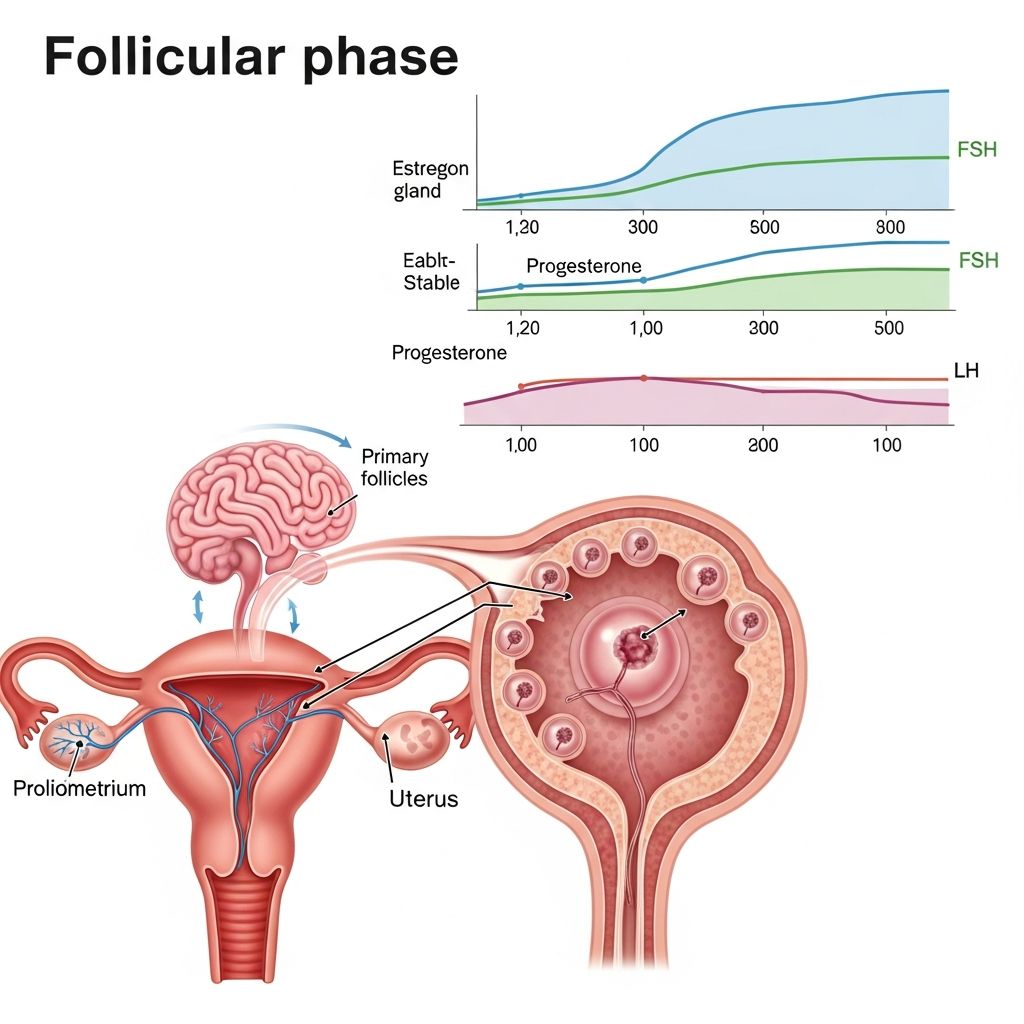
The follicular phase represents the longest phase of your menstrual cycle, a critical period when your body undergoes significant hormonal and physiological changes to prepare for potential pregnancy. Understanding this phase is essential for anyone seeking to comprehend their reproductive health, track fertility, or simply become more aware of the cyclical changes occurring within their body.
What Is the Follicular Phase?
The follicular phase refers to that part of your menstrual cycle when an egg matures in your ovaries. It is part of an ongoing process in your body during your reproductive years when hormones activate changes that make it possible for you to become pregnant. Your menstrual cycle consists of two primary phases: the follicular phase and the luteal phase. Menstruation (your period) and ovulation are important events during your cycle that correspond with each phase. Hormones in your brain and your ovaries regulate the changes in your body that make this process possible.
The follicular phase begins on the first day of your menstrual period and ends with ovulation, marking a transition from one cycle phase to another. During this time, your ovaries house a developing egg that will later be released during ovulation. The end of your follicular phase is a particularly fertile period, when your odds of getting pregnant increase significantly if you have sexual intercourse.
How Long Does the Follicular Phase Last?
The follicular phase is the longest phase of your menstrual cycle, typically lasting from 14 to 21 days. The length of your follicular phase depends on how long it takes the dominant follicle to form a fully matured egg. Unlike the luteal phase, which stays fairly consistent at approximately 14 days, the length of your follicular phase may vary at different stages of your life.
The average menstrual cycle lasts from 28 to 35 days, with the follicular phase ranging from 14 to 21 days and the luteal phase lasting about 14 days. Since everyone’s cycle is different, it can be difficult to predict exactly how long your follicular phase will last. Some individuals may experience a shorter follicular phase, while others have notably longer ones.
What Happens During the Follicular Phase?
During the follicular phase, several important biological processes occur within your body:
Follicle Development and Maturation: Your pituitary gland releases follicle-stimulating hormone (FSH), which prompts your ovaries to produce small fluid-filled sacs called follicles. Each follicle contains an unfertilized egg. Multiple follicles begin to develop, but one will become the dominant follicle, which develops quicker than the rest. As the dominant follicle develops, the egg inside matures, and this egg will ultimately be released during ovulation.
Estrogen Production and Uterine Lining Thickening: The dominant follicle releases estrogen, which thickens the inner lining of the uterus (the endometrium) so that an embryo can implant there if your egg is fertilized by sperm. The increase in estrogen causes your body to produce less FSH, allowing the other follicles to be reabsorbed back into your body. A maturing follicle triggers a surge of estrogen, which is partly responsible for thickening the uterine lining for potential implantation.
Hormone Surge and Ovulation Trigger: Toward the end of the follicular phase, high estrogen levels trigger your pituitary gland to release a surge of luteinizing hormone (LH), the hormone associated with the luteal phase. LH activates the mature egg to escape the follicle and the ovary, an event known as ovulation.
Related Stories



Hormone Levels During the Follicular Phase
Several hormones play crucial roles during the follicular phase:
Follicle-Stimulating Hormone (FSH): FSH is released by the pituitary gland and is responsible for stimulating the ovaries to produce follicles containing unfertilized eggs. FSH levels rise during the early follicular phase and then decrease as estrogen levels increase.
Estrogen: Estrogen levels gradually increase throughout the follicular phase as the dominant follicle matures. This hormone is responsible for thickening the uterine lining and preparing your body for potential pregnancy. Rising estrogen also contributes to many of the physical and emotional changes you may experience during this phase.
Luteinizing Hormone (LH): While LH is primarily associated with the luteal phase, it plays a critical role at the end of the follicular phase by triggering ovulation when estrogen levels reach their peak.
Progesterone: Progesterone levels remain low during the follicular phase but begin to increase after ovulation. However, some progesterone is produced by the developing follicle toward the end of this phase.
The Fertile Window
The end of the follicular phase coincides with your most fertile period. Your body is at its most fertile at the end of the follicular phase and during ovulation. This is often referred to as your fertile window, which is classed as the five days before you ovulate and the day after ovulation. If you are trying to conceive, understanding when your fertile window occurs can significantly increase your chances of pregnancy.
Variations in Follicular Phase Length
Long Follicular Phase: Having a long follicular phase doesn’t mean you’re less likely to become pregnant. A long follicular phase most likely means that your menstrual cycle is longer overall. You can have a long follicular phase for a variety of reasons, including individual variations in hormone production, stress levels, nutritional status, and exercise intensity. As long as ovulation occurs, a longer follicular phase does not impact fertility.
Short Follicular Phase: A short follicular phase could indicate that you may have trouble becoming pregnant. It’s common for your follicular phase to shorten (for example, from 14 days on average to 10 days) as you approach menopause. Menopause signals a shift in your life when you no longer get your period.
Follicular Phase Changes Across Your Lifespan
The length and characteristics of your follicular phase can change significantly throughout different stages of your reproductive life. In your late 30s and beyond, your FSH levels may still increase during your follicular phase, but your LH levels may not spike as they did previously. As a result, the follicle may mature faster than the egg inside, and it may release too soon. These eggs may not be viable for pregnancy, which is why fertility tends to decline with age.
As you enter perimenopause, it’s common for your cycle to shorten, which is largely due to a shortened follicular phase. This occurs because hormonal changes affect the rate at which eggs mature within the ovaries.
Physical and Emotional Changes During the Follicular Phase
Many individuals report noticeable changes in how they feel during their follicular phase. As estrogen levels rise throughout this phase, you may experience increased energy levels, improved mood, better mental clarity, and potentially higher libido. These changes occur because estrogen influences neurotransmitters in the brain that affect mood and motivation.
The rising estrogen can also improve skin appearance, increase motivation for physical activity, and enhance social confidence. These positive changes make the follicular phase an optimal time for starting new projects, engaging in challenging workouts, or tackling demanding tasks.
Frequently Asked Questions
Q: When does the follicular phase begin and end?
A: The follicular phase begins on the first day of your menstrual period and ends with ovulation. In a typical 28-day cycle, this translates to approximately days 1 through 14, though the exact timing varies based on individual cycle length.
Q: Can I get pregnant during the follicular phase?
A: You are most likely to get pregnant toward the end of the follicular phase, particularly during your fertile window (the five days before ovulation and the day of ovulation). However, you could potentially become pregnant at any point during the follicular phase if intercourse occurs near the end of the phase.
Q: Why does my follicular phase length vary month to month?
A: The follicular phase is the part of the cycle that fluctuates the most. Factors such as stress, illness, extreme exercise, significant weight changes, and nutritional status can all influence how long it takes for a follicle to fully mature, thereby affecting follicular phase length.
Q: What if my follicular phase is shorter than 14 days?
A: A shorter follicular phase may occur as you approach menopause or due to hormonal imbalances. If you have concerns about a consistently short follicular phase, particularly if you’re trying to conceive, consult with a healthcare provider who can evaluate your individual situation.
Q: How does age affect the follicular phase?
A: As you age, particularly in your late 30s and beyond, the follicular phase may shorten, and hormone dynamics may change. This can affect egg quality and fertility. However, the follicular phase will continue as long as you’re menstruating.
Q: Should I track my follicular phase if I’m trying to conceive?
A: Yes, understanding your follicular phase and identifying when it ends (ovulation) can be extremely helpful for conception planning. Various tracking methods, including apps, ovulation predictor kits, and basal body temperature monitoring, can help you identify your fertile window.
Key Takeaways About the Follicular Phase
The follicular phase is a vital component of your menstrual cycle that typically lasts 14 to 21 days and begins on the first day of your period. During this phase, hormones orchestrate the development and maturation of an egg within the ovaries while simultaneously preparing your uterus for potential pregnancy. High estrogen levels during this phase often contribute to increased energy, improved mood, and better focus.
Understanding your follicular phase can provide valuable insights into your reproductive health and help you make informed decisions about family planning, fitness routines, and overall wellness. The fertile window at the end of this phase represents your most fertile time each cycle. While the length of your follicular phase may vary, this variation is normal and does not necessarily indicate any underlying health concerns.
If you have questions about your individual follicular phase or menstrual cycle, or if you notice significant changes in your cycle pattern, consulting with a healthcare provider can provide personalized guidance and address any concerns about your reproductive health.
References
- Female Reproductive System: Structure & Function — Cleveland Clinic. 2024. https://my.clevelandclinic.org/health/articles/9118-female-reproductive-system
- Menstrual Cycle (Normal Menstruation): Overview & Phases — Cleveland Clinic. 2024. https://my.clevelandclinic.org/health/articles/10132-menstrual-cycle
- Infradian Rhythms: What They Are & Why They Matter — Cleveland Clinic. 2024. https://health.clevelandclinic.org/infradian-rhythm
- Cycle Syncing Nutrition and Exercise Throughout Your Menstrual Cycle — Cleveland Clinic. 2024. https://health.clevelandclinic.org/nutrition-and-exercise-throughout-your-menstrual-cycle
- What is the Follicular Phase? Know Your Cycle and Symptoms — Flo Health. 2024. https://flo.health/menstrual-cycle/health/follicular-phase
Similar Articles








Read full bio of Sneha Tete