Folliculitis Decalvans: Causes, Symptoms, and Treatment
Understanding folliculitis decalvans: A comprehensive guide to this rare scarring alopecia condition.
Folliculitis Decalvans: Understanding This Rare Scalp Condition
Folliculitis decalvans is a rare, chronic inflammatory scalp condition characterized by pustules, redness, crusting, and progressive hair loss. This condition results in scarring alopecia (cicatricial alopecia), meaning that the inflammation permanently damages hair follicles, leading to irreversible hair loss. Unlike other forms of hair loss that may be reversible, folliculitis decalvans causes permanent bald patches through follicular destruction.
The condition typically begins with small red bumps around the base of hair follicles, usually along the crown or posterior scalp, and progressively develops into more extensive inflammatory lesions if left untreated. Early recognition and treatment are critical to preventing severe scarring and permanent hair loss.
Symptoms of Folliculitis Decalvans
The symptoms of folliculitis decalvans vary in intensity and may progress over time. Patients often experience a combination of physical and sensory symptoms:
- Early Symptoms: Small pustules, mild redness, and localized hair thinning on the scalp
- Itching and Pain: Affected areas become itchy, painful, and may feel tight
- Pustules and Crusting: Yellow pustular discharge, crusting, and scabbing develop on the scalp
- Bleeding: Occasionally, spontaneous bleeding occurs from the affected areas
- Advanced Symptoms: Extensive pustules, marked inflammation, and formation of round patches on the scalp
- Scarring and Hair Loss: Permanent bald patches develop and increase in size, leaving visible scarring
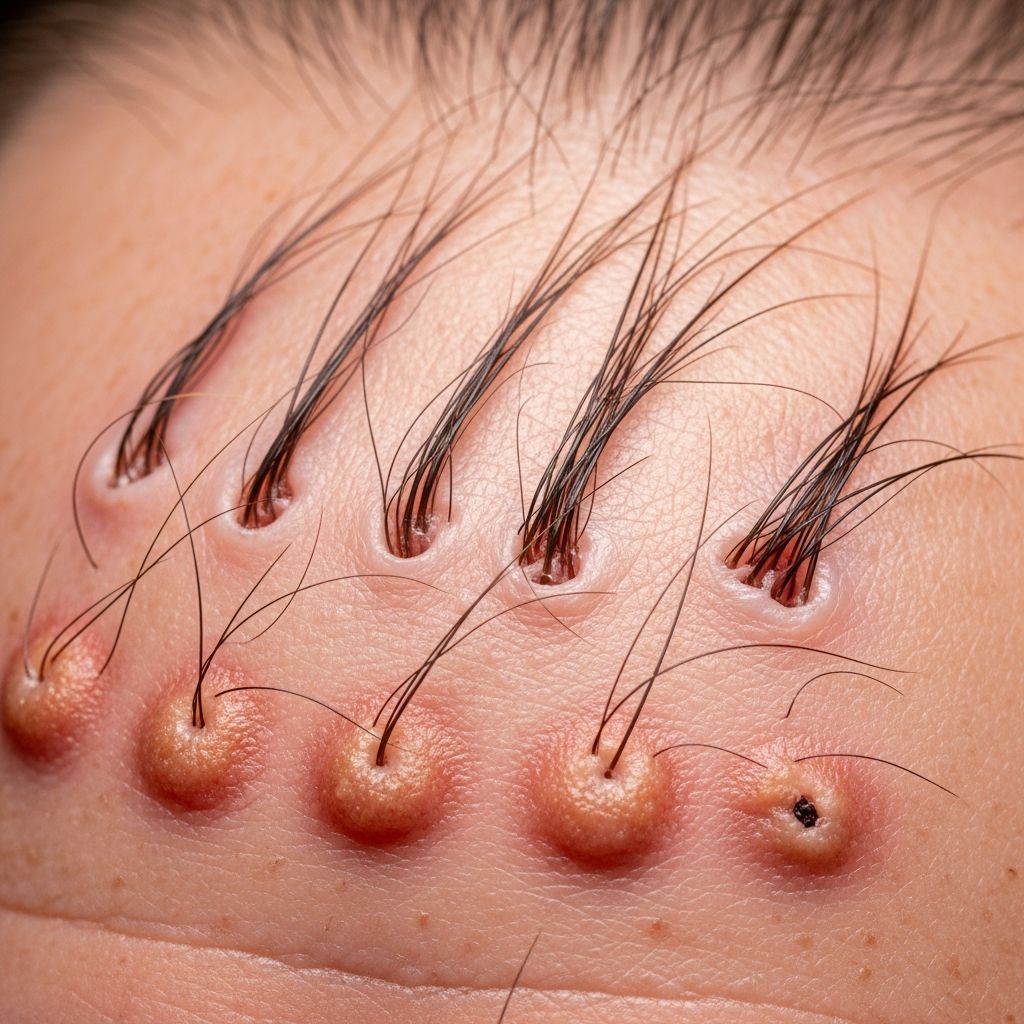
A characteristic feature of folliculitis decalvans is
”tufting,”
where several hairs grow from the same hair follicle on the scalp skin, resembling doll hair or toothbrush bristles. This distinctive appearance can help dermatologists identify the condition during clinical examination.Who Is Affected by Folliculitis Decalvans?
While folliculitis decalvans can affect people of all ages and genders, certain demographic groups are more commonly affected:
- Adults and young adults, typically males
- African American men are particularly susceptible
- Individuals with a history of scalp infections or inflammatory skin conditions
- People with a genetic predisposition to cicatricial alopecia
The disease shows evidence of familial clustering, supporting a genetic component in its development. Individuals with a family history of scarring alopecia should be particularly vigilant about early signs of the condition.
Causes and Risk Factors
The exact cause of folliculitis decalvans remains incompletely understood, but multiple factors are believed to contribute to its development:
Bacterial Infection
Staphylococcus aureus is the most commonly implicated bacterium in folliculitis decalvans. However, the relationship between this bacterium and the disease is unusual—patients with folliculitis decalvans typically do not have evidence of bacterial infection elsewhere on the skin, nor do they show signs of immune deficiency. This suggests an abnormal host response to the bacterium rather than a simple infection.
The bacteria may act as “superantigens” and may escape normal detection by the host immune system, triggering an excessive inflammatory response specifically at the hair follicles.
Related Stories



Immune and Genetic Factors
An abnormal immune system response to bacteria, combined with genetic predisposition, appears to play a central role in the disease’s development. The condition is thought to involve a combination of genetic, allergic, infectious, and immunological factors that converge to trigger follicular inflammation.
Environmental and Lifestyle Factors
Environmental factors and stress may contribute to disease progression, although the precise mechanisms remain unclear. Managing these factors as part of a comprehensive treatment approach may help prevent exacerbations.
Diagnosis of Folliculitis Decalvans
Accurate diagnosis of folliculitis decalvans requires a combination of clinical assessment and diagnostic procedures:
Clinical Examination
A dermatologist evaluates the scalp lesions and hair loss patterns, looking for characteristic features such as pustules, crusting, scarring, and the distinctive “tufting” pattern. The distribution of lesions, typically on the crown or posterior scalp, can provide important diagnostic clues.
Scalp Biopsy
A scalp biopsy confirms the presence of neutrophilic inflammation and scarring, which are hallmarks of folliculitis decalvans. This histopathological examination is often necessary to differentiate the condition from other scalp disorders.
Bacterial Culture
Culture of pustular material helps determine the presence of Staphylococcus aureus or other bacteria and guides antibiotic selection. Repeated cultures over time may be needed, as the predominant pathogen can change during the course of disease.
Treatment Options for Folliculitis Decalvans
While there is currently no cure for folliculitis decalvans, symptoms can be controlled with appropriate treatment, and some patients experience hair regrowth. The goal of treatment is to control inflammation, eliminate bacterial involvement, and prevent further hair loss and scarring.
Antibiotic Therapy
Oral Antibiotics are the cornerstone of folliculitis decalvans treatment:
- Tetracyclines: Doxycycline and minocycline are commonly used first-line agents
- Combination Therapy: Clindamycin (300 mg twice daily) combined with rifampin is strongly recommended to prevent rapid emergence of bacterial resistance
- Other Options: Ozenoxacin (2% topical) has shown success in combination with oral doxycycline
Since bacterial pathogens may develop resistance, particularly to clindamycin, combination therapy with rifampin is strongly advised. Repeated culture of pustules is necessary to guide antimicrobial selection, as the predominant pathogen may change during treatment.
Topical Treatments
Topical therapies play an important supportive role in managing folliculitis decalvans:
- Medicated shampoos with antibacterial properties
- Anti-inflammatory and antibacterial scalp solutions
- Topical antibiotics such as mupirocin and clindamycin
- Topical antiseptics such as chlorhexidine
- Topical corticosteroids (creams, lotions, ointments) to decrease inflammation and calm itching, redness, and pain
Systemic Anti-Inflammatory and Immunomodulatory Treatments
For moderate to severe cases, systemic therapies may be considered:
- Oral Corticosteroids: Used for severe outbreaks to suppress immune overactivity
- Isotretinoin (Accutane): A vitamin A derivative that eases pustule formation; some clinicians believe this is the best treatment for severe cases
- Dapsone: An immunomodulatory agent useful in severe cases
- Ciclosporin: An immunosuppressant for severe, refractory disease
Advanced and Emerging Treatments
For patients resistant to traditional therapies, several advanced options have been documented in case reports:
- Steroid Injections: Intralesional corticosteroid injections directly into affected areas
- Immune-Based Medications: Biologic agents including adalimumab, infliximab, tofacitinib, and baricinitib
- Immune Globulin: Intravenous immunoglobulin therapy
- Photodynamic Therapy: A light-based treatment that may help reduce inflammation
- Platelet-Rich Plasma (PRP) Injections: An emerging regenerative treatment option
Treatment Approach and Prognosis
Folliculitis decalvans typically requires a combination of therapies tailored to individual patient response. Early and effective treatment is critical, as delayed intervention allows inflammation to cause irreversible follicular destruction and scarring. Because many patients show resistance to traditional therapies, close follow-up and periodic reassessment are essential.
While some patients experience remission or improved control of symptoms, the scarring that has already occurred is permanent. However, with appropriate management, further disease progression can be halted or slowed, potentially allowing some degree of hair regrowth in mildly affected areas.
Frequently Asked Questions
Q: Is folliculitis decalvans contagious?
A: No, folliculitis decalvans is not contagious. While bacterial involvement occurs, the condition reflects an abnormal host immune response to bacteria rather than a simple infection that can spread to others.
Q: Can folliculitis decalvans be cured?
A: Currently, there is no cure for folliculitis decalvans. However, with appropriate treatment, symptoms can be controlled and further hair loss can be prevented. Early intervention is crucial to minimize irreversible scarring.
Q: How long does treatment typically take?
A: Treatment duration varies depending on disease severity and individual response. Many patients require several months of consistent therapy, and some may need long-term maintenance treatment to prevent relapse.
Q: What happens if folliculitis decalvans is left untreated?
A: Without treatment, the condition progressively worsens, leading to extensive pustules, scarring, and permanent hair loss with visible bald patches. The inflammation spreads, ultimately destroying hair follicles irreversibly.
Q: Can hair grow back after folliculitis decalvans treatment?
A: Hair regrowth is possible in some cases with appropriate treatment, particularly when intervention occurs early in the disease course. However, areas with established scarring typically do not regrow hair, as the follicles are permanently destroyed.
Q: Are there genetic factors involved in folliculitis decalvans?
A: Yes, folliculitis decalvans shows evidence of familial clustering and genetic predisposition. Individuals with a family history of scarring alopecia should monitor their scalp health closely.
Q: What is the “tufting” appearance in folliculitis decalvans?
A: Tufting occurs when several hairs grow from the same hair follicle, resembling doll hair or toothbrush bristles. This distinctive feature can help dermatologists identify the condition during clinical examination.
References
- Folliculitis Decalvans: A Comprehensive Guide to Scalp Care — Indiana University School of Medicine Dermatology Trials. Accessed 2026. https://dermatrials.medicine.iu.edu/blogs/need-to-know-about-folliculitis-decalvans
- Folliculitis decalvans — British Association of Dermatologists Patient Hub & Skin Health Info. Accessed 2026. https://www.skinhealthinfo.org.uk/condition/folliculitis-decalvans/
- Symptoms & Causes: Folliculitis Decalvans — Scarring Alopecia Foundation. Accessed 2026. https://scarringalopecia.org/folliculitis-decalvans
- Folliculitis Decalvans – Causes, Symptoms & Treatment — Aglow Dermatology. Accessed 2026. https://www.dinastrachanmd.com/folliculitis-decalvans/
- Folliculitis Decalvans Treatment NYC — Linkov Hair Surgery. Accessed 2026. https://www.linkovhair.com/types-of-hair-loss/cicatricial-alopecia-scarring-alopecia/folliculitis-decalvans/
- Successful Management of Folliculitis Decalvans — National Institutes of Health, PubMed Central. 2024. https://pmc.ncbi.nlm.nih.gov/articles/PMC10894017/
- Folliculitis decalvans — DermNet New Zealand. Accessed 2026. https://dermnetnz.org/topics/folliculitis-decalvans
Similar Articles








Read full bio of medha deb