Folliculitis Keloidalis: Expert Guide To Prevention & Treatment
Understanding folliculitis keloidalis: causes, symptoms, diagnosis, and effective treatments for this chronic scalp condition.
Folliculitis keloidalis, also known as
acne keloidalis nuchae (AKN)
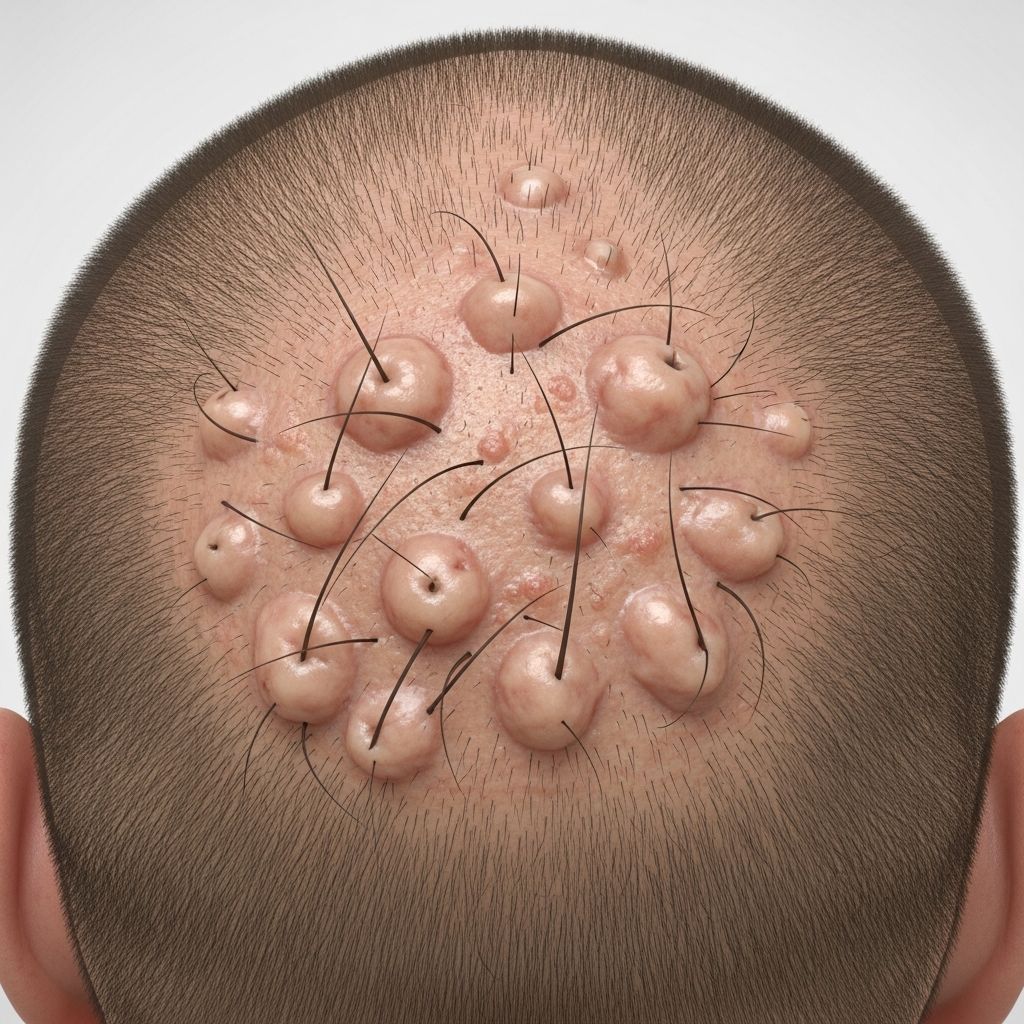
, is a chronic inflammatory condition primarily affecting the occipital scalp and nape of the neck. It manifests as folliculitis with a tendency to develop keloidal scars, leading to permanent hair loss and cosmetic disfigurement. This condition disproportionately impacts individuals with darkly pigmented skin and curly hair, particularly young adult males.What is folliculitis keloidalis?
Folliculitis keloidalis represents a distinct form of
scarring alopecia
where repeated inflammation of hair follicles results in follicular rupture, foreign body reaction to hair shafts, and progressive fibrosis. Unlike true keloids, the scarring in AKN is confined to the scalp and neck, evolving from small papules and pustules into firm nodules and plaques. Histologically, it begins with acute perifollicular inflammation dominated by mast cells, progressing to granulomatous reactions and collagen deposition that distorts follicles.The condition starts in adolescence or early adulthood, often after initiating close shaving or short haircuts. Without intervention, lesions coalesce, causing significant scarring and alopecia, impacting quality of life due to pruritus, pain, and aesthetic concerns.
Who gets folliculitis keloidalis?
Folliculitis keloidalis predominantly affects
men of African descent
with coarse, curly hair, though it can occur in women and other ethnicities. Risk peaks in the 2nd to 4th decades of life. Genetic predisposition to keloidal scarring, combined with hair morphology where cut ends curve back into skin (ingrown hairs), heightens susceptibility.- Prevalence: Up to 0.45–9% in African American males.
- Risk factors: Close shaving, frequent haircuts, tight collars, friction from helmets or chains, high humidity, androgen sensitivity.
- Rare in straight-haired individuals or those avoiding short nape hair.
What causes folliculitis keloidalis?
The precise etiology remains unclear, but mechanical trauma from grooming practices is central. Short, curly hairs shaved close develop sharp tips that re-penetrate skin, triggering immune response and inflammation. Additional contributors include:
- Chronic irritation: Friction from collars, helmets, or jewelry; heat/humidity occluding follicles.
- Infection: Secondary bacterial overgrowth or Demodex mites.
- Genetic factors: Keloid diathesis, excess sebum, androgen hypersensitivity.
- Pathophysiology: Follicular rupture releases hair shafts as foreign bodies, inciting granulomatous inflammation, fibrosis, and luminal occlusion.
Unlike acne vulgaris, no comedones form; the process is purely folliculocentric.
What are the clinical features of folliculitis keloidalis?
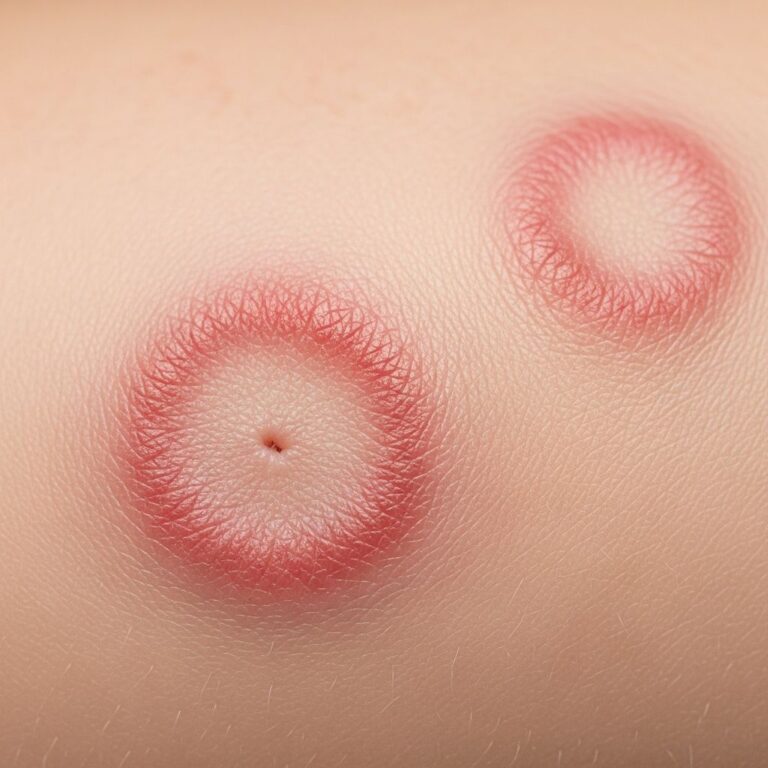
Lesions emerge as
pruritic papules and pustules
on the nape and occipital scalp, 2–4 mm in size, often excoriated. Untreated, they evolve:- Early stage: Follicular papules ± pustules, erythema, itching/tenderness.
- Intermediate: Coalescing into plaques with comedone-like plugs.
- Late stage: Firm keloid-like nodules (up to 3 cm), hypertrophic scars, alopecia.
Symptoms include intense itch (worsened by mast cell infiltrate), pain, suppuration if infected. Hyperpigmentation and sinus tracts may develop. Differential includes bacterial folliculitis, tinea capitis, lichen planopilaris.
Diagnosis
Diagnosis is
clinical
, based on lesion morphology and location in at-risk individuals. Dermoscopy reveals perifollicular scale, white dots (comedones), hair tufting. Biopsy confirms if atypical:Related Stories



- Acute: Neutrophilic/mastocytic perifolliculitis.
- Chronic: Granulomatous inflammation, naked hair shafts, fibrosis.
Rule out pseudofolliculitis barbae, keloidal folliculitis variants.
Treatment of folliculitis keloidalis
Treatment is
multimodal
, emphasizing prevention alongside medical/surgical options. Early intervention halts progression.Prevention and lifestyle modifications
Core strategy: Avoid triggers.
- Cease close shaving; allow 6 mm nape hair growth.
- Looser collars, no neck chains/helmets.
- Daily benzoyl peroxide (2.5–10%) or chlorhexidine washes.
- Avoid occlusive hair products.
Medical treatments
| Stage/Severity | Treatments | Details |
|---|---|---|
| Mild (papular) | Topical steroids ± retinoids | Clobetasol 0.05% ointment nightly; tazarotene 0.1% gel. |
| Inflammatory | Topical/systemic antibiotics | Clindamycin/benzoyl peroxide; doxycycline 100 mg daily (3–12 weeks). |
| Moderate plaques | Intralesional steroids | Triamcinolone 10–40 mg/mL every 4–6 weeks; flattens nodules. |
| Severe/refractory | Retinoids, lasers | Isotretinoin 20 mg daily; Nd:YAG/CO2 laser. |
Maintenance: Topical steroid/retinoid + antiseptics. Cryotherapy offers relief but risks hypopigmentation.
Surgical options
For extensive scarring: Excision with grafting, though recurrence possible. Laser ablation (pulsed dye, CO2) reduces bulk.
Complications
- Scarring alopecia: Irreversible hair loss.
- Secondary infection: Abscesses, cellulitis.
- Cosmetic: Hypertrophic scars, hyper/hypopigmentation.
- Psychosocial: Embarrassment, reduced self-esteem.
Prevention
Proactive measures minimize flares:
- Grooming: Clippers over razors; longer nape styles.
- Hygiene: Antiseptic shampoos 2–3x/week.
- Clothing: Breathable fabrics, loose fits.
- Monitor early papules; treat promptly.
Further reading and references
For deeper insights, consult peer-reviewed resources on scarring alopecias and folliculitis management.
Frequently Asked Questions
Is folliculitis keloidalis curable?
No, but early treatment prevents progression to severe scarring. Maintenance therapy controls symptoms.
Can women get folliculitis keloidalis?
Yes, though rarer than in men; similar triggers apply.
Does shaving worsen it?
Yes, close shaving is a primary trigger; grow hair longer at nape.
How long do treatments take?
Weeks to months; intralesional steroids show rapid improvement, lasers multiple sessions.
Will I lose all my hair?
Not if treated early; advanced cases cause localized alopecia.
References
- Folliculitis Keloidalis — Scarring Alopecia Foundation. Accessed 2026. https://scarringalopecia.org/folliculitis-keloidalis
- Acne Keloidalis Nuchae — StatPearls, NCBI Bookshelf, NIH. 2023-07-17. https://www.ncbi.nlm.nih.gov/books/NBK459135/
- Acne Keloidalis Nuchae — Aglow Dermatology. Accessed 2026. https://www.dinastrachanmd.com/acne-keloidalis-nuchae/
- Acne Keloidalis Nuchae — JAMA Dermatology. 2023. https://jamanetwork.com/journals/jamadermatology/fullarticle/2835829
- Acne Keloidalis Nuchae: A Papular Rash on the Scalp — Dermatology Advisor. Accessed 2026. https://www.dermatologyadvisor.com/ddi/acne-keloidalis-nuchae-papular-rash-on-scalp/
- Acne Keloidalis — Skin of Color Society. Accessed 2026. https://skinofcolorsociety.org/discover-patients-public/public-education/acne-keloidalis
- Acne Keloidalis Nuchae: What It Is, Causes & Treatment — Cleveland Clinic. 2023-11-01. https://my.clevelandclinic.org/health/diseases/22891-acne-keloidalis-nuchae
Similar Articles








Read full bio of medha deb