Food Allergies And Eczema: 5 Common Triggers
Unraveling the complex relationship between food allergies and eczema, from triggers to management strategies for better skin health.
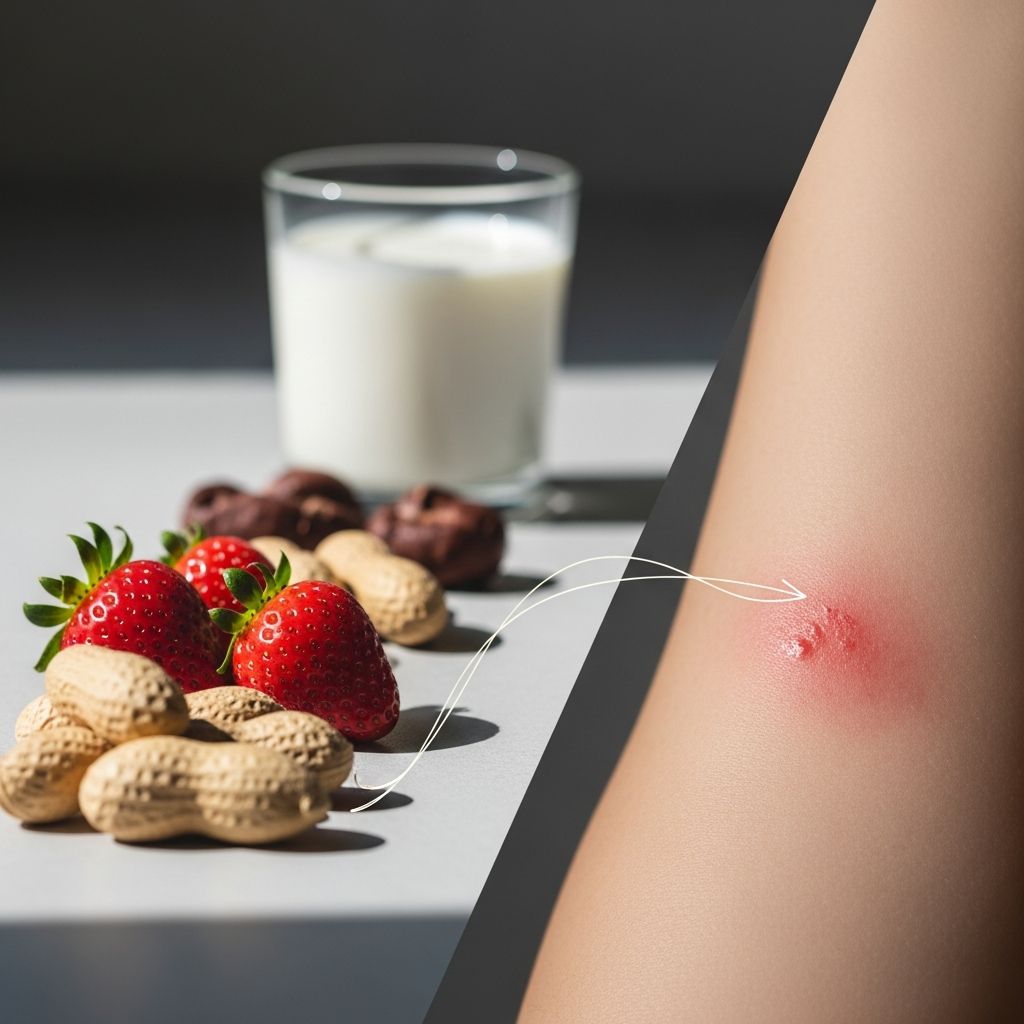
Eczema, or atopic dermatitis, frequently coexists with food allergies, particularly in children, where up to 30% of cases show this overlap. While food allergies do not cause eczema, they can trigger flare-ups in susceptible individuals, complicating management.
Understanding the Connection Between Eczema and Food Allergies
The relationship between eczema and food allergies forms part of the ‘allergic march,’ a sequence where eczema often precedes other allergic conditions like food allergies, hay fever, and asthma. Research indicates that a compromised skin barrier in eczema allows allergens to penetrate more easily, potentially sensitizing the immune system and increasing food allergy risk.
In infants and young children, severe eczema heightens susceptibility. Studies show eczema typically develops first, acting as a risk factor rather than a consequence of food allergies. This dynamic underscores the importance of early skin barrier protection to potentially mitigate allergy development.
Common Food Triggers for Eczema Flare-Ups
Several foods are notorious for provoking eczema symptoms in allergic individuals. These triggers prompt immune responses releasing histamines, leading to skin inflammation and itching.
- Dairy products: Milk, cheese, and yogurt top the list, especially in young children.
- Eggs: A leading allergen in toddlers, often outgrown but capable of causing persistent flares if hidden in baked goods.
- Wheat and soy: Common in infants; wheat links to celiac disease in some cases.
- Peanuts and tree nuts: Such as almonds, walnuts, and cashews, these persist into adulthood and trigger severe reactions.
- Fish, shellfish, and sesame: Less common but significant for flare-ups in sensitive populations.
Acidic foods like tomatoes, citrus, and pineapple, or irritants like spices and preservatives, can exacerbate symptoms without true allergy, through direct skin contact or non-IgE mechanisms.
Diagnostic Approaches: Testing for Food Allergies in Eczema Patients
Identifying triggers requires careful testing, as symptoms alone are unreliable. Skin prick tests detect IgE-mediated allergies but yield false positives in eczema due to skin inflammation. Blood tests for specific IgE are preferable, though not definitive without oral food challenges—the gold standard.
| Test Type | Pros | Cons | Suitability for Eczema |
|---|---|---|---|
| Skin Prick Test | Quick, inexpensive | False positives common in inflamed skin | Limited |
| Specific IgE Blood Test | No skin interference | Does not confirm clinical allergy | Preferred initial step |
| Oral Food Challenge | Confirms true allergy | Time-consuming, risk of reaction | Definitive under supervision |
Elimination diets should be supervised to avoid nutritional deficits, starting with high-risk foods under medical guidance.
Eczema Severity, Duration, and Food Allergy Persistence
Recent research reveals eczema characteristics influence food allergy resolution. Children with eczema onset at 4-6 months, greater severity, or prolonged duration are less likely to outgrow allergies. A non-linear pattern shows probability of tolerance dips with short durations, peaks modestly at 8-10 years, then declines.
- Early-onset eczema (0-3 months): Higher outgrowing odds.
- Severe cases: Strongly linked to persistent allergies.
- Management focus: Effective eczema control may foster tolerance development.
This interplay suggests skin barrier integrity and immune modulation are pivotal.
Strategies for Managing Eczema Triggered by Food Allergies
Related Stories



Primary management involves allergen avoidance after confirmed diagnosis. Key steps include:
- Strict dietary elimination of identified triggers.
- Meticulous label reading for hidden allergens in processed foods.
- Nutritional counseling to maintain balanced intake.
- Moisturizers and topical treatments to repair skin barrier, reducing sensitization risk.
For non-allergic irritants, simple avoidance suffices without broad restrictions. Emerging therapies like baked egg tolerance induction show promise for select cases, potentially resolving chronic flares.
Preventive Measures and Early Intervention
Preventing food allergy development in eczema-prone infants involves timely allergen introduction alongside skin care. Guidelines recommend moisturizing from birth and introducing peanuts/eggs around 4-6 months for high-risk babies, under guidance. Robust skin protection may interrupt the eczema-allergy pathway.
Parental education on recognizing flares versus true allergies prevents unnecessary restrictions.
FAQs: Eczema and Food Allergies
Does food allergy cause eczema?
No, eczema typically precedes and may predispose to food allergies; foods aggravate existing eczema.
Can all eczema patients be tested for food allergies?
Testing is recommended for moderate-severe cases or immediate reaction histories, not routinely for mild eczema.
How long does it take to see improvement after eliminating triggers?
Flare reduction often occurs within days to weeks, but full clearance requires comprehensive management.
Are elimination diets safe for children?
Only short-term and supervised; prolonged diets risk malnutrition without professional oversight.
Can adults develop food allergy-related eczema?
Less common than in children, but possible, especially with new-onset allergies.
Holistic care integrating dermatology, allergy expertise, and nutrition optimizes outcomes.
References
- Role of Food Allergies in Eczema — Allergy Pacific. 2023. https://allergypacific.com/the-role-of-food-allergies-in-eczema/
- Eczema and food allergies: Quick guide for parents — Summer Health. 2024. https://www.summerhealth.com/blog/eczema-food-allergy-test
- Allergy and eczema — National Eczema Society. 2024. https://eczema.org/information-and-advice/triggers-for-eczema/allergy-and-eczema/
- Study Finds Link Between Eczema Patterns and Children’s Ability to Outgrow Food Allergies — ACAAI. 2024. https://acaai.org/news/study-finds-link-between-eczema-patterns-and-childrens-ability-to-outgrow-food-allergies/
- Skin Injury May Bring on Food Allergies — Yale School of Medicine. 2023. https://medicine.yale.edu/news-article/skin-injury-may-bring-on-food-allergies/
- Food allergy and eczema — Skin Health Info. 2024-06. https://www.skinhealthinfo.org.uk/wp-content/uploads/2024/06/Food-allergy-and-eczema-PIL-June-2024.pdf
Similar Articles








Read full bio of medha deb