Food Allergy, Intolerance, or Sensitivity: What’s the Difference?
Understanding the critical differences between food allergies, intolerances, and sensitivities for better health management.
Understanding Food Reactions: Allergy, Intolerance, and Sensitivity
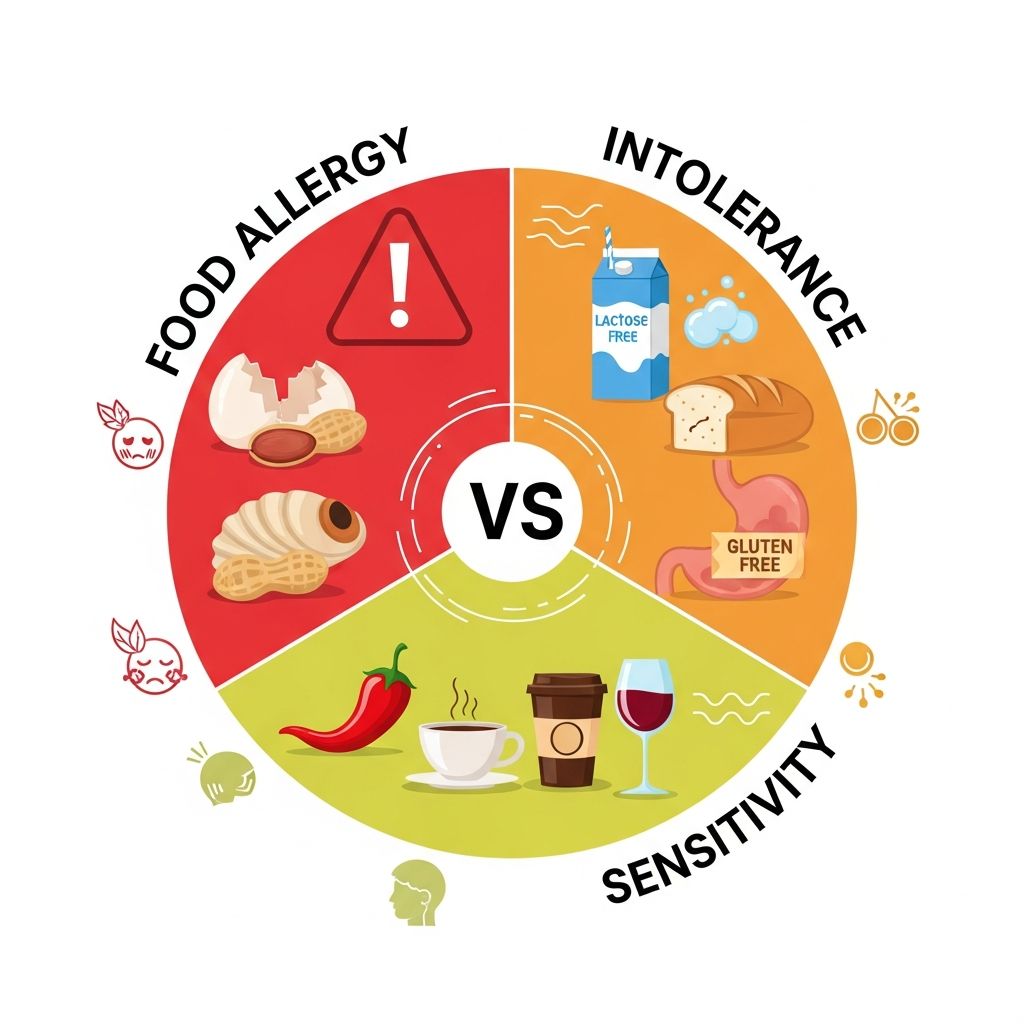
Many people experience adverse reactions to certain foods, yet the underlying causes can vary dramatically. While terms like “food allergy,” “food intolerance,” and “food sensitivity” are often used interchangeably in everyday conversation, they represent distinctly different physiological conditions with different causes, symptoms, and treatment approaches. Understanding these differences is not merely academic—it can significantly impact how you manage your health and which foods you need to avoid or limit.
The confusion surrounding these terms has become increasingly common as more people report food-related issues. However, misidentifying a condition can lead to unnecessary dietary restrictions, potential nutritional deficiencies, or worse, a false sense of security when facing a genuinely dangerous allergic reaction. This article explores the fundamental differences between these three conditions and explains why accurate identification matters for your health and wellbeing.
What Is a Food Allergy?
A true food allergy is an immune system response to a specific food protein that the body mistakenly identifies as harmful. When you have a food allergy, your immune system produces immunoglobulin E (IgE) antibodies against particular food proteins, treating them as dangerous invaders. This is an immunologically mediated reaction, meaning the immune system is directly involved in the response.
Food allergies are relatively rare, affecting only 2 to 5 percent of all food-induced adverse reactions. However, their potential severity makes them the most serious category of food reactions. Unlike intolerances and sensitivities, food allergies can trigger life-threatening anaphylactic reactions, making accurate diagnosis and management critical.
Characteristics of Food Allergies
True food allergies have several defining characteristics that distinguish them from other food reactions:
Immediate onset: Allergic reactions typically occur within minutes to two hours of consuming the allergen. The speed of onset is one of the most telling signs of a true allergy, as opposed to intolerances or sensitivities, which develop more slowly.
Specificity: Food allergies are highly specific and occur only in response to particular food components. A minute amount of the allergen is sufficient to trigger a reaction, meaning even trace amounts in cross-contamination can cause problems.
Severity potential: Allergic reactions can range from mild to severe, with anaphylaxis being the most dangerous form. Symptoms may include swelling of the lips, mouth, and throat; difficulty breathing; and cardiovascular collapse. Anaphylactic reactions are only seen with food allergies and never occur with intolerances or sensitivities.
Consistency: Unlike intolerances where symptoms may vary based on the amount consumed, allergic reactions follow a predictable pattern each time the allergen is encountered.
What Is Food Intolerance?
Food intolerance is fundamentally different from allergy because it does not involve an immune system response. Instead, food intolerances result from non-immunologic mechanisms in the digestive system, typically stemming from enzyme deficiencies, malabsorption, or other functional issues. Food intolerances make up the majority of food sensitivity reactions and are much more common than true allergies.
The most well-known examples of food intolerance are lactose intolerance and histamine intolerance. In lactose intolerance, individuals lack sufficient quantities of the enzyme lactase, which is necessary to break down lactose (milk sugar) in the digestive tract. Without adequate lactase, lactose accumulates in the small intestine, causing digestive symptoms. This condition affects approximately 65 percent of the world’s population and is particularly prevalent in African Americans, Hispanics, and Asian populations.
Related Stories



Key Features of Food Intolerances
Dose-dependent reactions: Unlike allergies, food intolerances are non-specific and require a threshold amount of the food to produce symptoms. Many people with lactose intolerance can tolerate small amounts of dairy, but symptoms worsen as consumption increases.
Delayed onset: Food intolerances are characterized by a delay of several hours between eating and symptom onset, with symptoms often lasting for days. This delayed response makes it harder to identify the culprit food.
Digestive focus: Intolerance symptoms are generally limited to the digestive system and include abdominal pain, bloating, gas, nausea, and diarrhea. Unlike allergies, intolerances never produce systemic reactions like anaphylaxis or respiratory distress.
No immune involvement: Standard allergy tests show no elevated IgE antibodies in food intolerance cases. This is a key distinguishing factor that helps clinicians differentiate intolerances from true allergies.
Common Types of Food Intolerances
Lactose intolerance: The most prevalent food intolerance worldwide, affecting those who lack sufficient lactase enzyme production.
Histamine intolerance: Results from deficiency of the enzyme diamine oxidase (DAO), which breaks down histamine in fermented foods, aged cheeses, cured meats, and alcoholic beverages. Estimated to affect roughly 1 percent of the population, though true prevalence is unknown.
FODMAP intolerance: Affects individuals who have difficulty absorbing certain carbohydrates (Fermentable Oligosaccharides, Disaccharides, Monosaccharides, and Polyols), commonly managed through the low-FODMAP diet.
Caffeine sensitivity: While not a true intolerance for most people, some individuals have difficulty metabolizing caffeine found in coffee, tea, and chocolate.
What Is Food Sensitivity?
Food sensitivity occupies a middle ground between true allergy and intolerance. Food sensitivities involve an inappropriate activation of the immune system upon exposure to a particular food, but in a different way than classical allergies. Rather than triggering IgE antibodies, food sensitivities typically involve IgG-mediated immune responses, and some may be associated with autoimmune mechanisms, though research on these mechanisms remains limited.
Sensitivities are often harder to identify and manage than allergies or intolerances, partly because they lack standardized diagnostic tests and partly because their symptoms are diverse and can be delayed. Many food sensitivities are discovered through elimination diets rather than medical testing, making them more challenging for healthcare providers to validate.
Symptoms and Characteristics of Food Sensitivities
Food sensitivities can produce a wide range of symptoms that extend beyond the digestive system, though they never include anaphylaxis. Common symptoms include:
Gastrointestinal symptoms: Abdominal pain, bloating, diarrhea, vomiting, and nausea.
Systemic symptoms: Headaches, migraines, fatigue, brain fog, and difficulty concentrating.
Dermatological symptoms: Skin rashes, hives, and eczema flare-ups.
Musculoskeletal symptoms: Joint pain and inflammation.
Psychological symptoms: Anxiety and mood changes.
One notable characteristic of food sensitivities is that symptoms can appear immediately or be delayed for several days, making them difficult to correlate with specific foods. Additionally, symptoms from ongoing food sensitivities can lead to longer-term issues, including damage to the gut lining.
Leaky Gut and Food Sensitivities
A contributing factor in food sensitivities appears to be increased intestinal permeability, commonly known as “leaky gut.” When the intestinal lining becomes too permeable, unwanted molecules—including partially digested food proteins and gut bacteria—can cross the gut barrier and enter the bloodstream. The immune system perceives these molecules as foreign invaders and mounts an inappropriate response.
This condition is often seen in people with autoimmune diseases, including celiac disease. The relationship between gut microbiota and food sensitivities is also emerging as an important factor, with research suggesting that disruption in an individual’s gut microbiota may lead to changes in how the immune system recognizes and reacts to certain foods.
Comparison of Key Differences
| Feature | Food Allergy | Food Intolerance | Food Sensitivity |
|---|---|---|---|
| Immune involvement | Yes (IgE-mediated) | No (non-immune) | Yes (IgG-mediated) |
| Onset time | Minutes to 2 hours | Several hours to days | Immediate to days |
| Amount required | Trace amounts | Threshold amount needed | Variable |
| Anaphylaxis risk | Yes | No | No |
| Digestive symptoms only | No (systemic) | Yes | No (can be systemic) |
| IgE test results | Elevated | Normal | Normal |
| Prevalence | 2-5% of reactions | Majority of reactions | Increasing recognition |
Diagnostic Methods
Accurate diagnosis is crucial for appropriate management and distinguishing between these conditions. Different diagnostic approaches are used for each type of food reaction.
Diagnosing Food Allergies
Food allergies can be identified through several clinical methods:
Skin prick testing: A small amount of allergen extract is placed on the skin, which is then pricked. A reaction indicates IgE antibodies to that food.
IgE blood tests: Serum measurements of IgE antibodies to specific foods help confirm allergies. Elevated levels suggest the presence of specific IgE antibodies.
Patient history: A detailed history is important in suggesting which foods should be tested, as most allergy tests are sensitive rather than specific.
Oral food challenge: When history and IgE levels suggest possible allergy but results are inconclusive, an oral food challenge may be performed under medical supervision to definitively confirm or rule out an allergy.
People with true food allergies often have a positive history of atopic disorders such as asthma, allergic rhinitis, or eczema, and may have family members with food allergies.
Diagnosing Food Intolerances
Food intolerances cannot be diagnosed through immune-based testing. Instead, diagnosis relies on:
Elimination tests: The suspected food is removed from the diet for a period of time while symptoms are monitored. If symptoms improve during elimination and return upon reintroduction, the diagnosis is confirmed.
Dietitian supervision: Food elimination should be conducted under the supervision of a registered dietitian to ensure nutritional adequacy and proper test execution.
Structured reintroduction: After the elimination period, foods are slowly reintroduced one at a time to confirm which specific foods trigger symptoms.
Diagnosing Food Sensitivities
Diagnosing food sensitivities is the most challenging of the three conditions. Most food sensitivities are self-reported and discovered through elimination diets, as commercial testing is controversial. IgG testing, commonly marketed for food sensitivity identification, is considered inaccurate by most experts, as elevated antibody levels may actually indicate tolerance rather than intolerance.
The most reliable approach is an elimination diet lasting 4 to 6 weeks, followed by careful reintroduction of eliminated foods while monitoring symptoms under professional guidance. This process helps identify trigger foods and establish a sustainable long-term eating pattern.
Why Does This Distinction Matter?
Correctly identifying which type of food reaction you have is critical for several reasons:
Safety: True food allergies require strict avoidance and emergency preparedness for anaphylaxis. Misdiagnosing a sensitivity as an allergy may create unnecessary anxiety, but misidentifying an allergy as a sensitivity could be dangerous.
Dietary restrictions: Unnecessarily restricting foods based on misdiagnosis can lead to nutritional deficiencies and reduced quality of life. Those with intolerances or sensitivities may tolerate small amounts of trigger foods, whereas allergies typically require complete avoidance.
Treatment approach: Allergies require complete elimination and emergency medications; intolerances can often be managed through portion control or enzyme supplements; sensitivities may improve with gut healing and dietary modifications.
Health monitoring: Understanding your specific condition helps you work with healthcare providers to develop appropriate management strategies and monitor for complications.
Management and Treatment Strategies
For food allergies: Complete avoidance of the allergen is necessary. Individuals should carry an epinephrine auto-injector and wear medical alert identification. Education about label reading and cross-contamination prevention is essential.
For food intolerances: Management often involves reducing or eliminating the trigger food or using enzyme supplements (such as lactase for lactose intolerance). Many people can consume small amounts without triggering symptoms.
For food sensitivities: An elimination diet followed by careful reintroduction is the primary diagnostic and management tool. Healing the gut through diet, lifestyle changes like exercise and stress reduction, and addressing underlying conditions like dysbiosis may help improve symptoms over time. Food sensitivities can improve with proper management, unlike allergies which persist throughout life.
Frequently Asked Questions
Q: Can food allergies develop later in life?
A: Yes, food allergies can develop at any age, though they are more common in children. Adult-onset allergies are possible, particularly to shellfish and tree nuts.
Q: Is there a test that can definitively diagnose food sensitivity?
A: Currently, there is no standardized medical test for food sensitivities. Elimination diets under professional supervision remain the most reliable diagnostic approach.
Q: Can someone outgrow a food allergy?
A: Some food allergies, particularly milk and egg allergies in children, may resolve with time. However, allergies to peanuts, tree nuts, and shellfish typically persist into adulthood.
Q: How long should an elimination diet last?
A: Most elimination diets are conducted for 4 to 6 weeks, followed by careful reintroduction of eliminated foods one at a time to identify specific triggers.
Q: Can food sensitivities cause permanent damage?
A: Ongoing food sensitivities can lead to damage of the gut lining over time, increasing intestinal permeability and potentially leading to additional food reactions and sensitivities if not properly managed.
Q: Should I take an epinephrine auto-injector if I have a food intolerance?
A: No. Epinephrine auto-injectors are only necessary for true food allergies with anaphylaxis risk. Food intolerances and sensitivities do not cause anaphylactic reactions.
Conclusion
While food allergies, intolerances, and sensitivities can produce overlapping symptoms and may be triggered by the same foods, they are fundamentally different conditions with distinct underlying mechanisms. Food allergies involve the immune system and can be life-threatening; food intolerances are digestive problems without immune involvement; and food sensitivities represent an inappropriate immune response that differs from classical allergies. Accurate diagnosis is essential for appropriate management, nutritional adequacy, and quality of life. If you suspect you have a food-related condition, consulting with a healthcare provider or registered dietitian can help you determine which category applies to your situation and develop an effective management plan.
References
- Food Allergy and Food Intolerance: What’s the Difference? — News Medical. 2024. https://www.news-medical.net/health/Food-Allergy-and-Food-Intolerance-Whats-the-Difference.aspx
- Food Sensitivity, Intolerance, or Allergy: What’s the Difference? — Autoimmune Institute. https://www.autoimmuneinstitute.org/articles/food-sensitivity-intolerance-or-allergy-whats-the-difference
- Food Sensitivity, Allergy, Intolerance: What Are They? — ZOE. https://zoe.com/learn/what-is-food-sensitivity-intolerance-and-allergy
Similar Articles








Read full bio of medha deb