Food Allergy: 9 Common Triggers, Symptoms, And Treatments
Understanding immunological reactions to food proteins: from skin symptoms to diagnosis, treatment, and prevention strategies.

Food allergy is an
immunological reaction
to a food protein that is eitherimmediate
(occurring seconds to minutes after eating or touching the food item) ordelayed
(occurring hours or days later). Allergic reactions may occur when the affected person eats or touches a tiny amount of the responsible protein.Food allergy and the skin
The skin is frequently involved in food allergy, manifesting as
urticaria
(hives),angioedema
(swelling), oratopic dermatitis
(eczema). Immediate reactions often present with itchy wheals that appear rapidly after exposure, while delayed reactions may exacerbate chronic eczema, particularly in infants and young children. In children with moderate-to-severe atopic dermatitis, food allergens like cow’s milk and eggs can trigger flares due to a defective skin barrier facilitating epicutaneous sensitization.Urticaria from food allergy typically resolves within 24 hours but can recur with re-exposure. Angioedema may affect the lips, eyelids, or extremities. Contact urticaria can occur from touching allergenic foods, such as raw fruits in pollen-food allergy syndrome.
Other food allergy symptoms
Food allergies can affect multiple systems beyond the skin.
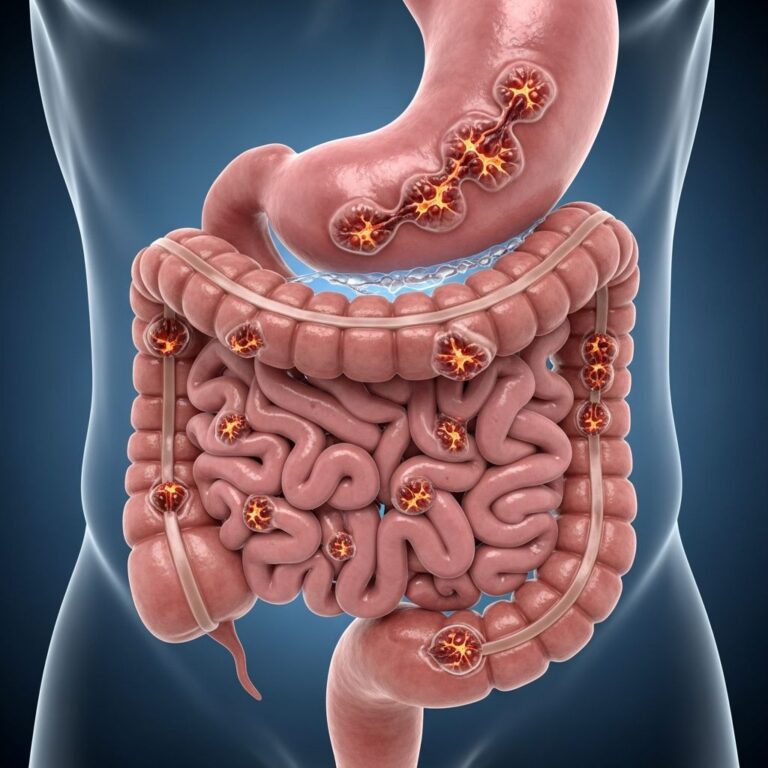
Gastrointestinal symptoms
include nausea, vomiting, abdominal pain, and diarrhea.Circulatory involvement
may lead to anaphylaxis, characterized by hypotension, tachycardia, and shock. Respiratory symptoms such as wheezing, laryngeal edema, or rhinoconjunctivitis can also occur.About
90% of systemic allergic reactions
are due to a limited group of foods:- Cow’s milk
- Hen’s egg
- Peanut
- Soy
- Wheat
- Sesame
- Tree nuts (e.g., cashew, hazelnut)
- Fish
- Shellfish
Numerous other foods and plants occasionally cause allergy, including fruits (apple, peach), vegetables (celery), and spices. Preservatives like parabens, flavorings, or fragrances added to foods can also provoke reactions. In pollen-food allergy syndrome, raw fruits and vegetables cross-react with pollen proteins, causing oral itching but rarely systemic symptoms.
Causes
Food allergies are primarily
IgE-mediated
(type I hypersensitivity), where allergen-specific IgE antibodies bind to mast cells and basophils, triggering degranulation upon re-exposure. This leads to immediate release of histamine and other mediators. Non-IgE-mediated reactions involve T-cell responses and occur delayed, often in the gut (e.g., food protein-induced enterocolitis syndrome, FPIES).In infants, a defective epidermal barrier in atopic dermatitis increases risk of food sensitization, particularly to cow’s milk protein allergy (CMPA) or egg. Genetic factors, family history of atopy, and early-life exposures influence susceptibility. Prevalence is higher in children (up to 10% under 5 years), with many outgrowing allergies by school age.
Diagnosis
Food allergy diagnosis begins with a
careful history
of symptoms and their temporal relationship to food intake, supported by physical examination. Key is documenting immediate symptoms post-ingestion or patterns of delayed flares. Unfortunately, history and tests are not entirely reliable in all cases.Main diagnostic tests include:
- Skin prick testing (SPT): Drops of allergen extracts on skin, pricked to introduce protein. Wheal >3mm indicates sensitization (high sensitivity, moderate specificity).
- Serum-specific IgE (RAST or ImmunoCAP): Blood test measuring allergen-specific IgE levels. Useful when SPT is contraindicated.
- Food challenge: Gold standard; supervised graded exposure in hospital setting due to anaphylaxis risk. Open or double-blind placebo-controlled.
- Patch testing: For delayed, non-IgE reactions in atopic dermatitis.
Related Stories



For children with persistent moderate-severe eczema despite optimized topical therapy, testing for foods like milk or egg is warranted if history suggests. Elimination diets (e.g., 2-3 weeks cow’s milk exclusion) can confirm CMPA or FPIES without formal testing. Over-reliance on tests without history leads to unnecessary avoidance.
Other reactions
Not all adverse food reactions are allergic.
Intolerance
causes similar symptoms like urticaria or dermatitis but is dose-dependent and non-immunological:- Enzyme deficiencies: e.g., lactose intolerance (lactase deficiency).
- Pharmacological: e.g., tyramine in cheese causing migraines.
- Pharmacological toxins: e.g., scombroid from histamine in spoiled fish.
- Psychological: e.g., gustatory sweating.
These differ from allergy as they lack immune memory and reproducibility at low doses.
Food deficiencies
Skin conditions may arise from
dietary deficiencies
due to restrictive avoidance of presumed allergens. Common in elimination diets for eczema:| Nutrient | Sources Avoided | Skin Manifestation |
|---|---|---|
| Vitamin B2 (riboflavin) | Dairy | Angular cheilitis, glossitis |
| Vitamin B6 | Meat, dairy | Seborrheic dermatitis |
| Vitamin B12 | Meat, dairy, eggs | Hyperpigmentation |
| Essential fatty acids | Cow’s milk, nuts | Dry scaly skin |
| Zinc | Meat, legumes | Acrodermatitis enteropathica-like rash |
Nutritional counseling is essential during long-term restrictions, especially in children.
Treatment
The
mainstay of management
is identifying culprit foods and strictavoidance
. Read labels, inform restaurants, and educate on hidden allergens (e.g., casein in milk derivatives).Prescribed treatments based on symptoms:
- Mild urticaria/itching: Non-sedating antihistamines (e.g., cetirizine).
- Eczema flares: Topical corticosteroids, emollients.
- Anaphylaxis risk: Epinephrine auto-injector (e.g., EpiPen), train on use.
- Gastrointestinal: Antihistamines, rehydration.
Emerging therapies include oral immunotherapy (OIT) for desensitization in children ≥4 years with persistent peanut/tree nut allergies, under specialist supervision. Biologics like omalizumab may adjunct in severe cases. Supervised introduction of baked milk/egg can promote tolerance.
Prevention
Preventing food allergy focuses on early introduction of allergens in infants. Recent guidelines recommend:
- Introduce solids around 6 months, including peanut/egg for high-risk infants (eczema, egg allergy) after assessment.
- Avoid skin contact with allergens in moisturizers/baths for eczematous babies.
- Exclusive breastfeeding or hydrolyzed formula; no delay in allergenic foods.
For peanuts, early introduction (4-6 months) in high-risk infants reduces allergy risk by 80% per LEAP study guidelines. Control eczema to minimize sensitization.
Frequently Asked Questions
What are the most common food allergens?
A: Cow’s milk, egg, peanut, tree nuts, soy, wheat, fish, shellfish account for 90% of reactions.
How do I know if it’s allergy or intolerance?
A: Allergy is immune-mediated, occurs with tiny amounts, reproducible; intolerance is dose-dependent, non-immune.
Can food allergy cause eczema?
A: Yes, especially in infants with severe atopic dermatitis; confirmed by history and testing.
What if my child has a reaction to new food?
A: Stop food, monitor for swelling/hives/vomiting/breathing issues; seek urgent care if severe.
Do most children outgrow food allergies?
A: Yes, many outgrow milk/egg by school age; peanut/tree nuts more persistent.
Is allergy testing reliable?
A: SPT and IgE tests indicate sensitization but require confirmation with challenge; false positives common.
References
- Food allergy – DermNet — DermNet New Zealand. 2023-10-15. https://dermnetnz.org/topics/food-allergy
- Unraveling the diet-dermatitis connection: A systematic review of dietary exclusion in children with atopic dermatitis — Cosmoderma. 2023-12-01. https://cosmoderma.org/unraveling-the-diet-dermatitis-connection-a-systematic-review-of-dietary-exclusion-in-children-with-atopic-dermatitis/
- Allergy testing – Best Practice Advocacy Centre New Zealand — bpac.org.nz. 2011-12-01. https://bpac.org.nz/BT/2011/December/docs/best_tests_dec2011_allergy_pages_2-13.pdf
- Pollen-food allergy syndrome – DermNet — DermNet New Zealand. 2023-08-20. https://dermnetnz.org/topics/pollen-food-allergy-syndrome
- How to Introduce Solid Foods to Babies for Allergy Prevention — Australasian Society of Clinical Immunology and Allergy (ASCIA). 2024-01-10. https://www.allergy.org.au/patients/allergy-prevention/ascia-how-to-introduce-solid-foods-to-babies
Similar Articles








Read full bio of Sneha Tete