Foods High In Both Magnesium And Potassium: 5 Dual-Purpose Picks
Essential minerals for heart health, bone strength, and overall wellness
Foods High in Magnesium and Potassium
Magnesium and potassium are two essential minerals that play critical roles in maintaining optimal health and supporting numerous bodily functions. While many people focus on getting enough vitamins, the importance of these electrolytes and minerals is often overlooked. Both magnesium and potassium are vital for heart function, muscle contraction, nerve transmission, and bone health. Understanding which foods are rich in these minerals can help you make informed dietary choices and ensure you’re meeting your daily nutritional needs.
Why Magnesium and Potassium Matter
Magnesium is involved in over 300 biochemical reactions in the body, including energy production, muscle function, and nervous system regulation. It also plays a crucial role in maintaining normal heart rhythm and supporting bone density. Potassium, on the other hand, is essential for maintaining proper fluid balance, regulating blood pressure, and supporting heart health. Together, these minerals work synergistically to promote cardiovascular wellness and overall metabolic function.
According to dietary guidelines, adult men should consume approximately 400-420 mg of magnesium daily, while women need 310-320 mg. For potassium, the recommended adequate intake is 3,400 mg per day for adult men and 2,600 mg for adult women. Despite these clear recommendations, many Americans fall short of meeting their daily requirements for these essential minerals.
Top Magnesium-Rich Foods
Incorporating magnesium-rich foods into your diet is one of the most effective ways to support your overall health. Here are some of the best food sources of magnesium:
Leafy Greens
Dark leafy greens are among the richest sources of magnesium available. Spinach, kale, and Swiss chard contain substantial amounts of this mineral in every serving. One cup of cooked spinach provides approximately 157 mg of magnesium, making it an excellent choice for meeting your daily needs. These vegetables are also low in calories and rich in other nutrients, making them ideal for a balanced diet.
Nuts and Seeds
Nuts and seeds are convenient sources of magnesium that can be easily incorporated into snacks or meals. Almonds contain about 76 mg of magnesium per ounce, while pumpkin seeds provide approximately 151 mg per quarter cup. Other excellent options include cashews, sunflower seeds, and Brazil nuts. These foods also provide healthy fats and protein, making them nutrient-dense choices.
Whole Grains
Whole grains like brown rice, quinoa, and whole wheat bread are good sources of magnesium. One cup of cooked brown rice contains approximately 86 mg of magnesium. Choosing whole grain options over refined grains not only increases your magnesium intake but also provides additional fiber and nutrients.
Legumes
Beans and lentils are excellent plant-based sources of magnesium. Black beans contain about 60 mg of magnesium per cooked cup, while chickpeas provide approximately 84 mg. These protein-rich foods are versatile and can be incorporated into various dishes throughout the week.
Avocado
This creamy fruit is rich in magnesium, providing about 58 mg per half avocado. Avocados also contain potassium, making them a dual-mineral powerhouse for supporting cardiovascular health. They can be added to salads, smoothies, or eaten on their own.
Related Stories



Dark Chocolate
For those with a sweet tooth, dark chocolate offers a delicious way to increase magnesium intake. One ounce of dark chocolate contains approximately 64 mg of magnesium. Choosing varieties with at least 70% cocoa content maximizes mineral content while minimizing added sugars.
Top Potassium-Rich Foods
Potassium is abundant in many nutritious foods, and incorporating a variety of these options into your daily diet can help you meet your mineral requirements. Here are some of the best potassium sources:
Bananas
Bananas are perhaps the most well-known potassium source, containing approximately 422 mg per medium fruit. This convenient, portable fruit makes it easy to boost your potassium intake with a quick snack. However, it’s important to note that other fruits and vegetables often contain comparable or higher amounts of potassium.
Sweet Potatoes
One medium sweet potato with skin provides approximately 103 mg of potassium. When prepared healthily, such as baked rather than fried, sweet potatoes make an excellent addition to meals. They also provide fiber, vitamin A, and other beneficial nutrients.
Beans and Legumes
Beans are nutritional powerhouses that are exceptionally high in potassium. One cup of cooked white beans contains approximately 1,189 mg of potassium, making them one of the highest dietary sources. Black beans, kidney beans, and pinto beans also provide substantial amounts of this essential mineral.
Fish and Seafood
Salmon and other fatty fish are excellent sources of potassium. A 3-ounce serving of cooked salmon provides approximately 319 mg of potassium, along with heart-healthy omega-3 fatty acids. Other options include mackerel, halibut, and tuna.
Citrus Fruits
Oranges and other citrus fruits are good sources of potassium. One medium orange contains approximately 237 mg of potassium. Orange juice also provides potassium, though consuming whole fruits is generally preferable due to higher fiber content.
Tomatoes
Fresh tomatoes and tomato products are rich in potassium. One medium tomato contains approximately 292 mg of potassium. Tomato sauce and paste, being concentrated forms, contain even higher amounts of this mineral per serving.
Leafy Greens
As mentioned in the magnesium section, leafy greens are also excellent sources of potassium. Spinach, Swiss chard, and kale all provide substantial amounts of this mineral along with magnesium, making them dual-purpose nutritional choices.
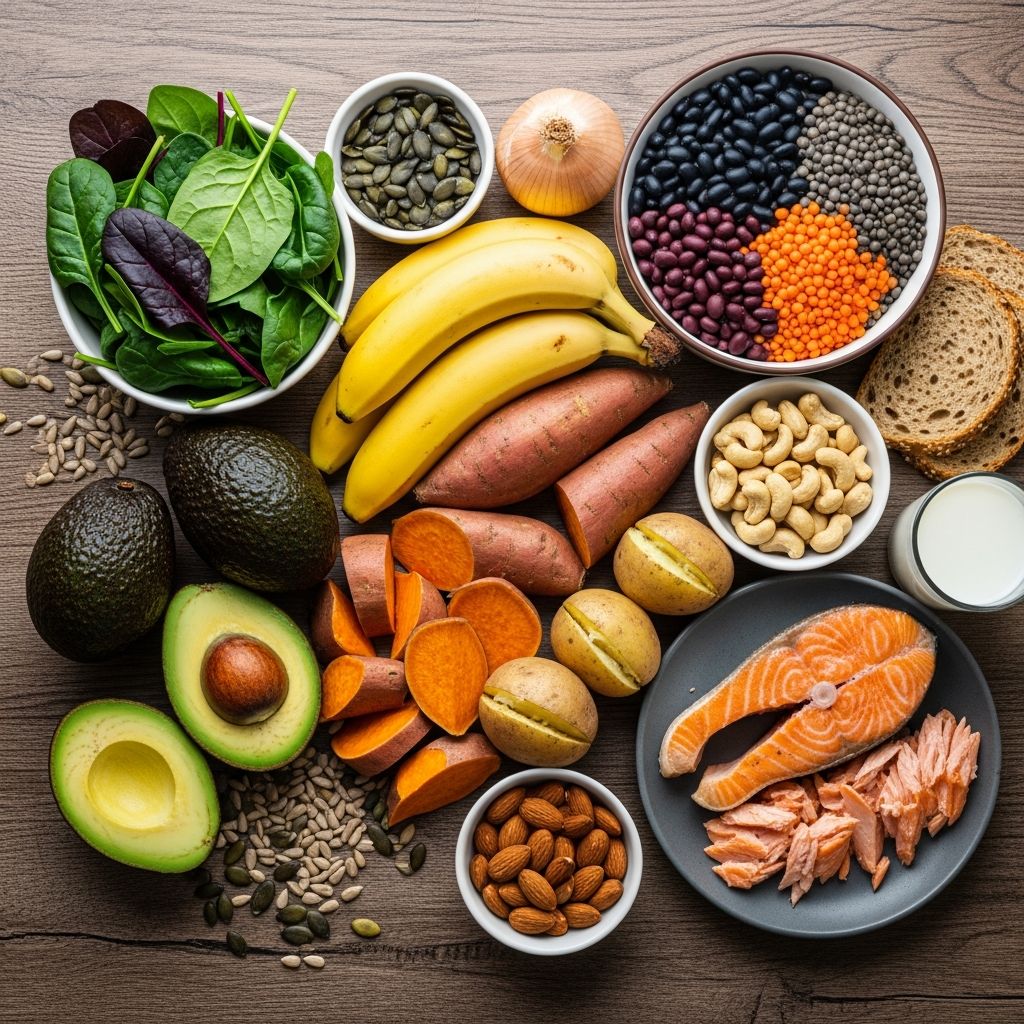
Foods High in Both Magnesium and Potassium
Some foods are particularly beneficial because they provide significant amounts of both minerals. These dual-purpose foods are especially valuable for optimizing your nutritional intake:
- Spinach and Dark Leafy Greens: One of the best choices for obtaining both minerals simultaneously, providing magnesium and potassium in meaningful amounts.
- Beans and Legumes: These plant-based proteins offer both minerals, making them excellent choices for vegetarians and vegans.
- Avocado: This nutrient-dense fruit provides both magnesium and potassium, along with healthy monounsaturated fats.
- Whole Grains: Quinoa and brown rice contain both minerals, particularly when prepared from whole grain sources.
- Nuts and Seeds: Pumpkin seeds and almonds provide meaningful amounts of both magnesium and potassium.
Daily Value Magnesium and Potassium Comparison Table
| Food Item | Serving Size | Magnesium (mg) | Potassium (mg) |
|---|---|---|---|
| Spinach (cooked) | 1 cup | 157 | 839 |
| Pumpkin Seeds | 1/4 cup | 151 | 270 |
| Almonds | 1 oz | 76 | 208 |
| Black Beans (cooked) | 1 cup | 60 | 611 |
| Avocado | 1/2 fruit | 58 | 485 |
| Banana | 1 medium | 32 | 422 |
| Sweet Potato (baked) | 1 medium | 28 | 103 |
| Dark Chocolate | 1 oz | 64 | 235 |
Health Benefits of Adequate Magnesium and Potassium Intake
Heart Health
Both minerals are crucial for cardiovascular health. Magnesium helps regulate heart rhythm and supports healthy blood pressure, while potassium helps counterbalance sodium and reduce blood pressure. Together, they help reduce the risk of heart disease and stroke.
Bone Strength
Magnesium is essential for bone structure and strength, working alongside calcium and vitamin D to maintain bone density and reduce the risk of osteoporosis. Potassium may also play a role in bone health by reducing bone loss associated with aging.
Muscle Function and Recovery
Both minerals are vital for proper muscle contraction and relaxation. Adequate intake can help reduce muscle cramps and support recovery after exercise. Athletes often pay special attention to potassium intake to maintain electrolyte balance during and after physical activity.
Energy Production
Magnesium is involved in ATP production, the primary energy currency of cells. This makes it essential for maintaining energy levels throughout the day and supporting physical activity.
Nervous System Function
Both minerals support proper nervous system function and help regulate neurotransmitter activity. Magnesium, in particular, may help reduce anxiety and support better sleep quality.
Tips for Incorporating More Magnesium and Potassium into Your Diet
- Start Your Day Right: Add spinach to your eggs or smoothies for a morning magnesium and potassium boost.
- Snack Smartly: Choose nuts, seeds, or a banana as an afternoon snack instead of processed options.
- Make Beans Your Friend: Incorporate legumes into salads, soups, and main dishes several times per week.
- Choose Whole Grains: Swap refined grains for whole grain versions to increase mineral content.
- Experiment with Leafy Greens: Try different varieties like kale, chard, and arugula to keep meals interesting.
- Prepare Avocado Toast: Top whole grain bread with avocado for a nutrient-dense breakfast or snack.
- Include Fish Regularly: Aim for fatty fish at least twice per week for potassium and omega-3 benefits.
- Roast Vegetables: Prepare sweet potatoes, Brussels sprouts, and other vegetables as flavorful side dishes.
Frequently Asked Questions
Q: Can I get enough magnesium and potassium from supplements instead of food?
A: While supplements can be helpful in specific cases, obtaining minerals from whole foods is generally preferable because foods provide these nutrients along with fiber, antioxidants, and other beneficial compounds. Consult with a healthcare provider before taking supplements to determine if they’re appropriate for you.
Q: Are there foods I should limit if I’m taking potassium-lowering medications?
A: Individuals taking certain medications, particularly ACE inhibitors or potassium-sparing diuretics, may need to monitor potassium intake. Always consult with your healthcare provider or registered dietitian about dietary restrictions related to your medications.
Q: What are the signs of magnesium or potassium deficiency?
A: Magnesium deficiency symptoms may include muscle cramps, fatigue, and irregular heartbeat. Potassium deficiency can cause weakness, muscle cramps, and irregular heart rhythms. If you experience these symptoms, consult a healthcare provider for proper evaluation and testing.
Q: Can cooking methods affect the magnesium and potassium content of foods?
A: Boiling vegetables can leach some potassium into the cooking water. Steaming or roasting are better cooking methods for preserving mineral content. Raw foods generally retain the highest levels of these minerals.
Q: How much magnesium and potassium do I really need daily?
A: Adult men need 400-420 mg of magnesium and 3,400 mg of potassium daily. Adult women need 310-320 mg of magnesium and 2,600 mg of potassium daily. Individual needs may vary based on age, health status, and medications.
References
- Dietary Reference Intakes (DRI) — National Academies of Sciences, Engineering, and Medicine. 2024. https://www.nationalacademies.org/our-work/dietary-reference-intakes-dris-and-recommended-dietary-allowances-rdas
- Magnesium in Cardiovascular Disease: More Is Not Always Better — American Heart Association Journal. 2023. https://www.ahajournals.org/
- Potassium and Blood Pressure Control — National Institutes of Health, National Heart, Lung, and Blood Institute. 2023. https://www.nhlbi.nih.gov/
- Nutrition Facts Database — U.S. Department of Agriculture (USDA). 2025. https://fdc.nal.usda.gov/
- The Role of Magnesium in Bone Health — Journal of the American College of Nutrition. 2023. https://www.tandfonline.com/toc/ujac20/current
Similar Articles








Read full bio of Sneha Tete