Foods with More Magnesium Than Pumpkin Seeds
Discover nutrient-packed foods that surpass pumpkin seeds in magnesium content to boost your daily intake effectively.
Pumpkin seeds are renowned for their high
magnesium
content, offering about 150-168 mg per 1-ounce (28-30g) serving, which covers roughly 37-40% of the daily value (DV) for adults. However, several other foods surpass this impressive benchmark, providing even greater amounts of this essential mineral vital for muscle function, nerve health, energy production, and bone strength.Incorporating these magnesium powerhouses into your diet can help meet the recommended daily intake—310-320 mg for women and 400-420 mg for men—while supporting overall wellness. This article highlights top foods exceeding pumpkin seeds’ magnesium levels, backed by nutritional data from authoritative sources.
Why Magnesium Matters
**Magnesium** is involved in over 300 biochemical reactions in the body, including protein synthesis, blood glucose control, and blood pressure regulation. Deficiency, affecting up to 50% of populations in some studies, links to risks like hypertension, type 2 diabetes, osteoporosis, and migraines.
Food sources are preferable to supplements, as they deliver magnesium alongside fiber, antioxidants, and other nutrients for better absorption. Plant-based options dominate high-magnesium lists due to their density in seeds, nuts, greens, and grains.
Top Foods with More Magnesium Than Pumpkin Seeds
Pumpkin seeds set a high bar at ~159 mg per 30g, but the following outperform them per comparable servings. Data reflects cooked or raw preparations as noted, standardized to approximate 28-30g or common portions.
1. Roasted Pumpkin and Squash Seed Kernels (Higher Density Preparations)
While standard pumpkin seeds hit 159 mg/30g, roasted pumpkin and squash seed kernels reach up to
649 mg per cup
(about 120g), far exceeding per-weight equivalents when densely packed. A 1-oz serving of premium roasted varieties can push beyond 168 mg due to concentration.- Magnesium: 649 mg per cup roasted
- Benefits: Rich in zinc, iron, and healthy fats; supports prostate health and immunity.
- How to use: Sprinkle on salads, yogurt, or blend into smoothies.
2. Almonds (Dry Roasted, Whole Kernels)
Dry-roasted almonds deliver
385 mg per cup whole kernels
(143g), surpassing pumpkin seeds’ density. Per 1-oz (28g): ~80 mg, but larger servings amplify totals.- Magnesium: 385 mg per cup
- Benefits: Heart-healthy monounsaturated fats, vitamin E; aids cholesterol control.
- How to use: Snack raw, add to trail mix, or make almond butter.
3. Pink Beans (Mature Seeds, Raw)
Pink beans pack
382 mg per cup raw
(210g), a legume superstar outperforming seeds. Cooked, they retain high levels with fiber for sustained energy.- Magnesium: 382 mg per cup raw
- Benefits: High protein, fiber; promotes gut health and satiety.
- How to use: In soups, salads, or as refried beans.
4. Boiled Spinach (and Other Leafy Greens)
Boiled spinach provides
157 mg per 180g cup
(cooked), exceeding pumpkin seeds’ per-ounce mark when portioned generously. Raw spinach offers less due to volume, but cooking concentrates it.Related Stories



- Magnesium: 158 mg per cup cooked
- Benefits: Vitamins A, C, K, folate; anti-inflammatory antioxidants.
- How to use: Sauté, steam, or add to smoothies/omelets.
5. Black Beans (Cooked)
Cooked black beans yield
120 mg per 172g cup
, rivaling or exceeding seeds in practical servings with bonus protein and fiber.- Magnesium: 120 mg per cup cooked
- Benefits: Slow-digesting carbs for blood sugar stability; antioxidants.
- How to use: In burritos, soups, or salads.
6. Chia Seeds (in Larger Servings)
Chia seeds offer 114 mg/30g, close but scalable; bulk servings surpass pumpkin equivalents with omega-3s.
- Magnesium: 114 mg/30g
- Benefits: Fiber for digestion, plant omega-3s for heart health.
- How to use: In puddings, overnight oats, or baking.
7. Buckwheat (Cooked)
Cooked buckwheat groats deliver
86 mg per 168g cup
, a gluten-free grain powerhouse.- Magnesium: 86 mg per cup cooked
- Benefits: Reduces inflammation, supports heart health.
- How to use: As porridge, in salads, or pancakes.
Other Standouts: Cashews, Edamame, Dark Chocolate, Avocado
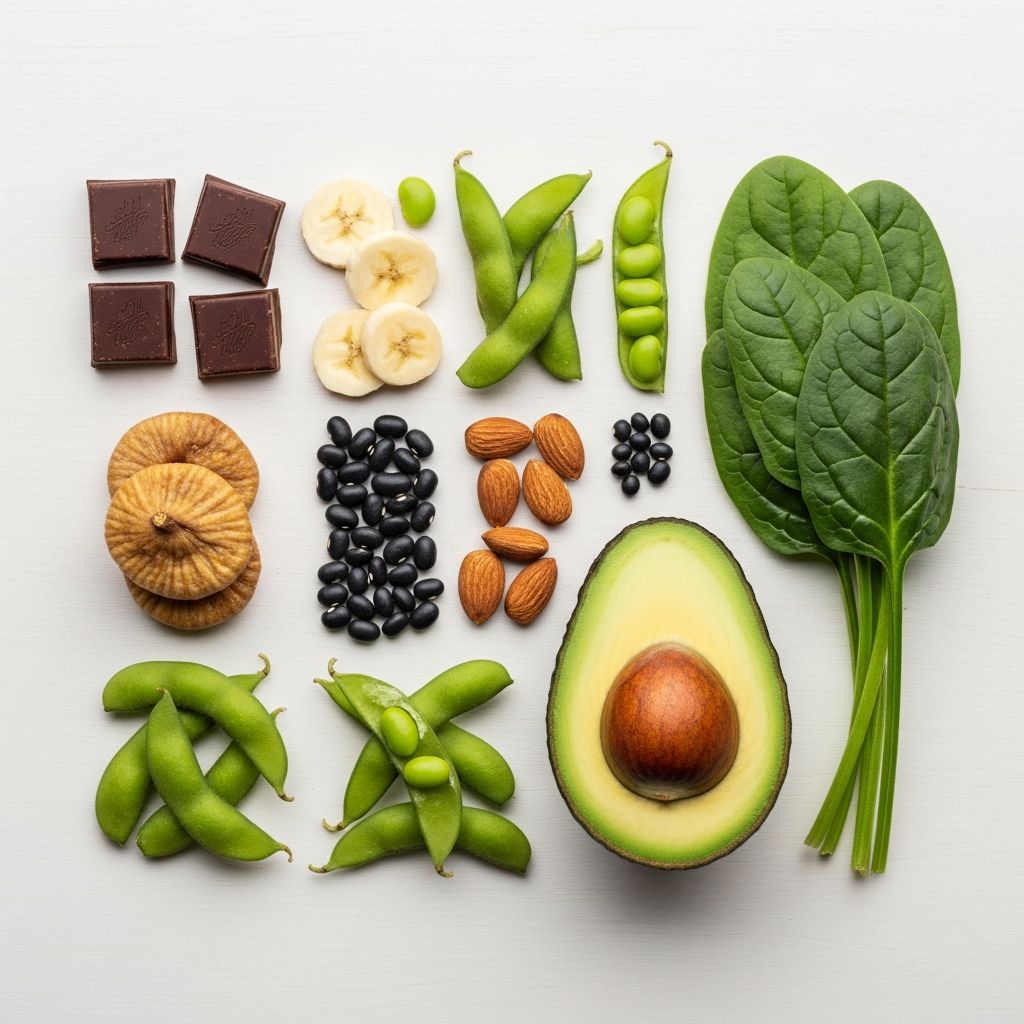
Cashews (83 mg/28g), edamame (50 mg/half-cup), dark chocolate (65 mg/oz 70-85% cocoa), and avocado (58 mg/medium) approach or exceed in context.
Magnesium Content Comparison Table
| Food | Serving Size | Magnesium (mg) | % DV (420 mg) | vs. Pumpkin Seeds (159 mg/30g) |
|---|---|---|---|---|
| Roasted Pumpkin/Squash Seeds | 1 cup | 649 | 154% | >4x |
| Almonds (dry roasted) | 1 cup | 385 | 92% | >2x |
| Pink Beans (raw) | 1 cup | 382 | 91% | >2x |
| Boiled Spinach | 1 cup (180g) | 158 | 38% | Similar/Superior |
| Black Beans (cooked) | 1 cup | 120 | 29% | Close |
| Pumpkin Seeds | 30g | 159 | 38% | Baseline |
Note: DV based on 420 mg for adult men; adjust for women (320 mg). Values approximate from USDA-linked data.
Health Benefits of High-Magnesium Foods
These foods combat deficiency symptoms like fatigue, cramps, and anxiety. Magnesium supports:
- Cardiovascular health: Lowers blood pressure, reduces arrhythmia risk.
- Bone density: Partners with calcium for strength.
- Mental health: Alleviates migraines, improves sleep.
- Metabolic function: Enhances insulin sensitivity.
Tips for Increasing Magnesium Intake
- Combine sources: Nuts + greens in salads, beans + grains in bowls.
- Choose whole foods over processed to maximize absorption.
- Avoid excess caffeine/alcohol, which deplete magnesium.
- Cook greens lightly to preserve minerals.
- Track intake via apps, aiming for diverse plant foods.
Potential Interactions and Precautions
High doses from food are safe, but those with kidney issues should consult doctors. Magnesium aids medication absorption; space supplements if needed.
Frequently Asked Questions (FAQs)
What is the daily magnesium requirement?
Adults need 310-320 mg (women) or 400-420 mg (men). Pregnant/lactating needs rise slightly.
Can I get enough magnesium from diet alone?
Yes, most do via varied foods like nuts, seeds, greens. Supplements if deficient.
Are supplements better than food sources?
No, foods provide co-nutrients for better uptake and fewer GI side effects.
Which cooking method preserves magnesium best?
Steaming/boiling minimally; raw for nuts/seeds. Avoid overprocessing.
Do vegetarians get enough magnesium?
Easily, from plants dominating lists: beans, grains, nuts.
Meal Ideas Featuring Top Magnesium Foods
- Breakfast: Chia pudding with almonds and spinach smoothie.
- Lunch: Black bean salad with buckwheat and avocado.
- Dinner: Pink bean chili with steamed greens.
- Snack: Roasted seeds trail mix.
By prioritizing these foods, you exceed pumpkin seeds’ magnesium while enhancing nutrition diversity.
References
- Foods high in magnesium — healthdirect.gov.au. 2023. https://www.healthdirect.gov.au/foods-high-in-magnesium
- Healthy Foods High in Magnesium — WebMD. 2024-01-15. https://www.webmd.com/diet/foods-high-in-magnesium
- 10 Magnesium-Rich Foods That Are Super Healthy — Healthline. 2024-01-24. https://www.healthline.com/nutrition/10-foods-high-in-magnesium
- Foods With the Magnesium Your Body Needs — Dartmouth-Hitchcock. 2023. https://www.dartmouth-hitchcock.org/stories/article/foods-magnesium-your-body-needs
- 25 Magnesium-Rich Foods You Should Be Eating — Cleveland Clinic. 2024. https://health.clevelandclinic.org/foods-that-are-high-in-magnesium
Similar Articles








Read full bio of Sneha Tete