Foot Exercises for Functional Fitness and Health
Strengthen your feet with targeted exercises for better mobility, balance, and overall wellness.
Your feet are fundamental to your overall health and mobility. Often overlooked in fitness routines, feet bear the weight of your entire body and facilitate movement throughout daily life. Strong, flexible feet are essential for maintaining balance, preventing injuries, and supporting an active lifestyle. Whether you’re an athlete, an older adult concerned about fall prevention, or simply someone who wants to maintain optimal foot health, incorporating targeted foot exercises into your wellness routine can yield significant benefits. This comprehensive guide explores the importance of foot exercises, various techniques to strengthen and improve foot function, and practical ways to integrate these exercises into your daily routine.
Why Foot Health Matters
The human foot is a marvel of biomechanical engineering, containing 26 bones, 33 joints, and more than 100 muscles, tendons, and ligaments. Despite this complexity, feet are frequently neglected in health and fitness discussions. Weak or inflexible feet can contribute to poor posture, balance issues, and increased risk of falls—particularly concerning for older adults. Additionally, foot problems can impact your gait, leading to compensatory strain on ankles, knees, hips, and the lower back.
Functional fitness emphasizes exercises that train muscles to work together and prepare them for daily tasks. Foot exercises fit perfectly within this philosophy, as strong feet enhance your ability to walk, climb stairs, stand for extended periods, and maintain stability during physical activities. By prioritizing foot health, you invest in your long-term mobility and independence.
The Foundation: Walking as Essential Foot Exercise
Walking stands as the most comprehensive and accessible foot exercise available. When you walk, your feet undergo a complete range of motion—from the initial heel strike through the midstance phase to the final toe-off. This natural movement pattern engages multiple muscles throughout the foot and lower leg, promoting strength and coordination without requiring special equipment or skills.
Regular walking provides several benefits for foot health. It strengthens the intrinsic muscles of the foot (muscles within the foot itself) and extrinsic muscles (those originating in the calf and leg). Walking also improves proprioception—your body’s awareness of its position in space—which is crucial for balance and injury prevention. Aim for at least 150 minutes of moderate-intensity walking per week to maintain optimal foot health and overall fitness.
Targeted Foot Strengthening Exercises
Beyond walking, specific exercises can further enhance foot strength and function. These targeted movements isolate particular muscles and address common weaknesses that develop from prolonged sitting or wearing restrictive footwear.
Toe Raises and Toe Spreads
Toe raises strengthen the muscles on the top of your foot. Sit comfortably with your feet flat on the floor. Without moving your heels, lift your toes toward your shins, then lower them back down. Perform 15 to 20 repetitions with each foot. For added challenge, practice while standing, maintaining balance as you lift your toes.
Toe spreads address the intrinsic foot muscles between your toes. Sit with your feet flat and attempt to spread your toes apart without using your hands. While this movement may feel awkward initially, practicing regularly enhances your ability to isolate and control these small muscles. Perform 10 to 15 repetitions several times daily.
Related Stories



Heel Walks and Toe Walks
Heel walks involve walking on your heels with your toes raised, engaging the anterior tibialis muscle along the front of your shin. Walk forward for 20 to 30 seconds, rest, and repeat 5 to 10 times. This exercise is particularly beneficial for improving ankle stability.
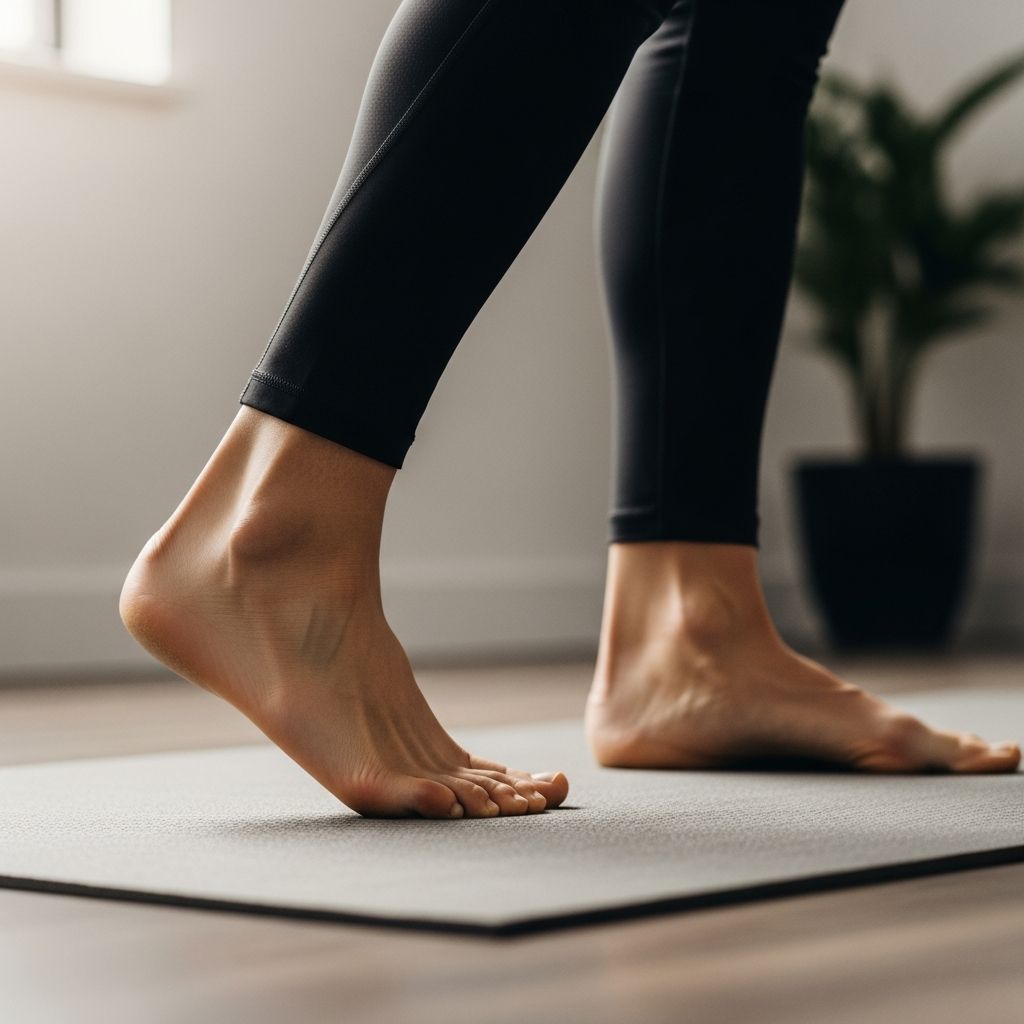
Toe walks, conversely, involve walking on your tiptoes while keeping your heels elevated. This movement strengthens the calf muscles and the muscles along the soles of your feet. Walk forward for 20 to 30 seconds, rest, and repeat 5 to 10 times. Both exercises can be performed in any clear space and require no equipment.
Short Foot Exercise
The short foot exercise specifically targets the intrinsic foot muscles. Sit or stand with your feet flat on the floor. Without curling your toes, try to shorten the length of your foot by drawing the ball of your foot toward your heel. You should see a slight dome form along the arch of your foot. Hold this contraction for 5 seconds, relax, and repeat 10 to 15 times per foot. This subtle but powerful exercise improves arch strength and foot stability.
Resistance Band Exercises
Resistance bands provide variable resistance for more challenging foot exercises. For foot flexion, loop a resistance band around the ball of your foot while sitting, then gently pull the band toward your shin against the resistance. Perform 15 to 20 repetitions. For foot extension, position the band around your forefoot and press downward. For inversion and eversion (turning your foot inward and outward), loop the band around your forefoot and move your foot against the resistance in both directions. Perform 12 to 15 repetitions in each direction.
Balance and Proprioception Training
Balance exercises improve proprioception and help prevent falls, making them particularly important for older adults. These exercises challenge your body’s stability systems and strengthen the stabilizer muscles in your feet and ankles.
Single-Leg Standing
Stand on one leg while keeping the other foot elevated, slightly bent at the knee. Maintain this position for 20 to 30 seconds, then switch legs. Perform 3 to 5 sets on each side. For progression, close your eyes to increase difficulty, or stand on a foam pad or pillow to create an unstable surface that demands greater stabilizer muscle activation.
Tandem Stance
Position one foot directly in front of the other, nearly heel-to-toe, with your arms extended for balance. Hold this position for 20 to 30 seconds. This exercise is more challenging than single-leg standing and excellent for improving lateral stability. For added difficulty, close your eyes or perform this exercise on an unstable surface.
Reaching Exercises
While standing on one leg, slowly reach your opposite arm and leg in different directions—forward, backward, and to the side. These dynamic movements challenge your balance while engaging stabilizer muscles throughout your foot and ankle. Perform 8 to 10 repetitions in each direction per side.
Flexibility and Mobility Work
Flexible feet move more efficiently and are less prone to injury. Incorporating stretching and mobility exercises addresses tightness that develops from daily activities and improves overall foot function.
Calf Stretches
The calf muscles significantly influence foot mechanics. Perform a calf stretch by facing a wall, placing one foot forward with a slight knee bend and the back leg straight, and gently leaning forward until you feel a stretch in the back of your lower leg. Hold for 30 seconds and repeat 2 to 3 times per leg. This stretch should be performed daily to maintain calf flexibility.
Plantar Fascia Release
The plantar fascia is a thick tissue running along the bottom of your foot that can become tight and painful. Using a tennis ball, golf ball, or specialized foot roller, apply moderate pressure to the arch of your foot and roll slowly from heel to toe. Perform 2 to 3 minutes per foot, 3 to 5 times weekly. This self-massage technique reduces tension and improves tissue quality.
Toe Flexion and Extension Stretches
Sit with one leg extended and gently pull your toes toward your shin using a towel or your hands. Hold for 20 to 30 seconds. Repeat with your toes pointed away from your body. Perform 2 to 3 sets per foot daily to maintain adequate toe and midfoot flexibility.
Common Foot Problems and Exercise Modifications
Certain foot conditions benefit from modified exercise approaches. Understanding how to adapt exercises ensures you maintain progress while protecting injured or problematic areas.
Plantar Fasciitis
Individuals with plantar fasciitis should focus on calf stretches and plantar fascia release exercises while avoiding high-impact activities initially. The short foot exercise is particularly beneficial for this condition as it strengthens the arch and reduces strain on the fascia. Progress gradually to more challenging exercises as symptoms improve.
Flat Feet and High Arches
Those with flat feet benefit particularly from intrinsic foot strengthening exercises like the short foot exercise and toe spreads. High-arched feet benefit from flexibility work and gentle strengthening of the muscles that support the arch. Both conditions may benefit from professional evaluation to determine optimal exercise progressions.
Bunions and Hammertoes
While exercises cannot reverse these structural deformities, strengthening surrounding muscles can reduce pain and slow progression. Focus on toe spreads and gentle toe mobility exercises, avoiding movements that aggravate symptoms. Consult with a healthcare provider or podiatrist for additional guidance.
Creating Your Foot Exercise Routine
Effective foot health requires consistency. Begin with a simple routine incorporating 4 to 5 exercises, performing them 3 to 5 days weekly for 10 to 15 minutes per session. As your strength and comfort improve, gradually add complexity and intensity.
Sample Beginner Routine
Start with walking 20 to 30 minutes daily as your foundation. Additionally, perform toe raises (15 reps), heel walks (20 to 30 seconds), short foot exercises (10 to 15 reps), and calf stretches (30 seconds, 3 sets) three times weekly. This routine addresses strength, balance, and flexibility without overwhelming beginners.
Sample Intermediate Routine
Progress to walking 30 to 40 minutes daily, supplemented with resistance band exercises (15 reps each direction), single-leg standing (3 to 5 sets of 20 to 30 seconds), toe spreads (15 reps), short foot exercises (15 reps), and plantar fascia release (2 to 3 minutes) performed 4 to 5 times weekly.
Special Considerations for Older Adults
Older adults face particular challenges related to foot health, including decreased proprioception, muscle weakness, and increased fall risk. For this population, balance training becomes especially important. Progress exercises gradually, maintain close attention to proper form, and consider practicing near a stable support surface for safety. Consulting with a physical therapist can ensure exercises are appropriately tailored to individual capabilities and limitations.
Footwear and Foot Health
Exercise alone cannot fully support foot health without appropriate footwear. Choose shoes that provide adequate support, cushioning, and room for natural toe movement. Avoid chronically wearing high heels or overly tight shoes, as these restrict foot mobility and weaken stabilizing muscles. Well-fitted athletic shoes support your foot exercise routine and daily activities.
Frequently Asked Questions
Q: How often should I perform foot exercises?
A: Aim for 3 to 5 sessions weekly, with daily walking as your foundation. This frequency allows adequate recovery while building strength and endurance progressively.
Q: Are foot exercises suitable for people with arthritis?
A: Yes, but modify exercises based on your comfort level. Focus on pain-free range of motion, and consult your healthcare provider or physical therapist for personalized recommendations. Gentle mobility work and water-based exercises can be particularly beneficial.
Q: How long before I notice improvements in foot strength and balance?
A: Most individuals notice improved balance and reduced discomfort within 2 to 4 weeks of consistent exercise. Significant strength gains typically require 6 to 8 weeks of regular practice.
Q: Can foot exercises prevent falls?
A: Yes, improved balance, proprioception, and foot strength reduce fall risk. Combined with other interventions like vision correction and environmental modifications, foot exercises provide important fall prevention benefits.
Q: Do I need any special equipment for foot exercises?
A: Most foot exercises require no equipment. Optional items like resistance bands, foam rollers, tennis balls, and balance pads can enhance your routine as you progress, but are not essential for beginning.
Q: Should I see a podiatrist before starting foot exercises?
A: If you have existing foot pain, structural abnormalities, or medical conditions affecting your feet, consulting a podiatrist ensures exercises are appropriately modified for your situation. Healthy individuals can typically begin with basic exercises without professional evaluation.
Conclusion
Your feet deserve attention and care. By incorporating targeted foot exercises into your regular fitness routine, you invest in long-term mobility, balance, and independence. Whether you begin with simple walking or progress to complex balance and strengthening routines, consistent practice yields measurable improvements in foot function and overall quality of life. Start today with basic exercises, progress gradually, and enjoy the benefits of stronger, healthier feet that support an active, vibrant life.
References
- Foot Exercises for Functional Fitness — Harvard Health Publishing. 2024. https://www.health.harvard.edu/healthbeat/foot-exercises-for-functional-fitness
- The Anatomy and Biomechanics of the Human Foot — American Podiatric Medical Association. 2024. https://www.apma.org
- Balance Training and Fall Prevention in Older Adults — National Center for Injury Prevention and Control, CDC. 2023. https://www.cdc.gov/falls/prevention/index.html
- Exercise for Health: Impact of Physical Activity on Musculoskeletal Function — NIH National Institute of Arthritis and Musculoskeletal and Skin Diseases. 2023. https://www.niams.nih.gov
- Plantar Fasciitis: Clinical Practice Guidelines — American Academy of Orthopaedic Surgeons. 2024. https://orthoinfo.aaos.org
Similar Articles








Read full bio of medha deb