Foot Skin Problems: Complete Guide To Causes & Treatments
Comprehensive guide to common foot skin conditions, symptoms, diagnosis, and effective treatments for healthier feet.
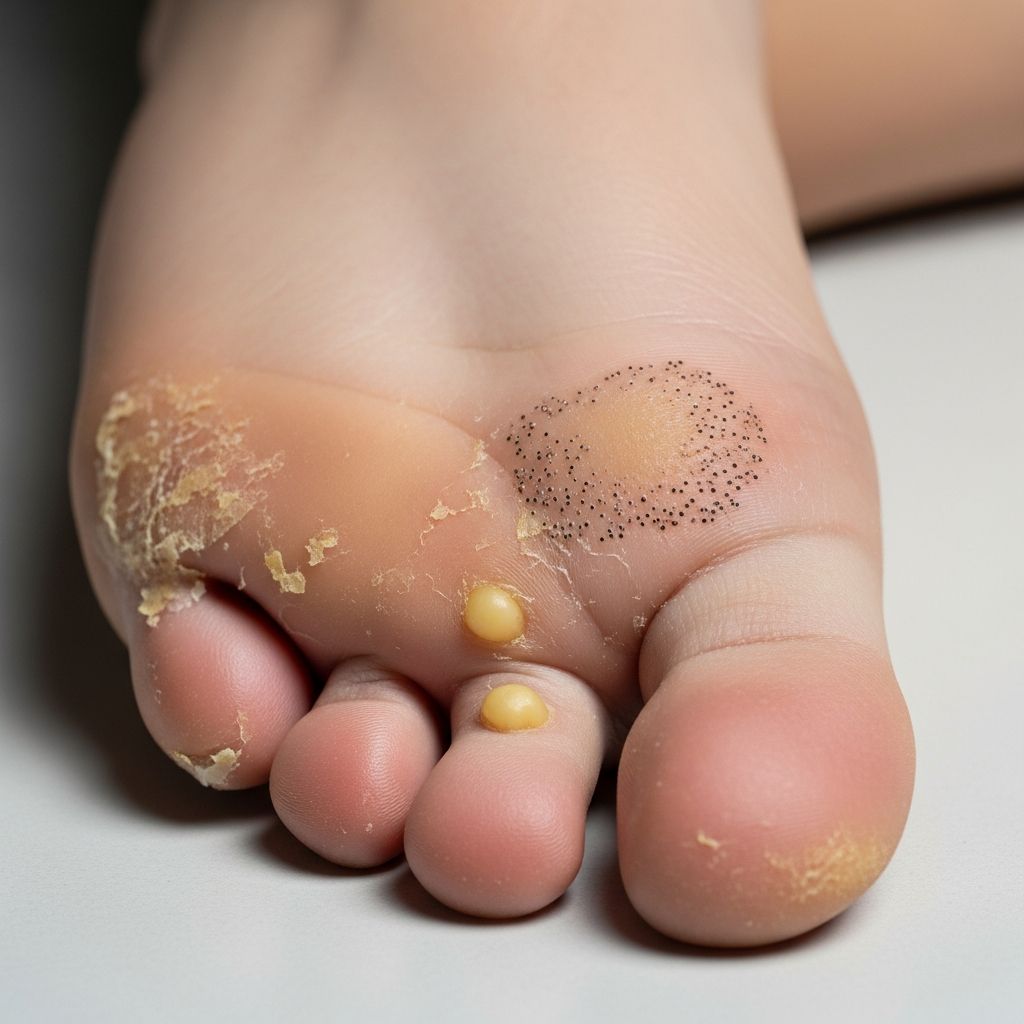
The skin on the feet is prone to a variety of conditions due to constant pressure, moisture, friction, and exposure to environmental factors. Feet endure unique stresses from walking, tight shoes, sweating, and contact with surfaces in public areas like pools and gyms. These factors contribute to common issues such as fungal infections, dryness, cracking, and inflammatory disorders. Understanding these problems is crucial for timely intervention to prevent complications like secondary infections or chronic pain. This article covers the most frequent foot skin conditions, their clinical features, diagnostic approaches, and management strategies.
What causes foot skin problems?
Foot skin problems arise from a combination of intrinsic and extrinsic factors. The stratum corneum on the soles is exceptionally thick—up to 10 times thicker than other body areas—to withstand mechanical stress, but this also makes it susceptible to hyperkeratosis and fissuring. Moisture trapped in shoes promotes fungal and bacterial growth, while friction from ill-fitting footwear leads to calluses and blisters. Systemic conditions like diabetes impair circulation and healing, increasing ulcer risk. Allergic reactions to shoe materials or socks, and environmental exposures such as cold weather for chilblains, further exacerbate issues. Atopic individuals are more prone to dermatitis, and psoriasis often manifests prominently on feet due to Koebner phenomenon from trauma.
Who gets foot skin problems?
Anyone can develop foot skin problems, but certain groups are at higher risk. Athletes and those in humid occupations (e.g., military personnel, factory workers) frequently suffer tinea pedis due to sweaty feet in occlusive footwear. Elderly individuals experience cracked heels from reduced skin elasticity and fat pad atrophy. Diabetics face heightened risks of ulcers and infections owing to neuropathy and poor vascularity. People with psoriasis or eczema have recurrent flares on feet. Children may get warts from barefoot walking in communal areas, while immunocompromised patients risk severe presentations. Prevalence of tinea pedis affects up to 70% of people at some point, highlighting its commonality.
Related conditions
Foot skin issues often overlap with nail disorders and systemic diseases. Onychomycosis (fungal nails) frequently accompanies tinea pedis, creating cycles of reinfection. Psoriasis on feet may involve nails with pitting or onycholysis. Diabetic foot ulcers stem from untreated fissures or calluses. Allergic contact dermatitis can mimic tinea but involves shoe allergens like rubber accelerators. Capillaritis presents as pinpoint petechiae, while acral lentiginous melanoma—a dangerous skin cancer—may masquerade as persistent pigmentation. Chilblains affect cold-exposed toes, and plantar warts disrupt normal skin architecture.
Foot skin problem pictures
Visual diagnosis aids identification. Athlete’s foot shows interdigital maceration with white, peeling skin. Cracked heels display deep fissures on weight-bearing areas. Psoriasis exhibits well-demarcated plaques with thick scale. Tinea nigra appears as asymptomatic brown macules on soles. Subungual melanoma features irregular pigmentation under nails. These images, akin to those on DermNet, underscore morphological clues for differentiation.
Interdigital maceration and scaling
Interdigital maceration involves soggy, whitish skin between toes, often from prolonged moisture and friction. This predisposes to secondary infections by bacteria (staphylococci, streptococci, Pseudomonas) or fungi (Candida, tinea). Symptoms include itching, odor, fissuring, and pain. Vesicles or pustules signal infection, potentially leading to cellulitis. Inverse psoriasis rarely mimics this. Diagnosis requires bacterial swabs and fungal scrapings. Treatment includes keeping feet dry, vinegar soaks (1:3 vinegar-water nightly for 15 minutes), and topical antifungals or antibiotics as guided. Prevention: breathable shoes, daily sock changes, and powder use.
Athlete’s foot (tinea pedis)
Athlete’s foot, or tinea pedis, is a dermatophyte infection thriving in warm, moist environments. It presents as itching, scaling, redness between toes (interdigital type), dry moccasin-like scaling on soles, or vesicular eruptions. Risk factors include occlusive footwear and public showers. Diagnosis via microscopy of skin scrapings showing hyphae. Mild cases respond to topical azoles like clotrimazole or miconazole creams for 2-4 weeks, continued 10 days post-resolution. Severe or recalcitrant cases need oral terbinafine. Advise hot-washing socks, shoe disinfection with formalin, and sandals in communal areas to prevent recurrence, as it’s mildly contagious.
Related Stories



- Interdigital type: Peeling, fissuring between 4th/5th toes.
- Moccasin type: Hyperkeratotic soles, risk for bacterial cellulitis.
- Vesicular type: Blisters on instep, intensely itchy.
Plantar scaling (dry type)
Dry-type tinea pedis causes diffuse scaling on soles and heels, mimicking psoriasis or eczema. Well-defined borders and hyperkeratosis favor tinea or psoriasis over dermatitis. Full skin exam reveals psoriasis elsewhere (elbows, scalp) or tinea on nails/groin. Fungal scrapings confirm diagnosis. Treatment mirrors athlete’s foot: topical antifungals, with urea/salicylic acid for hyperkeratosis. Bilateral symmetry suggests psoriasis/dermatitis; unilateral points to tinea.
Hyperkeratotic dermatitis of soles
This chronic, eczematous condition features thickened, scaly soles from irritants, allergens, or atopy. Pompholyx variant shows vesicles; hyperkeratotic has warty plaques. Triggers: heat, friction, sweating. Avoid irritants; patch testing if allergic contact suspected. Potent steroid ointments (betamethasone 0.05%) with keratolytics (salicylic acid 6%) manage it. Narrowband UVB helps refractory cases. Atopics predisposed; exclude tinea first.
Plantar psoriasis
Psoriasis on feet manifests as red, scaly plaques with thick hyperkeratosis, often fissured heels. Auspitz sign (pinpoint bleeding) and nail pitting aid diagnosis. Bilateral, well-demarcated. Treat with calcipotriol/betamethasone ointment, coal tar/salicylic acid for scale, and emollients. Phototherapy effective. Koebnerization from trauma common.
Cracked heels
Cracked heels result from dry, thickened skin splitting under fat pad movement. Predisposing: open shoes, obesity, psoriasis, ichthyosis. Deep fissures risk infection. Debride calluses, apply urea 10-20% or salicylic acid creams twice daily, use humectants, and wear closed shoes. Patient education on hydration and footwear essential. Untreated, leads to pain, bleeding, cellulitis.
| Condition | Key Features | Differentiation | Treatment |
|---|---|---|---|
| Tinea pedis | Unilateral, vesicles possible | Hyphae on scraping | Topical antifungals |
| Psoriasis | Bilateral, hyperkeratosis, nails | Auspitz sign | Steroids + vitamin D |
| Dermatitis | Ill-defined, atopic history | Patch test | Steroids, avoid triggers |
Plantar warts
Verruca plantaris, caused by HPV, appear as rough, punctate papules with black dots (thrombosed capillaries). Pain on pressure. Spread in moist areas. Diagnose clinically; dermoscopy shows mosaic pattern. Treatments: salicylic acid plasters, cryotherapy, or curettage. Paring reveals virally altered tissue. Recurrence common; advise non-sharing of towels.
Tinea nigra
This superficial mould (Hortaea werneckii) infection presents as asymptomatic, slow-growing tan-black macule on palms/soles with fine scale. Mimics melanoma. Dermoscopy: spicule pattern (non-melanocytic). Confirm with scrapings; treat topically with antifungals or benzoic/salicylic acid. Acquired via soil contact.
Other important conditions
- Acral lentiginous melanoma: Irregular pigmentation, poor prognosis if delayed.
- Allergic contact dermatitis: From chromate in leather; patch test.
- Capillaritis: Red-brown spots from capillary leakage.
- Chilblains: Itchy, swollen toes from cold; warm, elevate.
- Diabetic foot ulcer: Neuropathic, infect-prone; multidisciplinary care.
Frequently asked questions
How do I prevent athlete’s foot?
Wash/dry feet daily, change socks, rotate shoes, use antifungal powder, wear flip-flops in public showers.
Can cracked heels lead to serious issues?
Yes, fissures allow bacterial entry, risking cellulitis, especially in diabetics.
When to see a doctor for foot skin problems?
If persistent, painful, spreading, or with fever/red streaks—prompt evaluation needed.
Are foot skin problems contagious?
Fungal infections and warts yes; psoriasis/dermatitis no. Practice hygiene.
What daily routine helps foot health?
Inspect feet, moisturize, trim nails straight, proper shoes.
This guide empowers better foot care. Consult professionals for personalized advice.
References
- Trouble afoot: A review of common skin conditions of the feet and nails — The Royal Australian College of General Practitioners. 2020-05-01. https://www1.racgp.org.au/ajgp/2020/may/common-skin-conditions-feet-and-nails
- Cracking the Problem: A Podiatrist’s Guide to Managing Skin Fissures — Yavapai Foot and Ankle Center. 2023-01-15. https://www.yavapaifac.com/library/comprehensive-management-of-skin-fissures-in-podiatry.cfm
- Management and treatment options for common foot conditions — The Pharmaceutical Journal. 2022-06-10. https://pharmaceutical-journal.com/article/ld/management-and-treatment-options-for-common-foot-conditions
- Tinea pedis – Fungal skin infections — DermNet NZ. 2024-03-20. https://dermnetnz.org/cme/fungal-infections/tinea-pedis
- Tinea pedis: not just the curse of the athlete — Best Practice Advocacy Centre (bpac). 2014-12-01. https://bpac.org.nz/BPJ/2014/December/tinea-pedis.aspx
Similar Articles








Read full bio of medha deb