Foot X-Ray A to Z: Complete Diagnostic Guide
Everything you need to know about foot X-rays: indications, procedures, and diagnostic applications.
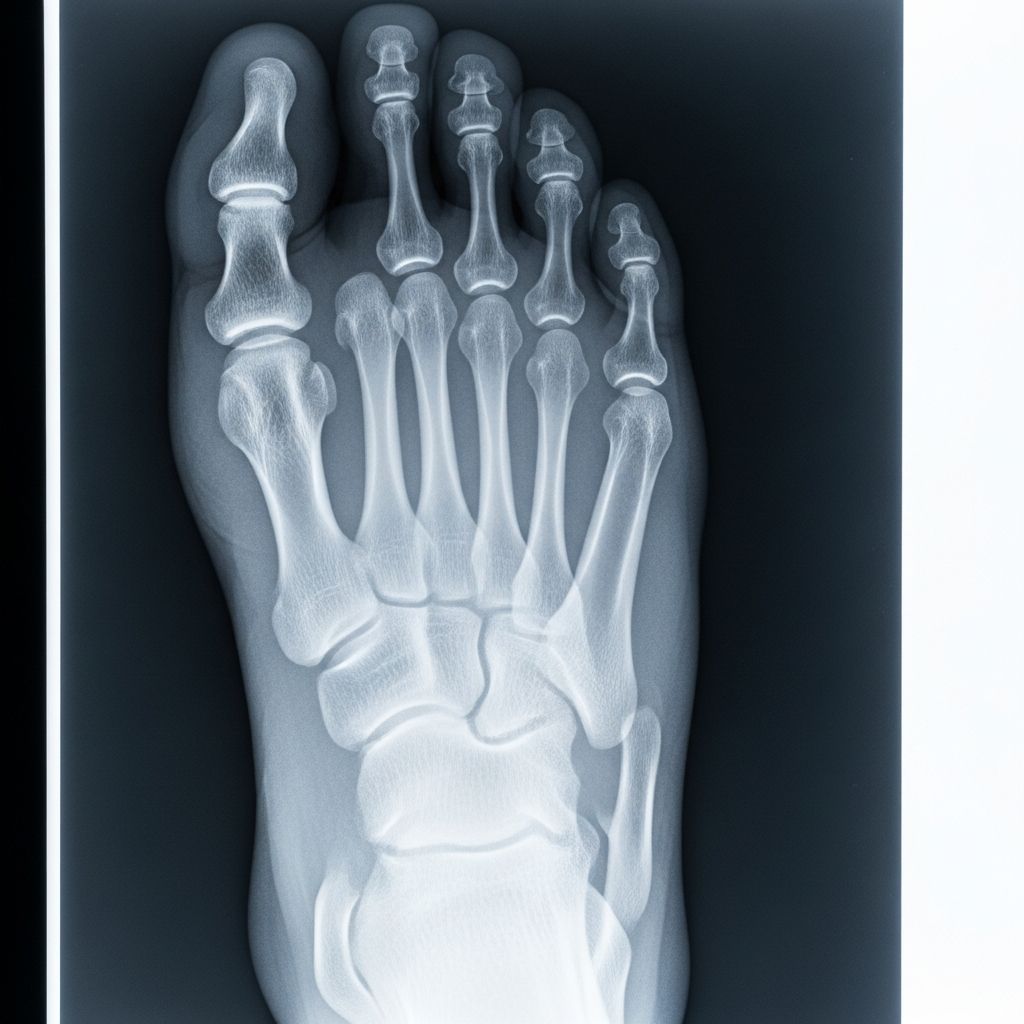
Foot X-Ray: A Comprehensive A to Z Guide
Foot pain and injuries are among the most common reasons patients seek medical care. When a foot injury occurs, healthcare providers often recommend imaging studies to visualize the internal structures and identify potential fractures, injuries, or abnormalities. Foot X-rays are one of the primary diagnostic tools used to evaluate foot trauma, pain, and structural concerns. This comprehensive guide covers everything you need to know about foot X-rays, from why they’re ordered to what the results mean.
What Is a Foot X-Ray?
A foot X-ray is a non-invasive imaging procedure that uses electromagnetic radiation to create detailed pictures of the bones and tissues in the foot. This type of radiography has become the gold standard for initial evaluation of acute foot trauma, providing clear visualization of the skeletal structures within minutes. X-rays work by passing radiation through the body; dense structures like bone appear white on the image, while soft tissues appear in shades of gray, and air appears black. This fundamental principle allows radiologists to identify fractures, dislocations, foreign objects, and other abnormalities with high sensitivity and specificity.
Why Would Your Doctor Order a Foot X-Ray?
Healthcare providers order foot X-rays for several clinical reasons. The most common indication is suspected fracture following acute trauma or injury. Radiographs are indicated by positive Ottawa rules with 99% sensitivity in determining the presence of a foot fracture, making them the mainstay of initial imaging evaluation. Additional reasons for ordering a foot X-ray include:
Common Indications for Foot X-Rays
- Suspected fractures from falls, motor vehicle accidents, or crush injuries
- Swelling, bruising, or significant pain following foot trauma
- Evaluation of chronic foot pain or arthritis
- Assessment of bone alignment and joint positioning
- Suspected infection or osteomyelitis in the foot bones
- Pre-operative planning for foot surgery
- Follow-up evaluation after previous foot injuries
- Assessment of suspected foreign bodies embedded in the foot
The Ottawa Rules and Foot Imaging
The Ottawa Ankle and Foot Rules are clinical decision-making guidelines that help determine whether X-rays are necessary following foot injuries. These evidence-based rules significantly reduce unnecessary imaging while maintaining diagnostic accuracy. According to these guidelines, foot radiographs are usually appropriate when Ottawa rules are positive, indicating a higher likelihood of fracture. Conversely, when Ottawa rules are negative and there are no exclusionary criteria, further imaging may not be immediately necessary unless clinical suspicion remains high for specific anatomic pathology not covered by the standard Ottawa evaluation rules. Understanding these rules helps both patients and providers make informed decisions about imaging necessity.
Types of Foot X-Ray Procedures
Several variations of foot X-ray procedures exist, each serving different diagnostic purposes and clinical scenarios.
Standard Radiography
Standard foot radiographs typically include multiple views such as anteroposterior (AP), lateral, and oblique projections. These provide comprehensive visualization of the foot bones from different angles, allowing radiologists to identify fractures and anatomic abnormalities effectively.
Weight-Bearing Radiography
Weight-bearing foot radiographs are usually appropriate for evaluating foot trauma when assessing weight-bearing tolerance and anatomic alignment. In this procedure, patients stand on the affected foot while X-rays are taken, providing functional information about how the bones align under load. This technique is particularly useful for evaluating midfoot injuries, stress fractures, and chronic foot pain conditions.
Related Stories



Specialized Views
Additional specialized radiographic views may be obtained depending on the clinical presentation and suspected pathology. These might include Harris heel views for calcaneal fractures or specific projections targeting particular anatomic regions of concern.
Preparing for Your Foot X-Ray
Preparation for a foot X-ray is relatively straightforward and minimally restrictive. Patients should wear comfortable, loose-fitting clothing that can be easily removed if necessary. Metal objects such as jewelry, watches, and body piercings should be removed from the foot and ankle area, as these can create artifacts that interfere with image quality. Patients should inform their healthcare provider if they are pregnant or might be pregnant, as X-rays involve radiation exposure. Although foot X-rays deliver minimal radiation to the rest of the body due to the localized nature of the procedure, pregnancy precautions should still be discussed with the ordering physician. Patients with severe pain or swelling may want to take over-the-counter pain medication approximately 30 minutes before the procedure to make positioning for the X-rays more tolerable.
What to Expect During the Procedure
A typical foot X-ray procedure takes only 10 to 15 minutes, including positioning and image acquisition. You will be positioned on or near the X-ray table, and a radiology technologist will carefully position your foot to obtain the necessary views. The technologist will provide clear instructions about how to position your foot and may use positioning aids or padding for comfort. You will need to remain still during image acquisition to prevent motion blur. The actual X-ray exposure lasts only a fraction of a second. The procedure is painless, though positioning a painful or injured foot may cause some discomfort. If weight-bearing views are needed, you may be asked to stand and bear weight on the affected foot for brief periods during imaging.
Understanding Your Foot X-Ray Results
Interpreting foot X-ray results requires medical expertise. Radiologists analyze multiple aspects of the images to reach diagnostic conclusions. Key elements examined include bone continuity and integrity (evaluating for fracture lines), bone alignment and positioning (assessing for dislocations or malalignment), joint spacing and relationships, soft tissue findings such as swelling or foreign objects, and comparison with any previous studies if available. Your ordering physician will review the radiologist’s report with you and explain the findings in terms relevant to your clinical situation and symptoms.
Common Findings on Foot X-Rays
- Simple fractures: Clean breaks in a single bone
- Compound fractures: Fractures involving multiple bone fragments
- Stress fractures: Small cracks resulting from repetitive loading
- Dislocations: Displacement of bones from normal joint positioning
- Arthritis: Degenerative joint disease with bone spur formation
- Osteomyelitis: Bone infection evidenced by bone destruction patterns
- Foreign bodies: External objects embedded in foot tissues
Limitations of Foot X-Rays
While foot X-rays are excellent for visualizing bone structures, they have limitations in evaluating soft tissues. Ligaments, tendons, and muscle injuries are poorly visualized on standard radiographs. Some fractures, particularly non-displaced or stress fractures in early stages, may not be apparent on initial X-rays. Additionally, Ottawa rules, while helpful, cannot evaluate all potential foot pathology. When clinical suspicion remains high despite negative X-rays, or when soft tissue injury is suspected, alternative imaging modalities may be warranted.
Alternative Imaging Modalities
When foot X-rays are insufficient or contraindicated, several alternative imaging options exist for more comprehensive evaluation.
Computed Tomography (CT)
CT scans may be appropriate for complex foot trauma or when radiographs are normal or equivocal but clinical suspicion remains high for specific injuries such as Lisfranc injuries or occult fractures. CT provides superior three-dimensional imaging and can detect subtle fractures and displacement that radiographs might miss. CT can also be used for guidance of procedures such as bone biopsies or injections.
Magnetic Resonance Imaging (MRI)
MRI is usually appropriate for evaluating suspected soft tissue injuries, ligament tears, or when osteomyelitis is suspected. MRI provides exceptional visualization of muscles, tendons, and ligaments and is particularly useful when initial radiographs are normal but clinical findings suggest significant injury. However, MRI is more time-consuming and expensive than X-rays.
Ultrasound
Ultrasound may be appropriate for diagnosis of tendon tears, joint effusions, bursitis, and tendon and nerve subluxation. Ultrasound is real-time, cost-effective, and involves no radiation, making it useful for specific soft tissue evaluations.
Radiation Safety Considerations
Foot X-rays involve exposure to ionizing radiation, though the amount is minimal and localized. A single foot X-ray delivers a radiation dose comparable to natural background radiation exposure over several days. The benefits of diagnostic accuracy typically far outweigh the minimal radiation risks. However, radiation exposure is cumulative over a lifetime, so unnecessary X-rays should be avoided. Pregnant women should inform their healthcare provider before undergoing foot X-rays, allowing the provider to assess whether the clinical benefit justifies any potential fetal exposure. Healthcare workers and staff in radiology departments take precautions to minimize unnecessary radiation exposure through proper shielding and technique optimization.
The Importance of Clinical Correlation
While foot X-rays are powerful diagnostic tools, they should always be interpreted in the context of thorough clinical evaluation. Research emphasizes that physicians evaluating patients with foot pain should conduct comprehensive physical examinations and detailed medical histories. A thorough assessment may reveal patterns suggesting broader lower extremity involvement, requiring evaluation of the hip and knee in addition to the foot. In an era where medical imaging has become prominent in patient diagnosis, the basic physical examination and patient history remain critically important for comprehensive evaluation.
When to Follow-Up After Foot X-Rays
Follow-up imaging may be recommended in several scenarios. If initial X-rays are negative but clinical suspicion for fracture remains high, repeat imaging after 7 to 10 days may reveal stress fractures that become more apparent as bone resorption occurs at the fracture site. Serial X-rays are also used to monitor fracture healing and assess proper alignment during the recovery period. Patients experiencing ongoing symptoms despite normal X-rays should discuss with their healthcare provider whether additional imaging such as CT or MRI is warranted.
Frequently Asked Questions About Foot X-Rays
Q: How long does a foot X-ray take?
A: The actual procedure typically takes 10 to 15 minutes, including positioning and image acquisition, though the actual radiation exposure lasts only a fraction of a second.
Q: Is a foot X-ray painful?
A: The X-ray procedure itself is painless, though positioning an injured foot may cause some discomfort. Inform the technologist if you experience significant pain.
Q: How much radiation does a foot X-ray involve?
A: Foot X-rays deliver minimal radiation, comparable to natural background radiation exposure over several days. The diagnostic benefit typically outweighs the minimal radiation risk.
Q: Can I get a foot X-ray if I’m pregnant?
A: Inform your healthcare provider if you are pregnant before undergoing X-rays. The provider can assess whether diagnostic benefit justifies any potential fetal exposure.
Q: What if my X-rays are normal but I still have foot pain?
A: Normal X-rays don’t exclude all foot pathology. Soft tissue injuries, stress fractures in early stages, or other conditions may require alternative imaging such as MRI or CT for diagnosis.
Q: How quickly will I get results from my foot X-ray?
A: Radiologists typically interpret foot X-rays within hours. Your ordering physician will review results and discuss findings with you, timing depending on clinical urgency.
Conclusion
Foot X-rays remain an essential diagnostic tool for evaluating acute foot trauma, fractures, and various foot pathologies. Their availability, minimal cost, speed, and effectiveness make them the first-line imaging choice for most foot injuries. Understanding when X-rays are appropriate, what to expect during the procedure, and how to interpret results empowers patients to participate actively in their diagnostic evaluation and treatment planning. When X-rays are insufficient, modern imaging alternatives provide more detailed information about soft tissue and complex fracture patterns. Combining imaging studies with thorough clinical evaluation ensures comprehensive diagnosis and optimal treatment outcomes for foot-related conditions.
References
- ACR Appropriateness Criteria: Acute Trauma to the Foot — American College of Radiology. 2024. https://acsearch.acr.org/docs/70546/Narrative/
- Acute Trauma to the Foot: ACR Appropriateness Criteria — Rethnam U, et al., PubMed/National Center for Biotechnology Information. 2020. https://pubmed.ncbi.nlm.nih.gov/32370964/
- Musculoskeletal Imaging Services — Beth Israel Deaconess Medical Center (BIDMC), Boston. 2024. https://www.bidmc.org/centers-and-departments/radiology/radiology-exams/musculoskeletal-imaging
- Comprehensive Evaluation of Lower Extremity Pain — Hospital for Special Surgery and Harvard Medical School Research. 2024. https://nmortho.com/foot-pain-new-study-says-look-hip-knee-complete-diagnosis/
Similar Articles








Read full bio of Sneha Tete