Forearm Workouts: 12 Expert Exercises For A Stronger Grip
Build stronger forearms and grip with these expert-approved exercises to boost upper-body power and prevent injuries.
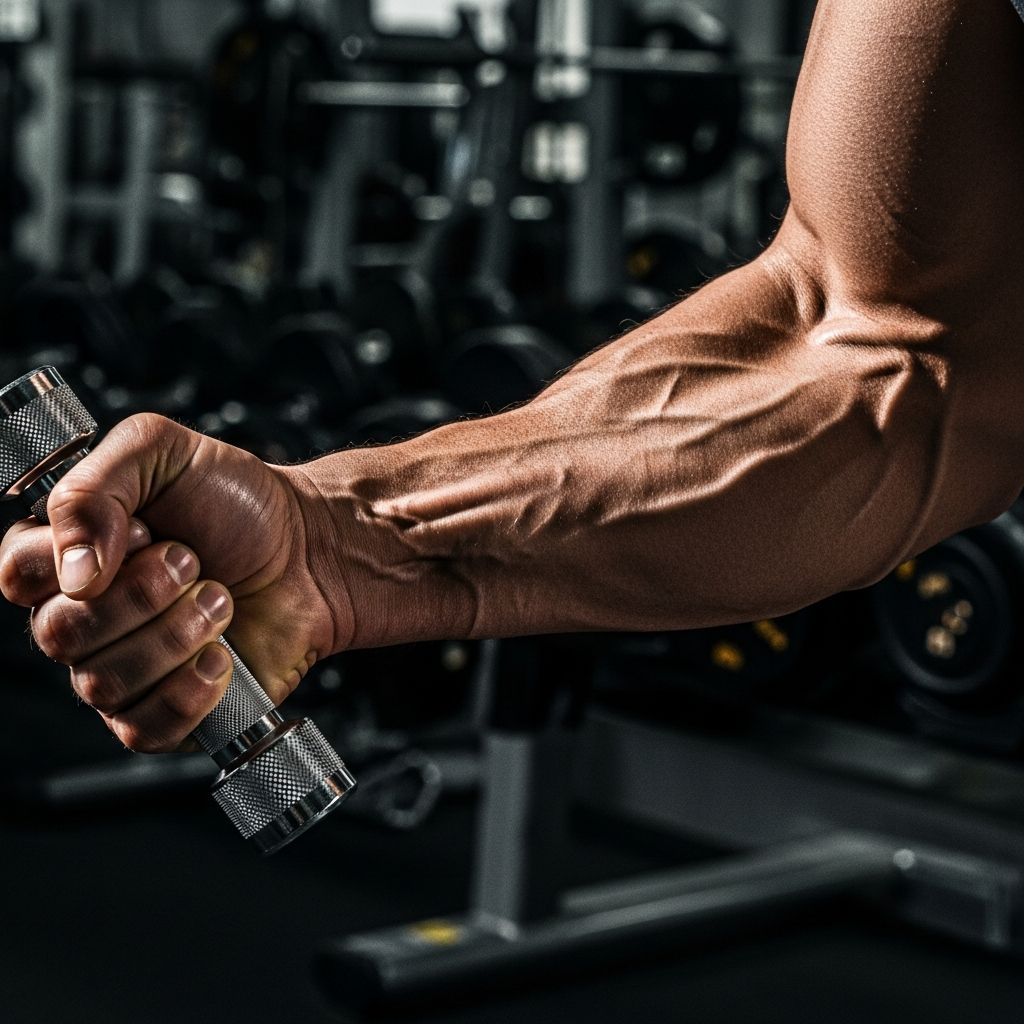
Forearms are the unsung heroes of upper-body strength, powering everything from lifting heavy weights to everyday tasks like gripping a coffee mug. Strong forearms enhance grip strength, protect your elbows and wrists from injury, and help you break through training plateaus. This comprehensive guide covers the anatomy, benefits, programming tips, and 12 best forearm exercises drawn from expert recommendations, suitable for home, gym, or no-equipment scenarios.
What Muscles Do Forearm Exercises Work?
The forearm complex includes several key muscles responsible for wrist flexion, extension, rotation, and grip. These muscles are:
- Pronator teres: Aids in rotating the forearm to turn the palm downward (pronation).
- Flexor carpi radialis: Flexes and abducts the wrist.
- Flexor carpi ulnaris: Flexes and adducts the wrist.
- Flexor digitorum superficialis: Flexes the middle phalanges of the fingers.
- Palmaris longus: Assists in wrist flexion (absent in some individuals).
- Extensor digiti minimi: Extends the pinky finger.
- Brachioradialis: Flexes the elbow and assists in pronation/supination.
These muscles work synergistically for movements like curling weights, swinging kettlebells, and maintaining a secure grip during pulls or carries.
Why Are Forearm Exercises Important?
Forearm training is often overlooked until pain arises, such as in tennis elbow or carpal tunnel syndrome. Yet, forearms underpin daily activities—typing, texting, holding objects—and athletic performance. Neglecting them leads to imbalances where strong biceps or shoulders are limited by weak grips, stalling progressive overload.
Experts emphasize that forearm strength maintains joint health, supports endurance in prolonged grips (e.g., deadlifts), and prevents overuse injuries in wrists, elbows, and shoulders.
5 Key Benefits of Forearm Workouts
- Builds upper-body strength: Forearms stabilize lifts, allowing heavier loads in compounds like rows and pulls.
- Enhances grip strength: Directly improves holding power, crucial for deadlifts, farmer’s carries, and sports.
- Protects elbows and wrists: Balances flexors and extensors to reduce strain and repetitive stress injuries.
- Prevents injuries: Strengthens supporting muscles around wrists, shoulders, and elbows.
- Avoids training plateaus: Ensures grip doesn’t bottleneck bicep, back, or overall strength gains.
Incorporating forearms prevents the scenario where ‘good bicep and shoulder strength’ is undermined by grip failure. Research supports twice-weekly training for optimal hypertrophy.
How Often Should You Train Forearms?
Train forearms 1-2 times per week, ideally on lower-body days to avoid overlap with upper-body grip-intensive work like deadlifts. Add 4-5 exercises for 3-4 sets each. A 2016 study in Sports Medicine confirms twice-weekly frequency maximizes muscle growth (hypertrophy).
Beginners: 1 session/week. Intermediate/Advanced: 2 sessions, with progressive overload (increase weight/reps/time under tension).
Do Grip Exercises Strengthen Forearms?
Yes—grip work recruits both forearm flexors (for squeezing) and extensors (for wrist stability). A study in the Journal of Physical Therapy found a direct correlation: stronger grip equates to stronger forearms, and vice versa. Exercises like plate pinches or dead hangs exemplify this synergy.
12 Best Forearm Exercises
These exercises target flexors, extensors, and brachioradialis using dumbbells, kettlebells, barbells, bodyweight, or household items. Perform 3-4 sets of 10-15 reps (or 30-60s holds) unless noted.
Related Stories



Forearm Dumbbell Exercises
- Farmer’s Carry
How to: Hold a dumbbell in each hand, arms at sides. Walk straight for 30-60s without letting weights hit legs. Rest 30-60s. 3-5 sets.
Why: Builds grip endurance and forearm stability under dynamic load.
- Wrist Curls (Flexor)
How to: Sit with forearms on thighs/bench, palms up, hands off edge. Curl weights up, squeeze, lower slowly. Flip for reverse curls (palms down).
- Zottman Curls
How to: Stand holding dumbbells, palms up. Curl up, rotate to palms down at top, lower slowly, rotate back. Targets biceps and forearms.
- Hammer Curls
How to: Palms facing in, curl dumbbells with neutral grip. Heavier loads hit brachioradialis.
Forearm Kettlebell Exercises
- Kettlebell Swing
How to: Feet shoulder-width, hinge hips to grab kettlebell. Swing to shoulder height via hip thrust, let drop back. Keep spine neutral.
Why: Explosive grip under swinging load.
- Towel Kettlebell Curl
How to: Drape towel over kettlebell handle, grip ends. Curl up, turning palms in, lower slowly.
Forearm Barbell & Plate Exercises
- Reverse Grip Barbell Curl
How to: Underhand grip on barbell (palms down), curl to shoulders. Extra forearm strain.
- Plate Pinch
How to: Pinch heaviest plates between thumb/fingers. Hold or walk 20-30s. Progress to two plates.
- Meadows Row
How to: Side to barbell end, hinge, row to hip with thick grip. Switch sides.
No-Equipment/Home Forearm Exercises
- Dolphin Pose
How to: From plank, lower elbows, lift hips to inverted V. Hold 5-20 breaths, pressing forearms down.
- Dead Hang
How to: Overhand grip on pull-up bar, hang with feet off ground. 30s+, progress with weight.
- Weighted Pull-Ups
How to: Add weight if able; focus on grip during full pull-ups.
Sample Forearm Workout Routine
| Exercise | Sets x Reps/Time | Rest |
|---|---|---|
| Farmer’s Carry | 4 x 40s | 60s |
| Wrist Curls | 3 x 12-15 | 45s |
| Reverse Curls | 3 x 12-15 | 45s |
| Plate Pinch | 3 x 30s | 60s |
| Dead Hang | 3 x max time | 60s |
Perform on leg day, 1-2x/week. Warm up wrists first.
Frequently Asked Questions (FAQs)
Can beginners do forearm workouts?
Yes—start with bodyweight like dead hangs or dolphin pose, progressing to light dumbbells. Focus on form to avoid strain.
How long until I see forearm gains?
Visible growth in 4-8 weeks with consistent 2x/week training and protein-rich diet. Grip improves faster.
Do forearms recover quickly?
Yes, as smaller muscles; 48 hours rest suffices, but avoid daily if grip-fatigued.
Can forearm training fix wrist pain?
It helps prevent and alleviate via balanced strength, but consult a doctor for persistent pain.
What’s the best grip for dead hangs?
Overhand wider than shoulders; vary with neutral or towel for progression.
References
- 10 best forearm exercises to improve your upper-body strength — Women’s Health UK. 2023. https://www.womenshealthmag.com/uk/fitness/workouts/a42801873/forearm-exercises/
- 14 Best Exercises to Add Muscle to Your Forearms — Men’s Health UK. 2023. https://www.menshealth.com/uk/building-muscle/a44723712/best-forearm-exercises/
- Effects of Training Frequency on Muscular Hypertrophy — Sports Medicine Journal (via PubMed). 2016-10-01. https://doi.org/10.1007/s40279-016-0543-8
- Correlation Between Grip Strength and Forearm Muscle Activity — Journal of Physical Therapy Science. 2018. https://www.ncbi.nlm.nih.gov/pmc/articles/PMC6110684/
- Anatomy of the Forearm Muscles — National Institute of Arthritis and Musculoskeletal and Skin Diseases (NIAMS). 2024. https://www.niams.nih.gov/health-topics/arm-injuries-and-disorders
Similar Articles








Read full bio of medha deb