4 Essential Types Of Exercise For Optimal Health
Master the four essential exercise types for optimal health and fitness.
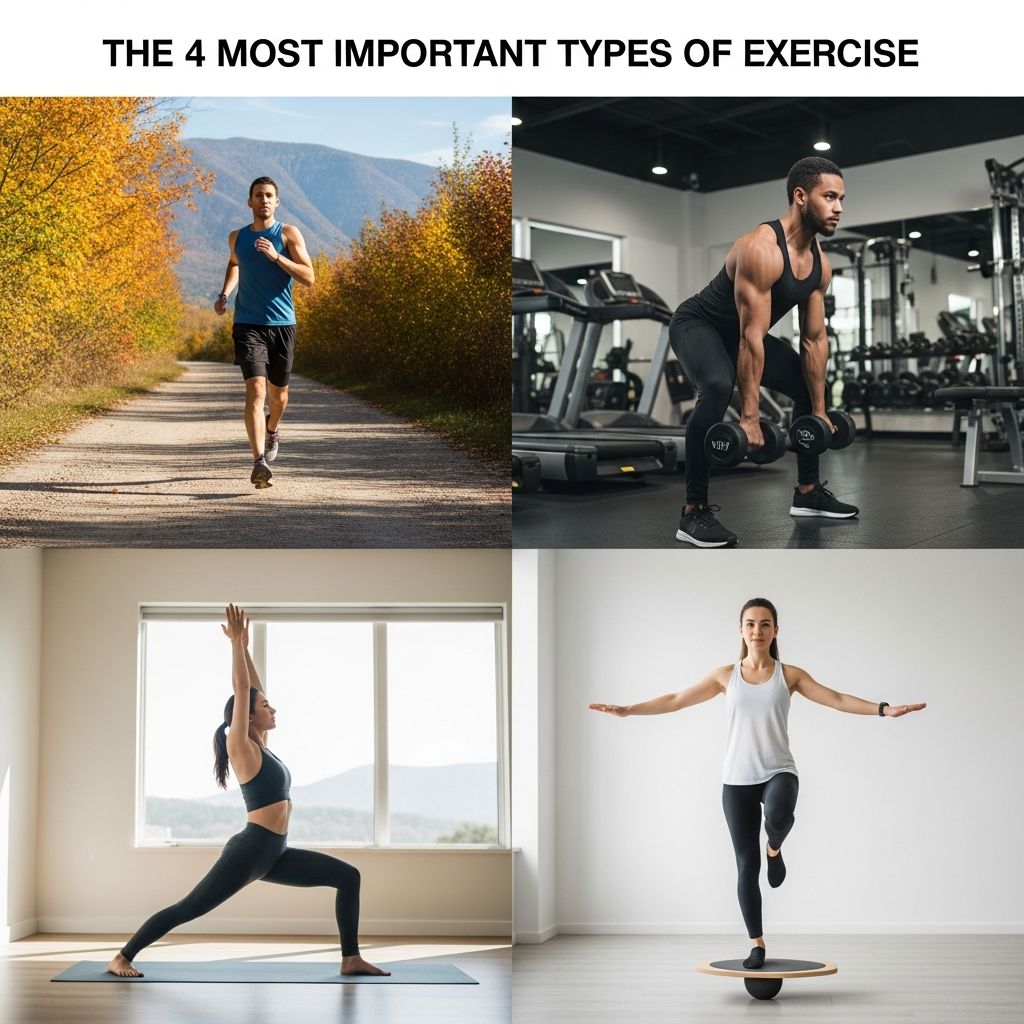
Exercise is fundamental to maintaining a healthy life and preventing chronic diseases. However, many people focus on only one type of exercise, missing out on the comprehensive benefits that come from a well-rounded fitness routine. Research demonstrates that incorporating exercises from all four major categories—endurance, strength, balance, and flexibility—provides superior health outcomes compared to specializing in a single exercise type. Each category targets different aspects of physical health, and together they create a complete fitness program that enhances cardiovascular function, builds muscle strength, improves stability, and maintains joint mobility.
Before beginning any new exercise program, it is essential to consult with your healthcare provider. This is particularly important if you have pre-existing health conditions, are recovering from an injury, or are starting an exercise routine for the first time. Your doctor can provide personalized recommendations based on your individual health status and fitness level.
Understanding the Four Types of Exercise
A comprehensive fitness routine should include all four essential types of exercise. Rather than viewing these categories as separate disciplines, think of them as complementary components of a holistic approach to fitness. Each type enhances the effectiveness of the others, creating a synergistic effect that maximizes your health benefits.
Endurance Exercise: Building Cardiovascular Health
Endurance exercises, commonly known as aerobic or cardio exercises, are activities that elevate your heart rate and breathing rate for sustained periods. These exercises strengthen your heart, lungs, and circulatory system while improving your overall aerobic capacity. Endurance training is the foundation of cardiovascular health and plays a crucial role in disease prevention.
Benefits of Endurance Exercises
Engaging in regular endurance exercise provides numerous health benefits:
- Improved overall cardiovascular fitness and stamina
- Enhanced ability to perform daily activities with ease
- Strengthened heart, lungs, and circulatory system
- Reduced risk of heart disease, stroke, type 2 diabetes, and certain cancers
- Improved mental health and mood
- Better weight management and metabolic function
- Increased energy levels throughout the day
Common Endurance Activities
There are numerous ways to incorporate endurance exercise into your routine:
- Brisk walking at a pace that elevates your heart rate
- Jogging or running
- Cycling outdoors or on stationary bikes
- Swimming laps or water aerobics
- Dancing, including styles like Zumba and aerobic dance
- Climbing stairs or using stair climbers
- Sports activities such as tennis, badminton, or basketball
- Rowing or using rowing machines
- Elliptical training
Endurance Exercise Recommendations
The American Heart Association provides clear guidelines for endurance exercise. Adults should aim for at least 150 minutes per week of moderate-intensity aerobic activity, 75 minutes per week of vigorous-intensity aerobic activity, or an equivalent combination of both. It is preferable to spread this activity throughout the week rather than condensing it into one or two days. The intensity of your exercise can be determined by monitoring your heart rate response—higher intensity exercises produce greater increases in heart rate.
Strength Training: Building Muscle and Bone Strength
Strength training, also known as resistance training, involves using external resistance—such as weights, resistance bands, or your own body weight—to challenge your muscles. This type of exercise builds muscle mass, increases bone density, and improves functional strength for everyday activities. Strength training is particularly important as we age, helping to maintain muscle mass that naturally declines with aging.
Related Stories



Benefits of Strength Training
Regular strength training provides comprehensive health benefits:
- Increased muscle mass and muscle strength
- Enhanced bone density and reduced osteoporosis risk
- Improved blood sugar control and reduced diabetes risk
- Effective weight management and increased metabolism
- Better balance and improved posture
- Reduced joint pain and improved joint stability
- Increased functional ability for daily tasks
- Improved confidence in performing routine activities
Types of Strength Training
Strength training can be performed using various methods and equipment. Free weights such as dumbbells and barbells offer versatility and allow for natural movement patterns. Resistance bands provide portable and adjustable resistance. Weight machines offer guided movements and are often easier for beginners. Bodyweight exercises using your own body as resistance, such as push-ups, squats, and planks, require no equipment and can be performed anywhere. Additionally, high-intensity interval training (HIIT) combines cardiovascular benefits with resistance training for efficient workouts.
Strength Training Guidelines
Healthy adults should incorporate resistance training into their routine on two to three days per week. You can use either heavier weights with fewer repetitions or lighter weights with more repetitions—research shows both approaches effectively build muscle strength and endurance. The key is to challenge your muscles with progressive resistance and allow adequate recovery time between sessions.
Balance Exercises: Preventing Falls and Improving Stability
Balance exercises focus on stability, coordination, and proprioception—your body’s awareness of its position in space. These exercises are essential for preventing falls, which can result in serious injuries, particularly in older adults. Balance training also improves coordination, enhances athletic performance, and strengthens stabilizer muscles throughout your body.
Benefits of Balance Exercises
Regular balance training provides significant health advantages:
- Reduced risk of falls and fall-related injuries
- Improved coordination and body awareness
- Enhanced stability during daily activities
- Strengthened stabilizer muscles throughout the body
- Better athletic performance and agility
- Improved proprioception and spatial awareness
- Increased confidence in movement and physical activity
Balance Exercise Examples
Tai chi and yoga are excellent forms of balance exercise, combining flowing movements with focused attention and breathing. These practices have been used for centuries and offer holistic benefits beyond balance improvement. Specific balance exercises include:
Single-Leg Standing: Stand with your feet together and hands resting on your hips. Lift one leg with bent knee as high as comfortable, or until your thigh is parallel to the ground. Maintain balance for several seconds to a few minutes, then switch legs. Perform multiple sets on each side.
Heel-to-Toe Walking: Walk in a straight line, placing the heel of one foot directly in front of the toes of the other foot, as if walking a tightrope. This challenges your balance and coordination.
Tai Chi: This Chinese martial art combines slow, graceful movements with deep breathing and meditation. Practitioners move at their own pace, making it accessible for various fitness levels and ages.
Balance Training Importance for Older Adults
Balance becomes increasingly important with age. As we grow older, we naturally lose some balance ability, which increases fall risk. Incorporating balance exercises into your routine becomes especially critical after age 60. Regular balance training can significantly reduce fall risk and maintain independence in daily activities.
Flexibility Exercises: Maintaining Range of Motion
Flexibility exercises involve stretching muscles to maintain and improve range of motion in your joints. These exercises help muscles remain long and supple, preventing stiffness and maintaining mobility for everyday activities. Flexibility naturally declines with age, but consistent stretching maintains muscle elasticity and joint function.
Benefits of Flexibility Exercises
Regular flexibility training provides important health benefits:
- Increased range of motion in all joints
- Reduced muscle stiffness and tension
- Prevention of age-related muscle cramping
- Improved ease of performing daily activities
- Better posture and body alignment
- Reduced muscle soreness after exercise
- Enhanced athletic performance and movement quality
- Decreased risk of muscle-related injuries
Flexibility Exercise Examples
Standing Calf Stretch: Stand with your feet together, approximately 3 feet away from a wall. Place both hands on the wall and lean forward gently. Position your right leg forward with bent knees so your toes touch the wall, while keeping your left leg straight behind you. You should feel a stretch in your right calf muscle. Hold this position for 15 to 30 seconds and release. Perform 3 to 5 repetitions on each side.
Hamstring Stretch: Sit on the floor with one leg extended straight and the other leg bent with foot flat on the floor. Lean forward gently toward your extended leg, feeling the stretch along the back of your thigh. Hold for 15 to 30 seconds.
Shoulder Stretch: Bring one arm across your body and gently press it closer using your other arm. Hold for 15 to 30 seconds on each side.
Stretching Guidelines
Stretching is most effective after your muscles are warm, such as after cardiovascular exercise or a warm bath. Perform stretches slowly and gently, never bouncing or forcing a stretch. Hold each stretch for 15 to 30 seconds and repeat 2 to 4 times on each side. Consistency is more important than intensity—gentle daily stretching is more beneficial than aggressive stretching performed occasionally.
Creating Your Comprehensive Exercise Program
An optimal fitness program incorporates all four types of exercise throughout your week. A sample weekly routine might include three days of endurance exercise, two days of strength training, daily balance practice, and daily flexibility work. However, the specific breakdown depends on your individual goals, fitness level, and preferences.
Weekly Exercise Structure
| Exercise Type | Weekly Recommendation | Examples |
|---|---|---|
| Endurance | 150 minutes moderate or 75 minutes vigorous | Walking, running, swimming, cycling, dancing |
| Strength Training | 2-3 days per week | Weights, resistance bands, bodyweight exercises |
| Balance | Daily or most days | Tai chi, yoga, single-leg standing |
| Flexibility | Daily, after warming up muscles | Static stretching, yoga, tai chi |
Getting Started with Your Exercise Routine
Beginning an exercise program should be gradual and progressive. If you are currently inactive, start with shorter durations and lower intensities, then gradually increase over several weeks. Finding activities you enjoy is crucial for long-term adherence. Whether you prefer swimming, tai chi, walking, strength training, or alternative activities like Pilates, yoga, or pickleball, consistency matters more than perfection. Choose activities that fit your lifestyle and preferences, as you are more likely to maintain a routine you genuinely enjoy.
Frequently Asked Questions
Q: Is 20 minutes of exercise per day enough?
A: The American Heart Association recommends 150 minutes of moderate-intensity activity per week, which translates to approximately 21 minutes daily. Twenty minutes daily falls slightly short of recommendations but is still beneficial. However, aim for the full recommended amount for optimal health benefits.
Q: Can I do all four types of exercise on the same day?
A: Yes, you can combine multiple exercise types in one session. For example, you might warm up with light cardio, perform strength training, then cool down with stretching and balance work. However, spreading different types throughout the week allows for adequate recovery.
Q: What if I have joint pain or arthritis?
A: Swimming is an excellent choice for people with arthritis because it is low-impact and supports your body weight while providing resistance. Tai chi, yoga, and gentle stretching are also beneficial. Always consult your healthcare provider before starting a new exercise program.
Q: How long before I see results from exercise?
A: Some benefits appear relatively quickly—improved mood and sleep often occur within days to weeks. Cardiovascular improvements typically appear within 2-4 weeks. Strength gains and significant body composition changes usually require 4-8 weeks of consistent training.
Q: Is one type of exercise enough?
A: While any exercise is better than none, research shows that incorporating all four types provides superior health outcomes. Each type targets different aspects of fitness, and together they create a comprehensive program that maximizes health benefits.
References
- What Are the Four Most Important Types of Exercises? — MedicineNet. 2024. https://www.medicinenet.com/four_most_important_types_of_exercises/article.htm
- Physical Activity Guidelines for Americans — U.S. Department of Health and Human Services. 2018. https://health.gov/physical-activity
- Best Exercises for Your Body, According to a Harvard Doctor — Harvard Medical School. 2024. https://www.health.harvard.edu/exercise-and-fitness/the-4-most-important-types-of-exercise
- The Importance of Consistent Exercise and Alternative Activities — American College of Osteopathic Family Physicians. October 2024. https://www.acofp.org
- Tai Chi and Balance in Older Adults — National Center for Complementary and Integrative Health. 2024. https://nccih.nih.gov
- Exercise and Depression — American Psychological Association. 2024. https://www.apa.org
Similar Articles








Read full bio of Sneha Tete