Fractional Laser Treatment: Complete Guide To Skin Rejuvenation
Advanced skin resurfacing using fractional lasers to rejuvenate, reduce scars, wrinkles, and pigmentation with minimal downtime.
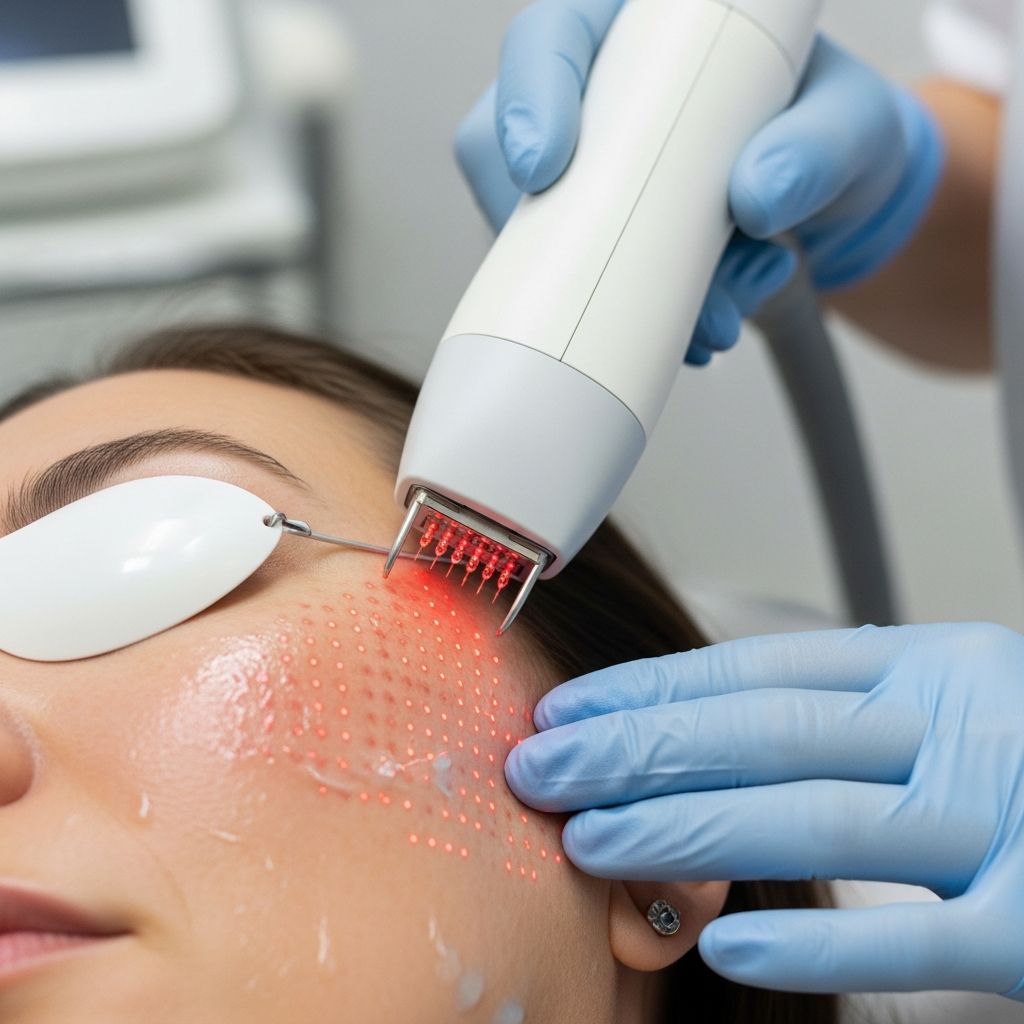
Fractional laser treatment is a revolutionary dermatological procedure that uses targeted laser beams to resurface and rejuvenate the skin. By creating microscopic columns of thermal injury in the skin while leaving surrounding tissue intact, it stimulates natural collagen production and skin remodeling for improved texture, tone, and appearance.
What is fractional laser treatment?
Fractional laser treatment involves delivering precise microbeams of laser light into the deeper layers of the skin, forming narrow columns of coagulated tissue known as microscopic treatment zones (MTZs). These zones trigger the body’s wound healing response, promoting rapid regeneration of healthy collagen and elastin without damaging the entire skin surface. Unlike traditional full-field lasers that treat 100% of the skin, fractional lasers affect only a fraction (typically 20-40%), allowing faster recovery and reduced risk of complications.
This technology encompasses both ablative (e.g., fractional CO2 or erbium) and non-ablative (e.g., 1550-nm erbium fiber or 1927-nm thulium) lasers. Ablative types vaporize the epidermis for more dramatic resurfacing, while non-ablative heat the dermis beneath intact skin for subtler improvements. FDA-approved devices like Fraxel® and Icon have made this treatment versatile for various skin types and concerns.
Who is suitable for fractional laser treatment?
Ideal candidates include individuals with photoaged skin, fine to moderate wrinkles, acne scars, surgical or traumatic scars, stretch marks, hyperpigmentation, melasma, actinic keratosis, or textural irregularities. It suits Fitzpatrick skin types I-VI, though darker tones may require non-ablative options to minimize pigmentation risks. Those seeking minimal downtime and long-lasting results without surgery benefit most. Contraindications include active infections, isotretinoin use within 6-12 months, keloid tendencies, or uncontrolled diabetes.
What are the types of fractional lasers?
- Non-ablative fractional lasers: Such as 1410-nm, 1540/1550-nm erbium fiber, or 1927-nm thulium lasers. They target dermal layers without epidermal removal, ideal for mild concerns with 3-5 days downtime.
- Ablative fractional lasers: Fractional CO2 (e.g., SmartXide Tetra with CoolPeel®) or erbium lasers. These provide deeper resurfacing for wrinkles and scars, with recovery of 1 week or less due to fractional delivery.
Fractional patterns ensure safety on face, neck, chest, arms, hands, and extremities.
What skin conditions are treated with fractional laser resurfacing?
| Condition | Description | Effectiveness |
|---|---|---|
| Acne scars | Atrophic and rolling scars | High; stimulates collagen to fill depressions |
| Wrinkles & fine lines | Perioral, periorbital rhytides | Excellent for superficial to moderate |
| Hyperpigmentation | Sun spots, age spots, melasma | Targets melanin breakdown |
| Scars | Surgical, traumatic, stretch marks | FDA-approved; remodels scar tissue |
| Texture irregularities | Enlarged pores, roughness | Improves via cell turnover |
| Actinic keratosis | Pre-cancerous lesions | Effective epidermal treatment |
This treatment excels for photoaging and scarring across body areas.
What is the procedure for fractional laser treatment?
Preparation involves topical numbing cream applied 45-60 minutes prior, sometimes with oral sedatives. Protective eyewear is mandatory. The procedure lasts 15-60 minutes depending on area size. The laser handpiece stamps or scans micro-columns into the skin, with cooling for comfort. Post-treatment, soothing agents like cold compresses or Aquaphor are applied. Multiple sessions (3-5) spaced 2-4 weeks apart optimize results.
How is fractional laser treatment performed?
Settings vary by device and concern: energy density, fluence, and coverage percentage are customized. For Fraxel®, micro-wounds in a grid pattern spare 60-80% of skin for quick healing. CO2 fractional uses short pulses (CoolPeel®) to minimize heat spread. Patients feel warmth or pricks, managed by numbing.
Related Stories



What is the recovery after fractional laser treatment?
Downtime is minimal: 1-5 days of redness, swelling, and bronzing like a sunburn. Non-ablative: 3-5 days; ablative: up to 1 week with peeling. Avoid sun for 4 weeks, use gentle cleansers, moisturizers, and SPF 50+. Positive changes appear in days, peaking at 3-6 months as collagen remodels.
- Mild redness/swelling: 24-48 hours
- Peeling/flaking: Days 3-7
- Full healing: 1 week
What are the side effects and risks of fractional laser treatment?
Common: transient erythema, edema, pinpoint bleeding (ablative). Rare: hyper/hypopigmentation (darker skins), infection, scarring (<1%). Risks lower than non-fractional lasers due to preserved epidermis. Post-care adherence minimizes issues.
What are the alternatives to fractional laser treatment?
- Microneedling/RF: Similar collagen stimulation, less pigment risk.
- Chemical peels: Superficial resurfacing.
- IPL/PDL: Pigmentation-focused.
- Full ablative lasers: Deeper but more downtime.
Frequently Asked Questions
Q: What is the average recovery time for fractional laser?
A: 3-7 days, with redness resolving first; full results in months.
Q: Does it work for acne scars?
A: Yes, by inducing collagen to smooth atrophic scars over sessions.
Q: Is it safe for dark skin?
A: Non-ablative types are safer for types IV-VI.
Q: How many treatments needed?
A: 3-5 for optimal results, spaced 2-4 weeks.
Q: Does it tighten skin?
A: Yes, via collagen contraction and elastin production.
Long-term Outcomes
Results last 1-5 years with sun protection; maintenance sessions recommended. Collagen boost improves with age-defying effects.
References
- Fractional Laser Resurfacing for Aging Skin — American Society for Dermatologic Surgery. 2023. https://www.asds.net/skin-experts/skin-treatments/laser-resurfacing/fractional-laser-resurfacing-for-aging-skin
- Fraxel Laser Skin Resurfacing — Elite Dermatology & Plastic Surgery. 2024. https://www.elitedermatology.com/services/fraxel-laser/
- Fractional Laser Scar Treatment — Epiphany Dermatology. 2023. https://www.epiphanydermatology.com/services/services-laser/
- Current Laser Resurfacing Technologies: A Review — PMC/NCBI (Peer-reviewed). 2012-09-01. https://pmc.ncbi.nlm.nih.gov/articles/PMC3580982/
- Fractional CO2 Laser Skin Resurfacing — Bliss Dermatology Group. 2024. https://blissdermatologygroup.com/cosmetic-dermatology/fractional-co2-skin/
- Laser Skin Resurfacing — Cleveland Clinic. 2023-10-12. https://my.clevelandclinic.org/health/treatments/11015-laser-skin-resurfacing
- Laser Resurfacing — Mayo Clinic. 2024. https://www.mayoclinic.org/tests-procedures/laser-resurfacing/about/pac-20385114
Similar Articles








Read full bio of Sneha Tete