Fragile X Syndrome: Symptoms, Causes & Treatment
Understanding Fragile X Syndrome: causes, symptoms, diagnosis and management strategies for families.
Understanding Fragile X Syndrome: Causes, Symptoms, and Treatment Options
Fragile X syndrome (FXS) is an inherited genetic disorder that represents the leading cause of inherited intellectual disability and the most common single-gene cause of autism spectrum disorder. This condition affects children’s learning abilities, behavioral development, physical appearance, and overall health. While there is currently no cure for fragile X syndrome, various therapeutic interventions and medications can effectively manage symptoms and help individuals reach their full potential. Understanding this condition is essential for parents, caregivers, and healthcare providers to provide appropriate support and early intervention.
What Is Fragile X Syndrome?
Fragile X syndrome is a genetic condition that causes a wide range of developmental, behavioral, and physical challenges. The condition affects approximately 1 in 7,000 males and 1 in 11,000 females worldwide.[10] Boys typically experience more severe manifestations of the condition compared to girls, though both genders can be significantly affected. The severity of symptoms varies widely among individuals, ranging from mild learning difficulties to profound intellectual disability.
The condition was historically known as Martin-Bell syndrome and has been recognized as a major public health concern in developmental medicine. Early recognition and intervention can make a substantial difference in outcomes for children with fragile X syndrome, highlighting the importance of awareness among healthcare professionals and families.
The Genetic Basis of Fragile X Syndrome
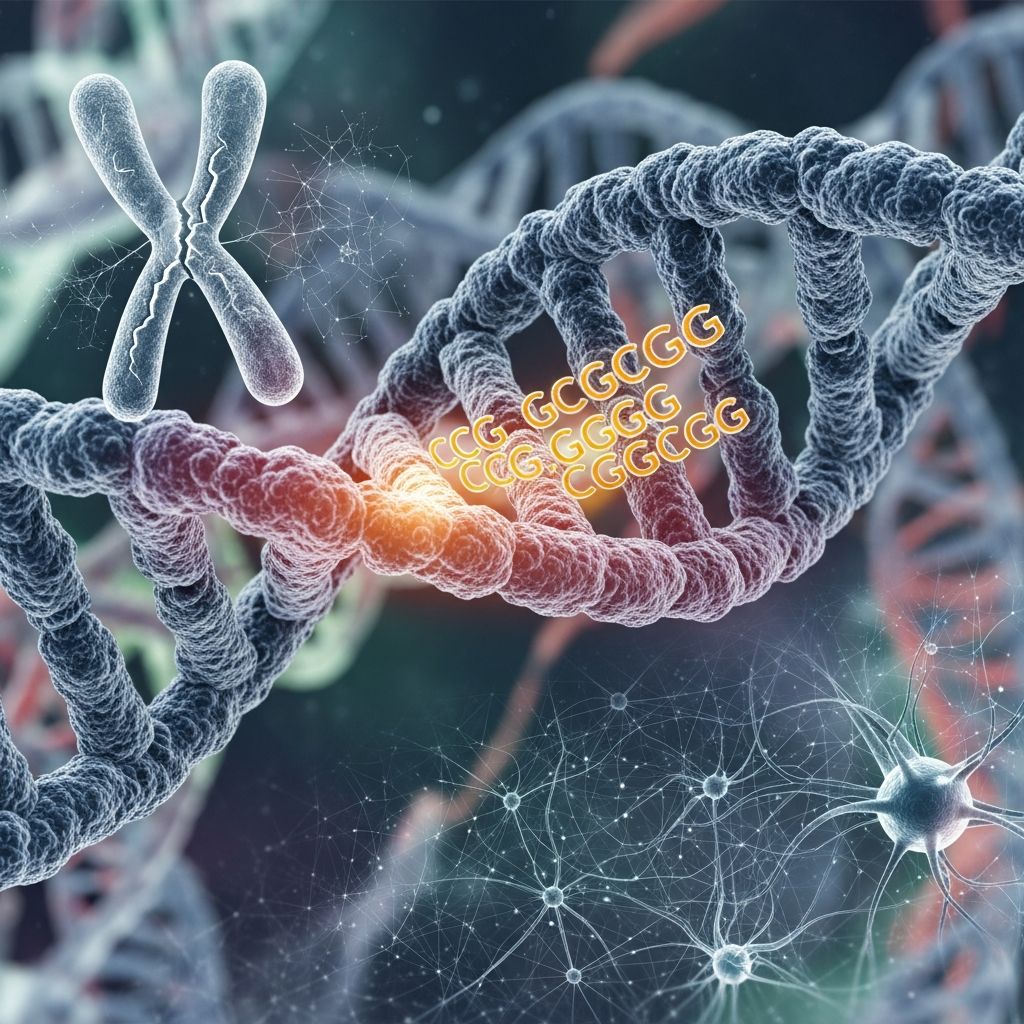
Fragile X syndrome is caused by a mutation in the FMR1 gene located on the X chromosome. This gene normally produces a protein called fragile X mental retardation protein (FMRP), which is crucial for proper nerve cell connections and brain development. In individuals with fragile X syndrome, a specific segment of DNA within the FMR1 gene, called the CGG triplet repeat, becomes abnormally expanded.
In typical individuals, this CGG sequence repeats between 5 and 40 times. However, in people with fragile X syndrome, the repeat expands to more than 200 times. This excessive expansion silences the FMR1 gene, preventing it from producing adequate amounts of the fragile X mental retardation protein. This protein deficiency disrupts normal neural development and function, leading to the cognitive and behavioral symptoms characteristic of the condition.
Inheritance Pattern and Risk Factors
Fragile X syndrome follows an X-linked dominant inheritance pattern, meaning the mutated gene is located on the X chromosome and only one copy of the mutated gene is necessary to cause the condition. This inheritance pattern explains why males are more severely affected than females.
Males have only one X chromosome, so if they inherit the mutated FMR1 gene, they will develop fragile X syndrome with full symptom expression. Females, conversely, have two X chromosomes. Because of this, a female may inherit the mutated gene on one X chromosome but have a normal gene on the other. This X-chromosome inactivation means that some females with the fragile X mutation may be carriers without displaying significant symptoms, though they can still pass the condition to their children.
Women with the fragile X premutation (55-200 CGG repeats) face specific health risks, including premature ovarian failure and earlier-than-normal menopause, a condition known as fragile X-associated primary ovarian insufficiency (FXPOI). Additionally, individuals of either sex carrying the premutation may develop fragile X-associated tremor/ataxia syndrome (FXTAS) later in life, characterized by tremors, walking difficulties, balance problems, and cognitive decline.
Related Stories



Clinical Presentation and Symptoms
Fragile X syndrome manifests through a complex array of symptoms affecting multiple domains of development and health. Symptoms typically become apparent in early childhood, with signs of developmental delay often noticeable by age 2. The presentation differs between males and females, with males generally experiencing more severe manifestations.
Developmental and Cognitive Symptoms
Children with fragile X syndrome commonly experience significant developmental delays. Early signs include:
- Delayed achievement of motor milestones such as sitting, crawling, and walking
- Speech and language development delays, often among the first signs parents notice
- Delayed cognitive development and learning disabilities
- Intellectual disability ranging from mild to severe
Boys are typically diagnosed around 35-37 months of age, while girls are often diagnosed around 42 months. Most males with fragile X syndrome experience significant learning and developmental challenges, whereas girls frequently demonstrate milder intellectual involvement, with approximately one-third experiencing no to very mild learning disabilities, one-third showing mild disabilities, and one-third experiencing moderate to significant intellectual disabilities.
Behavioral and Emotional Symptoms
Behavioral challenges are prominent features of fragile X syndrome, particularly in affected males. Common behavioral symptoms include:
- Attention deficit hyperactivity disorder (ADHD) and trouble maintaining focus
- Hand-flapping, hand-biting, and other repetitive behaviors
- Poor eye contact and difficulty interpreting social cues
- Difficulty maintaining impulse control and emotional regulation
- Temper tantrums and aggressive behavior
- Anxiety, depression, and obsessive-compulsive behaviors
- Sensory sensitivities including extreme reactions to light or sound
- Autism spectrum disorder characteristics affecting communication and social interaction
Despite these challenges, individuals with fragile X syndrome possess significant strengths. They typically demonstrate excellent imitation abilities, strong visual and long-term memory, natural sociability, and a genuine desire to help others. Many are kind, thoughtful individuals with a wonderful sense of humor when provided with appropriate support and understanding.
Physical Characteristics
Fragile X syndrome often produces distinctive physical features, though not all individuals display all characteristics. Common physical manifestations include:
- A long, narrow face with a prominent jaw
- Large or protruding ears
- Macrocephaly (enlarged head)
- Large testicles in post-pubertal males
- Joint hyperextensibility and flexible joints
- Mitral valve prolapse (a heart valve abnormality)
- Low muscle tone affecting physical development
Associated Medical Complications
Beyond the primary symptoms, fragile X syndrome can cause various medical complications requiring management:
- Seizure disorders occurring in a significant percentage of affected individuals
- Strabismus (crossed eyes) and other vision problems
- Hearing difficulties and frequent ear infections
- Gastrointestinal problems and chronic sinus infections
- Sleep disturbances and insomnia
- Obesity and weight management challenges
- Cardiac issues including mitral valve prolapse
These complications necessitate comprehensive medical monitoring and coordinated care among multiple specialists to optimize the child’s overall health and wellbeing.
Diagnosis and Evaluation
Early diagnosis of fragile X syndrome is crucial for implementing timely interventions. Genetic testing is the definitive diagnostic method and involves analyzing the FMR1 gene to detect CGG triplet repeat expansions. The molecular testing typically includes polymerase chain reaction (PCR) to assess the size of the CGG triplet repeat and Southern blot analysis to determine methylation status, particularly important in positive and prenatal cases.
Prenatal diagnosis is available for at-risk pregnancies through genetic counseling and testing. Healthcare providers evaluate developmental milestones, behavioral observations, and family history as part of the diagnostic process. Early identification allows families to begin appropriate early intervention services during the critical period of brain development.
Treatment and Management Strategies
While there is no cure for fragile X syndrome, comprehensive management approaches can significantly improve outcomes. Treatment typically involves a multidisciplinary team approach addressing various aspects of the condition:
Educational and Developmental Support
Specialized education services tailored to each child’s abilities form a cornerstone of treatment. Special education programs, speech therapy, occupational therapy, and physical therapy help children develop skills appropriate to their level and maximize their potential for learning and independence.
Behavioral Interventions
Behavioral therapy and social skills training help address challenging behaviors and improve social functioning. Applied behavior analysis (ABA) and other evidence-based behavioral approaches can be particularly effective in managing repetitive behaviors, improving impulse control, and developing adaptive skills.
Medication Management
Various medications can help manage specific symptoms of fragile X syndrome, including attention deficits, anxiety, depression, and seizures. Stimulant medications may improve focus and attention, while selective serotonin reuptake inhibitors (SSRIs) can help manage anxiety and mood disorders. Anticonvulsant medications prevent seizures in affected individuals.
Family Support and Counseling
Genetic counseling helps families understand inheritance patterns and recurrence risks. Family therapy and support groups provide emotional support and practical guidance for managing the challenges of raising a child with fragile X syndrome. Parental education about the condition and appropriate expectations leads to better outcomes.
Frequently Asked Questions
Q: At what age are children typically diagnosed with fragile X syndrome?
A: Boys are usually diagnosed around 35-37 months of age, while girls are typically diagnosed around 42 months. However, diagnosis can occur at any age when developmental delays or behavioral concerns prompt evaluation.
Q: Is fragile X syndrome curable?
A: Currently, there is no cure for fragile X syndrome. However, medications, therapy, educational support, and behavioral interventions can effectively manage symptoms and help individuals develop skills and achieve their potential.
Q: Why do males experience more severe symptoms than females?
A: Males have only one X chromosome, so a mutation on that chromosome causes the full expression of fragile X syndrome. Females have two X chromosomes, so they may have a normal gene on their second X chromosome that can partially compensate for the mutated gene.
Q: Can females with fragile X syndrome become pregnant?
A: Some females with fragile X syndrome may experience fertility challenges. Women with the fragile X premutation are at increased risk for fragile X-associated primary ovarian insufficiency (FXPOI), which can affect fertility and lead to premature menopause.
Q: What is the difference between fragile X syndrome and the fragile X premutation?
A: Fragile X syndrome occurs when the CGG repeat expands to more than 200 times. The premutation involves 55-200 repeats and may not cause significant symptoms, but carriers face risks of developing conditions like FXPOI or FXTAS later in life.
Q: Are there specific strengths in individuals with fragile X syndrome?
A: Yes, individuals with fragile X syndrome typically demonstrate excellent imitation skills, strong visual and long-term memory, natural sociability, and a genuine desire to help others. Many are kind, thoughtful, and have a strong sense of humor.
References
- Fragile X Syndrome: Symptoms, Causes, Diagnosis, and Treatment — WebMD. 2024. https://www.webmd.com/children/what-is-fragile-x-syndrome
- Fragile X Syndrome — Defeating Epilepsy Foundation. 2024. https://www.defeatingepilepsy.org/living-with-epilepsy-series/fragile-x-syndrome/
- Fragile X Syndrome (FXS): What It Is, Symptoms & Treatment — Cleveland Clinic. 2024. https://my.clevelandclinic.org/health/diseases/5476-fragile-x-syndrome
- Signs and Symptoms of Fragile X Syndrome — National Fragile X Foundation. 2024. https://fragilex.org/fxs/about/
- Fragile X Repeat Analysis for Developmental Delay — UH Cleveland Medical Center. 2024. https://www.uhhospitals.org/for-clinicians/specialties/pathology/genomic-and-molecular-pathology/tests-offered/fragile-x-syndrome-analysis
- Fragile X Syndrome: A Review of Associated Medical Problems — PubMed/National Center for Biotechnology Information. 2013. https://pubmed.ncbi.nlm.nih.gov/25287458/
- Faulty Nerve Connections Responsible for Leading Inherited Cause of Autism Spectrum Disorders — Cleveland Clinic. 2024. https://consultqd.clevelandclinic.org/faulty-nerve-connections-responsible-for-leading-inherited-cause-of-autism-spectrum-disorders
Similar Articles








Read full bio of medha deb