Fragrance Mix Allergy: 8 Common Perfume Allergens To Know
Understanding fragrance mix allergy: causes, symptoms, diagnosis, and strategies for avoidance in everyday products.
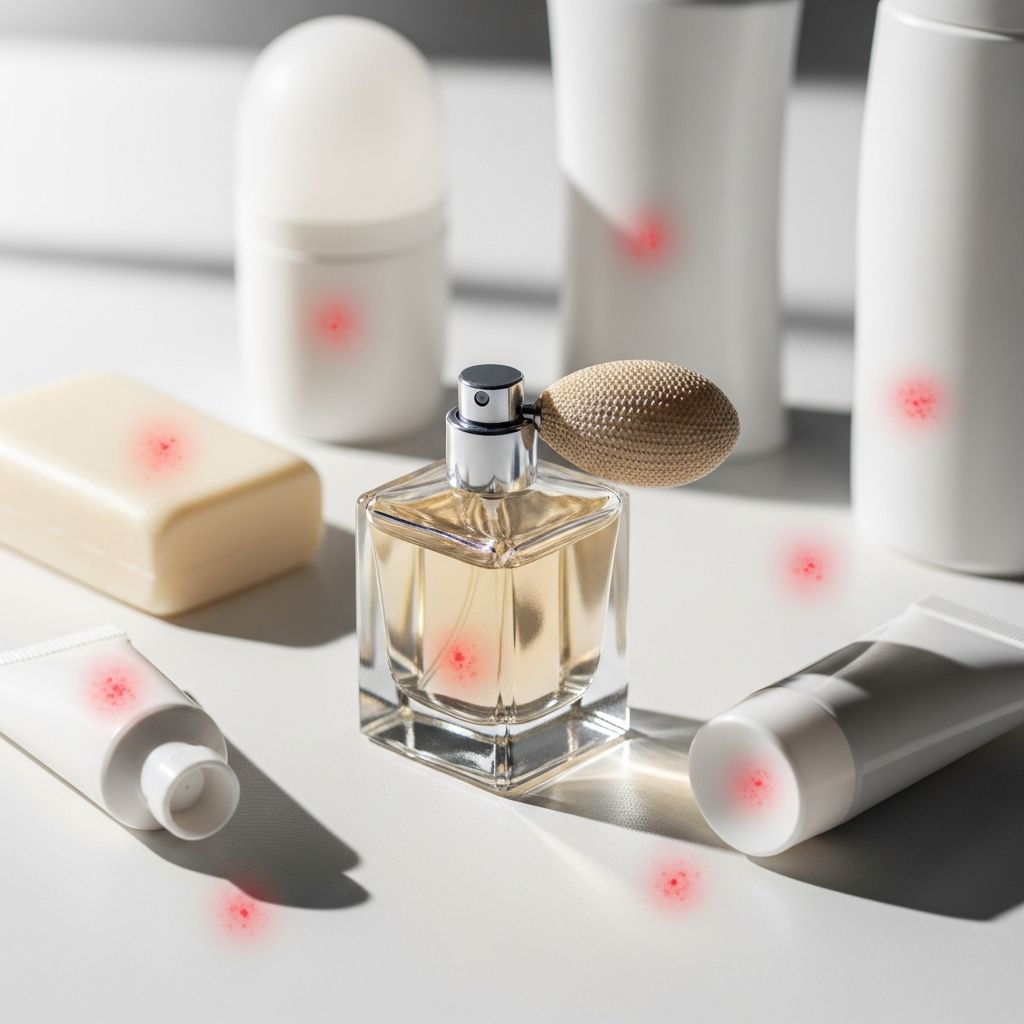
Fragrance mix allergy is a form of allergic contact dermatitis (ACD) caused by an immunological reaction to common fragrance ingredients found in cosmetics, personal care products, and household items. It predominantly affects women with facial or hand eczema who have a history of rashes from fine fragrances or scented deodorants. Fragrance ingredients are among the most frequent causes of ACD, with positive patch tests to fragrance mix occurring in about 10% of eczema patients and sensitization rates of 1.7-4.1% in the general population.
What is the fragrance mix?
The fragrance mix used in patch testing comprises eight common allergens: oak moss absolute, isoeugenol, eugenol, cinnamal, cinnamyl alcohol, geraniol, hydroxycitronellal, and alpha-amyl cinnamal. These represent key components of perfumes and scented products. Fragrance mix I (FMI) detects 70-80% of cases, but 7-15% may be missed, necessitating additional tests like fragrance mix II (FMII), which includes coumarin, citral, citronellol, farnesol, and others. Chemical analysis shows these allergens in 15-100% of cosmetics, often in combinations of three to four.
Fragrances can act as haptens—small molecules binding to skin proteins to trigger immune responses. Some are prehaptens (e.g., linalool oxidizing to linalool hydroperoxides in air) or prohaptens (activated in skin via enzymes), leading to ACD. Essential oils in ‘natural’ products are also common culprits.
Who gets fragrance mix allergy?
Fragrance allergy is more prevalent in women (due to higher cosmetic use) aged 20-60, often with preexisting atopic or irritant dermatitis. Men may develop it from aftershaves or deodorants, facilitated by shaving microtrauma. Prevalence is higher in patch-tested eczema patients (10%) than the general population (1-4%). Cross-reactivity is common; 40% positive to FMII or balsam of Peru also react to FMI.
What causes fragrance mix allergy?
Sensitization occurs from repeated skin contact with fragrances in leave-on products like perfumes, deodorants, lotions, and creams. Airborne exposure from sprays can also sensitize. Once sensitized, re-exposure elicits ACD. Ubiquitous presence in products (e.g., 15-100% of cosmetics contain allergens) increases risk. Preexisting skin barrier damage (e.g., eczema, shaving) heightens susceptibility.
What are the clinical features of fragrance mix allergy?
Symptoms typically appear 12-96 hours after exposure as erythematous, itchy, eczematous rash in contact areas. Common sites:
- Facial dermatitis: From makeup, creams, shampoos (rinsing onto face).
- Axillary dermatitis: Deodorants.
- Hand dermatitis: Moisturizers, soaps.
- Generalized or airborne: Perfumes, laundry detergents.
Reactions may mimic irritant dermatitis or photoallergy. Pigmented contact dermatitis, urticaria, or systemic effects (headache, respiratory issues) can occur. Oak moss absolute accounts for one-third of FMI reactions.
How is fragrance mix allergy diagnosed?
Diagnosis combines history, exam, and patch testing. Key history: rashes after scented products. Patch testing uses FMI (8%), FMII, balsam of Peru, and patient’s products. Readings at 48 and 96 hours grade reactions (0-3+). Positive FMI indicates fragrance allergy, but supplemental testing detects 1-3% more cases (e.g., hydroxyisohexyl 3-cyclohexene carboxaldehyde). T.R.U.E. TEST or NA-STD series are standard. Relevance confirmed by improvement on avoidance.
| Test | Components | Detection Rate |
|---|---|---|
| Fragrance Mix I | Oak moss, isoeugenol, etc. (8 chemicals) | 70-80% |
| Fragrance Mix II | Coumarin, citral, etc. | Additional 7-15% |
| Balsam of Peru | Natural mix | Cross-reactive |
Related Stories



What is the treatment for fragrance mix allergy?
Avoidance is primary. Use topical corticosteroids (e.g., hydrocortisone 1% mild; potent for severe) and emollients for acute flares. Severe cases may need oral steroids or calcineurin inhibitors. Wet wraps aid hand/foot dermatitis.
What is the prognosis for fragrance mix allergy?
With strict avoidance, most improve within weeks, but chronic exposure risks persistent dermatitis. Some lose sensitivity over time, but many require lifelong vigilance due to unlabeled fragrances.
How can fragrance mix allergy be prevented?
- Choose fragrance-free products (check ‘unscented’ carefully).
- Avoid products listing specific allergens or ‘parfum/fragrance’.
- Partner’s cosmetics can transfer.
- For single allergies, avoid that chemical; multiple positives warrant total fragrance avoidance.
- Read labels: EU lists 26 allergens; US labeling limited (Modernization of Cosmetics Act 2022 may improve).
Fragrance mix patch test positive
A positive test means sensitization; clinical relevance assessed by history/improvement on avoidance. False positives rare if read properly. Proceed to ingredient testing if needed.
Differential diagnosis
- Irritant contact dermatitis.
- Atopic dermatitis.
- Photoallergic dermatitis.
- Protein contact dermatitis.
- Other allergens (preservatives).
Further reading and references
For more, consult dermatology guidelines. See references below.
Frequently Asked Questions
Is fragrance mix allergy common?
Yes, it affects 1-4% of the population and 10% of patch-tested eczema patients.
Can natural fragrances cause allergy?
Yes, essential oils like linalool hydroperoxides are potent allergens.
Do I need to avoid all scented products?
If positive to multiple fragrances, yes; otherwise, target specifics.
How long after exposure do symptoms appear?
12-96 hours, peaking at 48-96.
Can airborne fragrance cause reactions?
Yes, from sprays or laundry.
References
- Fragrance contact allergy: a clinical review — PubMed (de Groot AC). 2003-10-31. https://pubmed.ncbi.nlm.nih.gov/14572300/
- Fragrance most common cause of cosmetic allergic contact dermatitis — Dermatology Times. 2023. https://www.dermatologytimes.com/view/fragrance-most-common-cause-cosmetic-allergic-contact-dermatitis
- A Whiff of Trouble: Navigating Allergic Contact Dermatitis to Fragrance — The Hospitalist. 2023. https://blogs.the-hospitalist.org/content/whiff-trouble-navigating-allergic-contact-dermatitis-fragrance
- Perfumes and associated allergens: A brief review — Cosmoderma. 2022. https://cosmoderma.org/perfumes-and-associated-allergens-a-brief-review/
- Fragrance mix I and II — British Society of Cutaneous Allergy. 2024. https://cutaneousallergy.org/pils/fragrance-mix-i-and-ii/
Similar Articles








Read full bio of Sneha Tete