Egg Freezing: Preserving Fertility for Your Future
Understand egg freezing technology, process, success rates, and how it can help preserve your reproductive options.
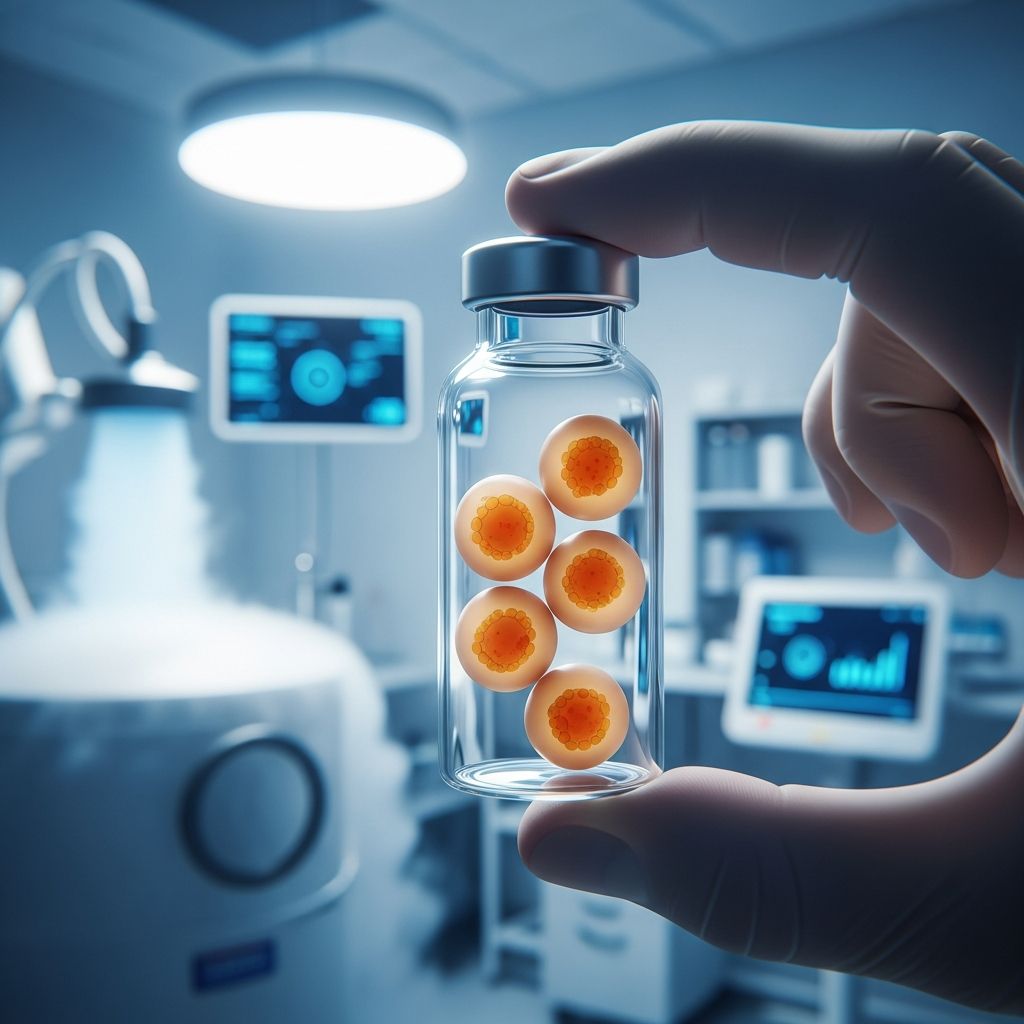
Understanding Egg Freezing: Preserving Your Reproductive Options
Egg freezing, medically known as oocyte cryopreservation, has become an increasingly popular option for individuals seeking to preserve their fertility and extend their reproductive timeline. This advanced fertility preservation technique allows women to extract, freeze, and store their eggs while they are young and most viable, providing the opportunity to pursue pregnancy later in life when personal circumstances are more favorable.
The technology behind egg freezing has advanced dramatically over the past few decades. The first human birth from a frozen egg was reported in 1986, marking a significant milestone in reproductive medicine. Since then, the process has become increasingly refined and successful, with modern vitrification technology offering survival rates exceeding 80-90% and demonstrating strong fertilization and embryonic development outcomes.
What Is Egg Freezing?
Egg freezing is a form of assisted reproductive technology (ART) that allows women to preserve their eggs at their current age and quality. Unlike embryo freezing, which requires fertilization with sperm before storage, egg freezing preserves unfertilized eggs, providing flexibility for future family planning decisions.
The fundamental principle behind egg freezing is time suspension. When eggs are frozen, they cease aging biologically. This means a woman who freezes eggs at age 33 can expect pregnancy rates typical of a 33-year-old when she uses those eggs years later, regardless of her actual age at the time of use. This preservation of fertility potential is particularly valuable as natural egg quality and quantity decline significantly with age.
The Egg Freezing Process: Step-by-Step
The complete egg freezing process typically takes between two to four weeks from start to finish, though it can be completed more rapidly when necessary due to medical circumstances such as pending cancer treatment. Understanding each phase of the process helps prospective patients know what to expect.
Step One: Initial Consultation and Assessment
The journey begins with a comprehensive consultation with a fertility specialist. During this appointment, your healthcare provider will assess your ovarian reserve—the quantity and quality of your remaining eggs. This assessment typically includes blood tests to measure hormone levels, particularly follicle-stimulating hormone (FSH), and a pelvic ultrasound to visualize your ovaries and follicles. This evaluation helps determine the optimal medication dosage for your individual needs and provides realistic expectations regarding the number of eggs that may be retrieved.
Step Two: Ovarian Stimulation
Once baseline testing is complete, ovarian stimulation begins, typically timed with your menstrual cycle to optimize results. During this phase, you will self-administer injectable hormonal medications for approximately 10-14 days. These medications stimulate your ovaries to produce multiple mature eggs rather than the single egg typically released during a natural cycle.
Throughout the stimulation phase, careful monitoring is essential. You will undergo frequent ultrasounds and blood tests to track follicle development and monitor hormone levels, ensuring the ovaries are responding appropriately to medication and reducing the risk of overstimulation. Most women require office visits every other day during this monitoring period.
Related Stories



Step Three: Egg Retrieval
Once follicles reach optimal maturity, typically after 10-14 days of stimulation, the eggs are ready for retrieval. This procedure involves inserting a needle through the vaginal wall into the ovaries while you are under light sedation. The needle aspirates the fluid within each follicle, removing the eggs along with surrounding fluid. The procedure typically takes 15-20 minutes and is performed in an outpatient surgical setting.
Following retrieval, you will spend time in recovery as the sedation wears off. Most women experience mild to moderate cramping and may have light spotting or bleeding for a few days post-procedure. You should plan to have someone drive you home and rest for the remainder of the day.
Step Four: Egg Evaluation and Cryopreservation
After retrieval, your eggs are immediately transferred to the embryology laboratory. Embryologists examine each egg under a microscope to determine maturity level. Only mature eggs, which have completed their first meiotic division, are suitable for freezing. Immature eggs cannot be successfully frozen and thawed.
The mature eggs are then frozen using vitrification, an ultra-rapid cooling technique that has revolutionized egg freezing success. During vitrification, eggs are exposed to cryoprotectant solutions and then plunged into liquid nitrogen at extremely cold temperatures, typically around -196 degrees Celsius. This rapid freezing minimizes ice crystal formation, which can damage cellular structures, thereby preserving egg viability. The frozen eggs are then stored in specialized tanks where they can remain viable for many years.
Timeline and Duration
The entire egg freezing cycle typically unfolds over three to four weeks:
- Days 1-3: Initial consultation, blood work, and ultrasound assessment
- Days 3-14: Ovarian stimulation with daily hormone injections and monitoring appointments
- Day 14-15: Final ultrasound and blood work to confirm readiness for retrieval
- Day 16: Egg retrieval procedure
- Within hours of retrieval: Egg evaluation and vitrification (freezing)
- Days 17-21: Recovery period and return to normal activities
In cases where rapid freezing is medically necessary, such as before cancer treatment, the timeline can be compressed to as little as two weeks.
How Many Eggs Should You Freeze?
Determining the optimal number of eggs to freeze involves understanding natural fertility statistics and individual factors. Human reproduction is remarkably inefficient—the natural monthly conception rate ranges from only 10-20%, depending on age, meaning the average couple takes 5-7 months to conceive naturally. This inefficiency carries through to assisted reproduction as well.
Fertility specialists typically recommend freezing based on age and live birth probability:
- Women under 38 years: Freezing 15-20 mature eggs provides approximately a 70-80% chance of at least one live birth
- Women ages 38-40 years: Freezing 25-30 mature eggs provides approximately a 65-75% chance of at least one live birth
- Women over 40 years: Success rates decline significantly, and larger numbers of eggs may be necessary
These recommendations account for attrition rates at various stages: not all retrieved eggs will be mature, not all mature eggs will survive freezing and thawing, not all surviving eggs will fertilize successfully, and not all fertilized eggs will develop into viable embryos capable of implantation.
Success Rates and Outcomes
Modern egg freezing demonstrates impressive success rates when using vitrification technology. Current data shows that 80-90% of frozen eggs survive the thawing process. Following thaw, eggs are fertilized using intracytoplasmic sperm injection (ICSI), a technique where a single sperm is directly injected into each egg to facilitate fertilization.
Real-world outcome data provides valuable insight into egg freezing effectiveness. In one comprehensive study analyzing 1,171 egg freezing cycles from 875 women, 117 women subsequently returned for thaw cycles using a total of 1,283 frozen eggs. The results demonstrated 51 viable pregnancies, resulting in 55 children with 8 more pregnancies in progress at the time of analysis. Additionally, 62 high-quality blastocysts remained in storage for future attempts.
These outcomes underscore an important advantage of egg freezing: multiple attempts are typically possible from a single retrieval cycle. Embryologists typically thaw and work with eggs in batches of 6-8, increasing the chances of developing high-quality embryos while preserving additional frozen eggs for future attempts if an initial cycle is unsuccessful.
Using Your Frozen Eggs: The Thaw and Transfer Process
When you decide to pursue pregnancy using your frozen eggs, the process begins with a warming cycle. Your frozen eggs are carefully thawed using specialized warming solutions, and those that survived the freezing process are assessed for viability.
Surviving eggs are then fertilized using ICSI, where a single sperm is injected directly into each egg. This specialized fertilization technique is necessary because the zona pellucida—the thick outer coating surrounding the egg—hardens during the freezing and thawing process, preventing natural sperm penetration.
Fertilized eggs are cultured in the laboratory for 3-5 days, allowing them to develop into blastocyst-stage embryos. These developing embryos are then transferred into your uterus during an embryo transfer procedure. Transfer is a minimally invasive outpatient procedure requiring no sedation, typically completed within minutes.
Who Should Consider Egg Freezing?
Egg freezing may be appropriate for various life circumstances and medical situations:
- Career and Life Planning: Women prioritizing education, career development, or personal goals who wish to delay childbearing while preserving current fertility
- Relationship Timing: Those not yet in committed partnerships but desiring biological children in the future
- Medical Conditions: Women with conditions like endometriosis that may compromise ovarian reserve over time
- Cancer Treatment: Individuals undergoing chemotherapy or radiation therapy that may affect fertility
- Genetic Considerations: Those with family histories of premature menopause or diminished ovarian reserve
- Age-Related Concerns: Women seeking to preserve eggs at younger ages when egg quality is optimal
Costs and Financial Considerations
Egg freezing involves significant financial investment. Typical costs include medication expenses ($2,000-$5,000), the retrieval procedure and laboratory processing ($8,000-$15,000), and annual storage fees ($500-$1,500 per year). Some fertility clinics offer shared-risk programs or financing options to help make the procedure more accessible.
Insurance coverage varies considerably. Some plans cover portions of the procedure, while others do not cover fertility preservation at all. It is essential to review your insurance policy and discuss financial options with your fertility clinic before beginning the process.
Risks and Considerations
While egg freezing is generally safe, potential risks and considerations include:
- Ovarian Hyperstimulation Syndrome (OHSS): Rare but potentially serious condition from hormone stimulation
- Infection or Bleeding: Uncommon complications from the egg retrieval procedure
- Medication Side Effects: Mild side effects like bloating, mood changes, and injection site soreness are common
- No Guarantee: Egg freezing preserves fertility potential but does not guarantee pregnancy
- Psychological Factors: The financial investment and emotional aspects of fertility preservation should not be underestimated
Advances in Egg Freezing Technology
The vitrification technique represents a quantum leap forward from older slow-freezing methods, dramatically improving survival and pregnancy rates. Continued research focuses on optimizing cryoprotectant solutions, perfecting thawing protocols, and developing predictive tools to identify the most viable eggs for freezing.
Additionally, advances in preimplantation genetic testing (PGT) allow embryos created from thawed eggs to be screened for chromosomal abnormalities before transfer, potentially improving outcomes and reducing miscarriage risk.
Frequently Asked Questions
Q: How long can frozen eggs be stored?
A: Frozen eggs can theoretically remain viable for decades. Current medical evidence suggests storage periods of 10+ years are safe, with some data supporting even longer storage. However, many clinics limit storage to specific timeframes; it is best to discuss long-term storage plans with your fertility clinic.
Q: Does egg freezing guarantee pregnancy?
A: No. While egg freezing preserves fertility potential and improves the likelihood of pregnancy compared to using fresh eggs at an older age, it does not guarantee pregnancy. Success depends on multiple factors including egg quality, sperm quality, embryo development, and uterine receptivity.
Q: Is egg freezing painful?
A: The egg retrieval procedure itself is performed under sedation and is not painful during the procedure. Mild to moderate cramping and discomfort may occur for several days afterward, similar to menstrual cramps.
Q: Can I freeze eggs at any age?
A: While egg freezing is technically possible at various ages, success rates are significantly better when performed earlier. Egg quality declines with age, particularly after age 35. Most fertility specialists recommend freezing eggs before age 40 for optimal outcomes, though older women may still benefit from the procedure.
Q: What is the difference between egg freezing and embryo freezing?
A: Egg freezing preserves unfertilized eggs, while embryo freezing involves fertilizing eggs with sperm and freezing the resulting embryos. Egg freezing offers greater flexibility if you have not yet identified a sperm source or wish to preserve that choice for the future.
Q: Will my frozen eggs age while in storage?
A: No. One of the primary advantages of egg freezing is that frozen eggs do not age biologically. They remain at the biological age at which they were frozen, regardless of how many years pass before they are used.
References
- Egg Freezing: Process, Cost, Success, Testing & More — Shady Grove Fertility. 2024. https://www.shadygrovefertility.com/treatments/egg-freezing/
- Egg Freezing – Fertility & Reproductive Health — UCLA Health. 2024. https://www.uclahealth.org/medical-services/obgyn/fertility/egg-freezing
- Fertility Preservation — University of Mississippi Medical Center. 2024. https://umc.edu/Healthcare/Womens%20Health/Fertility%20Services/Treatments-We-Offer/Fertility-Preservation.html
- Egg Freezing and Fertility Preservation — Emory Healthcare Reproductive Center. 2024. https://www.emoryhealthcare.org/centers-programs/reproductive-center/treatments/egg-freezing-fertility-preservation
- Egg Freezing Clinic at RMA of New York — RMA of New York. 2024. https://www.rmany.com/treatment-options/egg-freezing
- Egg Freezing: Process, Cost, and What to Expect — Healthline. 2024. https://www.healthline.com/health/egg-freezing-process
Similar Articles








Read full bio of medha deb