Freezing Embryos: Fertility Preservation Guide
Comprehensive guide to embryo cryopreservation for fertility preservation and family planning.
Freezing Embryos: A Comprehensive Guide to Fertility Preservation
Embryo freezing, also known as embryo cryopreservation, is a well-established fertility preservation technique that has been used successfully for decades to help individuals and couples maintain their reproductive options. This procedure involves freezing embryos created through in vitro fertilization (IVF) for future use, allowing people to postpone parenthood, preserve fertility before cancer treatment, or plan their families according to their personal timelines. As reproductive technology continues to advance, embryo freezing has become an increasingly accessible option for those seeking to take control of their reproductive futures.
What is Embryo Freezing?
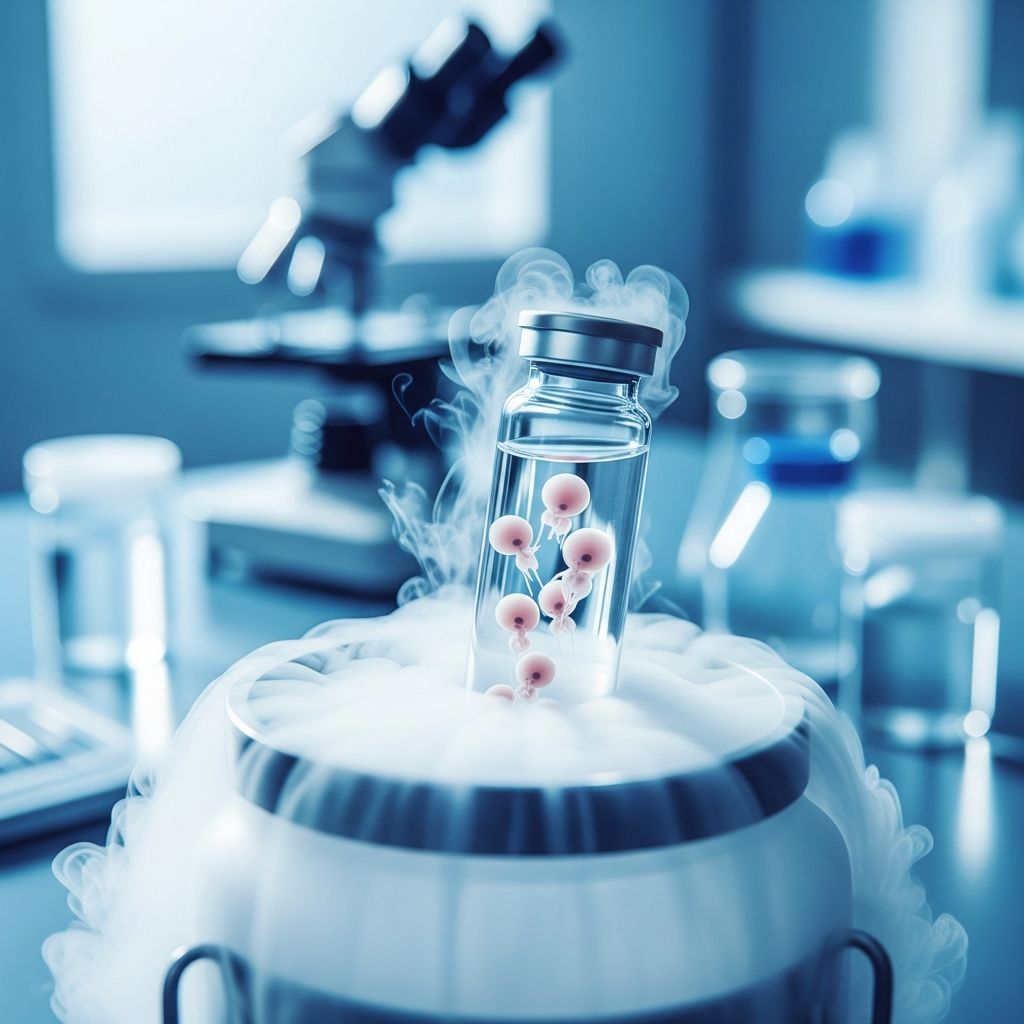
Embryo freezing is the process of preserving fertilized eggs at extremely low temperatures for future use. The procedure begins with controlled ovarian hyperstimulation, which involves hormone medications to stimulate the ovaries to produce multiple eggs rather than the single egg typically released during a natural menstrual cycle. Once the eggs have matured, they are retrieved through a minimally invasive procedure, then fertilized with sperm in a laboratory to create embryos. These embryos are then carefully frozen and stored in specialized cryogenic tanks, where they can remain viable for many years until the individual or couple decides to use them.
The freezing process itself uses advanced cryopreservation techniques to ensure the embryos remain healthy and viable. Modern vitrification methods, which involve ultra-rapid freezing, have dramatically improved survival rates and made embryo cryopreservation one of the most reliable fertility preservation options available today.
The Embryo Freezing Process: Step by Step
Understanding the embryo freezing process helps individuals make informed decisions about whether this fertility preservation option is right for them. The entire process typically takes approximately two to three weeks from start to finish.
Initial Consultation and Evaluation
Before beginning the embryo freezing process, patients meet with fertility specialists to discuss their medical history, reproductive goals, and any concerns. The specialist will explain the procedure in detail, review success rates based on age and other factors, and answer questions about costs and timeline.
Ovarian Stimulation
The process begins with hormone injections administered daily over approximately 10-12 days. These medications, typically involving 2-3 injections per day, stimulate the ovaries to develop multiple follicles containing eggs. During this stimulation phase, patients undergo frequent monitoring appointments—usually 4-6 ultrasound visits and blood work sessions—to track follicle development and adjust medication doses as needed. These monitoring appointments are typically scheduled during early morning hours to accommodate the clinic’s testing schedule.
Egg Retrieval
Once the follicles have reached optimal maturity, patients receive a trigger injection to complete egg maturation. Approximately 34-36 hours later, egg retrieval takes place. This procedure is performed under sedation and involves using an ultrasound-guided needle to aspirate the eggs from the ovarian follicles. The entire retrieval process typically takes 15-20 minutes, and patients can usually go home the same day.
Fertilization and Embryo Development
In the laboratory, the retrieved eggs are fertilized with sperm (from a partner or donor) and cultured for several days. The embryologist monitors the embryos’ development, assessing their quality and viability. On day five or six of development, when the embryos have reached the blastocyst stage—consisting of approximately 100-120 cells—they are ready for freezing or genetic testing if desired.
Related Stories



Cryopreservation
Using vitrification technology, embryos are rapidly frozen in a cryoprotectant solution, which prevents ice crystal formation that could damage the cellular structure. The frozen embryos are then stored in liquid nitrogen tanks at temperatures below -300°F, where they can remain indefinitely without degradation.
Who Are Good Candidates for Embryo Freezing?
Embryo freezing is an excellent option for certain individuals and couples, though not everyone may be a suitable candidate. Understanding your candidacy helps determine whether this procedure aligns with your reproductive goals and circumstances.
Ideal Candidates Include:
- Individuals or couples undergoing cancer treatment who wish to preserve fertility before chemotherapy, radiation, or surgical interventions that may affect reproductive capacity
- People with partners or those willing to use donor sperm, since embryo creation requires fertilization with sperm
- Those who can delay their fertility-related treatment by at least two to three weeks to complete the stimulation and retrieval process
- Individuals in their reproductive years seeking to preserve fertility for future use
- Couples who produce excess embryos during IVF and wish to preserve them for future pregnancies
- People with genetic conditions who may benefit from preimplantation genetic testing (PGT) to select healthy embryos
Those Who May Not Be Good Candidates:
- Individuals without a partner and unwilling to use donor sperm
- Patients requiring immediate treatment who cannot delay 2-3 weeks
- Those with medical conditions that contraindicate ovarian stimulation or egg retrieval
- Individuals with very limited ovarian reserve who may not produce sufficient eggs
Success Rates and Outcomes
The success of embryo freezing depends on several factors, with age at the time of embryo creation being the most significant determinant. When embryos are created from eggs retrieved from younger individuals, success rates tend to be substantially higher. Success rates for embryo cryopreservation generally range from 40 percent or higher, though individual outcomes vary based on specific circumstances.
One critical distinction between egg freezing and embryo freezing relates to selection. Not all mature eggs will fertilize, and not all fertilized eggs will develop into viable embryos. Frozen embryos represent eggs that have successfully passed the fertilization and early development selection process, giving them a higher probability of success compared to frozen eggs. This means that one frozen egg does not necessarily equal one frozen embryo in terms of reproductive potential.
The survival rate of frozen embryos following thawing is exceptionally high. With modern vitrification techniques, embryo survival rates typically exceed 95 percent, meaning the vast majority of thawed embryos remain viable and suitable for transfer.
Embryo Freezing vs. Other Fertility Preservation Options
Several fertility preservation techniques are available, each with distinct advantages and considerations. Comparing these options helps individuals choose the method best suited to their circumstances.
| Preservation Method | Process Duration | Requires Partner/Sperm | Key Advantage | Best For |
|---|---|---|---|---|
| Embryo Freezing | 2-3 weeks | Yes | High success rates, embryos pre-selected | Individuals with partners or donor sperm access |
| Egg Freezing | 2-3 weeks | No | Reproductive flexibility, no partner needed | Single individuals, those wanting future partner choice |
| Ovarian Tissue Freezing | Minimal delay | No | No delay needed, works for pre-pubertal girls | Urgent cancer treatment, pediatric patients |
| Sperm Freezing | Days | N/A | Simple, quick, long-term storage possible | Males before cancer or fertility-affecting treatment |
Embryo Freezing vs. Egg Freezing
Both embryo and egg freezing represent viable fertility preservation strategies, each with distinct benefits and considerations. Embryos, being more developed structures containing approximately 100-120 cells compared to eggs as single cells, are generally considered more resilient to the freeze-thaw process. However, modern vitrification technology has substantially improved egg survival rates, with expected survival rates around 90 percent or higher.
The primary advantage of embryo freezing is that the selected embryos have already passed the fertilization and early development milestones, indicating higher viability. However, embryo freezing requires a committed partner or donor sperm source and removes reproductive flexibility—the frozen embryos are specifically tied to a particular genetic contribution.
Egg freezing, conversely, preserves reproductive autonomy. Individuals can freeze eggs without needing a partner and retain the option to select their partner or sperm source at a later time when they choose to use the eggs. This flexibility represents a significant advantage for single individuals or those uncertain about future partnership status.
Cost Considerations
Financial aspects play an important role in fertility preservation decisions. While costs vary by facility and region, understanding typical expenses helps with planning and budgeting.
The initial embryo freezing cycle, including ovarian stimulation, egg retrieval, fertilization, and embryo freezing, typically costs between $10,000 and $15,000, though this can vary based on medication costs, monitoring requirements, and facility fees. Medications for ovarian stimulation generally range from $3,000 to $7,000. Additional costs may include preimplantation genetic testing (PGT) at $500-$2,000 per embryo if chosen.
Beyond the initial freezing cycle, annual storage fees typically range from $500 to $1,200 per year. When individuals are ready to use frozen embryos, thawing and embryo transfer procedures cost approximately $3,000-$5,000 per cycle.
It’s worth noting that cost-effectiveness analyses demonstrate that individuals freezing eggs or embryos at younger ages—for example, at age 33 compared to age 42-43—can significantly reduce the cost per live birth when later pursuing pregnancy. This economic advantage underscores the potential value of early fertility preservation for those who anticipate wanting biological children in the future.
Storage and Long-Term Viability
One of the most reassuring aspects of embryo freezing is the exceptional stability of frozen embryos during storage. Embryos preserved through cryopreservation remain viable indefinitely when properly stored in liquid nitrogen tanks. Research has demonstrated successful pregnancies from embryos frozen for 10, 15, and even 20+ years, with no apparent degradation in viability based on storage duration.
This long-term stability provides individuals with the freedom to delay parenthood without concern about the embryos’ reproductive potential declining over time. However, individuals should maintain contact information with their fertility clinic and ensure their wishes regarding embryo storage and use are clearly documented.
Genetic Testing of Frozen Embryos
An important consideration regarding frozen embryos involves genetic testing capabilities. Currently, genetic testing cannot be performed on eggs before they become embryos. However, once embryos are thawed and ready for transfer, they can undergo preimplantation genetic testing (PGT) if desired or recommended by a physician.
PGT allows embryologists to screen embryos for chromosomal abnormalities and, in some cases, specific genetic conditions. This testing can be particularly valuable for individuals over age 35, those with family histories of genetic disorders, or those who have experienced previous miscarriages related to chromosomal issues. Testing results help guide the selection of the healthiest embryos for transfer, potentially improving pregnancy outcomes and reducing miscarriage risk.
Fertility Preservation in Cancer Treatment
For individuals diagnosed with cancer, embryo freezing represents a critical option to preserve reproductive potential before undergoing chemotherapy, radiation, or surgical treatments that may compromise fertility. Cancer treatments can damage eggs, sperm, or reproductive organs, making fertility preservation before treatment begins essential for those wishing to have biological children in the future.
The primary consideration in the cancer setting is timing. Individuals with hematologic malignancies often require more urgent treatment initiation. Working closely with both oncology and fertility specialists ensures that a fertility preservation strategy is implemented quickly without compromising cancer treatment urgently needed.
One advantage of embryo freezing in the cancer setting is that the tissue harvesting procedure can often be coordinated with chemotherapy port placement, minimizing additional procedures and allowing treatment to begin promptly after embryo freezing is complete.
Emotional and Ethical Considerations
Beyond the medical and technical aspects, embryo freezing involves important emotional and ethical considerations. Individuals should reflect on their feelings about creating and storing embryos, their preferences regarding unused embryos, and their reproductive goals. Clear communication with fertility specialists about these considerations helps ensure that the chosen path aligns with personal values and circumstances.
Couples should also discuss their joint wishes regarding frozen embryos in various scenarios, including relationship changes, and should ensure these wishes are documented with their fertility clinic.
Frequently Asked Questions
How long can embryos be frozen?
Embryos can remain frozen indefinitely without degradation when stored properly in liquid nitrogen. Successful pregnancies have resulted from embryos frozen for 20+ years.
What happens if I don’t use my frozen embryos?
Individuals can choose to donate unused embryos to other couples, donate them for research, or request their disposal. These wishes should be clearly communicated to the fertility clinic.
Can embryo freezing guarantee pregnancy success?
While embryo freezing and transfer have good success rates—typically 40 percent or higher depending on age at creation—success is not guaranteed. Multiple factors influence pregnancy outcomes, including embryo quality, uterine receptivity, and overall health.
Is embryo freezing covered by insurance?
Coverage varies significantly by insurance plan and state. Some plans cover fertility preservation for medical reasons like cancer treatment, while others do not. Checking with your specific insurance provider is essential.
Can I freeze embryos for gender selection?
In the United States, embryo freezing and PGT can be used to identify embryo sex, though regulations vary by state regarding sex selection practices.
What is the difference between embryo freezing and egg freezing success rates?
Embryos generally have slightly higher success rates than eggs due to their more developed state and the fact that they’ve passed fertilization milestones. However, with modern vitrification techniques, both options have high survival rates exceeding 90 percent.
References
- Fertility Preservation for Women with Cancer — Johns Hopkins Medicine. 2020-01-28. https://www.hopkinsmedicine.org/gynecology_obstetrics/specialty_areas/fertility-center/infertility-services/fertility-preservation.html
- Egg Freezing 101 with Dr. Pardis Hosseinzadeh — Johns Hopkins Medicine. 2025-01-21. https://www.hopkinsmedicine.org/gynecology-obstetrics/specialty-areas/fertility-center/
- Infertility Treatment and Fertility Preservation — Johns Hopkins University. https://hpo-docs.jh.edu/WkaQpTXx
- Practice Committee of the American Society for Reproductive Medicine — ASRM. Guidelines on Fertility Preservation. https://www.asrm.org/
Similar Articles








Read full bio of Sneha Tete