French Marigold: Dermatology Uses, Benefits, And How-To Guide
Discover the therapeutic uses of French marigold (Tagetes patula) in dermatology, from wound healing to anti-inflammatory applications.
See also separate article(s): Marigold
The French marigold is a plant valued in dermatology for its therapeutic properties. Scientifically known as Tagetes patula, it belongs to the Asteraceae family and has been utilized traditionally for skin conditions due to its antiseptic, anti-inflammatory, and wound-healing effects.
What is French marigold?
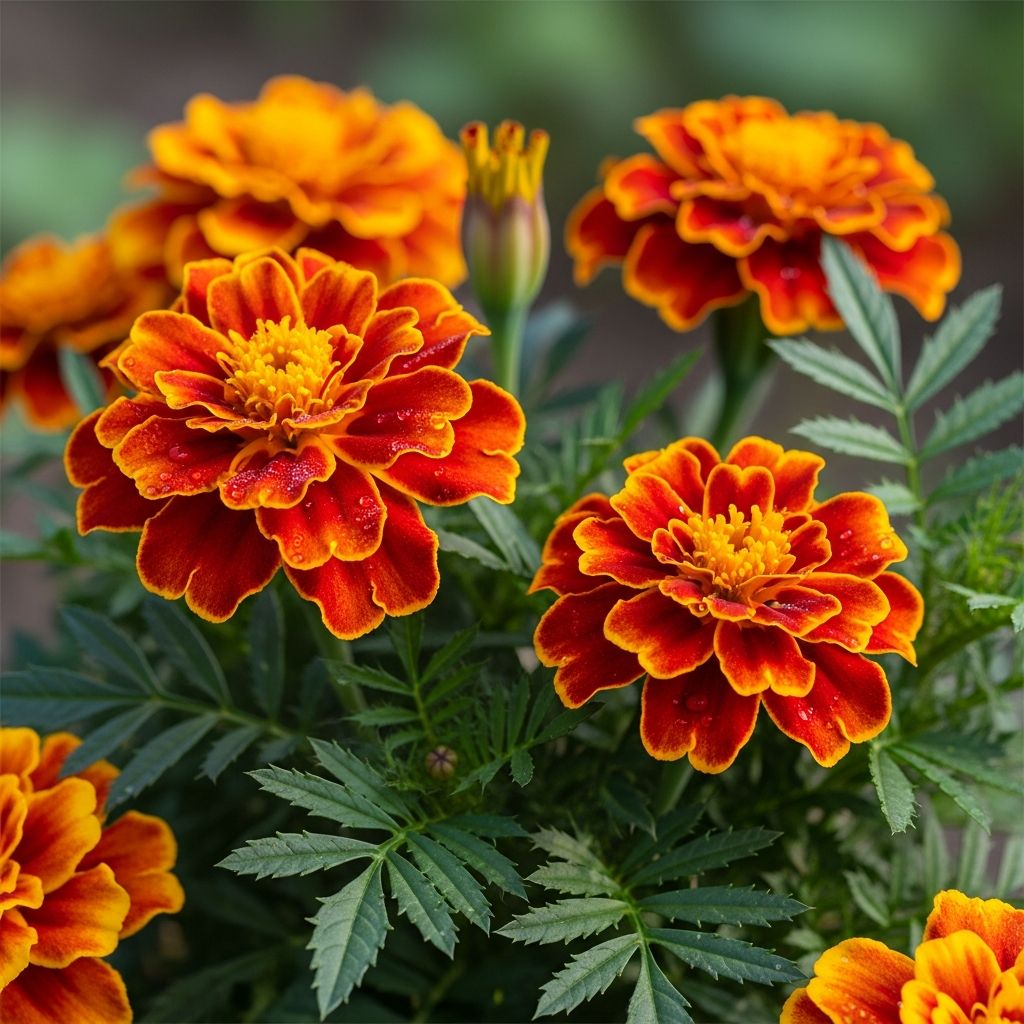
French marigold (Tagetes patula L.) is an annual herbaceous plant native to Mexico and Central America, widely cultivated for ornamental and medicinal purposes. It features bright yellow, orange, or red double flowers, growing 15–60 cm tall with fern-like, aromatic foliage. The plant thrives in full sun and well-drained soil, blooming from summer to autumn. In horticulture, it is distinguished from the taller African marigold (Tagetes erecta) by its compact size and pungent scent, which repels pests like nematodes and aphids.
Medicinally, the flowers, leaves, and roots contain bioactive compounds including flavonoids (quercetin, quercetagetin, patuletin), carotenoids (lutein), and essential oils. These contribute to its antioxidant, antimicrobial, and anti-inflammatory activities, making it relevant in dermatological applications.
Historical and traditional uses in dermatology
French marigold has a long history in folk medicine, particularly among indigenous cultures in Latin America and later in Europe. The flowers were used topically as poultices for wounds, cuts, scrapes, and skin irritations due to their antiseptic properties. Infusions served as eyewashes for conjunctivitis, while decoctions treated rheumatic pains and skin inflammations.
In traditional remedies, petals were applied to soothe eczema, varicose ulcers, and insect bites. The plant’s anthelmintic effects extended to treating skin infestations indirectly by addressing underlying parasitic issues. Its use spread globally, with records in Georgian folk medicine for stomach issues, fever, and hepatic disorders, but dermatological applications focused on external healing.
Active constituents
The therapeutic efficacy of French marigold stems from diverse phytochemicals:
- Flavonoids: Quercetin, quercetagetin, and patuletin exhibit strong antioxidant and anti-inflammatory effects. Patuletin inhibits TNF-α production, reducing inflammation without cytotoxicity at therapeutic doses.
- Carotenoids: Lutein provides radical-scavenging capacity and supports skin repair.
- Essential oils: Thiophenes and terpenes confer antimicrobial properties against bacteria and fungi.
- Other compounds: Polysaccharides and phenolic acids enhance wound healing by promoting collagen synthesis and epithelialization.
Methanol extracts show high ORAC values (177.9 μM Trolox equivalents/g), comparable to spices like paprika, indicating potent free radical scavenging.
Dermatological applications
French marigold is applied in various skin conditions:
- Wound healing: Petal extracts accelerate granulation and reduce scarring in cuts, burns, and ulcers. Antiseptic properties prevent secondary infections.
- Inflammatory dermatoses: Effective for eczema, dermatitis, and bunions via flavonoid-mediated cytokine modulation.
- Antimicrobial uses: Combats Staphylococcus aureus and Candida species, useful in infected wounds and athlete’s foot.
- Other: Soothes haemorrhoids, varicose veins, and conjunctivitis as compresses or rinses.
In companion planting, its nematode-repelling roots benefit garden health, indirectly supporting herbal cultivation.
Scientific evidence
Research validates traditional uses. A PMC study on Tagetes patula flowers demonstrated cytoprotective effects in oxidative stress models, enhancing antioxidant enzymes like SOD and catalase. Flavonoid fractions boosted IL-10 production, an anti-inflammatory cytokine.
Animal models confirmed methanolic extracts reduce acute and chronic inflammation, comparable to standard drugs. A double-blind trial showed efficacy in bunion treatment. Patuletin and lutein exhibit anticancer potential via cytotoxicity in HeLa cells, with radical-scavenging in neutrophils.
NIH studies highlight antimicrobial effects, supporting topical use. Roots suppress root-knot nematodes, a mechanism extendable to soil-borne pathogens affecting skin health indirectly.
How to use French marigold for skin conditions
Related Stories



Preparations:
- Infusion: Steep 1–2 tsp dried flowers in 250 ml boiling water for 10 min. Use as compress for wounds or eyewash (diluted).
- Ointment: Infuse petals in oil, mix with beeswax for salves on dry skin or eczema.
- Poultice: Crush fresh flowers, apply directly to cuts or insect bites.
- Tincture: 1:5 herb-alcohol extract, dilute for topical anti-inflammatory use.
Dosage: Topical only; avoid ingestion without guidance due to potential toxicity. Test patch for allergies.
| Condition | Preparation | Application |
|---|---|---|
| Wounds/Cuts | Poultice or Ointment | 2–3x daily until healed |
| Eczema | Infusion Compress | Daily soaks |
| Conjunctivitis | Diluted Infusion | Eye rinse 2x daily |
Side effects and contraindications
Generally safe topically. Possible allergic contact dermatitis in Asteraceae-sensitive individuals. Avoid in pregnancy due to emmenagogue effects. Phototoxicity rare but caution with sun exposure post-application. No known drug interactions, but consult for immunosuppression.
Prevention
For skin health, incorporate into gardens for fresh supply. Combine with hygiene to prevent infections amenable to marigold therapy.
Related topics
Frequently Asked Questions
Is French marigold safe for skin use?
Yes, topical use is safe for most, but patch test first due to allergy risk in daisy family sensibles.
Can French marigold treat infections?
Its antimicrobial compounds help minor infections; severe cases need medical attention.
How does it differ from calendula?
Tagetes patula (French marigold) is more antimicrobial; Calendula officinalis excels in soothing inflammation.
Are the flowers edible?
Yes, petals add citrus flavor to salads, but use sparingly due to bitterness.
Does it repel pests in gardens?
Yes, effective against nematodes, aphids, and rabbits via root secretions and scent.
References
- French Marigold – Facts You Probably Didn’t Know — Gardenia.net. 2023. https://www.gardenia.net/plants/common-names/french-marigold
- Constituents of French Marigold (Tagetes patula L.) Flowers Protect… — PMC (National Library of Medicine). 2016-07-13. https://pmc.ncbi.nlm.nih.gov/articles/PMC4940552/
- Why You Should Grow Marigolds This Year — Siskiyou Vital Medicine. 2023. https://siskiyouvitalmedicine.com/why-you-should-grow-marigolds-this-year/
- French Marigold — Buchanan’s Native Plants. 2023. https://buchanansplants.com/plant-library/annuals/french-marigold/
- Marigold (Tagetes) — UIC Heritage Garden. 2023. http://heritagegarden.uic.edu/marigold-tagetes
- Marigold Flower Uses: Marigold Benefits For Gardens And Beyond — Gardening Know How. 2023. https://www.gardeningknowhow.com/ornamental/flowers/marigold/marigold-flower-uses.htm
- An Ethnobotanical Perspective on Marigolds — Swansons Nursery. 2023. https://www.swansonsnursery.com/blog/marigolds
Similar Articles








Read full bio of medha deb