Frenum (Frenulum): Anatomy, Function & Oral Health
Understanding frenums in your mouth: structure, function, conditions, and when treatment is needed.
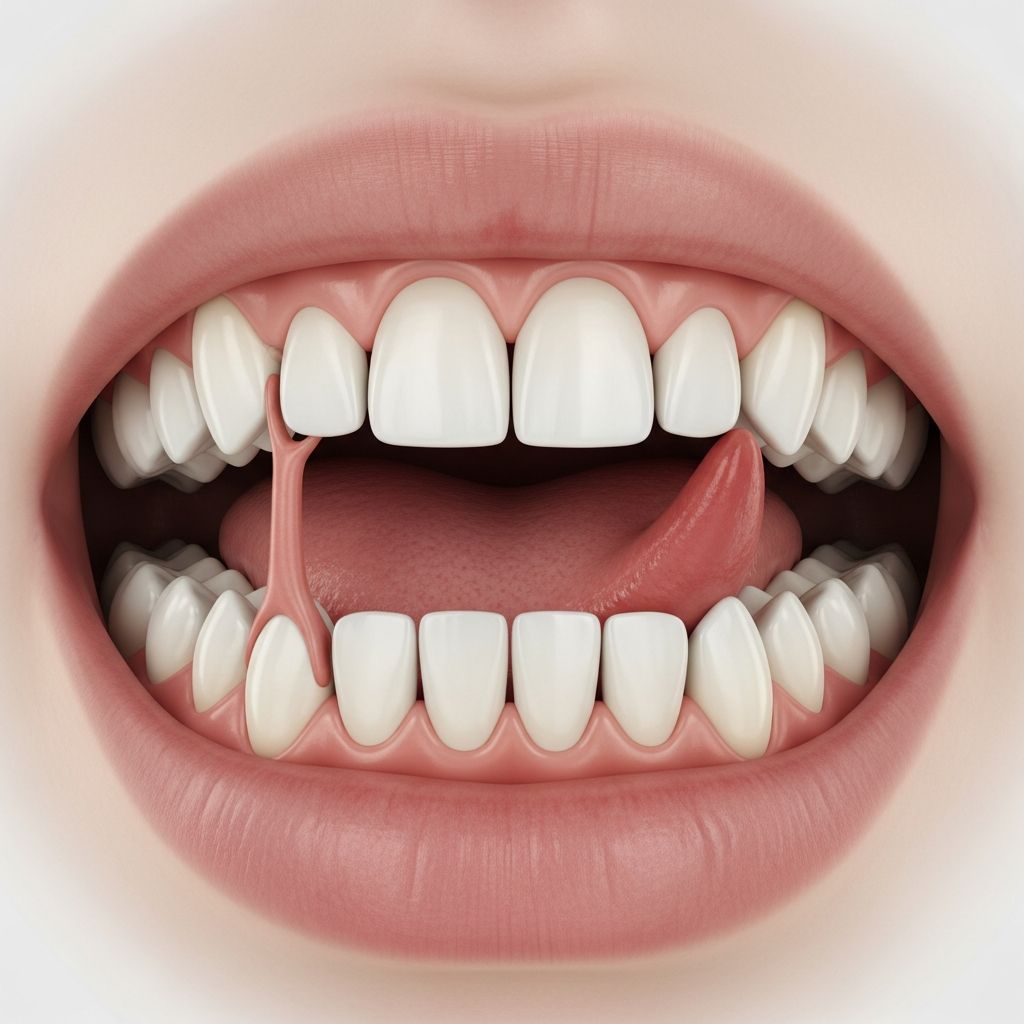
Understanding the Frenum: A Small Tissue with Big Responsibilities
Your mouth contains several small but important structures that often go unnoticed unless they cause problems. One of these is the frenum—a small piece of connective tissue that plays a vital role in your daily oral functions. Most people never give their frenums a second thought, but these tiny bands of tissue are essential for eating, speaking, and maintaining proper oral structure.
A frenum is a small band of connective tissue that joins two different structures within your mouth. The term “frenulum” is simply another name for a small frenum, and healthcare providers typically use these terms interchangeably. Both words derive from the Latin term “frēnulum,” which means “little bridle”—an apt description for tissues that help control and stabilize movement.
Types of Oral Frenums
Most people have several oral frenums, each serving a specific purpose in maintaining proper oral function and structure. The most prominent frenums include:
The Labial Frenums
The labial frenums are the most visible frenums in your mouth. The maxillary labial frenum connects your upper lip to your upper gums, while the mandibular labial frenum connects your lower lip to your lower gums. These frenums provide essential support and give structure to your lips, helping them maintain their position during speaking, eating, and other oral activities.
The Lingual Frenulum
Located beneath your tongue, the lingual frenulum is a fold of tissue that connects the bottom of your tongue to the floor of your mouth. This particular frenulum plays a crucial role in tongue movement and stability, making it essential for proper speech, swallowing, and eating. When the lingual frenulum is too short or too tight, it can restrict tongue movement—a condition known as tongue-tie or ankyloglossia.
Buccal Frenums
You also have smaller buccal frenums located on both sides of your mouth going toward the back. The term “buccal” refers to the cheek area, and these frenums support and provide structure to your cheeks and lips. While less prominent than the labial and lingual frenums, they still play an important role in maintaining oral structure.
The Anatomy and Composition of Frenums
An oral frenum appears as a ropelike band of tissue, typically about the same color as your gums. Frenums vary significantly in appearance from person to person. Some individuals have thin frenums, while others have thicker ones. Additionally, frenums can be either short or long depending on individual anatomy. These variations in size, thickness, and length are completely normal and may not cause any functional problems.
Despite their small size, frenums contain powerful elements that make them structurally significant. They are composed of connective tissue elements that provide the necessary strength and elasticity to support and stabilize your lips and tongue, allowing them to function properly throughout your daily activities.
Related Stories



The Critical Functions of Frenums
The main purpose of frenums in your mouth is to stabilize and provide support for your lips and tongue. Without your frenums, everyday tasks like chewing and speaking would become difficult or impossible. These small tissues are particularly important during infancy and early childhood, where they play crucial developmental roles.
Supporting Breastfeeding
In newborns and infants, frenums help babies breastfeed effectively. A properly functioning lingual frenulum allows infants to create the necessary suction and movement patterns required for successful breastfeeding. When a frenulum is too tight or short, it can interfere with a baby’s ability to latch properly onto the breast, leading to breastfeeding difficulties for both mother and child.
Speech Development
As children grow, frenums play a vital role in speech development. The lingual frenulum, in particular, helps toddlers learn how to form words correctly by allowing proper tongue positioning and movement. Abnormal frenulum attachment or excessive tightness can interfere with proper articulation and speech development.
Daily Oral Functions
Throughout life, frenums keep your lips and tongue exactly where they should be, enabling you to eat, chew, and speak without worry. They maintain the structural integrity of your mouth and prevent excessive movement of soft tissues that could interfere with normal oral functions.
Common Conditions Affecting Frenums
While frenums are resilient structures, various conditions can affect them, causing discomfort or functional problems. Dentists commonly treat several frenum-related conditions:
Tongue-Tie (Ankyloglossia)
Tongue-tie occurs when the lingual frenulum is too short, too thick, or abnormally attached, restricting the tongue’s range of motion. This condition can interfere with breastfeeding, speech development, and eating. Some people are born with this condition, while others may develop restrictions over time.
Lip-Tie
Similar to tongue-tie, lip-tie occurs when the labial frenums (particularly the maxillary labial frenum) are too short or too thick, restricting the upper or lower lip’s movement. This can affect breastfeeding latch, speech, and eating patterns.
Frenum Irritation and Injury
If a frenum gets irritated or injured, you might develop pain and swelling in the area. This common issue usually goes away on its own with proper care. However, if irritation persists or the injury is severe, professional treatment may be necessary.
Diastema
An abnormally prominent or thickly attached maxillary labial frenum can contribute to diastema—a gap between the upper front teeth. The frenum’s tension on the gingiva can prevent the natural converging of the central incisors during development, creating or maintaining this space.
Gingival Recession
When a frenum is abnormally attached, it can exert excessive tension on the gingiva (gums), potentially contributing to gingival recession where the gum line pulls back, exposing the root surface of teeth.
Symptoms of Frenum-Related Problems
Frenum-related conditions can cause a wide array of symptoms, depending on the specific issue and its severity:
- Difficulty breastfeeding or improper latch in infants
- Speech difficulties or unclear articulation
- Limited tongue or lip movement
- Pain or swelling in the affected area
- Difficulty brushing teeth properly
- Visible gap between upper front teeth
- Gum recession or sensitivity
- Difficulty eating certain foods
- Oral irritation or tissue damage
Treatment Options for Frenum Conditions
Treatment for frenum-related conditions depends on the specific problem, its severity, and how significantly it affects your daily life or your child’s development.
Conservative Approaches
For many frenum conditions, particularly those that don’t cause significant functional problems, observation and conservative management may be recommended. Healthcare providers may suggest adjusting breastfeeding position or your baby’s latch to see if this resolves feeding difficulties. Many frenums naturally lengthen with age, so a watchful waiting approach is often appropriate when no feeding or developmental difficulties are present.
Frenotomy (Frenectomy)
When conservative measures don’t resolve the issue, a frenotomy—also called a frenectomy—may be recommended. This is a quick, minimally invasive surgical procedure that releases the restricted frenum tissue. Healthcare providers typically perform this procedure in-office using sterile scissors or laser technology. For infants with tongue-tie affecting breastfeeding, babies don’t require anesthesia for this simple procedure. The healthcare provider makes a small cut in the lingual frenulum or labial frenum, allowing the tongue or lip to move more freely.
Frenuloplasty
For more severe cases or when additional tissue restructuring is needed, a frenuloplasty may be performed. This more involved procedure not only releases the restricted frenulum but also repositions it for optimal function and appearance. Frenuloplasty is typically performed under general anesthesia and may be preferred for aesthetic concerns or cases requiring significant tissue modification.
Laser-Assisted Treatment
Modern dental practices increasingly use laser technology for frenum procedures. Laser-assisted frenectomies are preferred for their precision, ability to minimize bleeding, and faster recovery time compared to traditional surgical approaches.
When Your Child Might Need Frenotomy
If your child has difficulty breastfeeding, it’s important to tell your healthcare provider. If a frenum is the culprit, a simple frenotomy procedure may help. The decision to perform this procedure is made carefully after considering whether other adjustments or treatments might resolve the issue. Healthcare providers will discuss the benefits and risks with you and ensure you’re comfortable with the decision before proceeding.
Maintaining Healthy Frenums
The best way to keep your frenums healthy is to practice good oral hygiene. Regular brushing and flossing helps reduce harmful bacteria that may cause tissue inflammation. By maintaining excellent oral health habits, you minimize the risk of frenum irritation, infection, or complications. Additionally, avoiding trauma to your mouth and maintaining a healthy diet can help protect your frenums and overall oral health.
Frequently Asked Questions
Q: What exactly is a frenum or frenulum?
A: A frenum is a small band of connective tissue that joins two structures in your mouth. A frenulum is simply a small frenum. The terms are used interchangeably by healthcare providers.
Q: How many frenums do I have in my mouth?
A: Most people have seven distinct frenums in their mouth, including the maxillary labial frenum, mandibular labial frenum, lingual frenum, and four buccal frenums.
Q: Can tongue-tie or lip-tie resolve on its own?
A: In some cases, frenums naturally lengthen with age, potentially resolving minor restrictions. However, if significant functional problems persist, treatment may be necessary.
Q: Is frenotomy painful for babies?
A: Frenotomy is a quick procedure typically performed without anesthesia in infants. While there may be minimal discomfort, the procedure is generally well-tolerated and causes minimal pain.
Q: What’s the difference between frenotomy and frenectomy?
A: There is no difference. Frenotomy and frenectomy both refer to the same procedure where a healthcare provider makes a small cut in the frenum to release tissue restriction.
Q: How long does recovery take after a frenum procedure?
A: Recovery is typically quick, especially with laser-assisted procedures. Most people experience minimal pain and can resume normal activities within a few days.
Q: Can I prevent frenum problems?
A: While you cannot prevent genetic variations in frenum attachment, maintaining excellent oral hygiene through regular brushing and flossing helps prevent frenum irritation and inflammation.
Conclusion
Frenums are tiny bands of tissue that play surprisingly important roles in your oral health and daily functions. These small structures support your lips and tongue, enable proper speech and eating, and help infants breastfeed successfully. While most people never experience problems with their frenums, some individuals are born with abnormal attachments or thickness that can interfere with function. Understanding what frenums are, how they work, and what conditions can affect them empowers you to recognize potential problems and seek appropriate treatment when needed. By maintaining good oral hygiene and working with healthcare professionals when issues arise, you can ensure your frenums remain healthy and functional throughout your life.
References
- Frenum (Frenulum in Mouth) — Cleveland Clinic. 2023-12-12. https://my.clevelandclinic.org/health/body/frenum-mouth-frenulum
- Frenotomy Procedure To Treat Tongue-Tie — Cleveland Clinic. https://my.clevelandclinic.org/health/procedures/frenotomy
- Lingual Frenulum: Treating and Preventing Abnormal Conditions — Healthline. https://www.healthline.com/health/lingual-frenulum
- Timing of Treatment for Patients with Hypertrophic Maxillary Labial Frenum — PubMed Central. https://pmc.ncbi.nlm.nih.gov/articles/PMC12468180/
- Tongue-Tie (Ankyloglossia) Symptoms, Causes & Treatment — Cleveland Clinic. https://my.clevelandclinic.org/health/diseases/17931-tongue-tie-ankyloglossia
Similar Articles








Read full bio of Sneha Tete