Friedreich’s Ataxia: Causes, Symptoms, Diagnosis & Treatment
Complete guide to understanding Friedreich's ataxia: genetics, symptoms, diagnosis, and management strategies.
Understanding Friedreich’s Ataxia
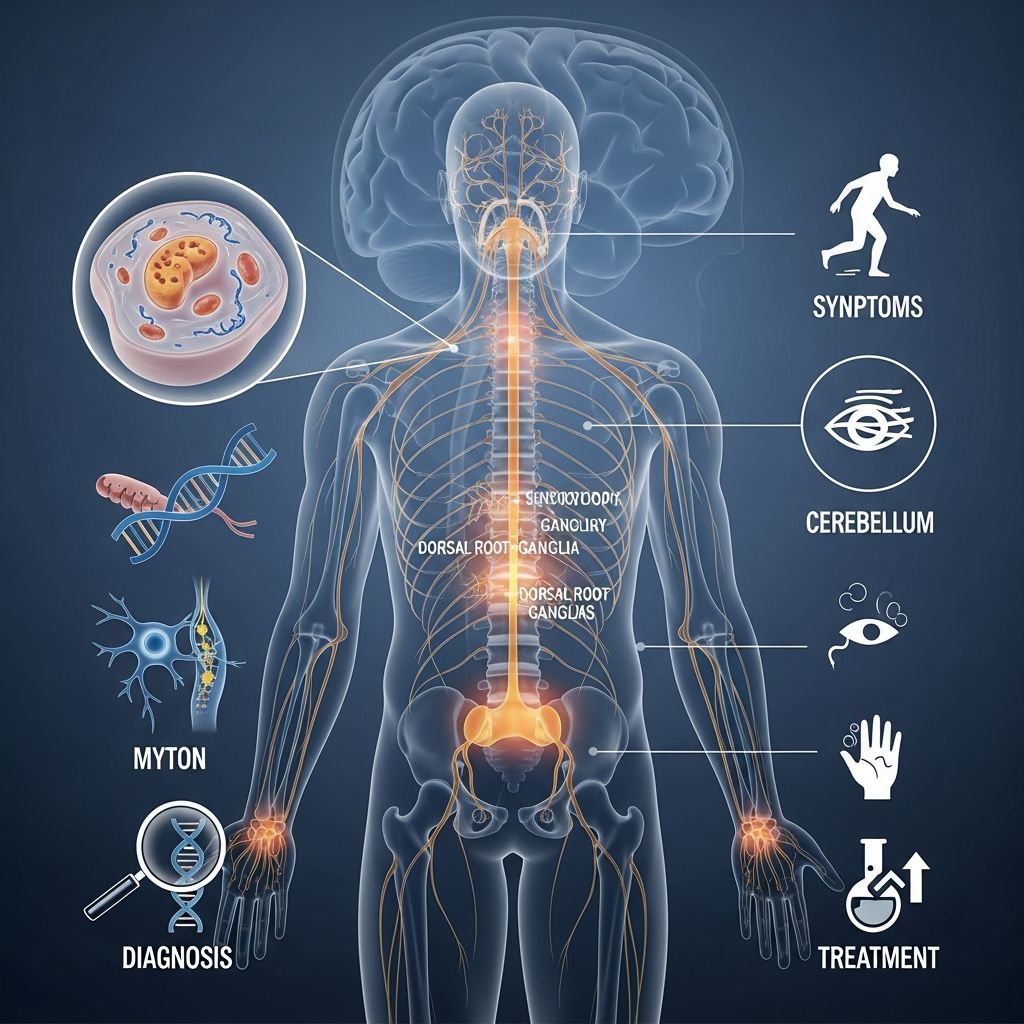
Friedreich’s ataxia (FA) is a rare genetic neuromuscular disorder that progressively affects the nervous system’s ability to coordinate muscle movements. This inherited condition impacts the spinal cord, peripheral nerves, and cerebellum—the brain region responsible for maintaining balance and coordination. In the United States, approximately 1 in 50,000 individuals live with Friedreich’s ataxia, making it one of the more common inherited ataxias. While the condition typically emerges during childhood and adolescence, ranging from ages 5 to 15, late-onset presentations do occur in some patients.
Understanding Friedreich’s ataxia requires recognizing its progressive nature and the multifaceted challenges it presents. From initial gait disturbances to complex neurological symptoms, this condition demands comprehensive medical management and lifestyle adjustments. The good news is that advances in medical science have led to new treatment options and supportive therapies that improve quality of life for those affected.
The Genetic Basis of Friedreich’s Ataxia
Friedreich’s ataxia is caused by mutations in the FXN gene, which normally produces a protein called frataxin. This protein plays a crucial role in cellular energy production, particularly within mitochondria. In individuals with FA, the genetic mutation involves an abnormally expanded GAA repeat sequence—a section of DNA that repeats multiple times beyond the normal range.
When these GAA repeats are excessively long, the body’s ability to produce adequate amounts of frataxin protein diminishes significantly. This reduction in frataxin leads to progressive dysfunction in nerve and muscle cells, particularly affecting:
- Dorsal root ganglia neurons that carry sensory information
- Corticospinal tract fibers controlling voluntary movement
- Cerebellar neurons managing coordination and balance
- Cardiac muscle tissue
Since Friedreich’s ataxia follows an autosomal recessive inheritance pattern, an individual must inherit two mutated FXN genes—one from each parent—to develop the condition. Carriers with only one mutated gene typically remain asymptomatic.
Recognizing Early Symptoms
The onset of Friedreich’s ataxia symptoms varies among individuals, but certain warning signs commonly appear first. The most prevalent initial symptom is ataxia—difficulty with balance and coordination that manifests as unsteady walking, particularly on uneven surfaces. Patients often describe an awkward gait that gradually worsens over time.
Beyond balance disturbances, individuals may experience:
- Progressive muscle weakness in the arms and legs, limiting functional capacity
- Loss of reflexes in the knees and ankles, detectable during neurological examinations
- Sensory changes including tingling, numbness, or burning sensations in extremities
- Speech difficulties such as slurred or slow speech, affecting communication
- Fatigue that may be disproportionate to activity levels
- Vision and hearing changes in some cases
It is important to recognize that symptom progression varies significantly among individuals. Some people experience rapid deterioration, while others have more gradual disease advancement. Early recognition of these symptoms is vital for accessing interventions like assistive devices (canes, walkers) and therapeutic programs that help maintain mobility and independence.
Related Stories



The Diagnostic Process
Accurate diagnosis of Friedreich’s ataxia involves a comprehensive evaluation combining clinical assessment with specialized testing procedures. Healthcare providers typically begin with a thorough neurological examination, evaluating gait stability, reflex responses, and sensory function in the lower extremities.
Diagnostic Testing Methods
Genetic Testing: Considered the gold standard for FA diagnosis, genetic testing identifies GAA repeat expansions or other FXN mutations. This definitive test confirms the diagnosis and provides information about disease severity.
Nerve Conduction Studies: These specialized tests measure the speed at which electrical signals travel along nerves, revealing the degree of nerve damage and helping differentiate Friedreich’s ataxia from other neurological conditions.
Electromyography (EMG): This test evaluates muscle electrical activity at rest and during contraction, identifying patterns characteristic of neurogenic disorders.
Cardiac Evaluations: Because heart complications frequently accompany Friedreich’s ataxia, electrocardiograms (ECGs) and echocardiograms screen for hypertrophic cardiomyopathy and cardiac arrhythmias that often develop with the disease.
Imaging Studies: Magnetic resonance imaging (MRI) or computed tomography (CT) scans visualize structural changes in the spinal cord and brain regions associated with movement control, confirming neurological damage patterns consistent with FA.
Treatment Options and Management
While Friedreich’s ataxia currently has no cure, significant advances in treatment have transformed disease management. The FDA’s approval of omaveloxolone (SKYCLARYS) in 2023 marked a historic milestone as the first medication specifically approved for Friedreich’s ataxia. This drug is recommended for individuals aged 16 and older and is now available in multiple countries including the United States, European Union, Canada, United Kingdom, and Brazil as of April 2025.
Pharmacological Treatment
Omaveloxolone (SKYCLARYS): This medication works by activating nuclear factor erythroid 2-related factor 2 (Nrf2), which enhances cellular antioxidant defenses and reduces oxidative stress—a key pathological mechanism in Friedreich’s ataxia. Clinical trials demonstrated that omaveloxolone slowed disease progression and improved functional outcomes in qualifying patients.
Supportive and Symptomatic Management
Physical Therapy: Structured physical therapy programs help maintain strength, flexibility, and balance. Therapists design individualized exercise regimens that may include strengthening exercises, balance training, and coordination drills, with modifications for each patient’s mobility level.
Cardiac Management: Beta-blockers, ACE inhibitors, and other cardiovascular medications help manage hypertrophic cardiomyopathy and arrhythmias. Regular cardiac monitoring is essential for early detection of complications.
Diabetes Management: Since diabetes frequently co-occurs with Friedreich’s ataxia, comprehensive diabetes care through lifestyle modifications and medication when necessary is crucial.
Orthopedic Interventions: Bracing, orthotics for foot support, and in some cases surgical correction of scoliosis (spinal curvature) help maintain proper alignment and reduce complications.
Mobility Aids: Canes, walkers, and wheelchairs preserve independence and reduce fall risk as the disease progresses.
Exercise and Physical Activity
Exercise plays a vital role in managing Friedreich’s ataxia, contrary to the intuitive assumption that reduced activity prevents injury. Regular physical activity provides multiple benefits for individuals with FA:
- Maintains and improves muscle strength and flexibility
- Enhances balance and coordination capabilities
- Supports cardiovascular health and endurance
- Reduces fatigue through improved fitness
- Preserves cognitive function and mental health
- Decreases risk of falls and related injuries
A physical therapist can design customized exercise programs incorporating strengthening exercises (targeting core, shoulders, hips, and ankles), balance training (including sit-to-stand exercises and balance board work), coordination drills, and low-impact cardiovascular conditioning. Many exercises can be modified for sitting positions or with assistive device support, ensuring accessibility regardless of disease stage.
Living Daily Life with Friedreich’s Ataxia
While Friedreich’s ataxia presents significant challenges, individuals can maintain rich, fulfilling lives through proactive planning and adaptation. Successfully living with FA requires:
- Environmental modifications: Removing fall hazards, installing grab bars, and optimizing home accessibility
- Energy management: Pacing activities and scheduling rest periods to combat fatigue
- Routine establishment: Creating structured daily schedules that accommodate symptom fluctuations
- Assistive technology: Utilizing mobility aids, voice-activated devices, and adaptive equipment
- Emotional support: Connecting with support groups, counseling, and family networks
- Travel planning: Organizing trips with consideration for accessibility and medical needs
Complications and Associated Conditions
Beyond primary neurological symptoms, Friedreich’s ataxia commonly leads to additional complications requiring management:
| Complication | Prevalence | Management Strategy |
|---|---|---|
| Cardiac disease | Very common | Regular cardiac monitoring, medication, lifestyle modifications |
| Diabetes | Common | Blood sugar monitoring, diet control, medication as needed |
| Scoliosis | Frequent | Bracing, physical therapy, surgery if severe |
| Foot deformities | Common | Orthotics, bracing, podiatric care |
| Vision problems | Less common | Regular eye exams, corrective lenses |
Frequently Asked Questions
Q: At what age do Friedreich’s ataxia symptoms typically appear?
A: Symptoms usually begin between ages 5 and 15, though late-onset cases can occur in adolescents and young adults. The timing of symptom onset can vary significantly among individuals.
Q: Is Friedreich’s ataxia hereditary?
A: Yes, Friedreich’s ataxia is an autosomal recessive genetic disorder. An individual must inherit two mutated FXN genes—one from each parent—to develop the condition.
Q: Can Friedreich’s ataxia be cured?
A: Currently, there is no cure for Friedreich’s ataxia. However, new medications like omaveloxolone (SKYCLARYS) can slow disease progression, and supportive therapies significantly improve quality of life and functional capacity.
Q: How does omaveloxolone help patients with Friedreich’s ataxia?
A: Omaveloxolone activates cellular antioxidant defenses to reduce oxidative stress, a primary pathological mechanism in Friedreich’s ataxia. Clinical studies show it slows disease progression and improves functional outcomes in eligible patients aged 16 and older.
Q: What role does exercise play in managing Friedreich’s ataxia?
A: Exercise is essential for maintaining strength, balance, coordination, and cardiovascular health. Regular physical activity, designed with a physical therapist, helps preserve mobility, reduce fatigue, and improve overall quality of life while potentially reducing fall risk.
Q: Are there cardiac complications associated with Friedreich’s ataxia?
A: Yes, cardiac complications are very common in Friedreich’s ataxia, including hypertrophic cardiomyopathy and arrhythmias. Regular cardiac evaluations and appropriate medication management are essential components of comprehensive care.
Q: Can individuals with Friedreich’s ataxia maintain independence?
A: While Friedreich’s ataxia is progressive, individuals can maintain considerable independence through assistive devices, environmental modifications, appropriate medical management, and supportive therapies tailored to their changing needs.
References
- What to Expect with Friedreich Ataxia: A Clear Overview — Relief Now. 2024. https://www.reliefnow.com/articles/friedreich-ataxia
- Benefits of Exercise for Friedreich’s Ataxia — Cleveland Clinic Health. 2024. https://health.clevelandclinic.org/benefits-of-exercise-for-friedreichs-ataxia
- Day-to-Day Living With Friedreich’s Ataxia — Cleveland Clinic Health. 2024. https://health.clevelandclinic.org/daily-living-with-friedreichs-ataxia
- Living With Friedreich’s Ataxia — Cleveland Clinic Health. 2024. https://health.clevelandclinic.org/living-with-friedreichs-ataxia
- Ataxia: What It Is, Causes, Symptoms, Treatment & Types — Cleveland Clinic. 2024. https://my.clevelandclinic.org/health/symptoms/17748-ataxia
- What is Friedreich’s ataxia? — CureFA. 2024. https://www.curefa.org/understanding-fa/what-is-friedreichs-ataxia/
- Omaveloxolone FDA Approval Information — U.S. Food and Drug Administration. 2023. https://www.fda.gov
Similar Articles








Read full bio of medha deb