Fruit Flies and Mosquitos Brainier Than Suspected
New research reveals tiny insect brains contain 200,000 neurons, challenging assumptions about intelligence.
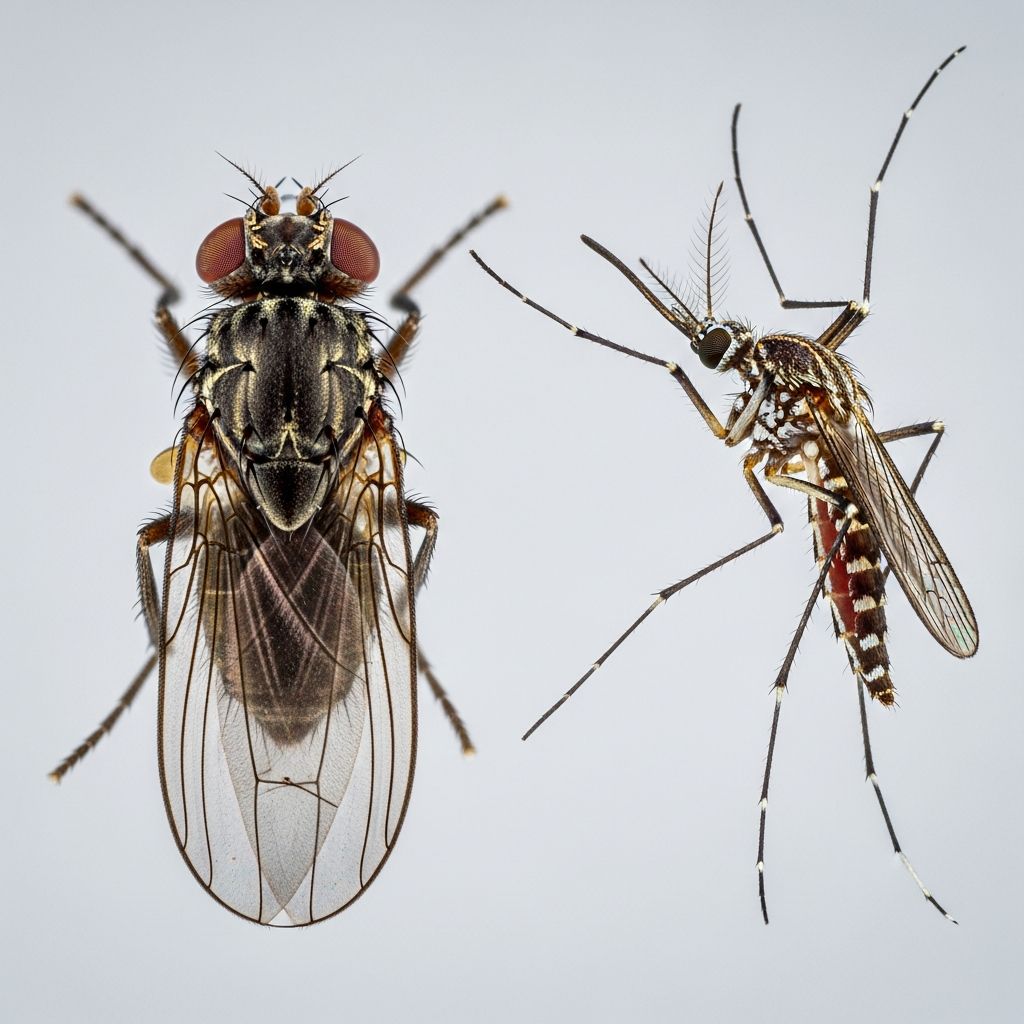
Fruit Flies and Mosquitos Are Brainier Than Most People Suspect
When most people think of insects, they typically envision creatures with minimal intelligence—simple beings driven by basic instincts. However, groundbreaking research from Johns Hopkins Medicine challenges this assumption fundamentally. Scientists who meticulously counted the brain cells of fruit flies and mosquitos discovered that these tiny creatures possess approximately 200,000 neurons and other cells within their compact brains. This revelation has profound implications for our understanding of insect cognition, neural complexity, and the evolutionary origins of intelligence across the animal kingdom.
The Research Behind the Discovery
The study conducted by researchers at Johns Hopkins University School of Medicine employed sophisticated methodologies to accurately quantify neuronal populations in insect brains. Using isotropic fractionation coupled with immunohistochemistry, scientists counted the total number of neuronal and non-neuronal cells in the whole brain, central brain, and optic lobe of Drosophila melanogaster, commonly known as the fruit fly. For comparative analysis, the research team also examined three divergent mosquito species: Aedes aegypti, Anopheles coluzzii, and Culex quinquefasciatus.
The findings revealed remarkable consistency across species. In all insect species examined, approximately 100,000 neuronal cells were found in the central brain and optic lobes combined, with the total brain cell population reaching around 200,000 neurons and support cells. This discovery was particularly significant because prior estimates of neuronal populations in these insects had been largely anecdotal and lacked systematic verification through rigorous scientific methodology.
Understanding Insect Brain Composition
Neuronal and Non-Neuronal Cell Populations
The research revealed that each insect brain was comprised of 89% ± 2% neurons out of its total cell population. This substantial neuronal composition indicates that insect brains are densely packed with processing cells, contributing to their functional capabilities. The remaining percentage consists of non-neuronal cells, including glia and other support cells that play crucial roles in brain function and maintenance.
Interestingly, comparisons between species showed that non-neuronal cell populations in mosquito brains statistically exceeded those of fruit flies, despite both species maintaining similar overall neuron counts. This variation suggests that different insect species may employ different neural architectures to achieve comparable processing capabilities, adapting their brain composition to their specific ecological niches and behavioral requirements.
Brain Regions and Structure
The insect brain is organized into distinct regions that handle different functions. The optic lobes, responsible for visual processing, contain substantial numbers of neurons dedicated to interpreting the insects’ visual environment. The central brain processes sensory information, controls motor functions, and manages complex behaviors. The research found no significant statistical difference between central brain and optic lobe neuronal populations across the four insect species examined, with each region containing approximately 100,000 neuronal cells.
This architectural organization, while vastly different in scale from mammalian brains, demonstrates that evolution has developed sophisticated neural solutions to enable insect survival and success. The fruit fly, in particular, has become an invaluable model organism precisely because its brain contains sufficient complexity to study fundamental neural principles while remaining tractable for detailed investigation.
Comparing Insect Brains to Other Species
To appreciate the significance of the 200,000-neuron finding, context is essential. A human brain contains approximately 86 billion neurons, making it roughly 430,000 times larger than a fruit fly brain in terms of raw neuron count. Similarly, a rodent brain contains about 12 billion neurons, approximately 60,000 times more than an insect brain. Despite these dramatic differences in scale, insects demonstrate behavioral complexity that seems disproportionate to their neural resources.
Related Stories



This disparity highlights an important principle in neuroscience: raw neuron count does not directly correlate with behavioral sophistication. Rather, the organization, connectivity, and efficiency of neural circuits determine cognitive capabilities. Insects have evolved to pack extraordinary processing power into their compact brains, achieving neural efficiency that rivals or exceeds that of much larger creatures.
Remarkable Behavioral Capabilities
Complex Processing Despite Brain Size
The most astounding aspect of insect neurobiology is the behavioral repertoire these creatures exhibit despite their small brains. Fruit flies and mosquitos can simultaneously navigate complex environments, locate food sources, identify mates, avoid predators, learn from experience, and engage in sophisticated mating behaviors. This multitasking capability suggests that insect brains operate with exceptional efficiency.
Recent research has demonstrated that fruit flies engage in learning behaviors, value computation, and action selection—cognitive functions typically associated with more complex organisms. They can form memories, exhibit preferences based on prior experience, and make decisions that weigh multiple factors. Mosquitos similarly display remarkable sensory discrimination, detecting host odors at extraordinarily low concentrations and following complex navigational paths to locate their targets.
Processing Power and Computational Capability
When considering the efficiency of insect neural processing, even a single insect brain performs computations that exceed the capabilities of many conventional computers in specific domains. The approximately 200,000 neurons in a fruit fly brain are organized into circuits with 548,000 connections, creating a densely interconnected network. Each neuron forms multiple synaptic connections with other neurons, enabling complex information processing pathways.
The computational principles underlying insect brains have attracted the attention of computer scientists and artificial intelligence researchers. The neural architectures that insects have evolved through millions of years of natural selection offer inspiration for developing more efficient machine learning algorithms and autonomous systems. Understanding how insects solve navigational problems, process sensory information, and make rapid decisions has direct applications for robotics and artificial intelligence development.
Research Methodologies and Accuracy
Isotropic Fractionation Technique
The Johns Hopkins team employed the isotropic fractionator method, a powerful technique for accurately counting cells in complex tissues. This approach involves dissociating brain tissue into individual cells and counting them using specialized equipment and staining protocols. To reduce variability, researchers pooled three brains together, dissociated them, and averaged the total counts before dividing by three to obtain individual brain estimates.
This methodology proved significantly more accurate than single-brain analysis. When applied to single brains, the coefficient of variation in whole brain cell counts reached 24.79%, but pooling three brains reduced this to 7.85%. Such improvements in precision are essential for establishing reliable baseline data upon which future research can build.
Consistency Across Species and Sexes
The research found no statistically significant differences in neuronal cell populations between male and female insects across any of the four species examined. This consistency across sexes suggests that behavioral differences between males and females, though pronounced in many insect species, arise from differences in neural circuitry organization and neurochemistry rather than from variations in total neuron count.
Significance for Future Research
The Complete Brain Connectome Project
The accurate cell counts established by Johns Hopkins researchers provide crucial groundwork for more ambitious neuroscience projects. In 2023, an international team led by Johns Hopkins University and the University of Cambridge completed the first comprehensive map of an entire insect brain—a connectome of a larval fruit fly containing 3,016 neurons and mapping all 548,000 connections between them. This landmark achievement required over a decade of meticulous work but represents a transformative milestone in neuroscience.
Having accurate neuron counts allows researchers to verify the completeness of connectome reconstructions and set expectations for the complexity that should be captured in full neural circuit maps. The connectome project demonstrates that knowing the precise number and organization of neurons in a brain provides researchers with a framework for understanding how specific neurons and circuits generate behavior.
Model Organism Research
Fruit flies have long served as invaluable model organisms for genetic research. Their short lifespan of approximately 10 weeks, combined with their complex nervous system organized into recognizable brain regions that share homologous structures with larger insects and even mammals, makes them ideal for studying fundamental neurobiological principles. The brain cell counts established by Johns Hopkins researchers confirm that fruit fly brains possess sufficient complexity to model important aspects of larger brain systems.
Scientists have identified that most human genes have counterparts in fruit flies, allowing researchers to explore how genes function in living organisms. This genetic similarity, combined with the now-confirmed neural complexity of insect brains, has enabled researchers to study disease mechanisms and test potential treatments in ways that would be impossible with human subjects.
Alzheimer’s Disease Research
The neural complexity of fruit flies has proven particularly valuable for studying age-related neurological conditions like Alzheimer’s disease. Researchers at Baylor College of Medicine have developed fruit flies with mutations in human Alzheimer’s disease risk genes, studying how disabling each of 100 human AD risk genes affects the fly’s brain structure, function, and stress resilience as the flies age. Such research has identified 50 candidate Alzheimer’s disease risk genes involved in both brain structure and function, with 18 potentially causing neurodegeneration when disabled.
Implications for Understanding Intelligence
The discovery that fruit flies and mosquitos possess 200,000 neurons challenges conventional assumptions about the relationship between brain size and intelligence. These findings suggest that intelligence and behavioral sophistication emerge not merely from the absolute number of neurons but from how those neurons are organized, connected, and utilized. Evolution has produced neural solutions of remarkable efficiency in insects, packing substantial cognitive capability into minimal biological packages.
This principle has profound implications for understanding intelligence across the animal kingdom and for conceptualizing what intelligence means from an evolutionary perspective. Rather than viewing intelligence as a linear scale with humans at the apex, we might better understand it as a collection of specialized capabilities that different organisms have evolved to solve their specific environmental challenges.
Frequently Asked Questions
Q: How many neurons do fruit flies actually have?
A: Fruit flies possess approximately 200,000 total cells in their brains, with about 100,000 being neurons in the central brain and optic lobes combined. This total includes both neuronal and non-neuronal cells, with neurons comprising about 89% of the total cell population.
Q: How do insect brains compare to human brains?
A: A human brain contains approximately 86 billion neurons, roughly 430,000 times more than a fruit fly brain. Despite this massive difference in scale, insects demonstrate remarkable behavioral capabilities, suggesting that neural efficiency and organization matter as much as raw neuron count.
Q: What research methods were used to count insect brain cells?
A: Johns Hopkins researchers used the isotropic fractionator technique combined with immunohistochemistry. This method involves dissociating brain tissue into individual cells and counting them with specialized staining and equipment, providing accurate counts of neuronal and non-neuronal populations.
Q: Why are fruit flies important for neurological research?
A: Fruit flies serve as invaluable model organisms because they have short lifespans (about 10 weeks), possess organized brain structures comparable to larger insects, and share genetic similarities with humans. This makes them ideal for studying fundamental neurobiology and age-related diseases like Alzheimer’s.
Q: Have scientists mapped the complete fruit fly brain?
A: Yes, in 2023, an international team led by Johns Hopkins and Cambridge completed the first comprehensive connectome of a larval fruit fly brain, mapping 3,016 neurons and all 548,000 connections between them—a landmark achievement in neuroscience.
Q: Can insect brains perform complex computations?
A: Yes, despite their small size, insect brains perform computations that exceed conventional computers in specific domains. Their densely interconnected neural circuits enable them to simultaneously navigate, locate food, identify mates, and learn from experience with remarkable efficiency.
Q: Are there differences between male and female insect brains?
A: Research found no statistically significant differences in neuronal cell populations between males and females across fruit flies and the three mosquito species examined. Behavioral differences arise from neural circuit organization and neurochemistry rather than neuron count variations.
References
- The number of neurons in Drosophila and mosquito brains — National Institutes of Health National Center for Biotechnology Information. 2021-05-01. https://www.ncbi.nlm.nih.gov/pmc/articles/PMC8121336/
- Fruit flies offer new insights into how human AD risk genes affect the brain — Baylor College of Medicine. 2021. https://www.bcm.edu/news/fruit-flies-offer-new-insights-into-how-human-ad-risk-genes-affect-the-brain
- Why fruit flies, mosquitos are ‘brainier’ than people suspect — Radio New Zealand. 2021-05-23. https://www.rnz.co.nz/national/programmes/sunday/audio/2018796614/why-fruit-flies-mosquitos-are-brainier-than-people-suspect
- Scientists complete first map of an insect brain — Johns Hopkins University Hub. 2023-03-09. https://hub.jhu.edu/2023/03/09/scientists-complete-first-map-of-an-insect-brain/
- The connectome of an insect brain — Science Journal. 2023-03-09. https://www.science.org/doi/10.1126/science.add9330
Similar Articles








Read full bio of Sneha Tete