Fruits Vs Vegetables: 5 Key Differences For Better Health
Discover key differences between fruits and vegetables, their health benefits, and how to incorporate more into your diet for optimal wellness.
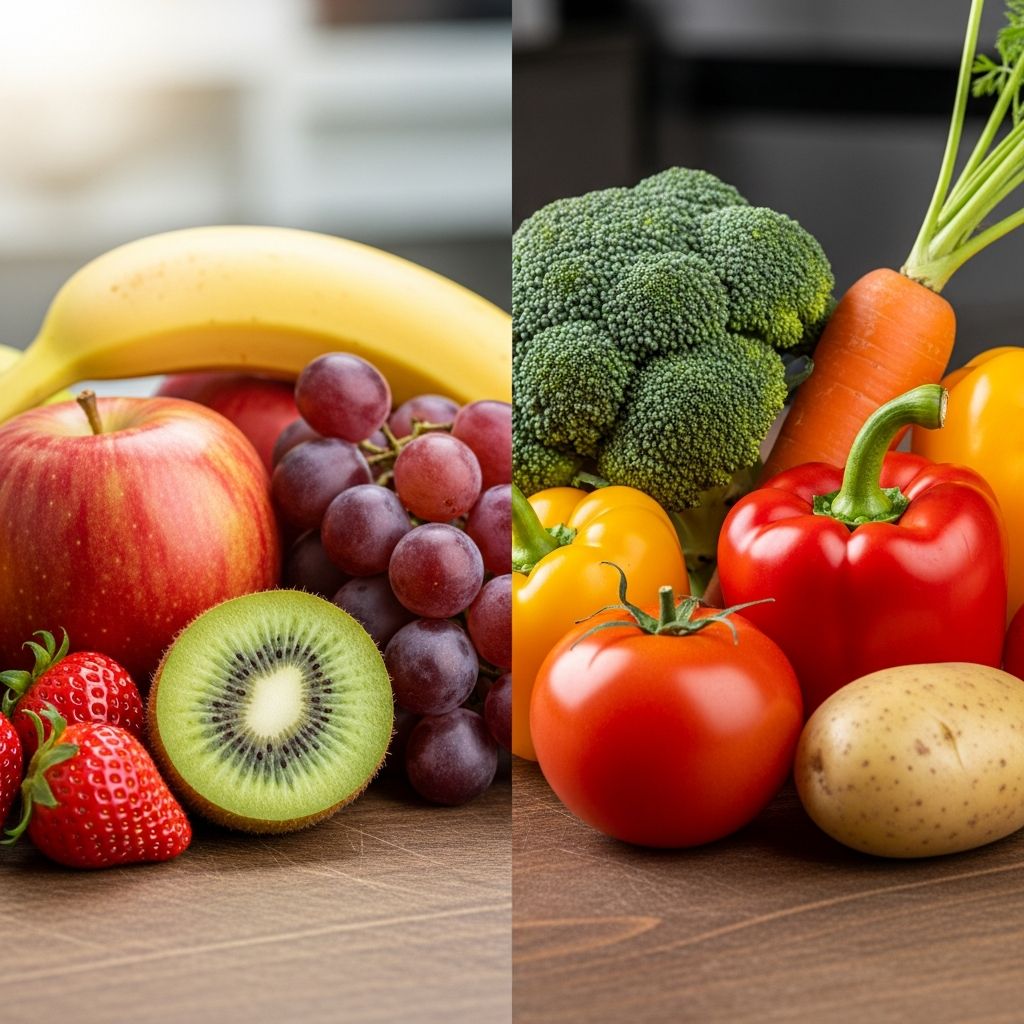
Fruits and vegetables form the cornerstone of a healthy diet, yet many people use the terms interchangeably without understanding their distinct botanical and nutritional differences. Botanically, fruits develop from the flowering part of a plant and often contain seeds, while vegetables refer to other edible plant parts like roots, leaves, and stems. Nutritionally, both provide essential fiber, vitamins, minerals, and phytochemicals that combat chronic diseases such as cardiovascular disease (CVD) and obesity. This article breaks down their definitions, benefits, and practical tips to help you maximize their intake for better health.
What Is a Fruit?
In botanical terms, a
fruit
is the mature ovary of a flowering plant, typically enclosing seeds. This definition surprises many, as it classifies items like tomatoes, cucumbers, avocados, and even olives as fruits rather than vegetables. Common culinary fruits include apples, berries, citrus, and bananas, prized for their natural sweetness from fructose.Fruits are rich in
dietary fiber
, vitamins (especially vitamin C), potassium, and antioxidants like polyphenols. These compounds act as anti-inflammatory agents and protect against oxidative stress. For instance, berries contain anthocyanins, which support heart health by improving blood vessel function.- Examples of botanical fruits: Tomatoes, peppers, eggplants, grapes, kiwis.
- Nutritional perks: High water content for hydration, quick energy from natural sugars.
What Is a Vegetable?
**Vegetables** encompass a broader category in botany, including roots (carrots), tubers (potatoes), bulbs (onions), leaves (spinach), stems (celery), and flowers (broccoli). Unlike fruits, they lack seeds and are generally lower in sugar, offering a savory flavor profile.
Vegetables excel in providing
fiber
, folate, vitamin K, and minerals like magnesium. Leafy greens are particularly dense in nutrients per calorie, making them ideal for weight management. Cruciferous vegetables like broccoli contain glucosinolates, which may inhibit cancer cell growth.- Examples: Kale, carrots, cauliflower, zucchini, sweet potatoes.
- Key benefits: Lower calorie density, higher satiety from fiber.
Nutritional Differences: Fruits vs. Vegetables
While both are nutrient powerhouses, fruits and vegetables differ in composition. Fruits tend to have higher sugar and calorie content, whereas vegetables are lower in carbs and richer in certain minerals.
| Nutrient | Fruits (per 100g avg.) | Vegetables (per 100g avg.) |
|---|---|---|
| Fiber | 2-3g | 2-4g |
| Vitamin C | High (e.g., oranges: 53mg) | Moderate (e.g., broccoli: 89mg) |
| Potassium | 200-350mg | 300-500mg |
| Sugar | 8-12g | 2-5g |
| Calories | 50-80 | 20-50 |
Fiber intake from both is linked to lower CVD and obesity risk, with vegetables often concentrating more insoluble fiber for gut health. Phytochemicals in fruits function as antioxidants and phytoestrogens, while vegetables provide anti-inflammatory sulforaphane.
Health Benefits of Fruits and Vegetables
Extensive research confirms that higher intake of fruits and vegetables reduces chronic disease risk. Epidemiological studies show associations with lower CVD incidence, with one Dutch cohort reporting 34% reduced CHD risk for high consumers (>475g/day) versus low (<241g/day). Fiber plays a key role in cholesterol reduction and blood sugar control.
For cancer prevention, evidence is mixed: prospective studies show weaker links than case-control designs, but overall support exists for reduced risk with increased consumption. Fruits may edge out in antioxidant protection, while vegetables shine in anti-cancer compounds.
Related Stories



- Heart health: Potassium and fiber lower blood pressure.
- Weight management: Low energy density promotes satiety.
- Diabetes prevention: Low glycemic load stabilizes blood sugar.
Do Raw or Cooked Fruits and Vegetables Matter?
Processing affects nutrient bioavailability. Raw fruits retain vitamin C but may limit absorption of lycopene in tomatoes, which increases with cooking. Cooked vegetables concentrate fiber by removing water, enhancing benefits. A Dutch study found both raw and processed forms protective against CHD.
Juices lack fiber, yet evidence suggests they aren’t inferior for disease risk reduction if whole forms are prioritized.
How Many Servings Should You Eat?
Government guidelines vary: U.S. Dietary Guidelines recommend 2 cups fruit and 2.5 cups vegetables daily for adults, while WHO suggests 400g total. Focus on variety to capture diverse phytochemicals.
- Fruits: 2-3 servings (1 serving = 1 medium apple).
- Vegetables: 3-5 servings (1 serving = 1 cup raw leafy greens).
Best Fruits and Vegetables to Eat
Prioritize color for nutrient diversity:
- Red: Tomatoes (lycopene), strawberries (vitamin C).
- Orange: Carrots (beta-carotene), oranges.
- Green: Spinach (folate), broccoli (sulforaphane).
- Blue/Purple: Blueberries (anthocyanins), eggplant.
Tips for Eating More Fruits and Vegetables
- Start meals with a salad or smoothie.
- Swap snacks for apple slices or carrot sticks.
- Roast veggies for flavor enhancement.
- Add berries to yogurt or oats.
- Stock frozen options for convenience.
Aim for whole forms, including peels, to maximize fiber.
Fruits vs. Vegetables for Weight Loss
Vegetables’ lower sugar content makes them superior for calorie control, but fruits’ fiber curbs hunger. Combine both: a study-linked fiber intake supports obesity prevention.
Common Myths About Fruits and Vegetables
- Myth: All calories from fruit are ‘bad’. Fact: Natural sugars with fiber are healthful.
- Myth: Juices count as servings. Fact: Prefer whole for fiber.
- Myth: Frozen is inferior. Fact: Often more nutrient-retained.
Frequently Asked Questions (FAQs)
Are tomatoes fruits or vegetables?
Botanically a fruit, culinarily a vegetable due to savory use.
Can I eat too many fruits and vegetables?
Rarely; excess fiber may cause bloating, but variety prevents oxalate issues.
Do organic fruits and vegetables have more nutrients?
Similar profiles, but organic may have higher antioxidants.
Which is better for digestion: fruits or vegetables?
Both; vegetables provide more insoluble fiber for regularity.
How do fruits and vegetables prevent disease?
Via fiber, vitamins, and phytochemicals reducing inflammation and oxidative stress.
References
- Health Benefits of Fruits and Vegetables — Slavin JL, Lloyd B. PMC – NIH. 2012-12-31. https://pmc.ncbi.nlm.nih.gov/articles/PMC3649719/
- Dietary Guidelines for Americans, 2020-2025 — USDA. 2020-12-31. https://www.dietaryguidelines.gov/
- Fruit and Vegetable Intake and Risk of Cardiovascular Disease — Oude Griep LM et al. Circulation. 2010-06-01. https://www.ahajournals.org/doi/10.1161/CIRCULATIONAHA.109.925977
- WHO Guidelines on Fruit and Vegetable Consumption — World Health Organization. 2003-01-01. https://www.who.int/publications/i/item/9241590375
- Phytochemicals and Chronic Disease Prevention — Liu RH. Annual Review of Nutrition. 2013-07-01. https://www.annualreviews.org/doi/10.1146/annurev-nutr-070909-104521
Similar Articles








Read full bio of Sneha Tete