Full Blood Count Guide: Key Tests Explained
Comprehensive insights into FBC testing, results interpretation, and health implications for better wellness decisions.
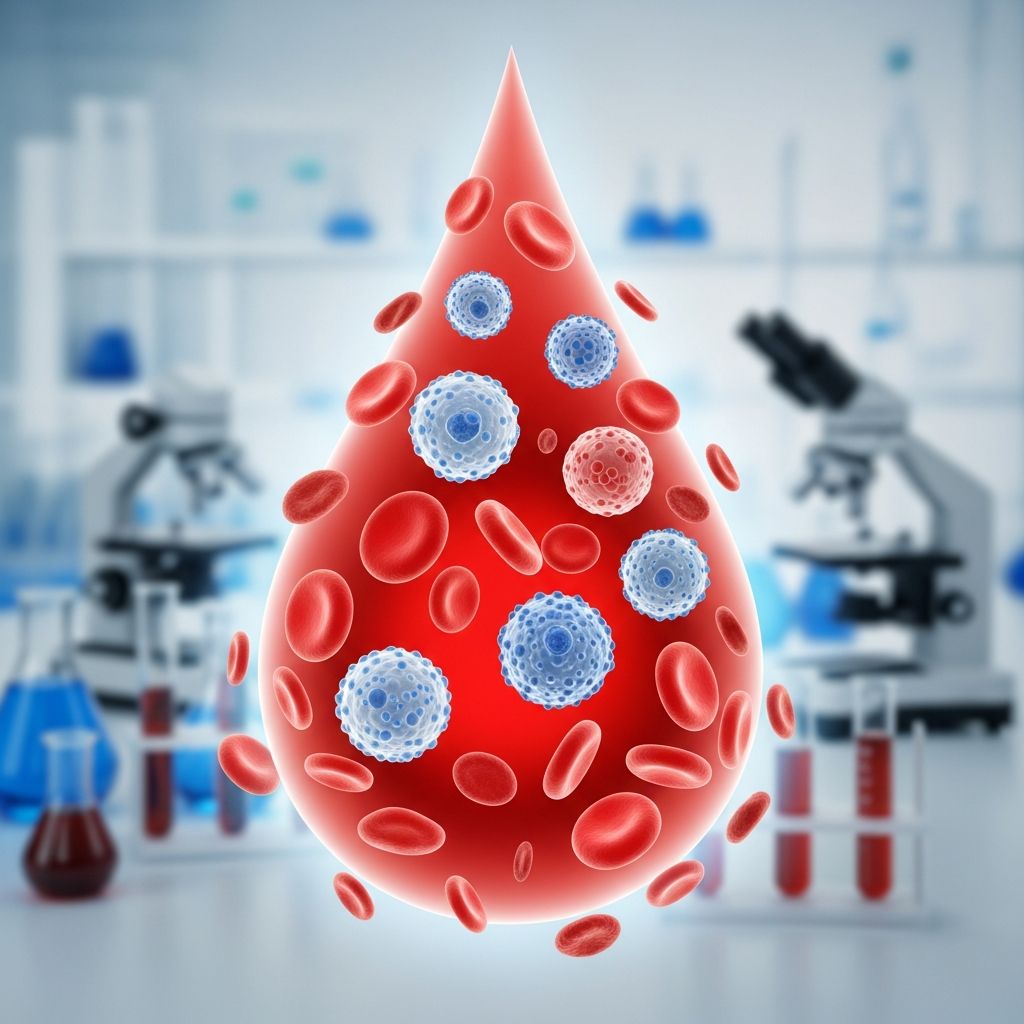
The full blood count, often abbreviated as FBC or known internationally as CBC (complete blood count), serves as a fundamental diagnostic tool in modern medicine. This routine blood test provides a detailed snapshot of an individual’s blood composition by quantifying and analyzing key cellular components. By examining red blood cells, white blood cells, and platelets, healthcare providers gain critical insights into a patient’s overall health, potential infections, nutritional status, and risks for conditions like anemia or clotting disorders.
Understanding Blood’s Core Components
Blood consists of plasma—a liquid medium—and cellular elements that perform vital functions. Red blood cells transport oxygen, white blood cells defend against pathogens, and platelets facilitate clotting. An FBC evaluates these elements quantitatively and qualitatively, helping detect deviations that may signal underlying issues.
Key Measurements in an FBC
An FBC report includes several parameters, each offering specific information about blood health. These are typically grouped into red cell indices, white cell differential, and platelet assessment.
Red Blood Cell Parameters
Red blood cells (RBCs) are crucial for oxygen delivery. The FBC measures:
- Red Blood Cell Count (RCC): Number of RBCs per microliter of blood. Normal range: approximately 4.5–5.9 million cells/μL for men and 4.1–5.1 million cells/μL for women.
- Hemoglobin (Hb): Oxygen-carrying protein in RBCs. Normal: 13.8–17.2 g/dL (men), 12.1–15.1 g/dL (women).
- Hematocrit (Hct): Percentage of blood volume occupied by RBCs. Normal: 40.7–50.3% (men), 36.1–44.3% (women).
- Mean Corpuscular Volume (MCV): Average RBC size. Normal: 80–100 fL.
- Mean Corpuscular Hemoglobin (MCH): Hemoglobin amount per RBC. Normal: 27–32 pg.
- Mean Corpuscular Hemoglobin Concentration (MCHC): Hemoglobin concentration in RBCs. Normal: 32–36 g/dL.
- Red Cell Distribution Width (RDW): Variation in RBC size. Elevated levels indicate anisocytosis.
These indices help classify anemias: microcytic (low MCV, e.g., iron deficiency), normocytic (normal MCV), or macrocytic (high MCV, e.g., vitamin B12 deficiency).
White Blood Cell Analysis
White blood cells (WBCs), or leukocytes, are the body’s immune warriors. Total WBC count normal range: 4.0–11.0 x 10^9/L. The differential breaks it down:
| Cell Type | Normal Range (x10^9/L) | Function |
|---|---|---|
| Neutrophils | 2.0–7.5 | Bacterial infection fighters |
| Lymphocytes | 1.0–4.0 | Viral immunity, adaptive response |
| Monocytes | 0.2–1.0 | Chronic inflammation, phagocytosis |
| Eosinophils | 0.0–0.4 | Parasitic infections, allergies |
| Basophils | 0.0–0.1 | Allergic reactions, inflammation |
Shifts in these counts can pinpoint infection types or immune disorders.
Platelet Evaluation
Platelets (thrombocytes) enable hemostasis. Normal count: 150–450 x 10^9/L. Low counts (thrombocytopenia) risk bleeding; high counts (thrombocytosis) risk clots.
The Testing Process Explained
Obtaining an FBC sample is straightforward. A phlebotomist draws blood, usually from a vein in the arm, into an EDTA tube to prevent clotting. Modern analyzers use automated flow cytometry or impedance methods for rapid, accurate counts. Results are available within hours. Patients may need to fast if combined with other tests, but FBC alone requires no preparation.
Interpreting Your FBC Results
Reference ranges vary by lab, age, sex, and ethnicity—always consult your report’s specifics. Abnormalities include:
- Anemia: Low Hb, Hct, RBC—causes range from blood loss to chronic disease.
- Polycythemia: High RBC/Hb—may indicate dehydration or bone marrow issues.
- Leukocytosis: High WBC—often infection or stress.
- Leukopenia: Low WBC—viral infections, chemotherapy.
- Thrombocytopenia: Low platelets—immune destruction, drugs.
Related Stories



Context matters: a single abnormal result rarely diagnoses alone; trends over time and symptoms guide further action.
Clinical Applications of FBC
FBC is versatile, screening for routine check-ups, monitoring chronic conditions like diabetes or cancer therapy, and investigating fatigue, bruising, or recurrent infections. In emergencies, it assesses bleeding risks or sepsis.
Common Conditions Detected
- Iron Deficiency Anemia: Low MCV, MCH, RDW high.
- Viral Infections: Lymphocytosis.
- Bacterial Infections: Neutrophilia with left shift.
- Allergies/Parasites: Eosinophilia.
- Bone Marrow Disorders: Pancytopenia (all lines low).
Factors Influencing FBC Outcomes
Results can fluctuate due to hydration, recent exercise, medications (e.g., steroids raise WBC), pregnancy, or altitude. Smoking elevates Hb; menstruation lowers it temporarily. Labs flag critical values for immediate review.
Advanced FBC Insights
Beyond basics, some reports include reticulocyte count (0.5–2.5%, gauges RBC production) or nucleated RBCs (absent in adults, indicate stress). Peripheral smear review complements automation for abnormal morphology.
Preparing for and Following Up on FBC
No special prep needed, but inform your doctor of medications. Post-test, discuss results promptly—further tests like ferritin for anemia or flow cytometry for WBC anomalies may follow.
Frequently Asked Questions (FAQs)
What if my FBC is slightly off?
Minor deviations often normalize; retest if needed. Your doctor contextualizes with history.
Can diet affect FBC?
Yes—nutrient deficiencies (iron, B12, folate) cause anemias.
How often should I get an FBC?
Annually for routine screening; more if at-risk or symptomatic.
Is FBC painful?
Minimal—a quick pinch from the needle.
What machines analyze FBC?
Automated hematology analyzers using laser or electrical resistance.
Empowering Your Health with FBC Knowledge
Mastering FBC basics empowers informed discussions with providers. Track trends via personal health records for proactive care.
References
- Full blood count (FBC) — a common blood test — Healthdirect (Australian Government). 2023. https://www.healthdirect.gov.au/full-blood-count
- Full Blood Count Interpretation | FBC | OSCE — Geeky Medics. 2024. https://geekymedics.com/fbc-interpretation/
- Complete blood count — Wikipedia (citing primary sources). 2024. https://en.wikipedia.org/wiki/Complete_blood_count
- Normal and Abnormal Complete Blood Count With Differential — NCBI Bookshelf (StatPearls). 2023-07-17. https://www.ncbi.nlm.nih.gov/books/NBK604207/
- Complete Blood Count (CBC) — MedlinePlus (U.S. National Library of Medicine). 2024. https://medlineplus.gov/lab-tests/complete-blood-count-cbc/
- Definition of full blood count — National Cancer Institute. 2024. https://www.cancer.gov/publications/dictionaries/cancer-terms/def/full-blood-count
Similar Articles








Read full bio of Sneha Tete