Pediatric Eye Exams: Engaging Strategies For Better Results
Transform routine eye checks into exciting adventures for kids with proven engagement strategies.
Conducting eye examinations on children presents unique challenges, but with the right approaches, these visits can become positive experiences that promote lifelong eye health. Eye care professionals play a crucial role in making these appointments enjoyable while gathering reliable diagnostic data. This guide explores effective strategies drawn from clinical best practices to captivate young patients, streamline testing, and foster cooperation.
Understanding the Importance of Early Vision Screening
Regular vision assessments in childhood are vital for detecting issues like amblyopia, refractive errors, and alignment problems early. The American Academy of Pediatrics advocates starting screenings as young as three years old for cooperative children, using tools that match developmental stages. Accurate exams not only identify problems but also build trust, encouraging future compliance.
Young children often struggle with focus due to short attention spans and unfamiliar settings. Tailoring the exam environment transforms potential stress into play, improving data quality. Objective measures like retinoscopy remain gold standards, supplemented by fun elements to maintain engagement.
Creating a Welcoming Exam Room Atmosphere
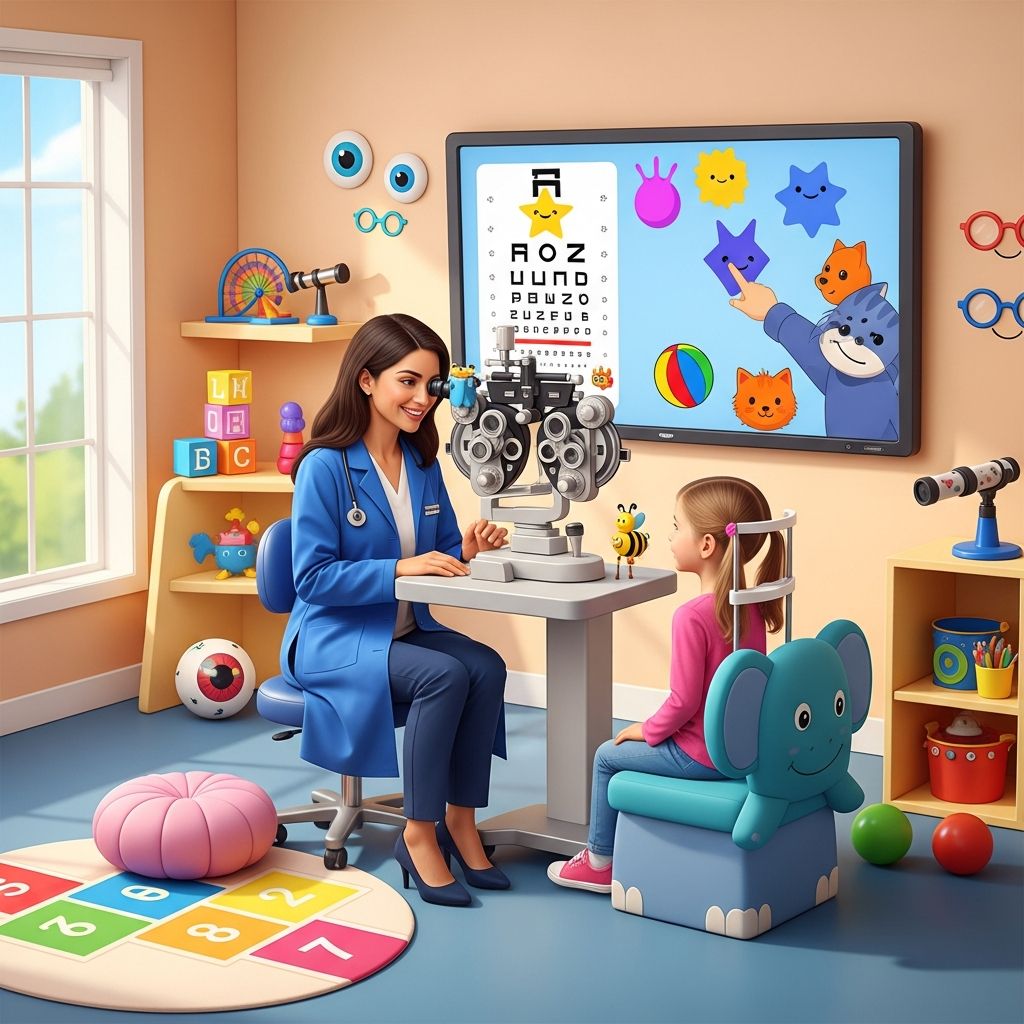
The physical space sets the tone. Bright colors, child-sized furniture, and displays of familiar characters create instant comfort. Stock toys, books, and light-up gadgets as rewards or fixation aids. Parents report higher satisfaction when rooms feel playful rather than clinical.
- Decorate walls with animal stickers or cartoon eye characters.
- Provide seating options like laps for toddlers or booster seats for older kids.
- Play soft background music from kid-friendly playlists.
Dim lighting for certain tests, paired with glowing toys, enhances visibility without intimidation. These adjustments signal fun, reducing tears and resistance.
Building Rapport from the First Moment
Greet children at eye level with a warm smile and their preferred name. Introduce yourself as a “super eye detective” hunting for hidden vision treasures. Share a quick fun fact, like how eyes work like cameras, to spark curiosity.
Ask open questions: “What’s your favorite animal?” Use responses to personalize tests, such as animal-shaped occluders. This builds instant connection, making kids feel seen and valued.
Age-Appropriate Visual Acuity Testing Techniques
Visual acuity assessment varies by age. For preschoolers, matching games with LEA symbols or HOTV charts outperform letter charts, offering four-choice options that minimize guessing. Linear charts prevent overestimation in amblyopic eyes, while crowding bars simulate real-world conditions.
| Age Group | Recommended Charts | Engagement Tip |
|---|---|---|
| 3-5 years | LEA Symbols, HOTV | Matching cards with rewards |
| 5+ years | Snellen, Sloan letters | Racing to read lines |
| <3 years | Instrument-based (photoscreeners) | Quick flashes with praise |
Incorporate games: “Can you spot the house?” for symbols. Light-up pointers direct attention, turning tests into treasure hunts.
Mastering Alignment and Motility Checks Playfully
Cover tests detect strabismus using engaging targets. Stickers from popular shows like Paw Patrol or Encanto on sticks captivate fixation. Perform unilateral and alternate covers at distance and near, in multiple gazes to spot patterns.
Related Stories



For extraocular muscles, wiggle toys prompt smooth pursuits. Confrontation fields use silent wiggly fingers or toys introduced peripherally, confirming detection via saccades. Central fixation holds with spinning lights or puppets.
Innovative Refraction and Retinoscopy Methods
Cycloplegic retinoscopy is essential for accurate refractive error measurement in kids, chasing the “white dot” in plus cylinder form. For cooperative school-age children, trial frames with fun frames allow subjective input post-objective testing.
- Neutralize the least plus meridian first.
- Use parent dancing or videos behind the phoropter.
- Offer breaks with high-fives for endurance.
Dim rooms with light-up toys maintain fixation during posterior segment views.
Handling Dilation with Confidence and Care
Dilation drops often spark fear. Explain honestly: “These magic drops make your eyes super strong to see inside better, like special glasses.” Instill swiftly directly into the eye, then distract with stories or videos.
Post-dilation, praise bravery and provide sunglasses. This honesty builds credibility for future visits.
Involving Parents as Active Partners
Parents stabilize heads, hold toys, or sit with toddlers on laps. Brief them on their role: gentle encouragement without coaching answers. Joint participation eases transitions and models calm behavior.
Advanced Binocular Vision Assessments for Kids
Stereopsis via polarized dots or animal tests, near point of convergence with toys approaching noses. Vergences use prism bars controlled by clinicians for objectivity. These reveal how eyes team up, critical for learning.
Follow-Up Strategies and Long-Term Engagement
Consistent protocols for returns: repeat key tests like over-retinoscopy on current glasses. Track progress with personalized charts kids can “beat.” Schedule fun-themed visits, like “Pirate Eye Day.”
Common Challenges and Quick Solutions
| Challenge | Solution |
|---|---|
| Uncooperative toddler | Lap positioning, finger puppets |
| Short attention span | Breaks, light-up toys, praise |
| Fear of equipment | Goofy hats on tools, demos on parent |
| Dilation resistance | Swift instillation, immediate distraction |
Frequently Asked Questions (FAQs)
How often should kids get eye exams?
Annually starting at age three, or sooner if family history or symptoms exist.
What if my child wears glasses already?
Check lensometry and over-retinoscopy to ensure proper fit and prescription updates.
Are instrument screeners enough?
They’re efficient starters but comprehensive exams confirm findings.
How to prepare at home?
Read eye books, practice shapes, use positive talk.
Signs of vision issues?
Squinting, head tilts, avoiding near work—prompt early checks.
Conclusion: Making Eye Care a Joyful Routine
By blending clinical precision with playful tactics, pediatric eye exams yield optimal outcomes without distress. Eye professionals equipped with these tools create memorable visits that safeguard vision and delight families.
References
- Strategies for the Pediatric Eye Exam — CooperVision Practitioner. 2023. https://coopervision.com/practitioner/ecp-viewpoints/myopia-management/strategies-pediatric-eye-exam
- The Ultimate Guide to Pediatric Eye Exams for Optometry Students — Eyes On Eyecare. 2023. https://eyesoneyecare.com/resources/ultimate-guide-pediatric-eye-exams-optometry-students-cheat-sheet/
- Childhood Eye Examination in Primary Care — American Academy of Family Physicians (AAFP). 2023-07-00. https://www.aafp.org/pubs/afp/issues/2023/0700/childhood-eye-examination.html
- Comprehensive Pediatric Eye and Vision Examination — American Optometric Association (AOA). 2017. https://www.aoa.org/aoa/documents/practice%20management/clinical%20guidelines/ebo%20guidelines/comprehensive%20pediatric%20eye%20and%20vision%20exam.pdf
- Preparing Your Child for an Eye Exam — Virginia Vision. 2023. https://www.virginiavision.com/10-top-tips-on-getting-your-child-ready-for-an-eye-exam/
Similar Articles








Read full bio of Sneha Tete