Functions Of The Skin: 6 Key Roles Explained
Explore the multifaceted roles of the skin as the body's largest organ, from barrier protection to immune defense and thermoregulation.
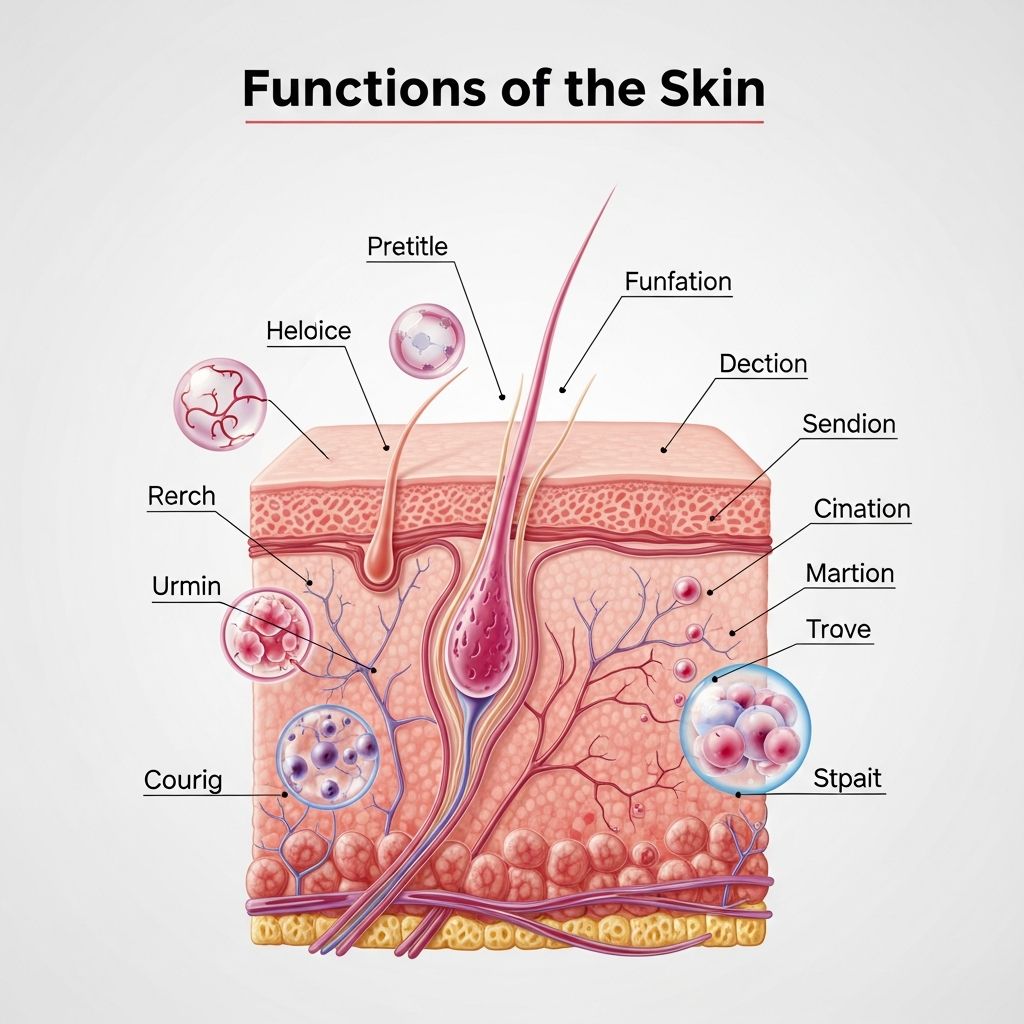
The skin is the body’s largest organ, serving as a dynamic interface between the internal environment and the external world. It performs a wide array of vital functions that maintain homeostasis, protect against environmental threats, and support overall physiological balance. Far beyond merely covering the body, the skin acts as a sophisticated barrier, regulator, synthesizer, and communicator.
Barrier Function
The skin’s primary role is to form an impermeable barrier that separates the internal milieu from external hazards. This multifaceted barrier encompasses physical, thermal, antimicrobial, chemical, and radiation protection, while also managing fluid balance.
Physical Barrier
The epidermis, particularly the stratum corneum, consists of corneocytes embedded in a lipid matrix, creating a ‘bricks-and-mortar’ structure that resists mechanical trauma, desiccation, and pathogen invasion. Keratinocytes provide structural integrity, while the basement membrane anchors the epidermis to the dermis via hemidesmosomes and anchoring fibrils.
Thermal Barrier
The skin insulates the body through its dermal and subcutaneous layers. The hypodermis, rich in adipocytes, provides thermal insulation and cushions against mechanical shock. Blood vessels in the dermis facilitate heat exchange to prevent overheating or excessive cooling.
Antimicrobial Barrier
Skin pH (4.5–5.5) forms an acid mantle that inhibits microbial growth. Antimicrobial peptides from keratinocytes, sebocytes, and sweat glands, along with sebum and cytokines from keratinocytes, repel bacteria, fungi, and viruses. The skin microbiome further contributes to this defense.
Chemical Barrier
The lipid matrix of the stratum corneum limits permeation of chemicals and toxins. Filaggrin-derived natural moisturizing factors (NMF) maintain corneocyte hydration and integrity, while enzymes like β-glucocerebrosidase optimize ceramide production in acidic conditions.
Radiation Barrier
Melanocytes in the basal epidermis produce melanin, packaged in melanosomes and transferred to keratinocytes, shielding DNA from ultraviolet (UV) radiation. Urocanic acid from filaggrin degradation also absorbs UV.
Maintain Fluid Balance
The skin regulates water homeostasis by minimizing transepidermal water loss (TEWL). The stratum corneum’s lipid barrier and NMF prevent dehydration, while epidermal appendages like sweat glands allow controlled excretion.
- Evaporation: Controlled via stratum corneum permeability.
- Permeation: Routes include transcellular (through corneocytes) and intercellular (lipid matrix).
- Excretion: Sweat glands excrete water, electrolytes, and waste.
Regulation of Body Temperature
Thermoregulation is achieved through vascular, sweat, and behavioral mechanisms. The skin maintains core temperature around 37°C despite environmental fluctuations.
Cooling
Sweat evaporation from eccrine glands dissipates heat. Vasodilation of dermal vessels increases blood flow to the surface for radiative and convective cooling.
Warming
Vasoconstriction reduces heat loss. Arrector pili muscles cause piloerection, trapping air for insulation. Subcutaneous fat provides passive insulation.
Immunological Function
The skin immune system, or skin-associated lymphoid tissue (SALT), mounts innate and adaptive responses against pathogens, allergens, and tumors.
- Infection Defense: Innate responses via keratinocytes’ Toll-like receptors (TLRs), antimicrobial peptides, and Langerhans cells. Adaptive immunity involves T cells (Th17, Th22) and antigen-presenting cells.
- Allergy Response: Dendritic cells recognize allergens, trafficking to lymph nodes to activate T and B cells.
Related Stories



Transient inflammatory cells like neutrophils and eosinophils respond to threats, regulated by cytokines.
Metabolic Function
The skin actively participates in biosynthesis, storage, and catabolism.
Synthesis
Keratinocytes synthesize vitamin D upon UV exposure, essential for calcium homeostasis. Other products include cytokines, growth factors, and lipids.
Storage
The hypodermis stores lipids as energy reserves. Dermal fibroblasts store glycosaminoglycans in ground substance.
Wound Healing
The skin orchestrates repair via inflammation, proliferation, and remodeling phases. Keratinocytes migrate, fibroblasts deposit extracellular matrix, and angiogenesis restores vascularity.
Communication
The skin conveys information about health, emotions, and environment through sensory and visual cues.
Sensory Nerves
Mechanoreceptors detect touch, pressure, vibration; thermoreceptors sense temperature; nociceptors signal pain. Merkel cells aid fine touch discrimination.
Physical State
Skin color, texture, and lesions indicate hydration, inflammation, or disease (e.g., pallor in anemia, jaundice in liver dysfunction).
Emotional State
Blushing (vasodilation), pallor (fear), sweating (anxiety) reflect autonomic responses.
Skin Appendages and Their Roles
Epidermal appendages enhance barrier functions:
| Epidermal Appendage | Function |
|---|---|
| Nails | Protect fingertips, aid manipulation |
| Hair | Thermal insulation, sensory, protection |
| Sebaceous Glands | Sebum production for lubrication, antimicrobial |
| Sweat Glands | Thermoregulation, excretion |
Vitamins and Skin Barrier
Micronutrients support barrier integrity:
| Vitamin | Mechanism |
|---|---|
| Vitamin B3 (Nicotinamide) | Synthesis of barrier proteins and ceramides |
| Vitamin B7 (Biotin) | Keratin production |
| Vitamin C | Collagen synthesis |
| Vitamin D | Immune modulation |
| Vitamin E | Antioxidant protection |
Frequently Asked Questions (FAQs)
What is the skin’s most important function?
The primary function is the barrier function, protecting against physical, chemical, microbial, and radiation threats while regulating water loss.
How does the skin regulate temperature?
Through sweating for cooling, vasoconstriction/vasodilation for heat conservation/loss, and insulation from fat and hair.
What role do melanocytes play?
They produce melanin to protect against UV radiation by absorbing harmful rays.
Can skin barrier dysfunction cause disease?
Yes, disruptions in filaggrin, lipids, or pH lead to conditions like atopic dermatitis, psoriasis, and ichthyosis.
How does the skin contribute to immunity?
Via innate (antimicrobial peptides, TLRs) and adaptive (Langerhans cells, T cells) responses.
References
- Principles of dermatological practice. Functions of the skin — DermNet NZ. 2023. https://dermnetnz.org/cme/principles/functions-of-the-skin
- Changes in the integument across the lifespan — Cambridge Media Journals. 2024. https://journals.cambridgemedia.com.au/wpr/volume-32-number-1/changes-integument-across-lifespan
- Anatomy, Skin (Integument) — StatPearls, NCBI Bookshelf, NIH. 2023-10-15. https://www.ncbi.nlm.nih.gov/books/NBK441980/
- Skin barrier function — DermNet NZ. 2023. https://dermnetnz.org/topics/skin-barrier-function
- Skin immune system — DermNet NZ. 2023. https://dermnetnz.org/topics/skin-immune-system
- The structure of normal skin — DermNet NZ. 2023. https://dermnetnz.org/topics/the-structure-of-normal-skin
Similar Articles








Read full bio of Sneha Tete