Fusidic Acid for Skin Infections (Fucidin)
Comprehensive guide to using fusidic acid cream and ointment for treating bacterial skin infections like impetigo and infected eczema effectively.
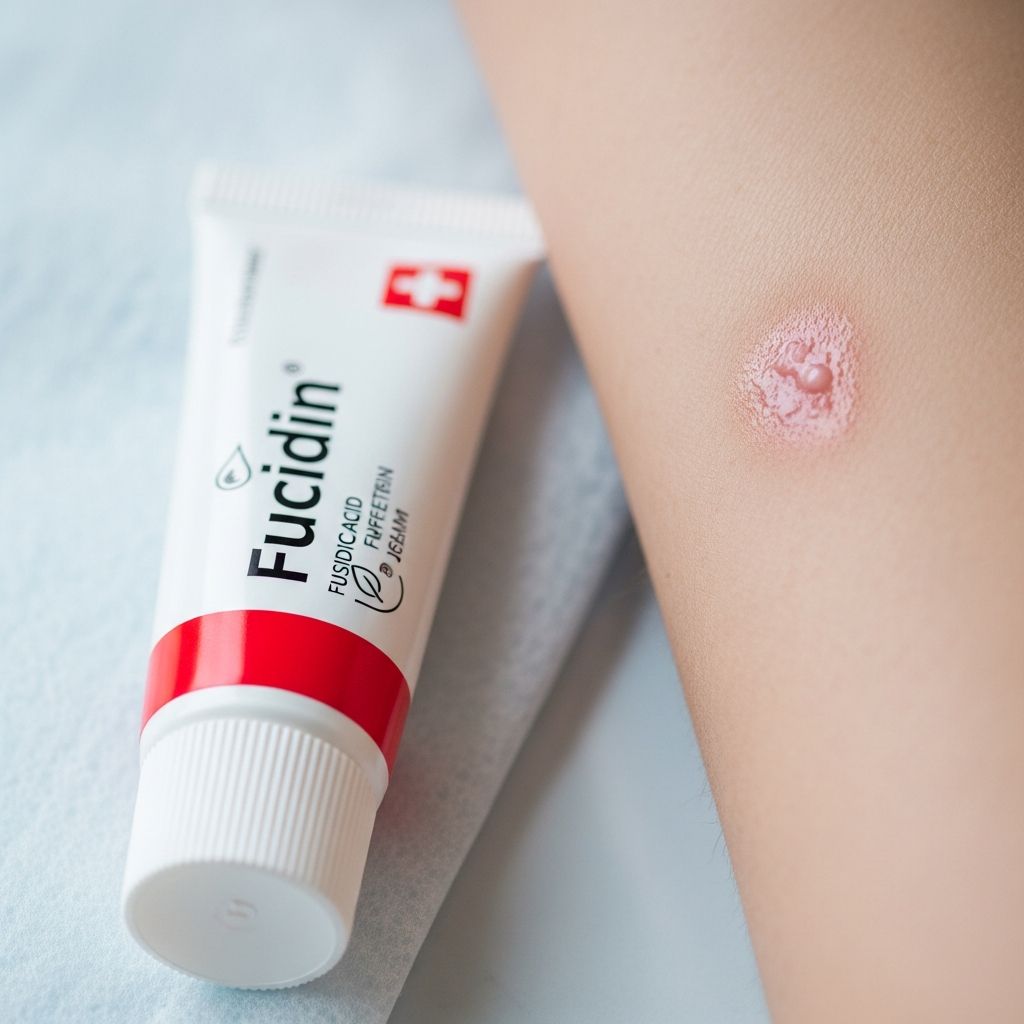
Fusidic acid, commonly known by the brand name Fucidin, is a topical antibiotic used to treat bacterial skin infections such as impetigo, boils, and infected eczema. It targets bacteria like Staphylococcus aureus and Streptococcus species, preventing their growth and allowing the skin to heal.
About fusidic acid
Fusidic acid belongs to a group of antibiotics called fusidanes, derived from the fungus Fusidium coccineum. It is available as a
cream
(2% fusidic acid) for moist or weeping lesions and anointment
(also 2%) for dry, scaly conditions. These formulations are prescription-only in most countries and work by inhibiting bacterial protein synthesis, specifically by binding to the elongation factor G (EF-G) on the ribosome, halting bacterial replication.Unlike broad-spectrum antibiotics, fusidic acid is narrow-spectrum, primarily effective against Gram-positive bacteria such as staphylococci and streptococci, making it ideal for common skin pathogens without disrupting normal skin flora as much. It is often used alone for mild infections or combined with oral antibiotics for more severe cases.
Before using fusidic acid
Who can use fusidic acid
Most adults and children over 1 month old can use fusidic acid cream or ointment. It is suitable for pregnant or breastfeeding women if the benefits outweigh risks, as only small amounts are absorbed systemically. Consult a doctor for use in infants under 1 month or those with liver issues.
Who should not use fusidic acid
- People with known hypersensitivity to fusidic acid or sodium fusidate.
- Those with viral skin infections (e.g., herpes, cold sores) or fungal infections, as it won’t treat these.
Using other medicines
Fusidic acid is topical, so interactions are rare. However, avoid concurrent use with other topical antibiotics unless advised. If on oral fusidic acid (rarely used), it may interact with statins like simvastatin, increasing muscle damage risk—not relevant for topical use. Inform your doctor of all medications.
Using fusidic acid with alcohol
There are no known interactions between topical fusidic acid and alcohol.
Pregnancy and breastfeeding
Topical fusidic acid is category B in pregnancy (no proven risk in humans). Minimal absorption occurs, making it generally safe during breastfeeding if applied away from nipples. Always seek medical advice.
Babies and children
Safe for children over 1 month; apply sparingly. For impetigo in children, studies show fusidic acid cream is superior to disinfectants alone, clearing infections effectively with few side effects.
How to use fusidic acid
Dosage
Apply a small amount (pea-sized for fingertip unit) to the affected area
three to four times daily
for cream, oronce or twice daily
if bandaged. Treatment duration is typically1-2 weeks
; complete the course even if symptoms improve to prevent resistance.| Form | Application Frequency | Best For |
|---|---|---|
| Cream | 3-4 times/day | Moist, weeping areas (e.g., impetigo) |
| Ointment | 1-2 times/day (if bandaged) | Dry, scaly skin (e.g., infected eczema) |
How to use it
- Wash hands and clean the affected area gently with soap and water; pat dry.
- Apply a thin layer, rubbing in gently without excessive force.
- Wash hands after application to avoid spreading infection.
- For larger areas, use oral antibiotics if prescribed.
Related Stories



If no improvement in 7 days, see a doctor—may indicate resistance or fungal cause.
If you forget to use it
Apply as soon as remembered, unless near next dose. Do not double up.
If you use too much or accidentally swallow it
Topical overuse may cause local irritation; rinse off excess. Swallowing small amounts is unlikely harmful, but contact poison control if concerned. Seek emergency help for large ingestion.
Health information
About skin infections
Bacterial skin infections often present as red, swollen, pus-filled areas. Common types include:
- Impetigo: Crusty sores, highly contagious, common in children.
- Infected eczema/dermatitis: Itchy, inflamed skin secondarily infected.
- Boils/folliculitis: Hair follicle infections.
- Infected wounds/cuts: Post-trauma or surgical.
Fusidic acid clears these by targeting sensitive staphylococci/streptococci.
Types of skin infection
Primary: Impetigo, folliculitis.
Secondary: Infected eczema, ulcers, burns.
Side effects
Most people tolerate fusidic acid well; side effects are usually mild and local:
- Common (>1/100): Rash, itching, burning, dryness at site.
- Rare: Allergic reactions (hives, swelling), worsened infection (indicating resistance).
- Very rare: Jaundice (with prolonged large-area use due to absorption).
Stop use and consult a doctor if severe irritation or no improvement occurs. Long-term use risks antibiotic resistance.
Fucidin H
Fucidin H combines fusidic acid (2%) with hydrocortisone (1%), a mild steroid, for
infected eczema with inflammation
. The steroid reduces redness, itching, and swelling alongside antibiotic action.| Product | Ingredients | Best Use |
|---|---|---|
| Fucidin Cream | Fusidic acid 2% | Bacterial infections without much inflammation |
| Fucidin H | Fusidic acid 2% + Hydrocortisone 1% | Infected, inflamed eczema/dermatitis |
Use Fucidin H for 1-2 weeks max; avoid face/genitals long-term due to steroid thinning risk.
Frequently Asked Questions (FAQs)
Can I use Fucidin cream for impetigo?
Yes, apply thinly 3 times daily for 7-10 days after cleaning sores. Superior to disinfectants alone.
How quickly does fusidic acid work?
Symptoms improve in 2-3 days; full clearance in 1-2 weeks. Complete course.
Is Fucidin H stronger than regular Fucidin?
Fucidin H is for inflamed infections due to added steroid; regular for infection alone.
Can fusidic acid treat fungal infections?
No, only bacterial. Misuse worsens fungi.
What if symptoms persist?
See a doctor; may need culture/swab for resistance or alternative therapy.
Cautions
- Avoid eyes/mouth/nose; rinse if contact.
- Do not use occlusive dressings unless advised.
- Resistance risk: Use only as prescribed.
- For widespread infection, combine with systemic antibiotics.
References
- Topical fusidic acid — DermNet NZ. 2023. https://dermnetnz.org/topics/topical-fusidic-acid
- How and when to use fusidic acid — NHS. 2024-05-14. https://www.nhs.uk/medicines/fusidic-acid/how-and-when-to-use-fusidic-acid/
- Fusidic acid: Uses, Interactions, Mechanism of Action — DrugBank. 2025. https://go.drugbank.com/drugs/DB02703
- What does fusidic acid do? — Vinmec. 2023. https://www.vinmec.com/eng/blog/what-does-fusidic-acid-do-en
- Fucidin Cream – Fusidic Acid Antibiotic — The Independent Pharmacy. 2024. https://www.theindependentpharmacy.co.uk/skin-infections/fucidin-cream
- Fusidic acid (oral route, injection route) — Mayo Clinic. 2024. https://www.mayoclinic.org/drugs-supplements/fusidic-acid-oral-route-injection-route/description/drg-20067601
Similar Articles








Read full bio of medha deb