Gallstones: Causes, Symptoms, Diagnosis, and Treatment
Comprehensive guide to understanding gallstones, their symptoms, diagnosis, and treatment options.
What Are Gallstones?
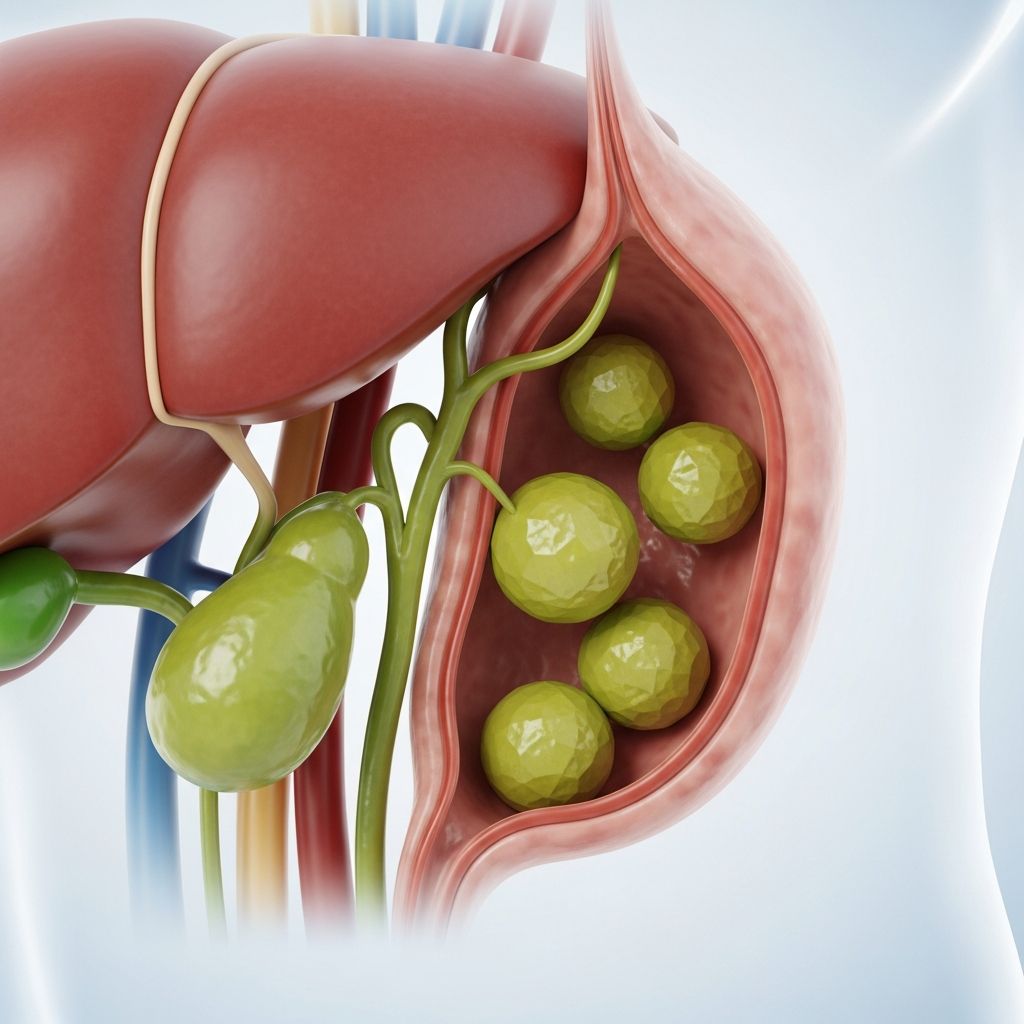
Gallstones, also known as cholelithiasis, are solid particles that form in the gallbladder, a small organ located under the liver. The gallbladder stores bile, a digestive fluid produced by the liver, and releases it into the small intestine to help digest fats. Gallstones can vary in size, from as small as a grain of sand to as large as a golf ball, and can be made of cholesterol, bilirubin, or a combination of both.
Types of Gallstones
There are two main types of gallstones:
- Cholesterol Stones: These are the most common type, making up about 80% of all gallstones. They are usually yellow-green and are primarily composed of undissolved cholesterol, though they may also contain bilirubin or bile salts.
- Pigment Stones: These are brown or black stones made mostly of bilirubin. They are more common in people with liver disease or blood disorders such as sickle cell anemia or leukemia.
Some individuals may have a mix of cholesterol and pigment stones.
Causes of Gallstones
Gallstones form when there is an imbalance in the substances that make up bile. The main causes include:
- Excess Cholesterol: If the liver produces more cholesterol than the bile can dissolve, the excess cholesterol can form stones.
- Excess Bilirubin: Conditions that cause the liver to produce too much bilirubin, such as liver disease or blood disorders, can lead to the formation of pigment stones.
- Concentrated Bile: If the gallbladder does not empty properly, bile can become overly concentrated, leading to stone formation.
Symptoms of Gallstones
Many people with gallstones do not experience any symptoms. However, when symptoms do occur, they can include:
- Pain in the upper right abdomen or upper middle abdomen, often after eating fatty meals.
- Nausea and vomiting.
- Fever and chills.
- Jaundice (yellowing of the skin and eyes).
- Dark urine and pale stools.
Symptoms can range from mild to severe and may come and go. Severe pain, known as biliary colic, can last for several hours and may be mistaken for a heart attack.
Diagnosis of Gallstones
Diagnosing gallstones typically involves a combination of physical examination and imaging tests:
- Physical Exam: The doctor will check for tenderness in the abdomen and other signs of gallbladder disease.
- Blood Tests: These can help identify signs of infection or blockage and rule out other conditions.
- Abdominal Ultrasound: This imaging test can show gallstones and signs of gallbladder inflammation.
- CT Scan: Specialized X-rays can provide detailed images of the gallbladder and surrounding organs.
- Endoscopic Retrograde Cholangiopancreatography (ERCP): This procedure involves inserting a tube through the mouth to the small intestine to inject dye and visualize the bile ducts.
- Endoscopic Ultrasound: This combines ultrasound and endoscopy to detect gallstones in hard-to-see areas, such as the common bile duct.
Treatment of Gallstones
The treatment for gallstones depends on the severity of symptoms and the presence of complications. Options include:
Surgical Treatment
For symptomatic gallstones, the most common treatment is surgical removal of the gallbladder, known as cholecystectomy. There are two main types of surgery:
- Laparoscopic Cholecystectomy: This is the most common procedure, involving small incisions and the use of a laparoscope. Patients usually go home the same day and recover quickly.
- Open Cholecystectomy: This involves larger incisions and is used in cases of severe gallbladder disease, bleeding disorders, or other complications. Hospitalization is typically required for a few days.
Related Stories



Both procedures are performed under general anesthesia.
Non-Surgical Treatment
For patients who cannot undergo surgery, non-surgical options include:
- Endoscopic Retrograde Cholangiopancreatography (ERCP): This procedure can remove gallstones stuck in the bile ducts.
- Medication: Drugs like chenodiol (Chenix) and ursodiol (Actigal) can dissolve small cholesterol gallstones. However, these medications may need to be taken for years, and gallstones may return after stopping treatment.
Complications of Gallstones
Gallstones can lead to several serious complications, including:
- Gallbladder Inflammation (Acute Cholecystitis): This occurs when a stone blocks the gallbladder, causing constant pain and fever. If untreated, the gallbladder may burst.
- Blocked Bile Ducts: This can cause fever, chills, and jaundice.
- Blocked Pancreatic Ducts: If gallstones block the duct leading to the pancreas, it can cause pancreatitis, which is swelling and inflammation of the pancreas.
- Infected Bile Ducts (Acute Cholangitis): A blocked duct is more likely to get infected, and if bacteria spread to the bloodstream, it can cause sepsis.
- Gallbladder Cancer: Although rare, gallstones increase the risk of gallbladder cancer.
Prevention of Gallstones
While not all gallstones can be prevented, certain lifestyle changes can reduce the risk:
- Maintain a healthy weight.
- Eat a balanced diet low in fat and cholesterol.
- Exercise regularly.
- Avoid rapid weight loss.
Frequently Asked Questions (FAQs)
Q: Can gallstones pass on their own?
A: Small gallstones can sometimes pass into the small intestine and out with stool without causing symptoms. However, if they cause pain or block the bile ducts, medical treatment is necessary.
Q: What are the risks of gallbladder surgery?
A: Risks include infection, bleeding, injury to nearby organs, and complications from anesthesia. However, laparoscopic cholecystectomy is generally safe and has a low complication rate.
Q: Can gallstones come back after treatment?
A: After gallbladder removal, gallstones cannot form in the gallbladder. However, stones can still form in the bile ducts, though this is rare.
Q: Are there any dietary restrictions after gallbladder surgery?
A: Most people can resume a normal diet immediately after surgery. However, some may need to avoid fatty foods for a short period to prevent digestive issues.
References
- Gallstones (Cholelithiasis): Symptoms, Causes, and Treatments — WebMD. 2023. https://www.webmd.com/digestive-disorders/gallstones
- Gallstones / Gallbladder Attack Symptoms & Treatment — Johns Hopkins Howard County Medical Center. 2023. https://www.youtube.com/watch?v=_kLqv8BFlrI
- A clinician’s guide to gallstones and common bile duct (CBD) — NIH. 2023. https://pmc.ncbi.nlm.nih.gov/articles/PMC10496460/
Similar Articles








Read full bio of Sneha Tete