Gallstones: A Comprehensive Guide To Risks, Diagnosis, And Care
Understand gallstones: causes, symptoms, diagnosis, treatments, and prevention strategies for better digestive health.
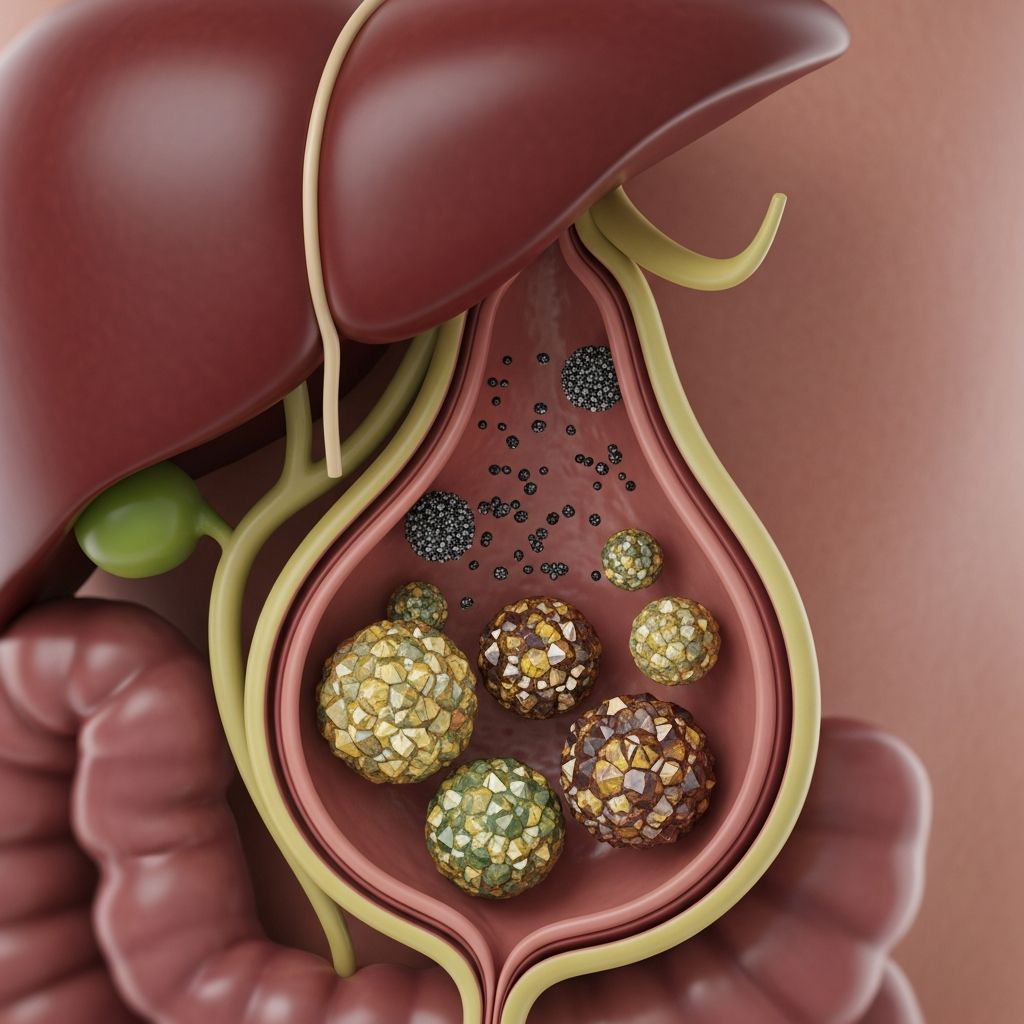
Gallstones, medically termed cholelithiasis, develop as hardened particles within the gallbladder, primarily from crystallized cholesterol or bilirubin in bile. These deposits affect millions globally, yet many remain symptom-free until complications arise. This guide delves into their origins, health impacts, detection strategies, therapeutic approaches, and proactive measures to maintain biliary health.
The Gallbladder and Bile: Essential Digestive Players
The gallbladder, a pear-shaped organ beneath the liver, stores and concentrates bile—a fluid vital for fat digestion. Produced by the liver, bile flows into the gallbladder via the cystic duct and releases into the small intestine through the common bile duct during meals. Disruptions in bile composition or gallbladder function can trigger stone formation, leading to potential blockages and inflammation.
How Gallstones Take Shape: Key Formation Mechanisms
Gallstones emerge when bile’s chemical balance falters.
Cholesterol stones
, the most prevalent type (about 80% of cases), form when bile contains excess cholesterol relative to bile salts and lecithin, causing supersaturation and crystallization.Pigment stones
, darker and smaller, arise from elevated bilirubin levels, often linked to conditions like cirrhosis, sickle cell anemia, or infections.Risk factors amplify susceptibility:
- Gender and hormones: Women face higher risks, especially post-pregnancy or on estrogen therapy, as hormones boost cholesterol in bile.
- Age and genetics: Prevalence rises after 40, with familial patterns evident.
- Weight and diet: Obesity, rapid weight loss, or high-fat/low-fiber diets promote stone development.
- Medical history: Diabetes, Crohn’s disease, or prolonged fasting elevate bilirubin or alter motility.
Globally, 10-20% of adults harbor gallstones, with higher rates in Western populations.
Recognizing Symptoms: From Silent to Severe
Up to 80% of gallstone carriers experience no issues, discovered incidentally via imaging. When symptomatic, the hallmark is
biliary colic
—intense, steady pain in the upper right abdomen or epigastrium, radiating to the back or shoulder. Episodes last 15 minutes to 24 hours, often post-fatty meals, with nausea or vomiting.Seek immediate care for:
- Pain persisting beyond 4-6 hours.
- Fever, chills, or jaundice signaling infection or obstruction.
- Dark urine, pale stools, or yellowing skin.
Potential Complications: When Stones Turn Dangerous
Untreated gallstones can escalate:
- Acute cholecystitis: Cystic duct blockage causes gallbladder inflammation, fever, and tenderness. Severe cases involve gangrene or perforation.
- Choledocholithiasis: Stones in the common bile duct provoke jaundice, cholangitis (bile infection), or pancreatitis.
- Pancreatitis: Duct obstruction inflames the pancreas, yielding severe pain and systemic effects.
- Rare issues: Gallstone ileus (intestinal blockage) or porcelain gallbladder (cancer risk).
| Complication | Key Signs | Labs/Imaging |
|---|---|---|
| Cholecystitis | RUQ pain, fever, mass | ↑ WBC, thickened wall on US |
| Choledocholithiasis | Jaundice, dark urine | ↑ Bilirubin, dilated CBD |
| Cholangitis | Fever, chills, hypotension | ↑ Liver enzymes, positive cultures |
| Pancreatitis | Epigastric pain, nausea | ↑ Amylase/lipase |
Diagnostic Approaches: Pinpointing the Problem
Ultrasound reigns as the gold standard, detecting stones with 95% sensitivity, revealing size, number, and duct dilation. Blood tests assess liver function (elevated bilirubin, ALP), infection (WBC), or pancreatitis (amylase).
Further tools include:
- CT/MRI: For complications or subtle stones.
- ERCP/MRCP: Visualize ducts; ERCP allows stone removal.
- HIDA scan: Evaluates gallbladder ejection fraction.
Probability scoring (e.g., high-risk: prior jaundice + dilated duct) guides ERCP urgency.
Related Stories



Treatment Pathways: Tailored to Severity
Asymptomatic stones rarely need intervention unless high-risk (e.g., >3cm, porcelain gallbladder). Symptomatic cases prioritize relief.
Conservative Management
Mild colic responds to NSAIDs, antiemetics, and dietary tweaks (low-fat). Hospitalize if pain endures >4 hours.
Surgical Solutions
Laparoscopic cholecystectomy—gold standard—removes the gallbladder minimally invasively, with <1% complications. Performed urgently in acute cases, electively for recurrent pain.
Non-Surgical Options
- Ursodeoxycholic acid: Dissolves small cholesterol stones over 6-24 months; recurrence common.
- ERCP: Extracts duct stones pre/post-surgery.
- ESWL: Rarely, shock waves fragment stones.
Lifestyle Strategies for Prevention
Minimize risks through:
- Balanced weight loss (0.5-1kg/week).
- High-fiber, moderate-fat diet rich in fruits/veggies.
- Regular exercise to enhance gallbladder motility.
Post-cholecystectomy, most adapt well sans bile storage, though <10% face diarrhea.
Frequently Asked Questions (FAQs)
Can gallstones dissolve naturally?
Small cholesterol stones may dissolve with medications like ursodiol, but surgery is more definitive.
Is gallbladder removal risky?
Laparoscopic procedures are safe (1-2% complication rate), with rapid recovery.
Do gallstones increase cancer risk?
Chronic inflammation raises gallbladder cancer odds slightly; removal mitigates this.
What diet follows surgery?
Gradually reintroduce fats; high-fiber aids adjustment.
Are gallstones hereditary?
Genetic factors contribute, alongside lifestyle.
Navigating Gallstone Health: Key Takeaways
Early recognition of biliary colic and prompt evaluation prevent escalations. With advanced diagnostics and minimally invasive treatments, outcomes excel. Consult providers for personalized advice, emphasizing prevention via healthy habits. (Word count: 1678)
References
- A clinician’s guide to gallstones and common bile duct (CBD) — Wiley Online Library/PMC. 2023-09-12. https://pmc.ncbi.nlm.nih.gov/articles/PMC10496460/
- Gallstones (Cholelithiasis): Symptoms, Causes & Treatment — Cleveland Clinic. 2023-08-23. https://my.clevelandclinic.org/health/diseases/7313-gallstones
- Gallstones Information & Treatment — Columbia Doctors. 2024-01-15. https://www.columbiadoctors.org/health-library/condition/gallstones/
- Gallstones – Symptoms & causes — Mayo Clinic. 2024-05-10. https://www.mayoclinic.org/diseases-conditions/gallstones/symptoms-causes/syc-20354214
- Gallstones — Merck Manuals. 2023-11-05. https://www.merckmanuals.com/home/liver-and-gallbladder-disorders/gallbladder-and-bile-duct-disorders/gallstones
Similar Articles








Read full bio of Sneha Tete