Gamma Knife Radiosurgery: Treatment Guide
Precision radiation therapy for brain tumors and neurological conditions.
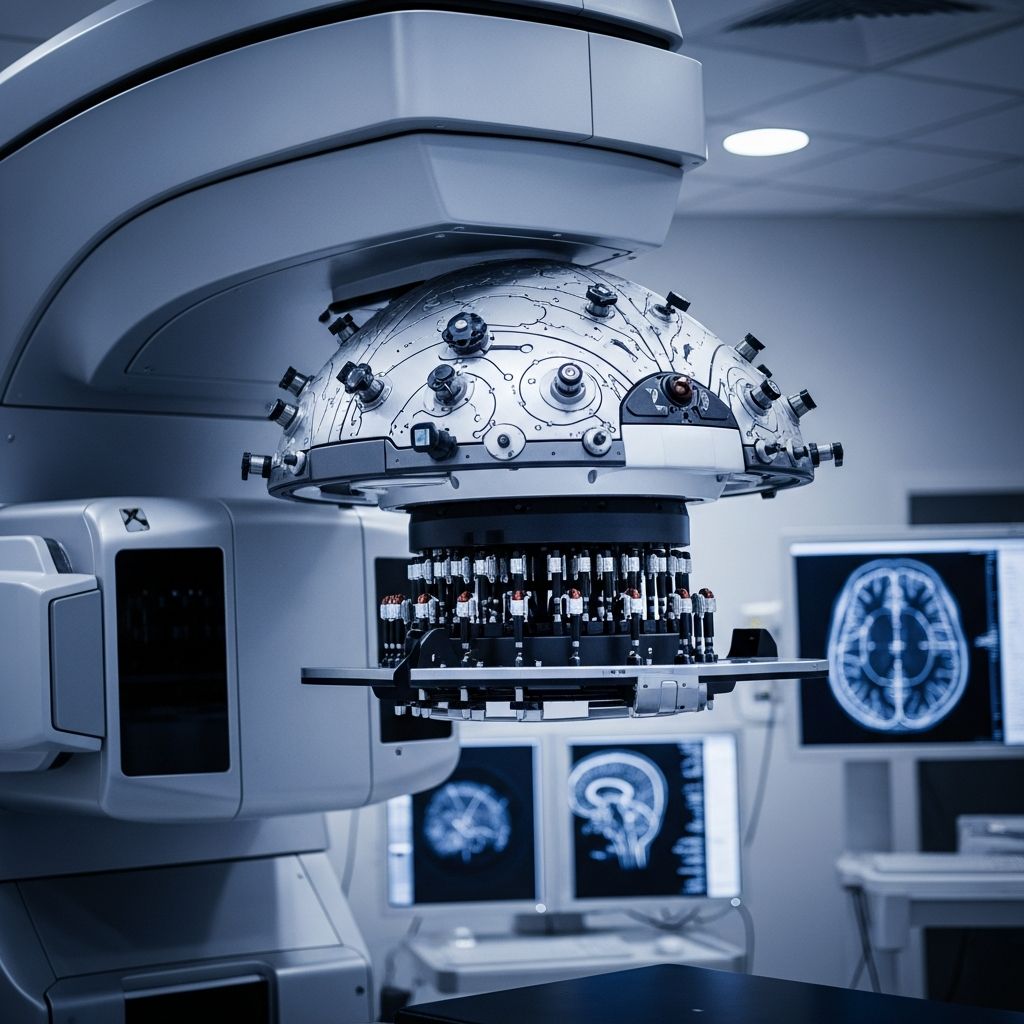
Gamma Knife Radiosurgery: What You Need to Know
Gamma Knife radiosurgery is a sophisticated form of radiation therapy that delivers precisely focused beams of gamma radiation to treat brain tumors, lesions, and various neurological conditions. Despite its name, Gamma Knife is not an actual surgical procedure—it requires no incisions, no cutting, and no general anesthesia. Instead, it uses advanced computer-guided technology to target abnormal brain tissue with exceptional accuracy, often delivering therapeutic doses of radiation in a single outpatient session.
This noninvasive approach has revolutionized treatment options for patients who may not be candidates for traditional open brain surgery or who prefer alternatives with potentially fewer complications and shorter recovery times. The technology combines modern neuroimaging techniques with sophisticated computer algorithms to ensure that radiation reaches only the intended target while minimizing exposure to healthy surrounding brain tissue.
How Gamma Knife Radiosurgery Works
Gamma Knife radiosurgery utilizes 192 to 201 separate beams of gamma radiation energy, all precisely directed at a single focal point. These tiny beams converge at the target with accuracy measured in fractions of a millimeter—approximately the thickness of a sheet of paper—ensuring that only the abnormal tissue receives the full therapeutic dose of radiation.
The procedure combines several advanced imaging modalities, including magnetic resonance imaging (MRI), computed tomography (CT) scans, and cerebral angiography, to create a detailed three-dimensional map of the brain. Neurosurgeons and radiation oncologists use this imaging data with sophisticated computer technology to precisely localize and target brain lesions. The focused radiation approach minimizes damage to nearby healthy tissue, making it as effective as conventional surgery for certain brain conditions while potentially avoiding serious surgical risks.
Key Technical Advantages
Compared to other radiosurgery devices, Gamma Knife delivers lower radiation doses to normal brain tissue and lower overall body radiation exposure. The system is specifically designed for precise brain treatments and can address very complex and challenging lesions or tumors located in difficult-to-access areas of the brain. Treatment is often completed as a same-day outpatient procedure, with treatment times ranging from minutes to over an hour, depending on the target size and complexity.
Conditions Treated with Gamma Knife
Gamma Knife radiosurgery effectively treats a wide range of brain and upper spinal cord conditions, including both cancerous and noncancerous tumors, as well as various neurological disorders.
Brain Tumors
Gamma Knife can treat several types of primary and secondary brain tumors, including:
- Metastatic cancer (cancer that has spread to the brain from other parts of the body)
- Acoustic neuromas (slow-growing tumors of the nerve connecting the ear to the brain)
- Pituitary tumors and adenomas
- Meningiomas and other benign brain growths
- Chordomas and other spinal cord tumors
Neurological and Vascular Conditions
Beyond tumor treatment, Gamma Knife addresses numerous neurological disorders and vascular abnormalities:
- Arteriovenous malformations (AVMs) and arteriovenous fistulas
- Trigeminal neuralgia (severe facial nerve pain)
- Certain types of epilepsy
- Essential tremor and Parkinson’s disease-related tremors
- Severe, treatment-resistant depression and obsessive-compulsive disorder (OCD)
Related Stories



Adjunctive Treatment
Gamma Knife can also be used after surgical removal of a brain tumor to reduce the risk of recurrence and improve long-term outcomes.
The Gamma Knife Procedure: What to Expect
Before Your Treatment
Preparation for Gamma Knife radiosurgery involves several important steps. Most patients are fitted with either a stereotactic head frame or a frameless mask system. The frame is a metal circle designed to precisely position your head in the Gamma Knife machine, improving accuracy and pinpoint targeting.
If a head frame is used, neurosurgeons perform a minimally invasive procedure where four small pins are attached to your skull through the skin. You receive a local anesthetic and should feel pressure rather than pain. Mild sedation is typically provided to help you relax during this fitting procedure. The frame remains attached throughout the entire treatment session, which usually lasts a few hours, and is then removed.
Alternatively, frameless systems use a customized face mask or positioning net, eliminating the need for skull pins while maintaining precise positioning accuracy. Frameless approaches may offer greater comfort for some patients.
Imaging and Treatment Planning
Regardless of which positioning system is used, detailed imaging tests including CT, MRI, or angiography are performed. These images reveal the exact location, size, and shape of your tumor or problem area, allowing for precision targeting and optimal treatment planning.
During Treatment
During the Gamma Knife procedure, you remain awake and do not require general anesthesia. Light sedation is provided to help you relax. The treatment itself is painless.
You lie on a table that slides into the Gamma Knife machine, which is equipped with a helmet containing hundreds of small holes for delivering radiation beams. The head frame or mask aligns precisely with the machine to ensure accurate targeting. The machine may make slight adjustments to your head position so that energy beams are delivered to the exact spots requiring treatment.
Your treatment team remains in an adjacent control room where they can observe you through cameras and communicate with you through microphones, ensuring your safety and comfort throughout the procedure.
Duration and Recovery
Treatment typically takes between 30 minutes to several hours, depending on the complexity and size of the target area. Many patients complete treatment in a single outpatient session, though some conditions may require treatment over multiple days. Most patients can resume normal activities shortly after the procedure, with minimal to no side effects.
Benefits and Advantages
Gamma Knife radiosurgery offers several significant advantages over traditional open brain surgery:
- Noninvasive approach: No incisions or cutting required, reducing infection risk and surgical complications
- Minimal recovery time: Outpatient procedure allowing patients to return home the same day
- Precise targeting: Accuracy within a fraction of a millimeter protects surrounding healthy tissue
- Reduced side effects: Focused radiation minimizes damage to normal brain structures
- No general anesthesia: Only local anesthesia and mild sedation are needed
- Multiple applications: Can treat tumors in locations difficult to reach with conventional surgery
- Combination therapy: Can complement traditional surgery to prevent tumor recurrence
Who Is a Candidate for Gamma Knife?
Gamma Knife radiosurgery may be recommended for patients with brain lesions or tumors located near critical areas of the brain responsible for important functions such as speech, movement, or vision. It is particularly appropriate for deep brain tumors where traditional surgical access would pose significant risk due to nearby blood vessels or other critical structures.
Additionally, Gamma Knife may be a suitable option for patients who are too unwell to undergo conventional brain surgery or who have other medical conditions that make open surgery inadvisable. Treatment is often highly individualized, and while not appropriate for everyone, many patients benefit from Gamma Knife radiosurgery as part of their comprehensive treatment plan.
Risks and Side Effects
Gamma Knife radiosurgery is generally well-tolerated with minimal side effects. However, like all medical procedures, it carries some potential risks:
- Temporary headaches
- Mild scalp irritation (if a head frame was used)
- Nausea in some cases
- Rarely, delayed radiation effects on surrounding brain tissue
- Swelling of the treated area (generally resolves with medication)
Serious complications are uncommon when performed by experienced treatment teams. Your physician will discuss specific risks relative to your individual condition and treatment plan.
Multidisciplinary Treatment Approach
At specialized centers, Gamma Knife treatment is typically provided by a multidisciplinary team of neurosurgeons, radiation oncologists, and neuroradiologists working collaboratively. This team-based approach ensures comprehensive evaluation and optimal treatment planning tailored to each patient’s specific needs. Brain tumor treatment is highly individualized, and your care team will determine whether Gamma Knife radiosurgery is appropriate for your particular condition.
Frequently Asked Questions
Is Gamma Knife surgery actually surgery?
No. Despite its name, Gamma Knife is not surgical procedure and does not involve any knives or incisions. It is a noninvasive radiation therapy that uses focused energy beams to treat brain conditions.
How long does the entire Gamma Knife treatment take?
The complete procedure, including positioning and treatment, typically takes several hours. Actual radiation delivery usually ranges from 30 minutes to over an hour depending on the target complexity.
Can I go home the same day?
Yes. Gamma Knife is an outpatient procedure, and most patients return home the same day and can resume normal activities shortly thereafter.
Will I need to have my head shaved?
This depends on your specific treatment plan and whether a head frame or frameless system is used. Your treatment team will provide specific pre-treatment instructions.
How effective is Gamma Knife compared to traditional surgery?
For certain brain conditions, Gamma Knife is as effective as conventional surgery while potentially offering fewer serious risks and shorter recovery times. Effectiveness depends on the specific diagnosis and tumor characteristics.
Can Gamma Knife treat brain tumors in any location?
Gamma Knife is most effective for small to medium-sized lesions. Very large tumors or those in certain locations may require alternative or combined treatment approaches. Your care team will determine the best treatment strategy for your specific situation.
References
- Gamma Knife Surgery In Western New York — UB Neurosurgery. https://www.ubns.com/services/adult-neurosurgery/brain-tumor-gamma-knife-surgery/
- Stereotactic Radiosurgery – Gamma Knife — MedlinePlus, U.S. National Library of Medicine. https://medlineplus.gov/ency/article/007577.htm
- Gamma Knife Surgery: What It Is, Procedure & Side Effects — Cleveland Clinic. https://my.clevelandclinic.org/health/procedures/16559-gamma-knife-surgery
- Gamma Knife® Radiosurgery | Radiotherapy | Patients — Elekta. https://www.elekta.com/patients/gamma-knife-treatment/
Similar Articles








Read full bio of medha deb