Gardner Syndrome Guide: Key Symptoms, Diagnosis, And Treatment
Inherited disorder with colon polyps, osteomas, skin cysts, and high cancer risk—early detection saves lives.
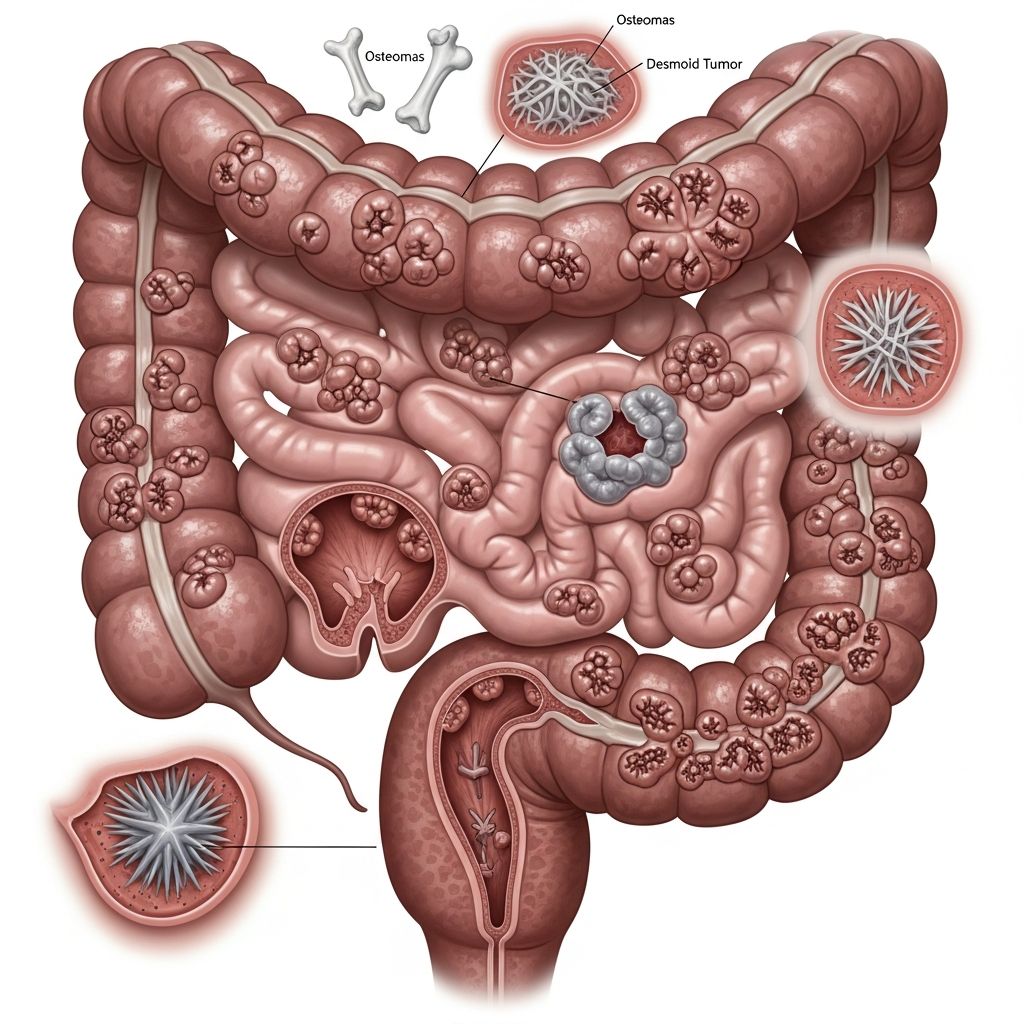
Gardner syndrome is a rare inherited disorder and a variant of familial adenomatous polyposis (FAP), characterized by numerous colorectal polyps that carry a near-100% risk of progressing to colon cancer if untreated, alongside extra-intestinal manifestations including multiple osteomas, epidermoid cysts, and other soft tissue tumors.
Introduction
Gardner syndrome, first described by Eldon J. Gardner in 1951, represents a severe subtype of FAP distinguished by prominent extra-colonic features. While the core pathology involves hundreds to thousands of adenomatous polyps in the colon and rectum, patients develop characteristic benign tumors in bones (osteomas), skin (epidermoid cysts), and soft tissues (desmoids), as well as dental anomalies and retinal pigment epithelium changes. Without intervention, virtually all affected individuals develop colorectal carcinoma by age 40.
The syndrome affects approximately 1 in 8,300 to 1 in 10,000 people worldwide, with equal prevalence in males and females. Early recognition is critical, as prophylactic colectomy can prevent cancer.
Demographics
Gardner syndrome occurs worldwide across all ethnic groups, with an estimated incidence of 1:8,300 live births. It presents equally in both sexes and typically manifests in adolescence or early adulthood, though polyps may appear as early as age 10. Familial clustering is common due to its autosomal dominant inheritance.
- Age of onset: Polyps: 10–20 years; extra-colonic features: childhood to 30s
- Sex distribution: Equal
- Geographic prevalence: No specific ethnic predisposition
Causes
Gardner syndrome results from germline mutations in the APC (adenomatous polyposis coli) tumor suppressor gene located on chromosome 5q21–22. The APC protein regulates Wnt signaling pathway, controlling cell proliferation and adhesion. Pathogenic mutations lead to uncontrolled cell growth, resulting in polyp formation and tumorigenesis.
Inherited in an autosomal dominant pattern, a single mutated allele from an affected parent confers 50% risk to each offspring. De novo mutations account for 15–30% of cases. Specific mutation sites correlate with phenotype severity: proximal 5′ mutations link to profuse polyposis, while distal ones associate with desmoid tumors.
Image description: Diagram of chromosome 5 highlighting APC gene locus (courtesy of genetics resources).
Clinical Features
Manifestations span gastrointestinal, skeletal, dermatologic, ocular, and dental systems. Cutaneous signs often precede GI symptoms, prompting dermatologic diagnosis.
Cutaneous Features
The hallmark skin lesion is multiple epidermoid (infundibular) cysts, appearing in crops on the face, scalp, neck, back, and arms. Unlike common cysts, these arise from hybrid follicles with pilar and glandular differentiation, often inflamed or discharging keratin.
- Epidermoid cysts: 1–5 cm, multiple (>4 suggestive), post-puberty onset
- Fibromas, lipomas, leiomyomas, neurofibromas
- Pilomatricomas (calcified hair matrix tumors; ≥6 highly indicative)
Non-Cutaneous Features
| System | Manifestations |
|---|---|
| Gastrointestinal | 100s–1000s colorectal adenomas; fundic gland polyps; periampullary/small bowel adenomas |
| Skeletal | Osteomas (jaw, skull, long bones); exostoses |
| Dental | Supernumerary teeth, odontomas, unerupted teeth |
| Ocular | Congenital hypertrophy retinal pigment epithelium (CHRPE; >4 per eye pathognomonic) |
| Soft Tissue | Desmoid tumors (mesenteric, abdominal wall; aggressive) |
| Endocrine | Adrenal adenomas, papillary thyroid carcinoma, hepatoblastoma (childhood) |
Complications
The paramount risk is colorectal adenocarcinoma (100% penetrance by age 40 without colectomy). Desmoid tumors cause morbidity via local invasion, bowel obstruction, or ureteral compression. Thyroid cancer occurs in 2–12%; upper GI cancers in 4–12%. Osteomas rarely symptomatic but dental anomalies impair occlusion.
- Cancer risks: Colorectal (100%), thyroid (10%), duodenal/ampullary (5–10%)
- Desmoids: 10–20% lifetime risk, higher post-surgery
Diagnosis
Diagnosis combines clinical triad (polyps + osteomas + epidermoid cysts), family history, and genetic confirmation. Dermatologic exam reveals cysts; histopathology shows keratinizing squamous epithelium. Radiology detects osteomas; sigmoidoscopy/colonoscopy confirms polyposis; fundoscopy identifies CHRPE.
- Full skin exam ± biopsy of cysts/fibromas
- Genetic testing for APC mutation
- Colonoscopy from age 10–15 in at-risk individuals
- Ophthalmology: CHRPE screening
- Panoramic dental X-ray for anomalies
Related Stories



Genetic counseling is essential for families.
Differential Diagnoses
Gardner syndrome must be distinguished from other polyposis syndromes:
| Condition | Key Distinguishing Features |
|---|---|
| FAP (classic) | Similar polyps but fewer osteomas/CHRPE |
| Attenuated FAP | Fewer (<100) polyps, later onset |
| Turcot syndrome | Polyps + brain tumors; café-au-lait spots (vs. cysts in Gardner) |
| Muir-Torre | Sebaceous tumors + internal malignancies |
| Multiple endocrine neoplasia | Endocrine tumors without polyps/osteomas |
Treatment
Management is multidisciplinary, focusing on cancer prevention, symptom control, and surveillance.
- Colectomy: Restorative proctocolectomy with ileal pouch-anal anastomosis (gold standard) by age 18–25
- Desmoids: Sulindac/celecoxib, tamoxifen, chemotherapy, or resection
- Skin cysts: Excision if symptomatic; monitor asymptomatic
- Osteomas: Surgical removal if obstructive
- Surveillance: Annual sigmoidoscopy pre-colectomy; post-op endoscopy, thyroid US, adrenal imaging
NSAIDs like sulindac reduce polyp burden.
Outcome
Prophylactic colectomy normalizes life expectancy. Untreated, colorectal cancer is inevitable. Desmoids pose ongoing risk but are manageable. Regular surveillance yields excellent prognosis.
Frequently Asked Questions (FAQs)
What is the main cause of Gardner syndrome?
Mutations in the APC gene on chromosome 5q22, inherited autosomal dominantly.
How is Gardner syndrome diagnosed?
By clinical triad (polyps, osteomas, cysts), family history, colonoscopy, genetic testing, and CHRPE exam.
What are the skin signs of Gardner syndrome?
Multiple epidermoid cysts, fibromas, lipomas, pilomatricomas on face, scalp, trunk.
Does Gardner syndrome always cause cancer?
Untreated, yes—nearly 100% colorectal cancer risk by age 40; colectomy prevents this.
Can Gardner syndrome be cured?
No cure, but colectomy and surveillance prevent complications and normalize lifespan.
References
- Gardner Syndrome – MD Searchlight — MD Searchlight. 2023. https://mdsearchlight.com/genetic-disorders/gardner-syndrome/
- Gardner syndrome: skin manifestations, differential diagnosis and management — PubMed (Indian J Dermatol Venereol Leprol). 2010-03-01. https://pubmed.ncbi.nlm.nih.gov/20141232/
- Gardner Syndrome – DermNet — DermNet NZ. 2023. https://dermnetnz.org/topics/gardner-syndrome
- Gardner Syndrome – Symptoms and Causes — Penn Medicine. 2024. https://www.pennmedicine.org/conditions/gardner-syndrome
- Gardner Syndrome — Cleveland Clinic. 2023-08-25. https://my.clevelandclinic.org/health/diseases/22013-gardner-syndrome
Similar Articles








Read full bio of Sneha Tete