Gas and Gas Pain: Causes, Symptoms & Treatment
Understanding gas pain: Learn what causes it, recognize symptoms, and discover effective treatment options.
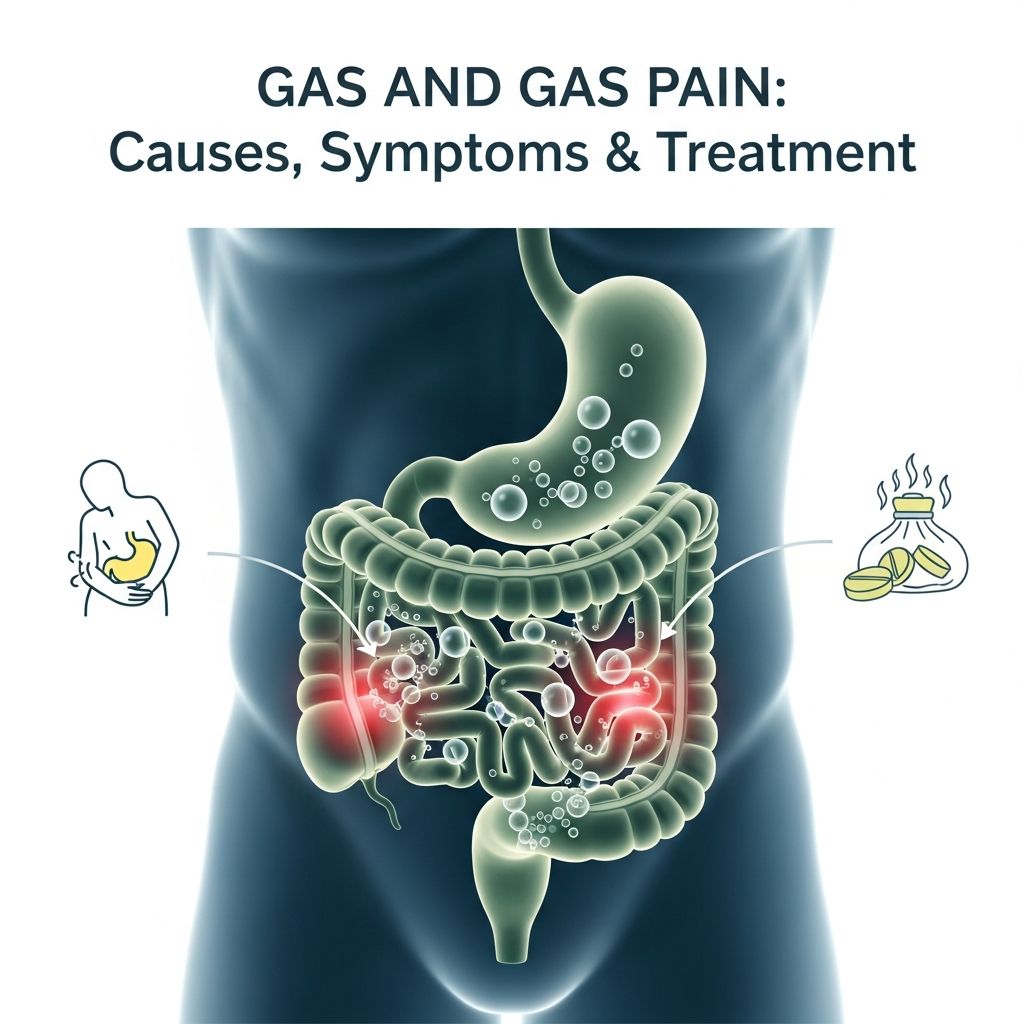
Gas and Gas Pain: Understanding Your Digestive Discomfort
Gas is a natural part of the digestive process that everyone experiences. Your body produces intestinal gas as it breaks down food, and you typically release it through burping or passing gas. However, when excess gas becomes trapped in your digestive system, it can cause significant discomfort, pain, and bloating that disrupts your daily life.
While gas pain is usually not serious, it can be embarrassing and physically uncomfortable. Understanding what causes gas, how to recognize the symptoms, and what treatment options are available can help you manage this common digestive issue effectively.
What Does Gas Pain Feel Like?
Gas pain can manifest in various ways depending on where the gas becomes trapped in your digestive system. The sensation ranges from mild discomfort to sharp, intense pain that might alarm you into thinking something more serious is occurring.
Common Sensations Associated with Gas Pain
When excess gas gets trapped in your gut, you might experience:
- Sharp, jabbing sensations in your abdomen
- A persistent ache or dull pain
- A feeling of fullness or tightness in your stomach (bloating)
- Cramping or muscle spasms
- A sensation similar to an overinflated balloon ready to burst
- Pressure in your chest or abdomen
- A visible swelling or distension of your belly
Where Can Gas Pain Occur?
One of the confusing aspects of gas pain is that it doesn’t always occur in one specific location. Trapped gas can cause discomfort throughout various areas of your trunk, making it difficult to pinpoint the exact source of your pain.
Left-sided gas pain can create chest sensations that are easily mistaken for a heart attack, causing unnecessary alarm. Right-sided gas pain can mimic the pain associated with gallstones or appendicitis. This is why it’s important to understand the characteristics of gas pain and when you should seek medical attention.
Understanding the Causes of Gas and Gas Pain
Gas formation is a normal byproduct of digestion, but several factors can lead to excess gas accumulation and subsequent pain. Understanding these causes helps you identify potential solutions and determine whether lifestyle changes might provide relief.
Common Reasons Gas Becomes Painful
Gas becomes problematic when several conditions occur simultaneously. Your digestive system may produce normal amounts of gas, but if it cannot be efficiently moved through your intestines or expelled from your body, it becomes trapped. Additionally, some individuals have increased sensitivity in their gut nerves, making them more aware of normal digestive gas.
The gas pain you experience results from the combination of how much gas is present, how sensitive your digestive system is to that gas, and how effectively your body can move it through your intestines.
Identifying Symptoms That Warrant Medical Attention
While gas pain is typically harmless, certain symptoms alongside excess gas or gas pain indicate you should consult a healthcare provider. These warning signs may suggest an underlying digestive condition requiring professional evaluation and treatment.
You should contact your healthcare provider if you experience gas or gas pain accompanied by symptoms such as persistent changes in bowel habits, unexplained weight loss, blood in your stool, severe abdominal pain that doesn’t improve, or symptoms that significantly interfere with your quality of life.
Related Stories



Diagnosis: How Healthcare Providers Evaluate Gas Pain
When you visit your healthcare provider for gas pain evaluation, they’ll use a systematic approach to identify the underlying cause and determine the most appropriate treatment strategy.
Initial Assessment Process
Your healthcare provider will begin by performing a physical examination of your abdomen and asking detailed questions about your symptoms. They’ll want to know when the gas pain started, how frequently it occurs, what makes it better or worse, and whether specific foods or situations trigger your symptoms.
Your provider may ask you to maintain a food diary for several weeks to identify patterns between what you eat and when symptoms occur. This simple but effective approach often reveals dietary triggers that contribute to your gas pain.
Diagnostic Tests
If your provider suspects that excess gas signals an underlying health condition rather than simple dietary issues, you may need additional testing. Possible diagnostic tests include:
- Blood tests to check for infections, inflammation, or metabolic issues
- Stool tests to evaluate your digestive health
- Imaging studies such as abdominal X-rays or CT scans
- Upper endoscopy or colonoscopy to visualize your digestive tract
- Breath tests to identify food intolerances or bacterial overgrowth
- Hydrogen breath test to diagnose lactose intolerance or fructose malabsorption
Treatment and Management Strategies
There isn’t a one-size-fits-all treatment for gas pain. Your healthcare provider will work with you to identify the underlying cause and recommend appropriate interventions. Often, a combination of dietary modifications and lifestyle changes provides significant relief.
Dietary and Lifestyle Modifications
Many people successfully manage gas pain by making changes to what they eat and drink, as well as how they consume food and beverages. Consider implementing these strategies:
- Eat slowly and chew food thoroughly to aid digestion
- Avoid talking with your mouth full to reduce air swallowing
- Don’t use straws when drinking beverages
- Limit carbonated drinks and beverages with artificial sweeteners
- Reduce consumption of high-fat foods, which slow digestion
- Avoid or limit foods known to cause gas, such as beans, cruciferous vegetables, and certain fruits
- Eat smaller, more frequent meals instead of large portions
- Stay hydrated with water rather than sugary or carbonated drinks
- Consider keeping a food diary to identify personal triggers
Over-the-Counter Medications
Several over-the-counter anti-gas medications can provide relief when dietary changes alone aren’t sufficient:
- Simethicone helps break up gas bubbles so they pass more easily
- Beano or Mylanta Gas contain alpha-galactosidase, which aids in breaking down carbohydrates
- Antacids may provide relief if your gas pain is related to acid reflux
- Probiotics may help balance your gut bacteria and reduce gas production
When to Seek Immediate Medical Care
Although gas pain is usually not dangerous, certain symptoms require emergency medical attention. Seek immediate care if you experience gas pain or abdominal discomfort accompanied by chest pain or pressure, severe shortness of breath, sudden severe abdominal pain, persistent vomiting, signs of internal bleeding, or symptoms suggesting a heart attack.
Frequently Asked Questions
Q: Is gas pain ever a sign of a serious medical condition?
A: While gas pain itself is usually harmless, it can sometimes signal an underlying digestive health problem. If your gas pain persists, worsens, or is accompanied by other concerning symptoms like weight loss or blood in your stool, consult your healthcare provider for evaluation.
Q: How long does gas pain typically last?
A: Gas pain duration varies depending on the cause. Mild gas pain from dietary triggers may resolve within minutes to hours once the gas is expelled. Chronic gas pain related to underlying digestive conditions may require ongoing management and treatment.
Q: Can certain foods completely eliminate gas pain?
A: No single food will eliminate gas pain for everyone. However, identifying and avoiding your personal dietary triggers can significantly reduce symptoms. Working with your healthcare provider or a dietitian can help identify which foods affect you most.
Q: Are there exercises that help relieve gas pain?
A: Gentle physical activity like walking can help move gas through your digestive system more efficiently. Some people find relief through yoga poses designed to aid digestion, though you should consult your healthcare provider before starting any new exercise program.
Q: When should I call my healthcare provider about gas pain?
A: Contact your healthcare provider if gas pain occurs frequently, over-the-counter treatments don’t help, you’re relying on antacids too often, your symptoms significantly interfere with daily activities, or you develop new or concerning symptoms alongside your gas pain.
Living with Gas and Gas Pain
Gas and the associated discomfort can be embarrassing and impact your quality of life, but most cases are highly manageable. Understanding your digestive system, identifying your personal triggers, and implementing appropriate dietary and lifestyle changes can provide significant relief.
Remember that your healthcare provider is an essential resource in managing chronic gas pain. They can help determine whether your symptoms result from simple dietary factors or signal an underlying condition requiring specific treatment. Don’t hesitate to seek professional guidance if your gas pain persists or worsens.
References
- Gas and Gas Pain: Causes, What It Feels Like, Location, Treatment — Cleveland Clinic. 2024-02-23. https://my.clevelandclinic.org/health/diseases/7314-gas-and-gas-pain
- Indigestion (Dyspepsia): What It Is, Symptoms & Causes — Cleveland Clinic. 2025-03-18. https://my.clevelandclinic.org/health/symptoms/7316-indigestion-dyspepsia
- Functional Dyspepsia: What It Is, Symptoms & Treatment — Cleveland Clinic. https://my.clevelandclinic.org/health/diseases/22248-functional-dyspepsia
- Irritable Bowel Syndrome (IBS): Symptoms, Causes & Treatment — Cleveland Clinic. https://my.clevelandclinic.org/health/diseases/4342-irritable-bowel-syndrome-ibs
- Flatulence (Farting): What it is, Causes, When to Worry — Cleveland Clinic. https://my.clevelandclinic.org/health/symptoms/flatulence
Similar Articles








Read full bio of Sneha Tete