Generalized Essential Telangiectasia: Diagnosis And Treatment
Comprehensive guide to generalised essential telangiectasia: causes, symptoms, diagnosis, and treatment options for this rare vascular skin disorder.
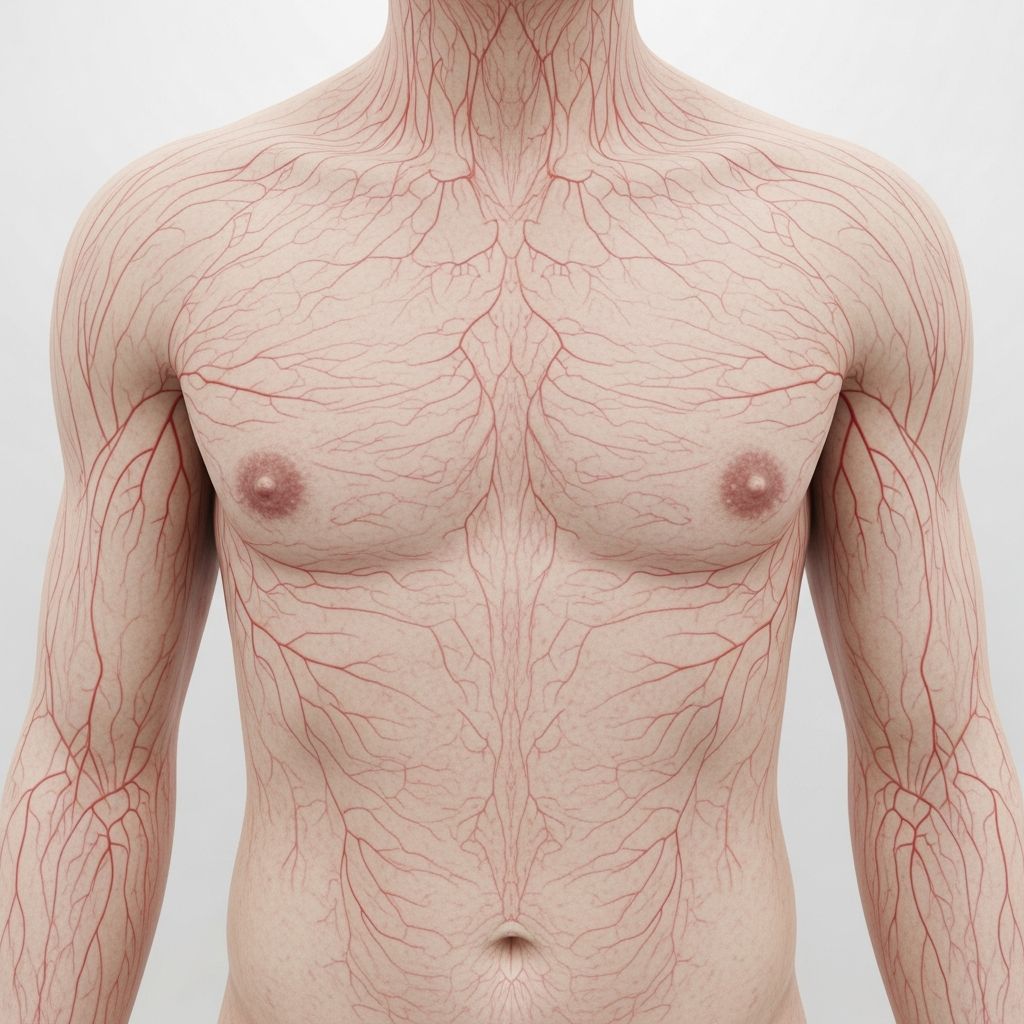
Generalised essential telangiectasia (GET), also known as essential generalised telangiectasia or generalised essential telangiectasia syndrome, is a rare dermatological condition characterised by the progressive development of widespread telangiectases on the skin.Telangiectases are small dilated blood vessels near the surface of the skin measuring between 0.1 and 1 mm in diameter. GET typically begins on the lower extremities and spreads upwards to involve the trunk and upper limbs over time. Who gets GET? What causes GET? What are the clinical features? How is the diagnosis made? What is the treatment for GET?
Who gets generalised essential telangiectasia (GET)?
Generalised essential telangiectasia primarily affects adults, with a strong predilection for women. The average age of onset is in the late 30s to late 40s, though cases in children and adolescents have been documented. It is estimated to be more common in females, possibly due to hormonal influences, although the exact prevalence remains unknown due to its rarity.
Reported cases describe patients ranging from paediatric to elderly, but the condition is most frequently observed in middle-aged women. For instance, a 56-year-old woman presented with erythematous vessels symmetrically distributed over extremities, highlighting the typical demographic. No strong ethnic predisposition has been identified, and while familial cases are rare, the condition is generally considered sporadic and non-hereditary.
Risk factors may include prior trauma or venous insufficiency in some patients, but most cases arise idiopathically without identifiable triggers. Psychological distress from cosmetic concerns is common, particularly as lesions progress.
What causes generalised essential telangiectasia (GET)?
The precise aetiology of generalised essential telangiectasia remains unknown, classifying it as an idiopathic condition. Unlike hereditary forms such as hereditary haemorrhagic telangiectasia (HHT), GET is not linked to genetic mutations and does not exhibit systemic involvement in most cases.
Pathophysiology involves abnormal dilation and proliferation of post-capillary venules in the superficial dermis, leading to visible ectatic vessels. Histopathology reveals dilated capillaries and post-capillary venules in the papillary dermis with surrounding pericytes, mild perivascular lymphocytic infiltrate, and oedema, without evidence of vasculitis or amyloid deposition.
One case reported low circulating vitamin C levels and urinary matrix metalloproteinases, suggesting possible roles in vessel wall integrity, though these findings’ relevance is unclear. Associations with hepatic haemangiomas and gastric antral vascular ectasia (GAVE) have been noted in isolated reports, hinting at potential extracutaneous vascular anomalies, but these are not standard features. No consistent hormonal, autoimmune, or coagulopathic links have been established.
What are the clinical features of generalised essential telangiectasia (GET)?
Lesions typically commence distally on the lower limbs, particularly ankles and feet, progressing proximally in a symmetric fashion over years to involve thighs, buttocks, trunk, and upper extremities. Distribution patterns include localised, diffuse, discrete, macular, plaque-like, or confluent telangiectases, often violaceous or red-brown, blanching completely with diascopy.
- Initial presentation: Fine, asymptomatic telangiectases on distal lower legs.
- Progression: Spread to proximal limbs, trunk; rarely face, mucous membranes, or conjunctiva.
- Morphology: Blanchable ectasias forming networks, patches, or plaques; no atrophy, purpura, or ulceration.
- Symptoms: Usually asymptomatic; occasional tingling, burning, numbness, or paraesthesia in affected areas.
Related Stories



Unlike varicose veins or secondary telangiectases, there is no underlying leg swelling, lipodermatosclerosis, or venous reflux. Rare complications include minor cutaneous bleeding or psychological impact from disfigurement. Gastrointestinal bleeding from GAVE has been reported exceptionally.
Diagnosis of generalised essential telangiectasia (GET)
Diagnosis is clinical, based on characteristic progressive, symmetric, blanchable telangiectases without systemic features or epidermal changes. Key differentials include:
| Condition | Key Distinguishing Features |
|---|---|
| Hereditary haemorrhagic telangiectasia (HHT) | Recurrent epistaxis, mucocutaneous and visceral AVMs, positive family history. |
| Telangiectasia macularis eruptiva perstans | Associated with urticaria pigmentosa/mastocytosis; yellow-brown macules. |
| Secondary telangiectases | Due to photoageing, rosacea, scleroderma, venous hypertension; localised. |
| Essential telangiectasia (unilateral) | Asymmetric, often facial; no proximal spread. |
Investigations exclude mimics: full blood count, coagulation profile, autoimmune screen (ANA, ENA), liver function, vitamin C levels if indicated. Duplex ultrasound rules out venous disease. Skin biopsy, if performed, confirms dilated dermal vessels without inflammation. Dermoscopy shows arborising vessels. Radiologic imaging (e.g., MRI) only if systemic involvement suspected.
Treatment of generalised essential telangiectasia (GET)
No curative treatment exists; management focuses on cosmesis and symptom relief. Options include:
- Vascular lasers: Pulsed dye laser (PDL, 585-595nm) is first-line, achieving 50-100% clearance in multiple sessions; effective for superficial lesions.
- Nd:YAG laser (1064nm): For deeper vessels; combined with PDL.
- Intense pulsed light (IPL): Broad-spectrum for diffuse areas.
- Sclerotherapy: Polidocanol or hypertonic saline for larger ectasias; risk of pigmentation.
- Systemic: Doxycycline (anti-angiogenic) or pentoxifylline in progressive cases; limited evidence.
Treatment is challenging due to extent; maintenance sessions required as progression continues. Camouflage makeup provides immediate cosmetic benefit. Patient education on benign nature reduces anxiety.
Generalised essential telangiectasia (GET) FAQs
What is generalised essential telangiectasia?
GET is a rare, benign condition causing progressive, widespread skin telangiectases starting on lower legs, without systemic symptoms.
Is GET hereditary?
No, GET is typically sporadic and non-hereditary, distinguishing it from HHT.
Does GET cause bleeding or pain?
Usually asymptomatic; rare tingling/burning. Bleeding is exceptional, unlike HHT.
How is GET treated?
Laser therapy (PDL, Nd:YAG) is mainstay; multiple sessions needed for cosmetic improvement.
Can GET affect internal organs?
Generally skin-limited; rare associations with GAVE or hepatic haemangiomas reported.
References
- Generalized essential telangiectasia — VisualDx. Accessed 2026. https://www.visualdx.com/visualdx/diagnosis/generalized+essential+telangiectasia
- Generalized Essential Telangiectasia: a Report of 3 Cases Treated… — Apunts Journal. 2011-01-01. https://www.apunts.org/en-download-pdf-S1578219010706156
- Benign Hereditary Telangiectasia: Causes, Symptoms, Treatment — Healthline. Accessed 2026. https://www.healthline.com/health/benign-hereditary-telangiectasia
- Generalized essential telangiectasia — PubMed / Wiley. 2008-07-01. https://pubmed.ncbi.nlm.nih.gov/18627745/
- Generalized essential telangiectasia — Orphanet. Accessed 2026. https://www.orpha.net/en/disease/detail/280774
- Generalized Essential Telangiectasia Treated With Pulsed Dye Laser — The Hospitalist. Accessed 2026. https://blogs.the-hospitalist.org/content/generalized-essential-telangiectasia-treated-pulsed-dye-laser
Similar Articles








Read full bio of medha deb