Generalized Exfoliative Dermatitis: Causes, Symptoms, and Treatment
Understanding generalized exfoliative dermatitis: A comprehensive guide to symptoms, causes, and medical management.
Understanding Generalized Exfoliative Dermatitis
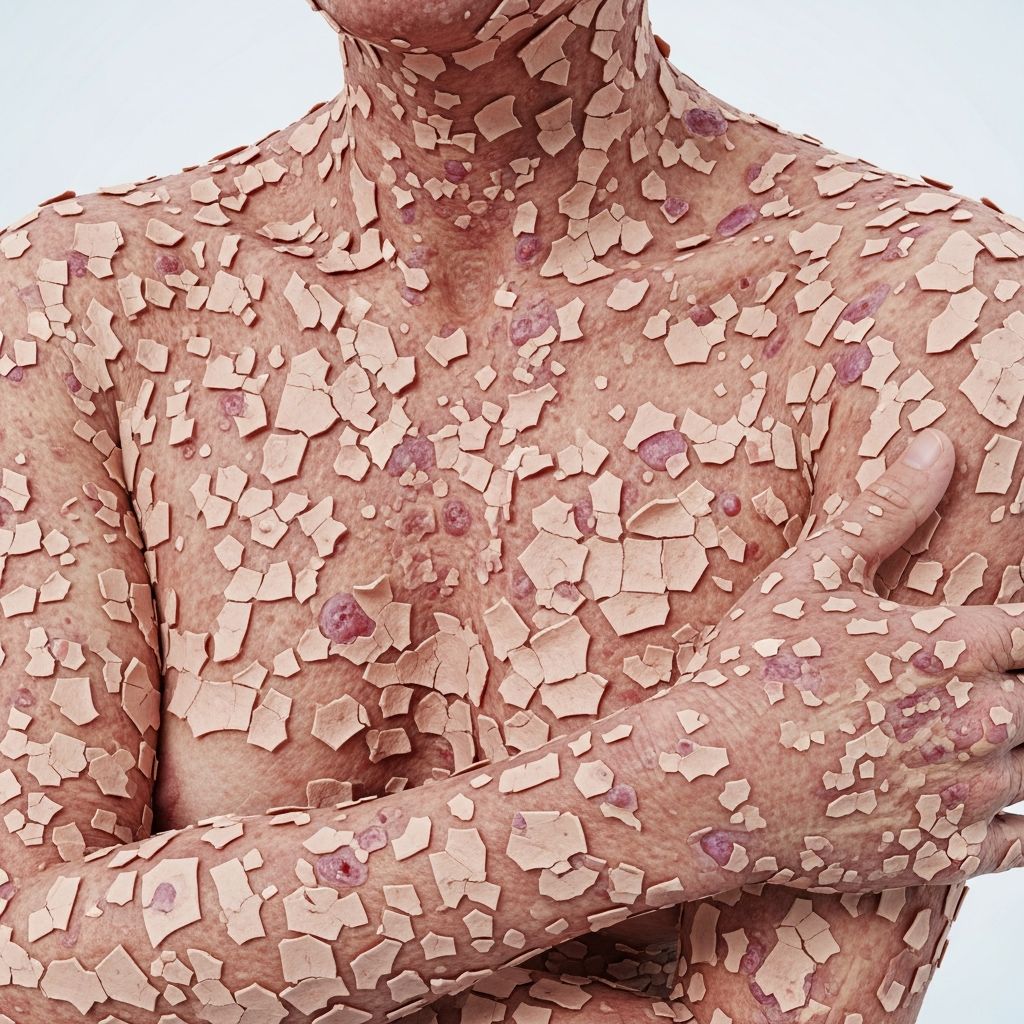
Generalized exfoliative dermatitis, also known as erythroderma, is a serious medical condition characterized by widespread inflammation and intense reddening of the skin affecting 80-90% or more of the body’s surface area. This condition represents a dramatic departure from normal skin function, where the skin becomes severely inflamed, scaled, and prone to significant complications. The condition occurs when most or all of the skin is involved in erythematous inflammation, resulting in massive scaling and shedding that distinguishes it from localized dermatological conditions.
The term “exfoliative dermatitis” specifically refers to the clinical presentation where the scale has a distinctive peeling quality, while “erythroderma” describes the widespread redness and inflammation. These terms are often used interchangeably in medical literature, though they technically describe related but slightly different aspects of the same condition. Understanding this condition is critical because it can be potentially life-threatening and requires prompt medical evaluation and treatment.
How Generalized Exfoliative Dermatitis Develops
The development of generalized exfoliative dermatitis involves complex biological mechanisms at the cellular level. The condition results from a dramatic increase in the epidermal turnover rate, where the mitotic rate and the absolute number of germinative skin cells exceed normal levels significantly. In healthy skin, cells mature and travel through the epidermis at a regulated pace, but in exfoliative dermatitis, this maturation process is severely compressed.
This accelerated cellular turnover leads to an overall greater loss of epidermal material, which manifests clinically as severe scaling and shedding. While normal skin naturally sheds dead cells daily, these shed scales contain minimal viable material such as nucleic acids, soluble proteins, and amino acids. In contrast, exfoliative dermatitis results in significant losses of proteins and folate, creating substantial metabolic consequences.
Recent clinical understanding suggests that exfoliative dermatitis results from a complicated interaction of cytokines and cellular adhesion molecules. Key inflammatory mediators involved include interleukin (IL)-1, IL-2, IL-8, intercellular adhesion molecule 1 (ICAM-1), tumor necrosis factor, and interferon gamma. These molecules orchestrate the inflammatory cascade that characterizes this condition, though the exact mechanisms remain an active area of dermatological research.
Causes of Generalized Exfoliative Dermatitis
Generalized exfoliative dermatitis can result from multiple underlying causes, and identifying the specific trigger is essential for appropriate treatment. The condition is not a primary disease itself but rather a clinical manifestation of various underlying disorders or external triggers.
Medication Reactions
One of the most common causes of exfoliative dermatitis is an adverse reaction to medications. Drug reaction is considered the most classic underlying cause of this condition. High-frequency culprits include antibiotics, anticonvulsants, antimalarials, allopurinol, lithium, and barbiturates. Specific medications known to trigger this reaction include penicillin, sulfonamides, phenytoin, and anti-seizure medicines. These medications can trigger an allergic reaction in susceptible individuals that progresses to generalized skin involvement.
Pre-existing Skin Conditions
Exfoliative dermatitis frequently develops as a complication of other underlying skin conditions. The most common predisposing skin diseases include atopic dermatitis (eczema), psoriasis, and pityriasis rubra pilaris. These conditions, when they progress or become exacerbated, can evolve into the widespread form characteristic of exfoliative dermatitis. The exact reason why some individuals with these conditions progress to erythroderma while others do not remains incompletely understood.
Related Stories



Malignancies and Systemic Conditions
Certain types of cancer, particularly cutaneous T-cell lymphoma and other lymphomas, can cause or be associated with generalized exfoliative dermatitis. Additionally, rare genetic disorders such as inherited immunodeficiency syndromes may predispose individuals to developing this condition. In approximately 1 in 4 people with exfoliative dermatitis, no identifiable cause can be determined, a situation referred to as idiopathic erythroderma.
Recognizing the Symptoms
The clinical presentation of generalized exfoliative dermatitis typically develops in stages, beginning with localized symptoms that progressively worsen and spread.
Initial Manifestations
The first stage typically involves erythema (redness), often beginning as single or multiple pruritic patches that commonly involve the head, trunk, and genital region. These patches tend to spread progressively until, after a matter of days or weeks, most of the skin surface becomes covered with an erythematous, pruritic eruption. Characteristically, the palms of the hands, soles of the feet, and mucous membranes are often spared from involvement, a phenomenon sometimes called the “nose sign” when the nose and paranasal areas remain unaffected.
Primary Symptoms
Patients with generalized exfoliative dermatitis experience multiple skin-related symptoms:
- Extreme redness (erythema) affecting 80-90% or more of the body surface
- Scaly and peeling skin patches with varying texture and thickness
- Intense itching and skin sensitivity or pain
- Crusty sores and lesions that may become infected
- Thickened or edematous skin areas
- Possible unpleasant skin odor
Systemic Symptoms
Beyond local skin manifestations, exfoliative dermatitis produces significant systemic effects that reflect the body’s response to widespread skin involvement:
- Swollen lymph nodes (lymphadenopathy)
- Fever
- Malaise (general feeling of illness and discomfort)
- Tachycardia (abnormally fast heart rate)
- Temperature dysregulation with difficulty maintaining normal body temperature
- Dehydration from increased fluid loss through damaged skin
Metabolic and Physiologic Complications
The disruption of normal skin function in generalized exfoliative dermatitis creates severe metabolic consequences that make this condition potentially life-threatening. Since cutaneous function as a protective barrier is so severely disrupted, the body loses heat, water, protein, and electrolytes, rendering itself much more vulnerable to infection. The condition represents a significant risk factor for the epidemic spread of methicillin-resistant Staphylococcus aureus and other serious infections.
Thermoregulatory Dysfunction
Heat loss is a major concern accompanying the defective skin barrier. Loss of normal vasoconstrictive function in the dermis, decreased sensitivity to the shivering reflex, and extra cooling from evaporation of fluids leaking from weeping skin lesions all result in thermoregulatory dysfunction. This can cause potentially dangerous hypothermia or hyperthermia that requires careful medical monitoring.
Fluid and Electrolyte Imbalance
The inflammatory scaling process causes severe loss of fluids and essential electrolytes through the damaged skin barrier. Patients can become seriously dehydrated without adequate skin to maintain moisture retention. This fluid loss can lead to significant systemic complications and requires aggressive fluid replacement therapy.
Nutritional Consequences
Protein and nutrient losses are substantial in exfoliative dermatitis. The increased turnover of skin cells results in significant protein loss through the scales, and patients may develop nutritional imbalances. Additionally, the basal metabolic rate is elevated in patients with this condition, creating a catabolic state that is often responsible for significant weight loss.
Cardiovascular Complications
The physiologic disruptions associated with exfoliative dermatitis are potentially life-threatening, particularly regarding cardiac function. Hypothermia can result in ventricular arrhythmias, decreased heart rate, and hypotension. Conversely, increased peripheral blood flow from the inflammatory state can result in high-output cardiac failure. Hypervolemia can also occur in some patients, further contributing to the likelihood of cardiac failure and requiring careful fluid management.
Risk Factors and Vulnerable Populations
Certain individuals face increased risk of developing generalized exfoliative dermatitis. You are more likely to develop this condition if you have eczema, psoriasis, or another skin condition linked to exfoliative dermatitis. Additionally, individuals assigned male at birth appear to have higher incidence rates. Those taking certain antibiotics, barbiturates, or anti-seizure drugs associated with exfoliative dermatitis face elevated risk, as do individuals exposed to phenytoin, allopurinol, or other causative chemicals. Patients with lymphoma or other types of cancer also carry increased risk.
Diagnosis and Medical Evaluation
Proper diagnosis of generalized exfoliative dermatitis requires comprehensive clinical evaluation. Medical professionals will perform a thorough physical examination to assess the extent and characteristics of skin involvement. Blood tests are typically ordered to provide a complete picture of systemic health and identify electrolyte abnormalities, nutritional deficiencies, or signs of infection. A skin biopsy may be performed, with affected tissue sent to a laboratory for histological analysis to help identify the underlying cause and confirm the diagnosis.
The diagnostic approach aims to identify the underlying cause, which is critical for determining appropriate treatment. A careful medication history, assessment of recent medication changes, and evaluation for signs of underlying malignancy or systemic disease are essential components of the diagnostic workup.
Potential Complications
Without prompt and appropriate treatment, generalized exfoliative dermatitis can lead to serious complications. Skin damage allows significant fluid and protein loss, causing dehydration and impairing the body’s ability to retain adequate nutrition. The compromised skin barrier permits bacteria and viruses to enter the body and cause serious secondary infections, which can be life-threatening in this vulnerable population.
Temperature regulation becomes impaired, potentially leading to dangerous hypothermia or hyperthermia. Cardiovascular complications, including arrhythmias and heart failure, represent serious threats to survival. Secondary bacterial or viral infections can rapidly progress to sepsis. The cumulative metabolic derangements can result in organ dysfunction if not aggressively managed.
Treatment Approaches
Treatment for generalized exfoliative dermatitis requires a multi-faceted approach addressing both the local skin manifestations and systemic complications. Identifying and treating any underlying disease is paramount, as is removing any contributing external factors such as offending medications.
Supportive Care
Supportive care forms the foundation of treatment and addresses the physiologic consequences of widespread skin involvement. Intravenous fluids are frequently necessary to prevent dehydration and maintain electrolyte balance. Nutritional support, including high-protein supplementation, is essential to combat the significant protein losses and metabolic demands of the condition. Temperature regulation requires careful environmental control and monitoring. Secondary infections must be treated promptly with appropriate antimicrobial therapy.
Skin Care Management
Gentle skin care with appropriate emollients and moisturizers helps protect the remaining skin barrier. Anti-itch medications and systemic corticosteroids may be utilized to manage symptoms. Topical therapies are adjusted based on the severity of skin involvement and response to treatment.
Treatment of Underlying Cause
Once an underlying cause is identified, specific treatment is directed at that condition. If medication-induced, the offending medication must be discontinued. If psoriasis or eczema is the underlying cause, these conditions require specific management. If malignancy is identified, appropriate oncologic treatment becomes necessary.
Frequently Asked Questions
Q: What is the difference between exfoliative dermatitis and erythroderma?
A: While these terms are often used interchangeably, technically exfoliative dermatitis refers specifically to the clinical phenotype of erythroderma where the scale has a distinctive “peeling” quality. Erythroderma is the broader term describing intense and widespread reddening of the skin.
Q: Is generalized exfoliative dermatitis contagious?
A: The condition itself is not contagious. However, secondary bacterial or viral infections that can develop due to the compromised skin barrier may pose infection risks, particularly methicillin-resistant Staphylococcus aureus.
Q: How quickly does exfoliative dermatitis develop?
A: The condition can develop quite rapidly in acute exfoliative dermatitis, with generalized erythema developing over hours to days. In chronic forms, the progression may occur more gradually over weeks to months.
Q: Can exfoliative dermatitis be cured?
A: Treatment depends on identifying and addressing the underlying cause. Prognosis varies based on the causative factor and how quickly it can be identified and treated. Some cases resolve once the offending medication is discontinued or the underlying condition is treated.
Q: When should I seek immediate medical attention?
A: Seek immediate medical attention if you experience sudden widespread redness and peeling affecting large areas of skin, especially if accompanied by fever, chills, severe itching, signs of infection, difficulty maintaining body temperature, or signs of dehydration such as extreme thirst or dark urine.
References
- Exfoliative Dermatitis — American Academy of Family Physicians. 1999-02-01. https://www.aafp.org/pubs/afp/issues/1999/0201/p625.html
- Exfoliative Dermatitis Information — Mount Sinai Health System. 2025. https://www.mountsinai.org/health-library/diseases-conditions/exfoliative-dermatitis
- Exfoliative Dermatitis: Symptoms, Causes, and Treatment — WebMD. 2025. https://www.webmd.com/skin-problems-and-treatments/what-is-exfoliative-dermatitis
- Erythroderma — University of Rochester Medical Center. 2025. https://www.urmc.rochester.edu/encyclopedia/content?contenttypeid=85&contentid=p00287
- Exfoliative Dermatitis — StatPearls, National Center for Biotechnology Information, National Institutes of Health. 2025. https://www.ncbi.nlm.nih.gov/books/NBK554568/
- Erythroderma — DermNet New Zealand. 2025. https://dermnetnz.org/topics/erythroderma
Similar Articles








Read full bio of medha deb