Genetics Of Parkinson’s Disease: Key Insights For Families
Unraveling the genetic threads behind Parkinson's: from rare mutations to risk factors shaping this complex neurological disorder.
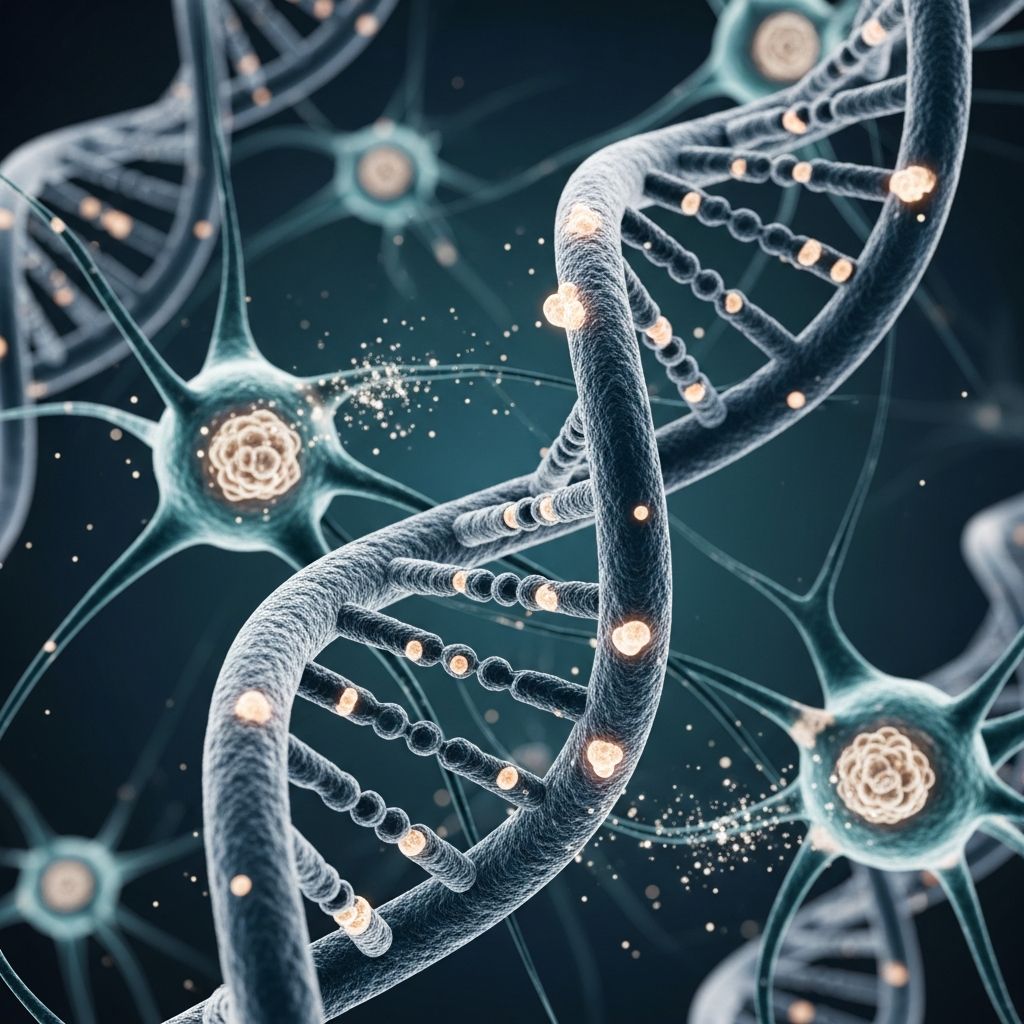
Parkinson’s disease (PD) arises primarily from the degeneration of dopamine-producing neurons in the brain, but genetic factors play a pivotal role in a subset of cases, influencing both familial and sporadic forms. While most PD cases stem from a blend of genetic susceptibility and environmental triggers, identifiable mutations account for roughly 10-13% of instances, offering crucial insights into disease mechanisms and potential therapies.
The Interplay of Genes and Environment in PD
PD manifests through progressive motor symptoms like tremors, rigidity, and bradykinesia, driven by neuronal loss in the substantia nigra. Genetic contributions vary: monogenic forms directly cause the disease via single-gene mutations, while polygenic risks amplify susceptibility in the broader population. Environmental exposures, such as pesticides or head trauma, interact with these genetic elements, explaining why not all mutation carriers develop PD.
Family history elevates risk modestly—about 2% lifetime chance for relatives versus 1% in the general population—but direct inheritance is uncommon. This underscores PD’s multifactorial nature, where penetrance (the likelihood of disease manifestation) ranges widely, often below 100% even in high-risk variants.
Monogenic Forms: Direct Genetic Culprits
Monogenic PD, comprising around 30% of familial cases, follows clear inheritance patterns: autosomal dominant (one mutated copy suffices), autosomal recessive (two copies needed), or rarely X-linked. These forms often onset earlier and may present with atypical features.
Autosomal Dominant Mutations
These require inheritance from one affected parent, with a 50% transmission risk per child. Key genes include:
- LRRK2: The most frequent genetic cause, linked to 1% of sporadic and 5% of familial PD worldwide. Prevalent in Caucasians (63%), Hispanics (8%), and Asians (11%). Mutations hyperactivate the LRRK2 kinase protein, disrupting cellular processes. Higher rates occur in Ashkenazi Jewish and North African Berber populations.
- SNCA: Encodes alpha-synuclein, a protein forming toxic Lewy body aggregates. Responsible for 1-2% of dominant familial PD, mainly in Caucasians (70%). Discovered in 1997, it was the first PD-linked gene, revealing protein aggregation’s centrality.
- VPS35: Involved in protein trafficking; rarer but confirmed in dominant inheritance.
Autosomal Recessive Mutations
These necessitate two mutated alleles, often from carrier parents, and typically cause early-onset PD (before age 50).
- PRKN (Parkin): Common in young-onset PD, affecting mitochondrial quality control via mitophagy. Variants include exonic rearrangements, missense, and frameshifts; prevalent in Asians (39%) and Caucasians (31%).
- PINK1: Partners with PRKN in mitochondrial pathways; recessive mutations lead to energy deficits in neurons.
- DJ-1: Protects against oxidative stress; mutations impair neuronal survival.
- DNAJC6: Rare recessive form, usually atypical parkinsonism but occasionally typical PD.
Risk-Modifying Genes
Not strictly causative, these elevate PD odds significantly.
- GBA (Glucocerebrosidase): The top genetic risk factor (2-30% prevalence), especially in Ashkenazi Jews. Heterozygous variants reduce enzyme activity, causing lysosomal dysfunction and alpha-synuclein buildup. Linked to faster progression.
Related Stories



Emerging genes like MAPT (tau protein), TMEM230, LRP10, NUS1, ARSA, and RIC3 (cholinergic pathway) await validation, as familial clusters are scarce.
Inheritance Patterns and Family Risks
| Gene | Inheritance | Prevalence | Typical Onset | Key Features |
|---|---|---|---|---|
| LRRK2 | Dominant | 1-5% | Adult | Levodopa-responsive; ethnic clusters |
| SNCA | Dominant | 1-2% | Adult/Early | Lewy bodies prominent |
| PRKN | Recessive | Young-onset | <50 years | Mitochondrial issues; slow progression |
| GBA | Risk (heterozygous) | 2-30% | Adult | Risk modifier; Gaucher link |
This table summarizes major genes, highlighting how dominant forms spread more readily across generations than recessive ones.
Genetic Testing: Benefits and Considerations
Testing identifies mutations via saliva or blood, aiding diagnosis, trial eligibility, and family planning. The PD GENEration study by the Parkinson’s Foundation provides free testing and counseling, sequencing panels for LRRK2, GBA, SNCA, etc. However, negative results don’t eliminate risk, given unknown variants. Counseling addresses psychological impacts, as incomplete penetrance means carriers may never develop PD.
Pros: Access to targeted therapies (e.g., LRRK2 inhibitors in trials); informs relatives. Cons: Variants of uncertain significance; no preventive cure yet.
From Genes to Mechanisms: Pathways Disrupted
Genetic insights illuminate PD biology:
- Alpha-synuclein pathology: SNCA mutations promote aggregation, spreading prion-like.
- Mitochondrial dysfunction: PRKN/PINK1/DJ-1 impair mitophagy, causing energy failure and oxidative stress.
- Lysosomal/autophagy defects: GBA variants hinder waste clearance.
- Kinase hyperactivity: LRRK2 overactivity affects vesicles and immunity.
X-linked forms (e.g., RAB39B) feature early onset with dystonia, seizures, and poor levodopa response.
Ongoing Research and Future Directions
Genomics advances, including GWAS, reveal polygenic risk scores predicting susceptibility. Therapies target pathways: antisense oligonucleotides for SNCA, kinase inhibitors for LRRK2, substrate reduction for GBA. Gene editing (CRISPR) holds promise for carriers. Studies like PD GENEration aggregate data for precision medicine.
Challenges persist: validating rare genes, understanding incomplete penetrance, and integrating genetics with environment.
Frequently Asked Questions (FAQs)
Will I get Parkinson’s if my parent has it?
No guarantee—most PD (90%) lacks known mutations. Relatives have ~2% risk vs. 1% general.
Should I get genetic testing?
Consider if family history suggests monogenic PD or for trials. Consult a specialist.
Can genetic PD be prevented?
Not yet, but lifestyle (exercise, diet) may mitigate risk. Trials offer hope.
How common are genetic forms?
~10-13% have direct links; GBA risks more widespread.
What ethnic groups are at higher risk?
Ashkenazi Jews for LRRK2/GBA; varies by gene.
References
- Parkinson’s disease – genetic cause — PubMed. 2023-06-20. https://pubmed.ncbi.nlm.nih.gov/37366140/
- Genetic architecture of Parkinson’s disease subtypes — Frontiers in Aging Neuroscience. 2022-11-11. https://www.frontiersin.org/journals/aging-neuroscience/articles/10.3389/fnagi.2022.1023574/full
- Parkinson’s Genetics — Michael J. Fox Foundation. N/A. https://www.michaeljfox.org/news/parkinsons-genetics
- What genetics tells us about the causes and mechanisms — PubMed. 2011-10-26. https://pubmed.ncbi.nlm.nih.gov/22013209/
- Genetics & Parkinson’s — Parkinson’s Foundation. N/A. https://www.parkinson.org/understanding-parkinsons/causes/genetics
Similar Articles








Read full bio of medha deb