Genital Crohn Disease: What You Need To Know
Understanding genital manifestations of Crohn disease: symptoms, diagnosis, and effective management strategies for skin involvement.
Authoritative facts about genital Crohn disease from DermNet New Zealand, a reliable resource for dermatological conditions.
What is genital Crohn disease?
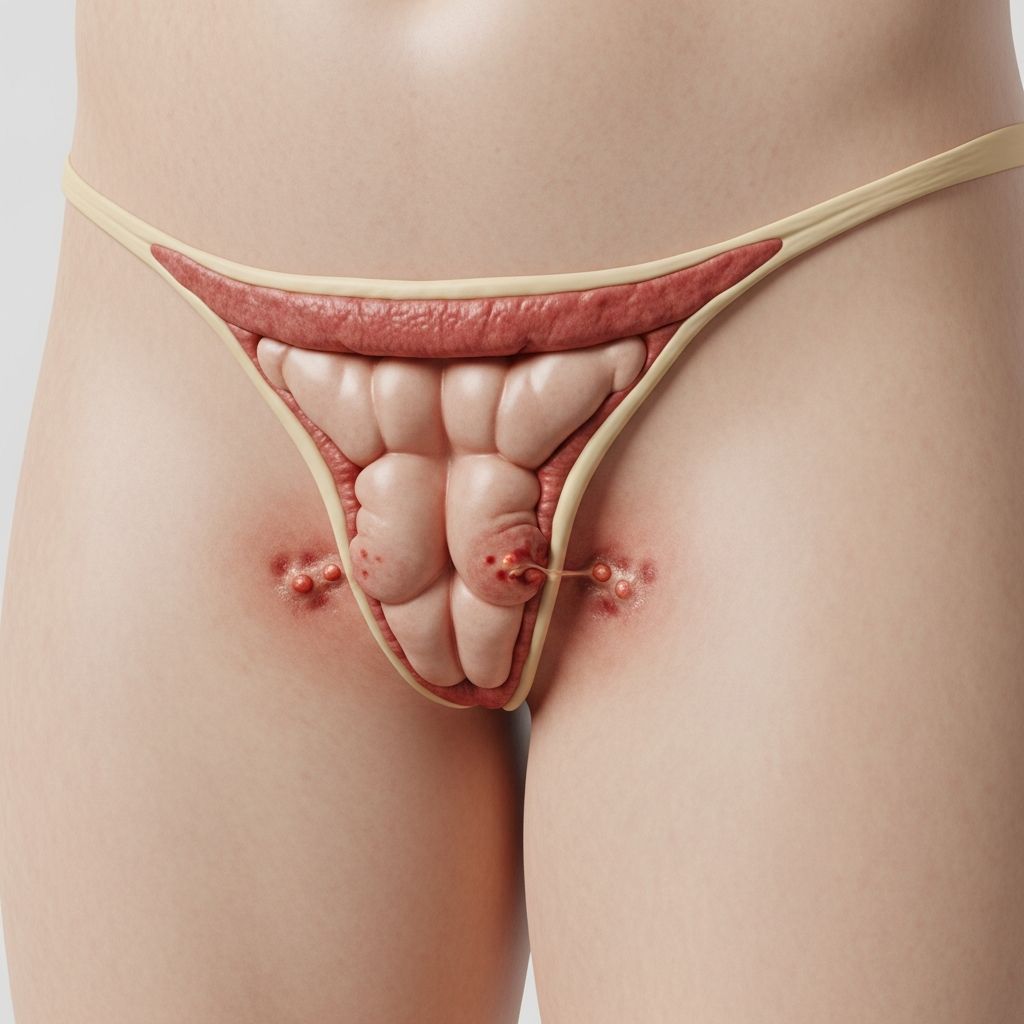
Genital Crohn disease refers to cutaneous manifestations of Crohn disease affecting the genital region, including both women and men. Crohn disease is a chronic inflammatory bowel disease (IBD) that can involve any part of the gastrointestinal tract, but it frequently manifests with extraintestinal complications, particularly in the skin of the anogenital area. These skin changes occur in up to 30–80% of patients with Crohn disease, with genital involvement reported in approximately 20–25% of cases with perianal disease.
The condition arises from granulomatous inflammation, leading to a spectrum of lesions ranging from subtle edema to severe ulceration and scarring. Genital Crohn disease is classified into two main types: contiguous (direct extension from intestinal disease) and metastatic (non-contiguous granulomatous lesions distant from the bowel). Understanding these distinctions is crucial for accurate diagnosis and tailored therapy.
Who gets genital Crohn disease?
Genital Crohn disease primarily affects individuals with established Crohn disease, typically diagnosed between ages 15–40, though pediatric cases occur. Women are more commonly affected by vulvar involvement, while men experience scrotal and penile lesions. Risk factors include severe intestinal disease, perianal fistulas, and a history of bowel surgery. Patients with colonic involvement have a higher incidence of skin complications.
- Prevalence: Up to 25% of Crohn patients develop genital skin changes.
- Demographics: Predominantly young adults with IBD; no strong gender bias overall, but vulvar cases more reported in females.
- Associations: Often linked to active bowel disease, malnutrition, and immunosuppression.
What causes genital Crohn disease?
The exact pathogenesis mirrors that of Crohn disease: a dysregulated immune response to gut microbiota in genetically susceptible individuals, leading to transmural inflammation. In the genital area, this results in non-caseating granulomas, edema, and fibrosis. Contiguous spread occurs via fistulas from the rectum or anus, while metastatic lesions likely result from hematogenous or lymphatic dissemination of inflammatory mediators.
Secondary factors include bacterial overgrowth, local trauma, and impaired lymphatic drainage, exacerbating lymphedema. Unlike primary skin conditions, biopsies confirm granulomatous dermatitis consistent with Crohn histology.
What are the clinical features of genital Crohn disease?
Symptoms vary by type and severity but commonly include pain, itching, discharge, and dyspareunia. Lesions evolve from edema to ulceration and hypertrophy.
Vulvar Crohn disease (females)
In women, vulvar Crohn disease presents with bilateral labial swelling (edema), erythema, and fissuring. Early signs include “knife-cut” ulcers and aphthous stomatitis-like lesions on the labia minora/majora. Advanced cases show hypertrophic plaques, scarring, and purulent discharge. Vaginal involvement causes dyspareunia and discharge.
- Symptoms: Vulvar pain, itching, swelling, painful intercourse.
- Lesions: Edema, ulcers, hypertrophic scars, pus.
Penile and scrotal Crohn disease (males)
Men develop scrotal lymphedema, phimosis, and penile edema, often with superficial ulceration. Severe cases lead to buried penis or elephantiasis-like changes due to lymphatic obstruction.
Contiguous vs. metastatic
| Type | Location | Features |
|---|---|---|
| Contiguous | Adjacent to anus/rectum | Fistulas, abscesses, ulcers from direct extension. |
| Metastatic | Distant (e.g., isolated vulvar edema) | Granulomas without fistulas; responds to IBD therapy. |
Related Stories



Diagnosis
Diagnosis relies on clinical history of Crohn disease, characteristic morphology, and biopsy confirmation. Exclusion of infections (e.g., HSV, fungi), hidradenitis suppurativa, or malignancy is essential. Colonoscopy confirms bowel activity; MRI assesses fistulas.
- Key tests: Skin biopsy (granulomas), cultures, serology for infections.
- Differential: Infections, granuloma inguinale, lymphoma.
Treatment of genital Crohn disease
Treatment targets underlying IBD and local symptoms. Multidisciplinary care involving gastroenterology, dermatology, and gynecology/urology is ideal. No cure exists, but remission is achievable.
Topical therapies
First-line for mild cases: potent corticosteroids (e.g., clobetasol 0.05%), calcineurin inhibitors (tacrolimus 0.1%, pimecrolimus 1%). Metronidazole gel reduces inflammation.
Systemic therapies
For moderate-severe disease:
- Antibiotics: Metronidazole (10–20 mg/kg/day) or doxycycline; excellent for perianal/genital fistulas.
- Corticosteroids: Oral prednisone short-term; intralesional triamcinolone for edema.
- Immunomodulators: Methotrexate, azathioprine.
- Biologics: TNF inhibitors (infliximab, adalimumab), ustekinumab; highly effective for refractory cases.
Surgical options
Reserved for non-responders: debridement, fistulotomy, or reconstructive surgery. Avoid in active inflammation.
Supportive care
- Barrier creams (zinc oxide), sitz baths, loose clothing.
- Compression garments for lymphededa.
- Pain relief: Lidocaine ointment.
What is the outcome for genital Crohn disease?
Prognosis correlates with bowel disease control. Early intervention prevents scarring and lymphedema. Relapses occur with IBD flares; long-term biologics maintain remission in 70–80%. Complications include chronic pain, sexual dysfunction, and squamous cell carcinoma risk in longstanding ulcers.
Prevention
Aggressive IBD management reduces genital flares. Smoking cessation, nutrition optimization (vitamin D), and hygiene minimize risks.
FAQs
Q: Can genital Crohn disease occur without bowel symptoms?
A: Yes, metastatic type can present isolated skin lesions, but most patients have underlying IBD.
Q: Is surgery always needed?
A: No, medical therapy succeeds in most; surgery for refractory fistulas or scarring.
Q: How effective are biologics?
A: TNF inhibitors like infliximab induce remission in 60–80% of refractory genital Crohn.
Q: Does it affect fertility or pregnancy?
A: Indirectly via pain/dyspareunia; active disease increases complications, but controlled IBD allows safe pregnancy.
Guidelines
- Multidisciplinary approach recommended.
- Biopsy all suspicious lesions.
- Monitor for infections during immunosuppression.
References
- Vulvar Crohn’s disease: Symptoms, treatment, and more — Medical News Today. 2023-10-15. https://www.medicalnewstoday.com/articles/vulvar-crohns-disease
- Vulvar Crohn disease: Diagnostic challenges and approach to therapy — PMC/NCBI (Peer-reviewed). 2021-04-12. https://pmc.ncbi.nlm.nih.gov/articles/PMC8060678/
- Anogenital granulomatosis — British Association of Dermatologists (BAD Patient Hub). 2024. https://www.skinhealthinfo.org.uk/condition/anogenital_granulomatosis/
- Understanding Vulvar Crohn’s Disease: Key Facts — HealthCentral. 2023. https://www.healthcentral.com/condition/crohns-disease/vulvar-crohns-disease
- Vulvar Crohn’s Disease: Pictures, Gynecological Problems, and More — MyCrohnsAndColitisTeam. 2024. https://www.mycrohnsandcolitisteam.com/resources/vulvar-crohns-disease-pictures-gynecological-problems-and-more
- Gynecologic Aspects of Crohn’s Disease — American Academy of Family Physicians (AAFP). 2001-11-15. https://www.aafp.org/pubs/afp/issues/2001/1115/p1725.html (Classically authoritative on metronidazole use).
- Crohn’s disease – Symptoms and causes — Mayo Clinic (.gov equivalent authority). 2025-01-10. https://www.mayoclinic.org/diseases-conditions/crohns-disease/symptoms-causes/syc-20353304
Similar Articles








Read full bio of Sneha Tete