Genital Skin Problems: Causes, Symptoms, And Treatment Guide
Comprehensive guide to recognising, diagnosing, and treating common genital skin disorders in men and women.
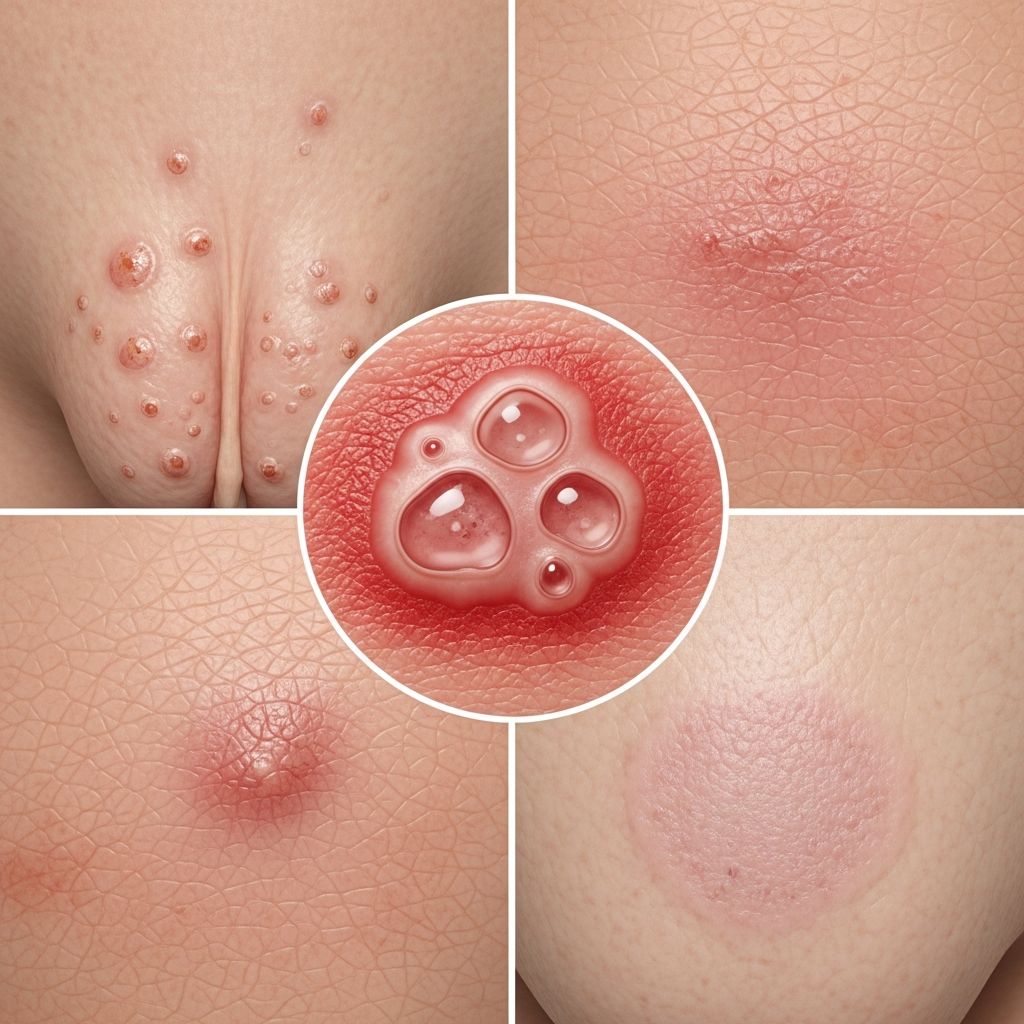
Genital skin problems encompass a wide range of conditions affecting the skin in the genital area of both men and women. These issues can cause significant discomfort, including itching, pain, soreness, redness, or changes in skin texture and colour. While many are benign and treatable, some require medical attention to prevent complications like scarring or increased cancer risk. Common triggers include infections, allergies, autoimmune responses, and irritants. Early diagnosis by a healthcare professional is crucial for effective management.
What causes genital skin problems?
Genital skin is particularly sensitive due to its thin structure, moisture, friction from clothing or activity, and proximity to mucous membranes. Causes are multifactorial:
- Infections: Fungal (e.g., candida, tinea cruris), bacterial (e.g., balanitis), viral (e.g., herpes, HPV warts), or parasitic (e.g., scabies).
- Inflammatory and autoimmune: Lichen sclerosus, lichen planus, psoriasis, eczema/dermatitis.
- Irritants and allergies: Soaps, scented products, washing powders, tight clothing, excessive moisture.
- Hormonal changes: Post-menopause oestrogen deficiency leading to skin thinning.
- Other: Trauma, poor hygiene, immunosuppression, or systemic diseases like diabetes.
Symptoms often worsen with heat, sweat, or rubbing. Non-sexually transmitted conditions mimic STIs, so accurate diagnosis is essential.
Who gets genital skin problems?
These conditions affect people of all ages, genders, and backgrounds. Women post-menopause are prone to lichen sclerosus due to hormonal shifts. Men, especially uncircumcised, may develop balanoposthitis or lichen sclerosus. Children can experience dermatitis from irritants, while sexually active adults face higher STI risks like herpes or warts. Those with atopy (eczema history), obesity, diabetes, or immunosuppression are at greater risk. Prevalence varies: lichen sclerosus affects 1 in 30 older women and 1 in 900-1,000 men.
Signs and symptoms of genital skin problems
Symptoms vary by condition but commonly include:
- Itch (pruritus) – often intense, leading to scratching and lichenification (thickening).
- Pain, soreness, burning, or stinging.
- Rash: red, scaly, white patches, or moist erosions.
- Changes: hypopigmentation, hyperpigmentation, fissuring, ulcers, or growths (warts, papules).
- Discharge, odour, or dyspareunia (painful intercourse).
- Asymptomatic lesions found incidentally.
| Symptom | Description | Common Associations |
|---|---|---|
| Itch | Urge to scratch, may be pleasurable or painful | Dermatitis, psoriasis, candida |
| Burning/Dysaesthesia | Unpleasant non-itch sensation | Lichen planus, herpes |
| Lesions | Papules, plaques, ulcers, scales | Warts (HPV), lichen sclerosus |
| Dyspareunia | Pain with intimacy | Scarring from lichen sclerosus |
In women, vulval involvement predominates; in men, glans and foreskin. Extragenital sites (e.g., mouth, nails) suggest systemic disease.
Diagnosis
Diagnosis starts with history: symptom onset, triggers, products used, sexual history, systemic symptoms. Examination includes vulva/penis, perianal area, mouth, scalp, nails. Tests may involve:
- Swabs for microbiology (candida, bacteria, viruses).
- Skin scrapings for fungi.
- Biopsy for ambiguous cases (e.g., to rule out precancer in lichen sclerosus).
- Patch testing for allergies.
- Blood tests for diabetes, hormones, or STIs.
Specialists (dermatologists, gynaecologists, urologists) are often needed for chronic cases.
Management and treatment
Treatment targets the cause, with general measures for all:
- Skincare: Avoid soap/perfumes; use emollients (e.g., sorbolene) for washing/moisturising. Wear loose cotton underwear. Pat dry, avoid over-washing.
- Steroids: Topical mid-to-potent corticosteroids (e.g., clobetasol for lichen sclerosus) applied thinly 1-2x daily, tapered to maintenance.
- Antifungals: For candida/tinea (clotrimazole cream or oral fluconazole).
- Antibiotics/Antivirals: For bacterial/STI causes.
- Other: Antihistamines for itch, circumcision for refractory balanitis.
Related Stories



Long-term use may be needed; monitor for side effects like skin thinning.
Specific conditions
Lichen sclerosus
Chronic inflammatory disorder causing white, thinned, scarred skin. Risk of squamous cell carcinoma (4-6%). Women: vulval itching/pain; men: phimosis. Treat with high-potency steroid ointment (e.g., weekly maintenance). Specialist follow-up mandatory.
Lichen planus
Causes painful purple papules/plaques, erosions. Oral/genital involvement common. Potent topical steroids; severe cases need systemic therapy. Requires specialist review.
Vulval/perianal dermatitis (lichen simplex)
Eczema-like from itch-scratch cycle. Triggers: irritants, stress. Mid-potent steroid + emollients.
Psoriasis
Red, scaly plaques (inverse type in genitals is moist/shiny). Topical steroids, vitamin D analogues, biologics for severe.
Balanoposthitis
Glans/foreskin inflammation. Causes: candida, psoriasis, lichen sclerosus. Hygiene + antifungals/steroids; circumcision if recurrent.
Infections
- Candida: White thrush, itch. Antifungals 1-6 months if recurrent.
- Tinea cruris (jock itch): Groin rash. Antifungals.
- Herpes (HSV): Painful blisters/ulcers. Antivirals.
- Genital warts (HPV): Growths. Cryotherapy, topicals, vaccination.
Other: Hidradenitis suppurativa, scabies, syphilis
Abscesses/nodules (hidradenitis: doxycycline); burrows/itch (scabies: permethrin); chancre (syphilis: penicillin). Refer if suspected.
Follow-up
Regular review for chronic conditions (e.g., lichen sclerosus every 6-12 months) to monitor response, side effects, cancer risk. Self-examination encouraged.
Self-care (vulvar/perineal skin care guidelines)
To prevent flares:
- Use cool water/soft cloth; no soap.
- Emollients twice daily.
- Cotton underwear, loose clothes.
- Avoid irritants, pads/tampons with fragrance.
- Pat dry; use hairdryer on cool if needed.
Frequently asked questions
Are genital skin problems contagious?
Only infectious ones (e.g., candida, herpes, warts) are; most like lichen sclerosus/psoriasis are not.
Can I treat it myself?
Simple irritants yes (emollients), but see a doctor for persistent symptoms to avoid complications.
Does lichen sclerosus cause cancer?
Slightly increased risk; regular monitoring essential.
How long until improvement?
Weeks with treatment; maintenance prevents relapse.
Is circumcision always needed for men?
Only if medical (e.g., refractory balanitis).
References
- Skin conditions of the vulva — Royal College of Obstetricians and Gynaecologists (RCOG). 2023. https://www.rcog.org.uk/for-the-public/browse-our-patient-information/skin-conditions-of-the-vulva/
- Your guide to genital skin conditions and solutions — Top Doctors (Dr George Kravvas). 2024. https://www.topdoctors.co.uk/medical-articles/your-guide-to-genital-skin-conditions-and-solutions/
- Genital dermatology — STI Guidelines Australia. 2024. https://sti.guidelines.org.au/syndromes/genital-dermatology/
- Vulvar skin care guidelines — University of Iowa Health Care (UIHC). 2023. https://uihc.org/educational-resources/vulvar-skin-care-guidelines
Similar Articles








Read full bio of medha deb