Gentamicin Eye Drops: Complete Guide To Use And Safety
Comprehensive guide to using gentamicin eye drops for treating bacterial eye infections effectively and safely.
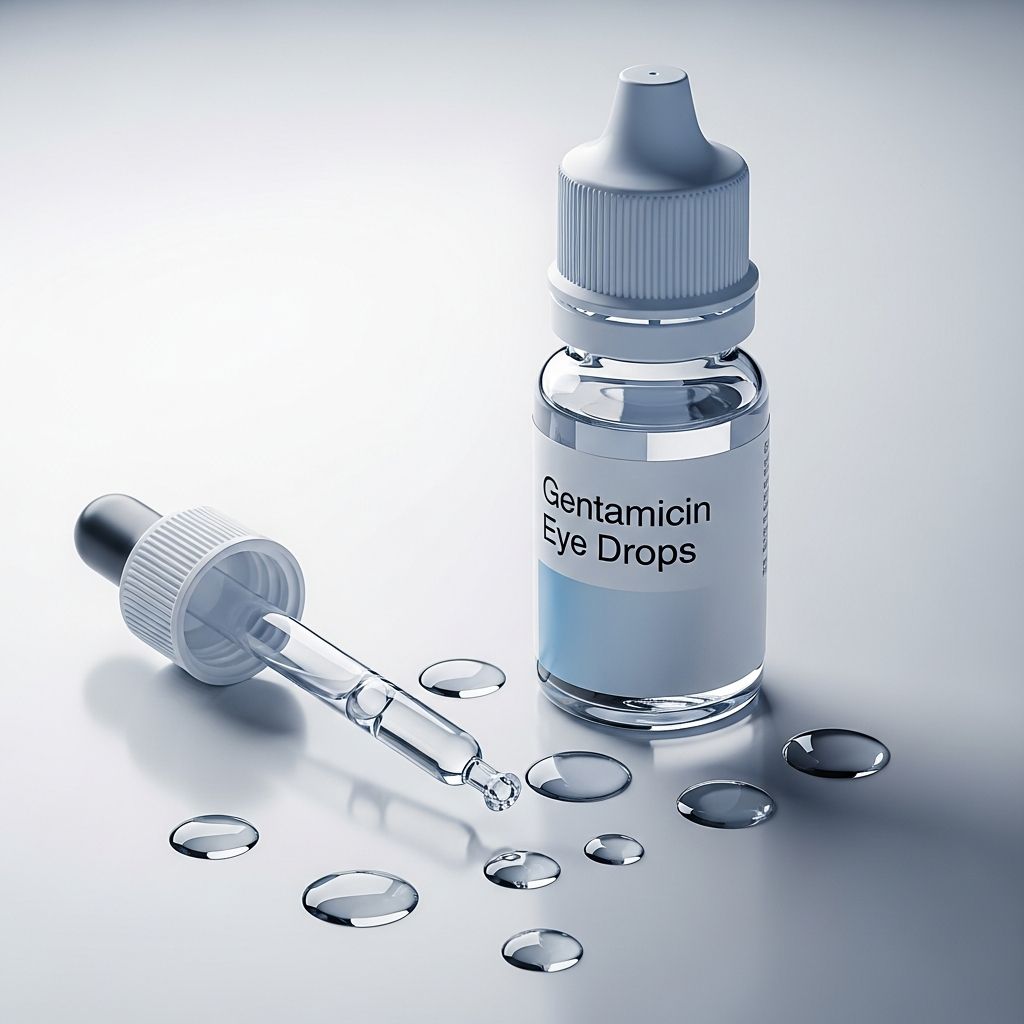
Gentamicin eye drops are a topical antibiotic medication belonging to the aminoglycoside class, specifically formulated to treat bacterial infections of the eye. They work by stopping the growth of bacteria, helping to alleviate symptoms such as redness, swelling, itching, and discharge associated with conditions like conjunctivitis, blepharitis, and other ocular infections.
About Gentamicin Eye Drops
Gentamicin is an antibiotic that targets and kills bacteria causing eye infections. It is available as eye drops (ophthalmic solution) or ointment and is prescribed for mild to severe bacterial infections affecting the conjunctiva, eyelids, or surrounding eye tissues. Unlike systemic antibiotics, topical gentamicin acts locally with minimal absorption into the bloodstream, reducing the risk of widespread side effects.
These drops are commonly used for infections like bacterial conjunctivitis (pink eye), keratitis, and blepharitis. They are effective against a range of gram-negative and some gram-positive bacteria but do not treat viral, fungal, or allergic eye conditions. Complete the full course even if symptoms improve to prevent bacterial resistance.
Before Using Gentamicin Eye Drops
Before starting treatment, consult your doctor to confirm a bacterial infection, as misusing antibiotics can worsen conditions or lead to resistance.
Who Can and Cannot Use Them
- Adults and children: Suitable for all ages, with no dosage adjustment needed for children.
- Do not use if: Allergic to gentamicin or other aminoglycosides; suspected burst eardrum (if used for ears); myasthenia gravis; mitochondrial disorders increasing hearing loss risk.
Common Questions About Suitability
| Condition | Suitable? | Reason |
|---|---|---|
| Pregnancy | Usually safe | Minimal systemic absorption; consult doctor. |
| Breastfeeding | Usually safe | Low risk to infant; monitor for side effects. |
| Kidney/Liver issues | Caution | Discuss with doctor; rare systemic effects possible. |
| Contact lens wearers | No during treatment | Remove lenses; risk of contamination and irritation. |
Other Medicines and Gentamicin Eye Drops
Gentamicin eye drops have low interaction risk due to topical use, but inform your doctor about:
- Other aminoglycoside antibiotics (increased toxicity risk).
- Diuretics like furosemide or ethacrynic acid (potential ear/kidney damage).
- Muscle relaxants or botulinum toxin (enhanced effects).
- Topical steroids (may be combined but under supervision).
How and When to Use Gentamicin Eye Drops
Follow your doctor’s or label instructions precisely. Typically used every 4-8 hours for drops, less frequently for ointment.
Dosage
| Form | Condition | Dosage | Frequency |
|---|---|---|---|
| Eye Drops | Mild/Moderate | 1-2 drops per eye | Every 4 hours (up to 6 times/day). |
| Eye Drops | Severe | 1-2 drops per eye | Up to every hour initially. |
| Ointment | All | 1 cm strip (1/3 inch) | Every 8-12 hours. |
Related Stories



Use for full prescribed duration (usually 5-7 days) to eradicate infection.
How to Use Eye Drops
- Wash hands thoroughly.
- Tilt head back; pull down lower eyelid to form pocket.
- Instill 1-2 drops into pocket without touching tip to eye/surface.
- Close eyes for 1-2 minutes; press tear duct to minimize drainage.
- Wipe excess; wait 5 minutes between drops or other eye meds.
- Replace cap tightly.
Note: Bottle may seem partially full for drop control. Avoid contamination.
How to Use Eye Ointment
- Wash hands.
- Tilt head; pull lower eyelid.
- Squeeze 1 cm strip into pocket; avoid tip contact.
- Close eyes 1-2 minutes; wipe tip with tissue.
- Expect temporary blurred vision; avoid driving.
Missed Dose
Use as soon as remembered unless near next dose; do not double up.
Side Effects of Gentamicin Eye Drops
Most users experience no or mild effects; serious ones are rare due to low absorption.
Common Side Effects
- Temporary stinging, burning, itching.
- Blurred vision (ointment).
- Redness, mild irritation.
Serious Side Effects (Rare)
- Allergic reactions: swelling, rash, breathing difficulty—seek emergency care.
- Prolonged use: superinfection, hearing/balance issues, kidney problems.
- Eye sensitivity, corneal issues (with benzalkonium preservative).
Report persistent or worsening symptoms to your doctor.
How to Cope with Side Effects
- Stinging/Burning: Normal initially; apply warm compress post-use.
- Blurred Vision: Wait 15-30 minutes before activities; use drops if prescribed.
- Irritation: Ensure sterile technique; discontinue if severe and consult doctor.
- Allergy: Stop use; seek immediate medical help.
Pregnancy and Breastfeeding
Limited systemic absorption makes gentamicin eye drops generally safe during pregnancy (Category B) and breastfeeding. However, consult your healthcare provider for personalized advice, especially in third trimester or with preterm labor risks.
Other Information
- Storage: Room temperature, away from children; discard after 4 weeks or per label.
- Overdose: Unlikely topically; rinse eye if excessive—contact poison control if concerned.
- Driving: Avoid if vision blurred.
- Duration: Do not exceed prescribed time to avoid resistance.
Further Information
Manufacturer details vary; check pack for specifics. For questions, contact your pharmacist or doctor. Report side effects via national systems (e.g., Yellow Card in UK).
Frequently Asked Questions (FAQs)
Q: How quickly do gentamicin eye drops work?
A: Improvement often within 48 hours; complete full course for best results.
Q: Can I wear contact lenses while using them?
A: No, remove before use; wait 15+ minutes post-dose if reinserting, but avoid during infection.
Q: What if I forget a dose?
A: Take immediately unless near next; skip and resume schedule—never double.
Q: Are they safe for children?
A: Yes, same dosage; supervise application.
Q: Do they treat viral pink eye?
A: No, only bacterial; doctor confirms type.
Q: Can I stop early if better?
A: No, finish course to prevent recurrence/resistance.
References
- Gentamicin (ophthalmic route) — Mayo Clinic. 2023-05-01. https://www.mayoclinic.org/drugs-supplements/gentamicin-ophthalmic-route/description/drg-20064058
- Gentamicin Eye/Ear Drops 0.3% w/v Patient Information Leaflet — Medicines.org.uk (electronic Medicines Compendium). 2024-02-15. https://www.medicines.org.uk/emc/files/pil.4218.pdf
- Gentamicin Ophthalmic — MedlinePlus (U.S. National Library of Medicine). 2025-01-10. https://medlineplus.gov/druginfo/meds/a682669.html
- Gentamicin Ophthalmic – Uses, Side Effects, and More — WebMD. 2024-11-20. https://www.webmd.com/drugs/2/drug-8337-841/gentamicin-ophthalmic-eye/gentamicin-drops-ophthalmic/details
- Gentamicin 0.3% Eye Drops — Kaiser Permanente. 2024-08-05. https://healthy.kaiserpermanente.org/health-wellness/drug-encyclopedia/drug.gentamicin-0-3-eye-drops.228870
Similar Articles








Read full bio of Sneha Tete