Geographic Tongue: Causes, Symptoms & Treatment
Understanding geographic tongue: A benign condition with distinctive map-like patches on your tongue.
Understanding Geographic Tongue
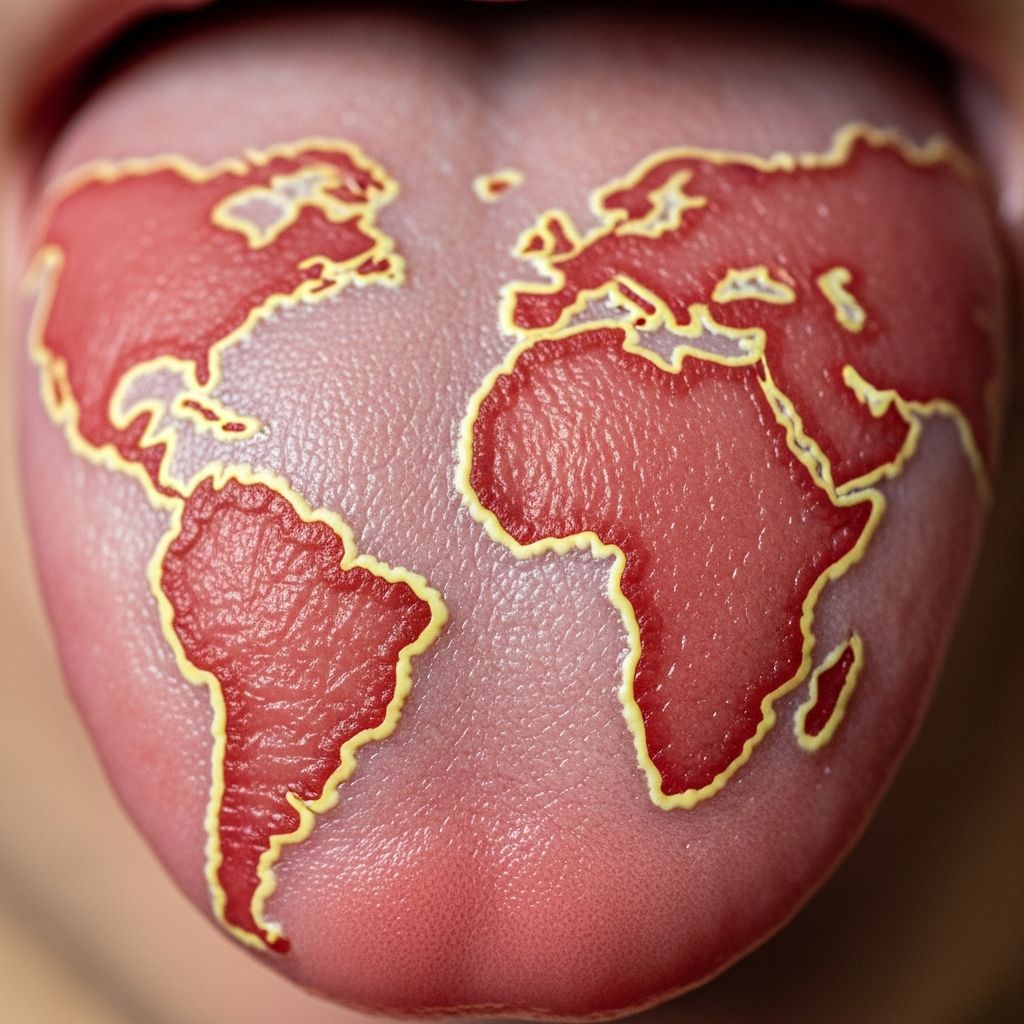
Geographic tongue is a noncancerous condition that creates patches of smooth, reddish skin on your tongue. The name derives from its distinctive appearance, which resembles how land masses and oceans are depicted on geographical maps. This benign condition is characterized by an irregular pattern of smooth, discolored areas on the tongue surface, typically surrounded by slightly raised, white or gray borders. Geographic tongue is noncancerous and does not spread to other areas of the mouth or body.
Also known as benign migratory glossitis or lingual erythema migrans, geographic tongue is a common oral condition affecting approximately 2% to 3% of the general population. In the United States, the condition appears more prevalent in white and black populations compared to Hispanic populations, and it shows no particular association with age or sex. Despite its striking appearance, geographic tongue is rarely a cause for serious concern and typically requires minimal intervention beyond reassurance and symptom management when necessary.
Recognizing the Symptoms
The most noticeable symptom of geographic tongue is the distinctive pattern of smooth, reddish spots on your tongue with white or gray borders. Normally, your tongue is covered with papillae—tiny, hair-like projections that provide protection and aid in various functions. People with geographic tongue have fewer papillae than normal, particularly in the affected areas, which creates the characteristic smooth appearance.
The patches associated with geographic tongue may come and go spontaneously, and the pattern can change over time. In many cases, geographic tongue causes no discomfort whatsoever. However, some individuals may experience additional symptoms, including:
- Mild soreness or sensitivity on the affected areas
- Burning sensation on the tongue, particularly when consuming certain foods
- Heightened sensitivity to hot, spicy, or acidic foods
- Discomfort when using alcohol-containing products
- General tongue sensitivity
It is important to note that geographic tongue itself is not painful or serious. The patches typically do not cause functional impairment, and the condition does not affect your ability to eat, speak, or taste. However, if you notice patches or other changes on your tongue, it is advisable to consult with a healthcare provider to ensure proper diagnosis and rule out other oral conditions.
Understanding the Causes and Risk Factors
Underlying Causes
Healthcare providers and researchers are not entirely certain about the precise causes of geographic tongue. However, evidence suggests that people with certain medical conditions are more likely to develop the condition. The underlying causes appear to be multifactorial, involving both genetic and environmental components.
Geographic tongue is postulated to represent an intraoral form of psoriasis due to its histopathological characteristics, which are similar to those observed in psoriatic lesions. The condition is associated with various factors including allergies, stress, diabetes mellitus, and anemia. Additionally, specific dietary and lifestyle triggers have been identified as potential exacerbating factors. These triggers include consumption of hot, spicy, and acidic foods, as well as alcohol consumption. Interestingly, contrary to previous beliefs, geographic tongue has been found to have an inverse association with smoking, suggesting that smokers may have a lower risk of developing the condition.
Related Stories



Nutritional Deficiencies
Nutritional factors play an important role in the development of geographic tongue. People who do not get enough zinc, iron, folic acid, and vitamins B6 and B12 from their daily diet may have an increased risk of developing geographic tongue. These micronutrients are essential for maintaining healthy oral tissue and supporting the protective function of tongue papillae. Ensuring adequate intake of these vitamins and minerals through a balanced diet may help reduce your risk of developing this condition.
Associated Medical Conditions
Several medical conditions have been associated with an increased risk of geographic tongue development:
- Diabetes mellitus
- Anemia and other blood-related disorders
- Psoriasis and other skin conditions
- Allergic conditions
- Stress-related disorders
Genetic and Family Factors
Some individuals with geographic tongue have a family history of the condition, suggesting that genetic factors may play a role in predisposing certain people to develop it. Additionally, people with geographic tongue often have a concurrent condition called fissured tongue, which is characterized by deep grooves or fissures appearing on the tongue surface. This association suggests possible shared underlying mechanisms.
Diagnosis and Differential Diagnosis
Healthcare providers typically diagnose geographic tongue through clinical examination of the tongue’s appearance. The distinctive pattern of smooth, reddish patches with white or gray borders is usually sufficient for diagnosis. However, healthcare providers must rule out other oral conditions that may present with similar symptoms.
The differential diagnosis for geographic tongue includes several other oral conditions that require consideration:
- Oral candidiasis (thrush)
- Leukoplakia
- Vitamin deficiency glossitis
- Lichen planus
- Systemic lupus erythematosus manifestations
- Drug reactions
- Recurrent aphthous stomatitis
Geographic tongue is differentiated from oral candidiasis by its presence in an otherwise healthy person and by the changing pattern of the lesions over time. Additionally, candidal pseudomembranes can be easily removed, leaving a painless red base, whereas geographic tongue patches cannot be removed in this manner. If there is suspicion of associated conditions such as anemia, nutritional deficiencies, or diabetes mellitus, healthcare providers may recommend appropriate evaluations and laboratory tests.
Treatment and Management Options
General Approach
Reassurance is the main treatment for geographic tongue. Since the condition is benign, noncancerous, and self-limiting, most individuals do not require active treatment. However, when symptoms such as soreness or sensitivity occur, several management options are available to provide relief.
Topical Treatments
For mild forms of geographic tongue with minimal symptoms, several topical treatments may provide symptomatic relief:
- Topical corticosteroids: These can reduce inflammation and provide comfort
- Local anesthetics: These may numb the affected area and reduce sensitivity
- Antihistamine and anesthetic mouthwash: This combination can address both allergic and pain components
- Topical tacrolimus: This immunosuppressive agent has shown usefulness in some cases
Advanced Treatment Options
For severe cases of geographic tongue that do not respond to topical treatments, more advanced options may be considered. Systemic cyclosporine, an oral immunosuppressive medication, has been reported as useful in managing severe manifestations of the condition. Healthcare providers will determine the most appropriate treatment based on the severity of symptoms and individual patient factors.
Prevention and Risk Reduction
While healthcare providers are not entirely certain about preventing geographic tongue, you may be able to reduce your risk by implementing certain lifestyle modifications. Maintaining a healthy diet that contains adequate amounts of zinc, folic acid, iron, and vitamins B6 and B12 is important. Additionally, managing stress through relaxation techniques, exercise, and other stress-reduction methods may help reduce the likelihood of developing geographic tongue.
Avoiding triggers such as hot, spicy, and acidic foods, as well as limiting alcohol consumption, may help prevent symptom exacerbation in those who have already developed the condition. Maintaining good oral hygiene and scheduling regular dental checkups also contribute to overall oral health and early identification of any changes in the mouth.
Geographic Tongue and Cancer Risk
Geographic tongue is a noncancerous disorder that does not become oral cancer. The patches associated with geographic tongue are benign and will not transform into cancerous lesions. However, you should talk to a dentist or healthcare provider any time you notice changes in your mouth, such as white patches that could be signs of oral cancer. This recommendation is important because while geographic tongue itself is not cancerous, other oral conditions presenting with similar appearances may require evaluation to rule out more serious pathology.
When to Seek Medical Attention
While geographic tongue is not serious and rarely requires intervention, it is advisable to consult a healthcare provider if you notice patches or other changes on your tongue. This is particularly important if:
- The patches persist for more than two weeks
- You experience pain or discomfort
- The condition is accompanied by other symptoms
- You are uncertain about the diagnosis
- Symptoms are significantly affecting your quality of life
Healthcare providers can confirm the diagnosis, rule out other conditions, and recommend appropriate treatment if necessary.
Frequently Asked Questions
Q: Is geographic tongue contagious?
A: No, geographic tongue is not contagious. It is a benign oral condition that cannot be transmitted to other people through contact, sharing utensils, or any other means.
Q: Can geographic tongue be prevented?
A: While there is no guaranteed way to prevent geographic tongue, maintaining a healthy diet rich in essential vitamins and minerals, managing stress, and avoiding known triggers may help reduce your risk of developing the condition.
Q: Do I need treatment for geographic tongue?
A: Treatment usually is not necessary for geographic tongue since it is benign and self-limiting. However, if you experience discomfort or other symptoms, your healthcare provider can recommend appropriate management options.
Q: Can geographic tongue affect my ability to taste?
A: Geographic tongue typically does not significantly affect your ability to taste, as taste buds are located beneath the surface of the tongue and are not directly impacted by the condition.
Q: Will geographic tongue go away on its own?
A: Yes, geographic tongue is self-limiting, and the patches may come and go spontaneously. The condition often resolves without any intervention, though it may recur periodically.
Q: Should I be concerned about oral cancer?
A: No, geographic tongue is a noncancerous disorder and does not become oral cancer. However, any persistent oral changes should be evaluated by a healthcare provider to ensure proper diagnosis.
References
- Geographic Tongue: Causes, Symptoms & Treatment — Cleveland Clinic. 2023-02-14. https://my.clevelandclinic.org/health/diseases/21177-geographic-tongue
- Geographic Tongue — Cleveland Clinic Journal of Medicine. MDedge – The Hospitalist, Community. https://community.the-hospitalist.org/content/geographic-tongue
- Geographic Tongue — Cleveland Clinic Journal of Medicine. 2016. https://www.ccjm.org/content/83/8/565
- Geographic Tongue – Symptoms and Causes — Mayo Clinic. https://www.mayoclinic.org/diseases-conditions/geographic-tongue/symptoms-causes/syc-20354396
- Benign Migratory Glossitis — Cleveland Clinic Journal of Medicine. https://www.ccjm.org/content/92/10/591
Similar Articles








Read full bio of Sneha Tete