Geographic Tongue: Causes, Symptoms, And 5 Self-Care Tips
Discover the causes, symptoms, diagnosis, and management of geographic tongue, a common and harmless oral condition affecting tongue appearance.
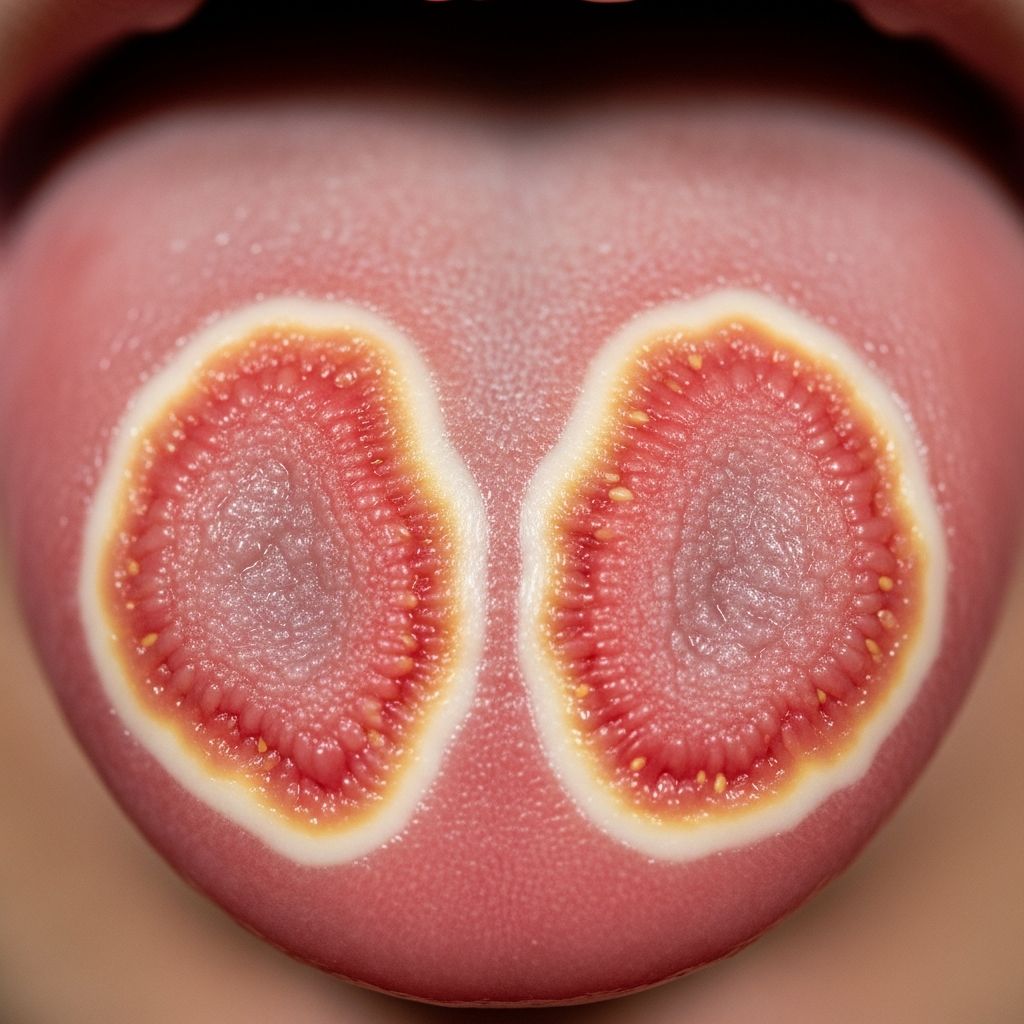
Geographic tongue, also known as benign migratory glossitis, is a common, harmless condition characterised by irregular smooth red patches (‘lesions’) on the top and sides of the tongue with a white border. These patches have a ‘map-like’ or ‘geographic’ appearance that changes over time. The condition affects approximately 1–3% of the general population.
What is the cause of geographic tongue?
The exact cause of geographic tongue is unknown. It is thought to arise due to loss of filiform papillae (the tiny projections that contain taste buds on the top of the tongue). The cause of this loss is unclear but may be related to:
- Genetics — it is more common in people with relatives who have geographic tongue
- Psoriasis — geographic tongue occurs in 10% of those with pustular psoriasis and may be the only sign of this type of psoriasis
- Fissured tongue — occurs in 50% of those with geographic tongue
Other reported associations include:
- Allergies, asthma, atopic eczema
- Nutritional deficiencies (eg, vitamin B2, B6, B12, iron, zinc)
- Down syndrome
- Systemic lupus erythematosus
Who gets geographic tongue?
Geographic tongue affects 1–3% of the population. It is more common in:
- Adults than children
- Females
- People with psoriasis
- People with fissured tongue
What are the clinical features of geographic tongue?
Geographic tongue may occur suddenly and spontaneously regress, often without the person noticing. It may last from days to several months, and may recur frequently. The tongue lesions:
- Vary in size and shape
- Appear as smooth red patches with irregular borders
- Have a white or grey coating at the edges
- Migrate/change over days or weeks
Symptoms are usually absent but may include:
- Tongue discomfort or pain
- Increased sensitivity to hot, spicy, salty, or acidic foods and drinks
- Tingling or burning sensation
Lesions are most common on the top and lateral tongue margins. Occasionally, similar lesions may be found on other mucosal sites such as palate, buccal mucosa, floor of mouth, and throat.
How is geographic tongue diagnosed?
Geographic tongue is diagnosed clinically based on its characteristic appearance. No investigations are required. The diagnosis may be confirmed by dermoscopy showing loss of filiform papillae.
Geographic tongue must be distinguished from:
- Candidiasis (thrush) — white patches that rub off to reveal a raw red area, often with angular cheilitis
- Lichen planus — white striae on buccal mucosa and tongue
- Leukoplakia — persistent white plaques that cannot be rubbed off
- Erythroplakia — persistent red velvety plaques
- Oral psoriasis — fissured tongue, may have skin psoriasis
- Pemphigus vulgaris — widespread flaccid blisters and erosions
Related Stories



What is the treatment for geographic tongue?
No treatment is required as geographic tongue is asymptomatic and benign. Reassurance is all that is usually needed.
Symptomatic relief can be provided by:
- Avoiding irritants — spicy, hot, acidic, or salty foods and drinks; alcohol; toothpaste containing sodium lauryl sulphate
- Topical analgesics — 2% lignocaine gel/minor painkillers
- Topical corticosteroids — eg, triamcinolone 0.1% in adhesive base
- Topical antifungals — if candidiasis is suspected
What is the outcome for geographic tongue?
Geographic tongue is a lifelong condition but is usually asymptomatic. Tongue lesions change in size, shape, and location over time, often lasting months before resolving spontaneously. It does not predispose to oral cancer.
Frequently asked questions
Is geographic tongue serious?
No, geographic tongue is a harmless condition that does not indicate oral cancer or any serious disease.
Does geographic tongue go away?
Patches may come and go over days to months, but the condition can be recurrent and lifelong.
Does geographic tongue cause bad breath?
No, geographic tongue does not cause halitosis (bad breath).
Is geographic tongue contagious?
No, it is not infectious or contagious.
Can geographic tongue be cured?
There is no cure but it rarely causes symptoms requiring treatment.
Table: Differential Diagnosis of Tongue Lesions
| Condition | Key Features | Treatment |
|---|---|---|
| Geographic Tongue | Migratory red patches with white borders, asymptomatic or mild discomfort | Symptomatic relief, avoidance of irritants |
| Oral Candidiasis | White plaques that scrape off, soreness, angular cheilitis | Antifungals |
| Lichen Planus | Lacy white lines on buccal mucosa and tongue, may be painful | Corticosteroids |
| Leukoplakia | Persistent white plaques, risk of dysplasia/malignancy | Biopsy, excision |
Self-Care Tips for Managing Geographic Tongue
- Maintain excellent oral hygiene with a soft toothbrush
- Avoid trigger foods: spicy, acidic, hot, salty items
- Stay hydrated to soothe the tongue
- Manage stress through relaxation techniques
- Consider nutritional supplements if deficiencies suspected
Geographic tongue remains a benign entity that requires minimal intervention. Regular dental check-ups ensure differentiation from more serious pathologies. Patients should be educated on its migratory nature to alleviate anxiety.
References
- Geographic Tongue — UM Health-Sparrow. 2023. https://www.uofmhealthsparrow.org/departments-conditions/conditions/geographic-tongue
- Geographic tongue: Causes, pictures, and treatment — Medical News Today. 2023-10-24. https://www.medicalnewstoday.com/articles/319342
- Geographic Tongue: Causes, Symptoms, and Treatment — Cleveland Clinic. 2023-09-28. https://my.clevelandclinic.org/health/diseases/21177-geographic-tongue
- Geographic tongue – Symptoms and causes — Mayo Clinic. 2023. https://www.mayoclinic.org/diseases-conditions/geographic-tongue/symptoms-causes/syc-20354396
- Geographic Tongue — American Academy of Oral Medicine. 2023. https://www.aaom.com/geographic-tongue
Similar Articles








Read full bio of Sneha Tete