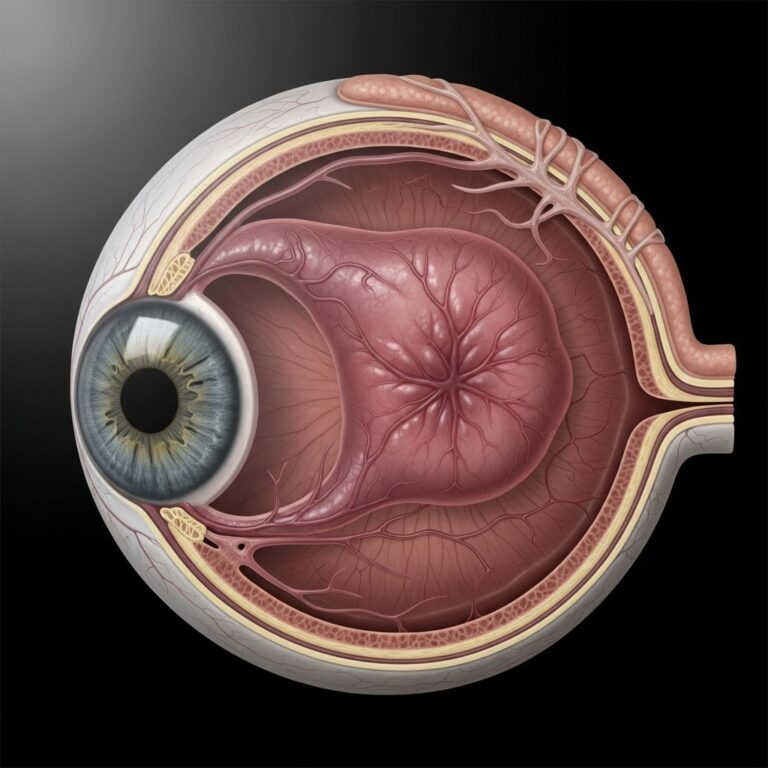
Gevokizumab for Non-Necrotizing Scleritis
Exploring the promise of IL-1β inhibition in managing severe eye inflammation without necrosis.

Gevokizumab represents a targeted therapeutic approach for autoimmune-driven ocular conditions, particularly non-necrotizing anterior scleritis, by specifically neutralizing interleukin-1 beta (IL-1β), a key cytokine in inflammatory cascades.
Understanding Scleritis and Its Challenges
Scleritis involves painful inflammation of the sclera, the eye’s protective white outer layer, often linked to systemic autoimmune disorders like rheumatoid arthritis or lupus. Non-necrotizing forms, while less destructive than necrotizing variants, still threaten vision through persistent edema and vascular changes in episcleral tissues. Traditional management relies on corticosteroids and immunosuppressive agents, but many patients experience refractory disease or intolerable side effects from long-term use.
The condition manifests as diffuse, nodular, or necrotizing subtypes, with anterior scleritis being the most common presentation. Symptoms include severe pain, photophobia, and redness, potentially progressing to corneal involvement or glaucoma if unchecked. Associated systemic diseases occur in up to 50% of cases, underscoring the need for therapies addressing underlying immune dysregulation.
The Role of IL-1β in Ocular Inflammation
IL-1β, produced by activated macrophages and other cells, drives pro-inflammatory signaling via the IL-1 receptor, amplifying cytokine storms in autoimmune pathologies. In scleritis, elevated IL-1β levels correlate with scleral breakdown and persistent inflammation, making it a rational target for biologic intervention.
This cytokine’s involvement extends beyond the eye, implicated in rheumatoid arthritis, Behçet’s disease, and cardiovascular complications. By binding IL-1β with high affinity (300 fM), gevokizumab allosterically modulates receptor activation, halting downstream inflammatory events without broadly suppressing immunity.
- Key Mechanism: Prevents IL-1β docking, reducing NF-κB pathway activation and subsequent chemokine release.
- Pharmacokinetics: Long half-life supports monthly subcutaneous dosing, improving patient adherence.
Clinical Trial Design and Patient Selection
A phase 1/2 open-label pilot trial (NCT01835132) assessed gevokizumab in active, non-infectious, non-necrotizing anterior scleritis. Eight patients, all with prior systemic therapy failures—including prednisone, methotrexate, or biologics like infliximab—received 60 mg subcutaneous injections at baseline, weeks 4, 8, and 12.
Eligibility required standardized photographic grading of scleral inflammation (0 to +4 scale), with primary endpoint a ≥2-step reduction or grade 0 by week 16. Participants tapered other immunosuppressants but continued ≤20 mg/day prednisone equivalents. Two had systemic associations: rheumatoid arthritis and lupus/Sjogren’s.
| Baseline Characteristics | Details |
|---|---|
| Number of Patients | 8 (7 eyes analyzed) |
| Prior Treatments | Corticosteroids, DMARDs, anti-TNF agents |
| Inflammation Grades | +1 to +3 |
| Dosing Regimen | 60 mg SC every 4 weeks x 3 doses |
Key Efficacy Outcomes
Seven of eight eyes achieved the primary endpoint, with median response time of 2 weeks. Three +3-grade eyes, one +2, and three +1-grade eyes improved dramatically, often reaching grade 0 in affected quadrants. Visual acuity stabilized or improved in responders, with sustained effects through week 16.
Extension phases tested durability: initial responders entered a 22-week open-label period, and three underwent re-induction after 10.2 months off therapy, all reverting to grade 0 post-single injection—indicating challenge-dechallenge-rechallenge consistency. Trial termination stemmed from sponsor’s ophthalmology pivot, limiting long-term data.
Related Stories



- Response Rate: 88% primary success.
- Durability: Most maintained gains; minor flares in new quadrants manageable.
- Rechallenge: Rapid efficacy restoration post-hiatus.
Safety Profile and Tolerability
Gevokizumab proved well-tolerated, with no serious adverse events linked to the drug. Mild injection-site reactions occurred transiently, and no infections, malignancies, or systemic flares were noted despite immunosuppression tapering. This aligns with broader IL-1 inhibitors’ profiles, though monitoring for opportunistic infections remains prudent.
Compared to TNF inhibitors, IL-1β blockade may offer fewer paradoxical inflammatory risks, positioning gevokizumab favorably for refractory cases.
Broader Applications in Inflammatory Eye Diseases
Beyond scleritis, gevokizumab showed promise in uveitis, particularly Behçet’s disease. The EYEGUARD program evaluated it for non-infectious intermediate/posterior uveitis and flare prevention in steroid-controlled patients. A US trial randomized responders to monthly 60 mg vs. placebo, targeting time to first exacerbation.
Trials also explored pyoderma gangrenosum, acne vulgaris, osteoarthritis, and metabolic diseases like type 2 diabetes, highlighting IL-1β’s pleiotropic role. Orphan drug designation for uveitic indications underscores its niche potential.
Comparative Landscape of Scleritis Therapies
| Therapy Class | Examples | Pros | Cons |
|---|---|---|---|
| Corticosteroids | Prednisone, topical | Rapid onset | Systemic toxicity, tachyphylaxis |
| Conventional DMARDs | Methotrexate | Oral, steroid-sparing | Slow effect, hepatotoxicity |
| Biologics (anti-TNF) | Infliximab, Adalimumab | High efficacy in RA-associated | Injection risks, failures in some |
| IL-1 Inhibitors | Gevokizumab, Canakinumab | Targeted, monthly dosing | Limited data, development halted |
Future Directions and Unmet Needs
While pilot data excites, larger randomized controlled trials are essential to confirm efficacy against placebo and active comparators. Biomarker studies could predict responders, optimizing patient selection. Development cessation by XOMA Royalty Corp. paused ophthalmology efforts, but IL-1 pathway interest persists via agents like anakinra.
Integration into multimodal regimens—pairing with rituximab for refractory cases—warrants exploration. Long-term safety in ocular autoimmune cohorts remains a priority, given IL-1β’s systemic roles.
Patient Considerations and Monitoring
For potential candidates, baseline IL-1β levels or genetic profiling (e.g., NLRP3 variants) might guide therapy. Monthly monitoring includes slit-lamp exams, grading via standardized photos, and systemic inflammation markers. Patients should report new pains promptly to avert progression.
Frequently Asked Questions (FAQs)
What is gevokizumab?
A humanized monoclonal antibody targeting IL-1β to curb inflammation in autoimmune diseases.
Is gevokizumab approved for scleritis?
No, it remains investigational following trial discontinuation, though results support further study.
How quickly does it work for scleritis?
Median 2 weeks for significant inflammation reduction in trial participants.
Are there side effects?
Primarily mild injection-site reactions; well-tolerated overall in small cohorts.
Can it treat other eye conditions?
Trials targeted Behçet’s uveitis and non-infectious uveitis with promising signals.
Conclusion
Gevokizumab’s targeted IL-1β inhibition offers a compelling option for non-necrotizing scleritis, evidenced by rapid, durable responses in a challenging cohort. Though development stalled, its profile informs ongoing biologic advancements in ophthalmology.
References
- Gevokizumab in the treatment of autoimmune, non-necrotizing anterior scleritis: results of a phase I/II pilot study — Nguyen QD et al. 2016-11-01. https://pmc.ncbi.nlm.nih.gov/articles/PMC5121021/
- Gevokizumab, an anti-IL-1β mAb for the Potential Treatment of Type 1 and 2 Diabetes, Rheumatoid Arthritis and Cardiovascular Disease — Ebling F. 2010-12-01. https://pubmed.ncbi.nlm.nih.gov/21154167/
- Gevokizumab for Active Scleritis (NCT01835132) — ClinicalTrials.gov. Last updated 2023. https://clinicaltrials.gov/study/NCT01835132
- Gevokizumab receives orphan drug designation — Ophthalmology Times. 2014-07-01. https://www.ophthalmologytimes.com/view/gevokizumab-receives-orphan-drug-designation
- Gevokizumab: Uses, Interactions, Mechanism of Action — DrugBank Online. Last updated 2025. https://go.drugbank.com/drugs/DB12119
- XOMA begins US clinical trial of gevokizumab to treat Behcet’s disease uveitis — Clinical Trials Arena. 2021-01-01. https://www.clinicaltrialsarena.com/news/newsxoma-begins-us-clinical-trial-of-gevokizumab-to-treat-behcets-disease-uveitis-4390819/
Similar Articles








Read full bio of Sneha Tete